Free Daily Podcast Summary
Excess Returns: Daily Summaries Delivered
by Excess Returns
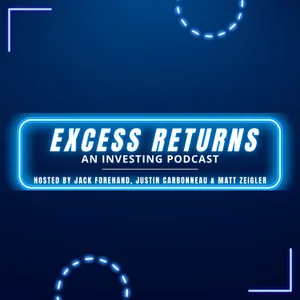
Excess Returns is dedicated to making you a better long-term investor and making complex investing topics understandable. Join Jack Forehand, Justin Carbonneau and Matt Zeigler as they sit down with some of the most interesting names in finance to discuss topics like macroeconomics, value investing, factor investing, and more.
Latest Episodes
The most recent episodes — sign up to get AI-powered summaries of each one.
- Today55 min
The AI Gap Is Closing | Jason Hsu on China, Momentum Crashes and the S&P’s Seven-Stock Bet
Jason Hsu, founder and CIO of Rayliant Global Advisors and co-founder of Research Affiliates, joins Excess Returns to discuss the US-China AI race, the economics of AI spending, and what market concentration means for investors. We explore China's energy and open source advantages, opportunities in Chinese stocks, and how factor investing and machine learning can help build more diversified portfolios.Rayliant Global Advisorshttps://rayliant.comRayliant on Xhttps://twitter.com/rayliantTopics covered:Why Jason believes AI safety requires cooperation between the US and ChinaHow Chinese AI models are closing the gap with US developersChina's electricity infrastructure and the competitive threat from open source AIWhere AI profits could accrue across hardware, energy, models and applicationsHow chip restrictions are encouraging China to develop domestic capabilitiesWhy retail trading creates opportunities and challenges for factor investors in ChinaChinese technology companies, dividend-paying state enterprises and US-China tradeThe AI spending arms race and the concentration risk facing S&P 500 investorsMomentum crashes, value cycles and how Rayliant uses machine learning to combine factorsWhy advisors' greatest contribution may be helping clients find meaning in their wealthTimestamps:00:00 Jason Hsu on AI competition and safety04:00 How close are Chinese AI models to the US?08:25 China's energy advantage and open source economics14:12 Who captures AI profits, and can China catch up in chips?18:41 Chinese stocks, retail trading and speculation24:01 China's overlooked opportunities and dividend stocks28:05 US-China interdependence and the AI spending arms race33:24 The AI concentration hiding in the S&P 50037:25 Momentum crashes, value cycles and factor performance41:54 Machine learning and building multifactor portfolios48:46 Financial advisors, Jack Bogle and having enough53:23 Why inefficient markets do not make alpha easyLearn more about the Excess Returns podcast network:https://excessreturns.coNo information discussed in this podcast should be construed as investment advice. Securities discussed may be held by the hosts and guests, their firms or their clients.
- 2 days ago1h 1m
David Rosenberg on Why He Wants the Bonds Everyone Hates — and Where He's Hiding in Stocks
David Rosenberg returns to Excess Returns to explain his bullish case for Treasury bonds, why he expects inflation and economic growth to slow, and the risks he sees in an AI-driven stock market. The Rosenberg Research founder joins Matt Zeigler to discuss consumer spending, Federal Reserve policy, gold, international stocks, and how he translates his economic outlook into a diversified portfolio.Recorded September 16, 2026, before the Federal Reserve's policy announcement.David Rosenberg on Twitterhttps://twitter.com/EconguyRosieRosenberg Researchhttps://www.rosenbergresearch.com/Topics covered:Why Rosenberg believes markets have priced in too much Fed tightening and Treasury bonds offer an opportunityWhy he views higher oil prices as a tax on consumers rather than evidence of sustained, broad-based inflationHow slowing wage growth, falling savings, and the stock market wealth effect shape consumer spendingHow Treasury issuance changes and potential post-election fiscal gridlock could support bondsWhy AI exposure extends beyond technology stocks into utilities, industrials, and other sectorsWhere he sees opportunities in healthcare, consumer staples, pipelines, European stocks, and AsiaHis model portfolio's allocation to equities, bonds, cash, and commoditiesHow gold, central bank buying, and a bearish dollar outlook fit his investment thesisWhy he is positioning for slower growth without making recession his base caseWhat working with portfolio managers taught him about cutting losses and separating conviction from stubbornnessTimestamps:00:00 Rosenberg's portfolio approach and the Treasury opportunity05:58 Why an oil shock can weaken consumer spending10:52 Jobs, wages, and the stock market wealth effect17:35 Fiscal stimulus, Treasury issuance, and the bond outlook22:53 AI concentration risk beyond technology stocks27:10 Why he owns European and Asian equities31:16 Inside his 50% stocks, 30% bonds model portfolio36:43 Betting against the inflation consensus42:41 Gold, central bank reserves, and a weaker dollar48:56 Recession watch and bear market risks for 202753:10 AI correlations and the risks of being fully invested58:27 Cutting losses and knowing when conviction becomes stubbornnessLearn more about the Excess Returns podcast network:https://excessreturns.coNo information discussed in this podcast should be construed as investment advice. Securities discussed may be held by the hosts and guests, their firms or their clients.
- 4 days ago55 min
Franklin Templeton CEO Jenny Johnson on AI, Private Markets, and the Hidden Risks in Index Funds
Franklin Templeton CEO Jenny Johnson joins Matt Zeigler to explore how AI, blockchain tokenization, and private markets are reshaping investing and asset management. They discuss what these changes mean for individual investors, from personalized portfolios and access to private companies to the concentration risks hiding in passive index funds. Jenny also shares lessons from her journey from intern to CEO, why financial advisors still matter, and why starting early remains her most important investing lesson.Franklin Templetonhttps://www.franklintempleton.comTopics covered:Why AI could create new industries and why learning to use it matters for young professionalsHow Franklin Templeton uses AI agents and why investment decisions still require human judgmentBuilding personalized portfolios around retirement, college savings, and other financial goalsHow blockchain, smart contracts, and instant settlement could reduce financial transaction costsTokenized money market funds, digital wallets, and the obstacles to bringing ETFs on-chainWhy companies stay private longer and what investors miss when they only own public stocksPrivate credit, illiquidity, and the trade-offs involved in expanding access to private marketsHow mega IPOs, AI spending, and changing index composition can increase portfolio concentrationBalancing shareholders, employees, and clients while investing in a company's long-term futureThe value of financial advisors, staying invested, and giving compounding time to workTimestamps:00:00 Jenny Johnson's leadership lessons and path from intern to CEO06:41 AI job disruption and lessons from earlier technology revolutions10:42 How young analysts use AI and where personalized investing is heading15:44 Human judgment, AI agents, and the future of asset management20:17 How tokenization could lower costs and expand financial access24:39 Why blockchain adoption is slow and how tokenized ETFs work29:58 Private company growth, investor access, and liquidity trade-offs35:20 Mega IPOs, index concentration, and the risks of AI spending41:23 Franklin Templeton's family legacy and investing for the next generation46:18 Why financial advisors matter and why investors should start early51:32 Jenny's hands-on experiments with AI toolsLearn more about the Excess Returns podcast network:https://excessreturns.coNo information discussed in this podcast should be construed as investment advice. Securities discussed may be held by the hosts and guests, their firms or their clients.
- 6 days ago1h 1m
Jim Paulsen on the Weakening Economy, Tech Bear Market Risk and the Bull Market Built on Fear
Jim Paulsen joins Jack Forehand and Matt Zeigler on the latest Jim Paulsen Show to explore why booming AI earnings may be masking a weakening U.S. economy, and what that means for stocks, bonds, and Federal Reserve policy. Using 27 charts, he examines stalled job creation, rising oil prices, growing reliance on debt to finance AI investment, and why he expects a sharper correction in technology than in the broader S&P 500.Subscribe to the Jim Paulsen Show on SpotifySubscribe to the Jim Paulsen Show on Apple PodcastsTopics covered:Why strong S&P 500 earnings hide a widening divide between technology, energy, and the remaining seven sectors.Why low unemployment claims may offer false comfort when job creation has stalled.Jim's job market misery index and what it suggests about the case for Fed easing.How business investment and employment have broken their historical relationship.Why weak real disposable income, low savings, and higher oil prices threaten consumer spending.How fading economic momentum could push Treasury yields lower despite renewed inflation fears.Why a shrinking wall of worry could remove an important source of support for stocks.What growth stock leadership, household purchasing power, and ISM services data reveal about market risk.How debt-funded AI spending and widening credit spreads change the risks facing technology companies.Why extreme stock outperformance versus bonds could matter for portfolio allocation.The difference between rising profits per worker and sustainable economic productivity.Why Jim expects a tech bear market but a more moderate correction in the broader S&P 500.Timestamps:00:00 Why oil, rates, and tight policy worry Jim05:43 The three-way split hiding beneath strong earnings09:58 Why low jobless claims may be misleading16:18 When business investment stops creating jobs20:48 Can consumer spending outrun real income?26:01 How the wall of worry has supported stocks31:44 Investor complacency and a shift toward growth fears36:58 The disconnect between Main Street and Wall Street41:35 AI debt financing, credit spreads, and the case for bonds47:25 Investment per worker and the yield curve's earnings warning51:52 Profit productivity versus real economic productivity58:08 Why Jim expects a tech bear market and a broader correctionLearn more about the Excess Returns podcast network:https://excessreturns.coNo information discussed in this podcast should be construed as investment advice. Securities discussed may be held by the hosts and guests, their firms or their clients.
- 1 weeks ago1h 0m
We Asked Fidelity's Ex-President What Made Peter Lynch Great — and Where Private Credit Risk Hides
Former Fidelity president and MFS chairman Bob Pozen joins Excess Returns to discuss retirement investing, the risks in private credit, and why he favors a 90% stock and 10% cash portfolio for investors who can cover their living expenses without selling stocks.Drawing on decades in asset management, he shares lessons from Peter Lynch and Warren Buffett, explains why index funds are difficult to beat, and challenges conventional thinking about bonds, Social Security, and corporate earnings reporting.Bob Pozen's websitehttps://www.bobpozen.comFollow Bob Pozen on Twitterhttps://x.com/PozenResearch discussed:Consequences of Mandatory Quarterly Reporting: The U.K. Experiencehttps://papers.ssrn.com/sol3/papers.cfm?abstract_id=2817120Rating Without Market Disciplinehttps://papers.ssrn.com/sol3/papers.cfm?abstract_id=6859158Giving Life to Private (Rated) Credithttps://papers.ssrn.com/sol3/papers.cfm?abstract_id=6857958Topics covered:What investors misunderstand about Peter Lynch and how fund liquidity shaped his approach versus Warren Buffett's.Lessons from leading Fidelity and rebuilding investor trust at MFS after its trading scandal.Why fees, fund size, and market efficiency make large-cap index funds difficult to beat.Private equity in 401(k) plans, liquidity constraints, and the problem with instant valuation markups.How private credit ratings and affiliated investments can obscure risks on insurance company balance sheets.Pozen's proposals for Social Security reform and the consequences of postponing difficult decisions.How automatic IRA enrollment could expand retirement savings access for workers without employer plans.Why Pozen favors a 90/10 portfolio for certain investors and how spending needs and inheritance goals affect allocation.Why quarterly financial reporting and quarterly earnings guidance deserve different treatment.The behavioral cost of chasing rallies and selling downturns, plus Pozen's work on AI and personal productivity.Timestamps:00:00 Peter Lynch, Warren Buffett, and staying the course05:27 Leading Fidelity and keeping stock funds invested11:03 Rebuilding trust at MFS after the trading scandal16:01 Why active managers struggle to beat index funds20:03 Private equity in 401(k)s and valuation concerns24:45 Private credit ratings and insurance company risks29:33 Regulatory gaps and affiliated insurance investments35:51 Social Security reform and the cost of waiting40:00 Automatic IRAs for workers without retirement plans44:09 The case for 90% stocks and 10% cash50:05 Why quarterly financial reporting matters55:00 The problem with precise quarterly earnings guidance59:00 Avoiding emotional market timing and AI productivity toolsLearn more about the Excess Returns podcast network:https://excessreturns.coNo information discussed in this podcast should be construed as investment advice. Securities discussed may be held by the hosts and guests, their firms or their clients.
- 1 weeks ago1h 5m
Everyone Hates Bonds. Why Two Bond Managers Say You're Hating the Wrong Ones
John Kerschner and Michael Contopoulos of Janus Henderson join Matt Zeigler to explain why persistent inflation and higher interest rates call for a different approach to bond investing. They explore short-duration bonds, AAA CLOs, mortgage-backed securities and how investors can rethink the fixed income allocation in a 60/40 portfolio.The conversation covers why traditional bond benchmarks may deliver too much interest rate risk for their yield, how ETFs expand access to securitized credit, and why the AI buildout could add to inflation rather than solve it.High-Conviction Views: The time for short-duration bondshttps://www.janushenderson.com/en-us/advisor/article/high-conviction-views-the-time-for-short-duration-bonds/Janus Henderson Investorshttps://www.janushenderson.com/en-us/advisor/Topics covered:Why deglobalization, fiscal spending and labor constraints could keep inflation and interest rates elevatedHow the Bloomberg US Aggregate Bond Index concentrates interest rate risk and leaves out large parts of the bond marketHow AAA CLOs work, why their coupons float, and why they are different from cashWhy tight corporate credit spreads may offer insufficient compensation for the risks investors takeThe three jobs of fixed income: safety, income and insuranceHow duration determines whether rising rates can wipe out a bond portfolio's incomeWhy bond ETF discounts can reflect price discovery when underlying bonds are not tradingHow Treasury borrowing and AI hyperscaler debt issuance affect bond supply and relative valueWhy AI capital spending, electricity demand, labor shortages and wealth effects can create inflationHow to rebuild the bond allocation around securitized credit, agency mortgages and the risks in your equity portfolioTimestamps:00:00 Rethinking bonds after years of disappointing returns04:28 Why the forces behind the bond bull market have changed10:09 The hidden interest rate risk in the Aggregate Bond Index14:53 AAA CLO ETFs: Floating income, structure and drawdown risk20:44 Treasury fiscal risk and tight corporate credit spreads26:16 Moving beyond set-and-forget bond funds30:45 How duration can overwhelm your bond yield36:27 Bond ETF liquidity and price discovery during stress41:11 Treasury borrowing, AI debt and securitized bond supply46:00 How hyperscaler borrowing can create credit market dislocations50:29 Four reasons AI could increase inflation55:56 Rebuilding the 40% bond allocation in a 60/40 portfolio01:02:00 Municipal bonds, recession protection and balancing equity riskLearn more about the Excess Returns podcast network:https://excessreturns.coNo information discussed in this podcast should be construed as investment advice. Securities discussed may be held by the hosts and guests, their firms or their clients.
- 1 weeks ago56 min
All-In on the S&P 500 Worked for 18 Years | Jared Dillian on Why It's Still Wrong
Jared Dillian joins Matt Zeigler to discuss The Awesome Portfolio, his approach to asset allocation built around 20% each in stocks, bonds, gold, cash, and real estate. They explore how diversification, annual rebalancing, and managing volatility can help investors reduce financial stress and build a portfolio they can stick with through bear markets.Jared explains his "life hedge" concept, challenges conventional wisdom about stock market drawdowns, and shares how losing half his net worth during the financial crisis shaped his investing philosophy.Buy The Awesome Portfolio Bookhttps://amzn.to/3Tf3of7Topics covered:Why Jared questions putting your entire life savings in the S&P 500How the Awesome Portfolio differs from Harry Browne's Permanent PortfolioIncluding home equity when measuring your overall asset allocationWhy volatility and frequent portfolio checking can lead to costly decisionsThe life hedge: protecting against your job and investments declining togetherWhy Jared disagrees with Charlie Munger about tolerating large drawdownsIndex concentration, changing correlations, and the limits of diversificationThe portfolio's historical backtests, including its losses in 2008 and 2022Annual rebalancing, cash reserves, inflation protection, and cryptocurrencyManaging FOMO and taking practical steps toward a less stressful retirement portfolioTimestamps:00:00 Jared Dillian's case against an all-stock portfolio06:33 The five equal allocations in the Awesome Portfolio11:07 Why "never sell" can become a behavioral trap15:26 The life hedge: when your paycheck and portfolio fall together20:38 Risk-adjusted returns and S&P 500 concentration24:49 Why rising interest rates hurt diversification in 202228:51 Backtested losses in 2008 and 202234:26 Combining home equity, retirement accounts, and savings38:58 Cryptocurrency, portfolio distractions, and FOMO44:31 The Death of Equities and lessons from past crashes48:44 How diversification could have changed Jared's financial crisis53:41 First steps toward reducing portfolio risk before retirementLearn more about the Excess Returns podcast network:https://excessreturns.coNo information discussed in this podcast should be construed as investment advice. Securities discussed may be held by the hosts and guests, their firms or their clients.
- 2 weeks ago55 min
Nvidia Is Betting on Its Customers. Gen Z Is Betting on Sports. Will It All End the Same Way?
Cameron Dawson and Dave Nadig join Matt Zeigler on Click Beta to explore how sports betting, leveraged ETFs and speculative behavior are blurring the line between gambling and investing. They also examine AI circular financing, hyperscaler cash flow and corporate disclosure, asking what investors might be missing beneath headline earnings. The conversation closes with baseball, music fandom and the challenge of learning from imperfect role models.Subscribe to Click Beta on SpotifySubscribe to Click Beta on Apple PodcastsTopics covered:Why sports betting is becoming a financial planning issue for Gen Z and wealthy familiesHow overconfidence and confusion between skill and luck encourage speculative behaviorWhy rapid market recoveries may reinforce risk-taking instead of teaching cautionHow recurring gambling losses can quietly undermine savings and wealth accumulationThe risks of placing gambling products alongside investments in brokerage appsLeveraged ETF innovation, hourly resets and competing approaches to investor protectionAI circular financing, payment terms, leases and opaque special purpose vehiclesHow one-time investment gains can distort headline earnings and future growth comparisonsWhy less frequent corporate reporting could favor investors with greater resourcesBaseball, emo music, Nirvana merchandise and what makes a meaningful role modelTimestamps:00:00 Sports betting, ETFs and the gambling economy05:24 Financial planning after crypto and gambling wins10:57 Why slow gambling losses can be harder to recognize16:55 Betting inside brokerage apps and regulatory backlash21:03 Gambling budgets and the next wave of leveraged ETFs25:04 AI financial shenanigans and hyperscaler cash flow29:25 Who benefits from less corporate disclosure?34:24 Discovering new passions in adulthood: Westerns and baseball38:30 Hot Topic, Nirvana sweatpants and cultural gatekeeping43:17 Can band merchandise introduce a new generation to music?47:26 Keith Morris and the search for meaningful role models51:34 Learning from imperfect people without idolizing themLearn more about the Excess Returns podcast network:https://excessreturns.coNo information discussed in this podcast should be construed as investment advice. Securities discussed may be held by the hosts and guests, their firms or their clients.
Get Excess Returns summaries in your inbox
Free AI-powered daily recaps. Key takeaways, quotes, and mentions — in a 5-minute read.
Get Free Summaries →Free forever for up to 3 podcasts. No credit card required.
You Might Also Like
Listeners also like.

Invest Like the Best with Patrick O'Shaughnessy
Interviews with top investors and business leaders reveal strategies and insights for smarter investing and decision-making.

The Investor's Podcast (We Study Billionaires) - The Investor’s Podcast Network
Analyzes the investment strategies of billionaire investors and explores lessons from legendary financiers on wealth, wisdom, and life.

All-In with Chamath, Jason, Sacks & Friedberg
Four tech investors discuss technology, markets, politics, and poker with candid, in-depth analysis.

The Real Eisman Playbook
A legendary investor analyzes markets, economic trends, and financial crises with candid, no-nonsense commentary.

The Compound and Friends
A weekly discussion on business and investing with rotating guests offering expert analysis and opinions.
Masters in Business
Barry Ritholtz interviews influential figures in markets, investing, and business.

Odd Lots
Two financial journalists explore unusual market trends, economic quirks, and interviews with leading finance and economics thinkers.
Masters in Business
Barry Ritholtz explores the people and ideas influencing markets, investing, and business.

How I Invest with David Weisburd
Interviews with top institutional investors about their strategies and decision-making.

Investing Experts
Market analysis and stock insights from top analysts and industry experts.

The Paul Morris Podcast
Entrepreneurs and investors share strategies for building wealth, scaling businesses, and leading high-performance teams.

InvestTalk
Weekday discussions on investing, financial planning, and market trends with advisers Justin Klein and Luke Guerrero.
About Excess Returns
Excess Returns is dedicated to making you a better long-term investor and making complex investing topics understandable. Join Jack Forehand, Justin Carbonneau and Matt Zeigler as they sit down with some of the most interesting names in finance to discuss topics like macroeconomics, value investing, factor investing, and more.
Customized Recaps
AI-powered recaps with compact key takeaways, quotes, and insights.
Straight to Your Inbox
Get key takeaways from Excess Returns in a 5-minute read.
Save Hours Every Week
Stay current on your favorite podcasts without falling behind.
Frequently Asked Questions
What is Podzilla's Excess Returns daily summary?
It's a free AI-powered email that summarizes new episodes of Excess Returns as soon as they're published. You get the key takeaways, notable quotes, and links & mentions — all in a quick read.
How does the Excess Returns podcast summary work?
When a new episode drops, our AI transcribes and analyzes it, then generates a personalized summary tailored to your interests and profession. It's delivered to your inbox every morning.
Is this an official Excess Returns product?
No. Podzilla is an independent service that summarizes publicly available podcast content. We're not affiliated with or endorsed by Excess Returns.
Can I get summaries of other podcasts too?
Absolutely! The free plan covers up to 3 podcasts. Upgrade to Pro for 15, or Premium for 50. Browse our full catalog at /podcasts.
How often does Excess Returns release new episodes?
Excess Returns publishes every few days. Our AI generates a summary within hours of each new episode.
What topics does Excess Returns cover?
Excess Returns covers topics including Business, Investing. Our AI identifies the specific themes in each episode and highlights what matters most to you.
Start getting Excess Returns summaries tomorrow morning.
Free forever for up to 3 podcasts. No credit card required.
Free forever for up to 3 podcasts. No credit card required.