Run Toward AI, or Compose and Master AI
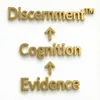
This article by Greg Twemlow argues that the true threat of Artificial Intelligence is not external displacement, but the internal erosion of human cognitive capacity. He suggests that users must move beyond mere acceleration and instead adopt a harmonic plan that treats work as a composition. To maintain human sovereignty, Twemlow introduces the Context & Critique Rule, a discipline that uses mandatory friction to prevent the creation of "slop" or shallow, automated output. By slowing down to provide deep context and applying rigorous critique, individuals can ensure their thinking remains resonant and authored rather than disappearing into the machine's efficiency. Ultimately, the text encourages a transition from a linear mindset to one that values discernment, balance, and the unique rhythms of human thought. Read the article.About the Author - Greg Twemlow writes and teaches at the intersection of technology, education, and human judgment. He works with educators and businesses to make AI explainable and assessable in classrooms and boardrooms — to ensure AI users show their process and own their decisions. His cognition protocol, the Context & Critique Rule™, is built on a three-step process: Evidence → Cognition → Discernment — a bridge from what’s scattered to what’s chosen. Context & Critique → Accountable AI™. © 2025 Greg Twemlow. “Context & Critique → Accountable AI” and “Context & Critique Rule” are unregistered trademarks (™).
Podzilla Summary coming soon
Sign up to get notified when the full AI-powered summary is ready.
Free forever for up to 3 podcasts. No credit card required.
Listen to This Episode
More from Evidence → Cognition → Discernment️ - Your Pathway to AI Leadership
The Pragmatist’s Guide to the Next Human Epoch

Hollowing of the Human Abstraction Stack

Reclaiming Cognition from the Slop Firehose

Teenagers- Explore Before You Decide
Get summaries like this every morning.
Free AI-powered recaps of Evidence → Cognition → Discernment️ - Your Pathway to AI Leadership and your other favorite podcasts, delivered to your inbox.
Free forever for up to 3 podcasts. No credit card required.