Free Daily Podcast Summary
Economics Explained: Daily Summaries Delivered
by Economics Explained
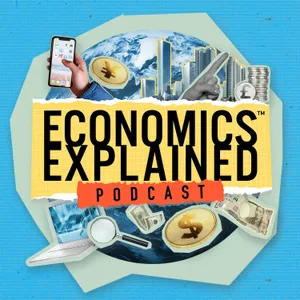
On Economics Explained, we take a look at interesting countries, policies, and decisions from the point of view of an economist. The world is an interesting place and we hope to uncover some of this intrigue in our short, informative podcasts.
Latest Episodes
The most recent episodes — sign up to get AI-powered summaries of each one.
- 4 days ago22 min
Uruguay Has No Resources, But They're Rich
📫 8,500+ read our free newsletter that has weekly original stories Sign up: → https://economics-explained-tv-program.beehiiv.com/ Learn more about your ad choices. Visit megaphone.fm/adchoices
- 6 days ago19 min
The Iran War Looks Very Different from Europe
📫 8,500+ read our free newsletter that has weekly original stories Sign up: → https://economics-explained-tv-program.beehiiv.com/ Learn more about your ad choices. Visit megaphone.fm/adchoices
- 1 weeks ago24 min
Did Pensions Destroy France?
📫 8,500+ read our free newsletter that has weekly original stories Sign up: → https://economics-explained-tv-program.beehiiv.com/ Learn more about your ad choices. Visit megaphone.fm/adchoices
- 2 weeks ago30 min
What Is The Net Worth Of The World
📫 8,500+ read our free newsletter that has weekly original stories Sign up: → https://economics-explained-tv-program.beehiiv.com/ Learn more about your ad choices. Visit megaphone.fm/adchoices
- 2 weeks ago16 min
Iran's Economy Was Collapsing … And Then The War Started
📫 8,500+ read our free newsletter that has weekly original stories Sign up: → https://economics-explained-tv-program.beehiiv.com/ Learn more about your ad choices. Visit megaphone.fm/adchoices
- 3 weeks ago16 min
Where Has Venezuela's Oil Gone?
📫 8,500+ read our free newsletter that has weekly original stories Sign up: → https://economics-explained-tv-program.beehiiv.com/ Learn more about your ad choices. Visit megaphone.fm/adchoices
- 3 weeks ago21 min
Dubai Was An Economic Miracle, Then They Got Bombed
📫 8,500+ read our free newsletter that has weekly original stories Sign up: → https://economics-explained-tv-program.beehiiv.com/ Learn more about your ad choices. Visit megaphone.fm/adchoices
- Aug 19, 202621 min
The End Game of U.K Economics
📫 8,500+ read our free newsletter that has weekly original stories Sign up: → https://economics-explained-tv-program.beehiiv.com/ Learn more about your ad choices. Visit megaphone.fm/adchoices
Get Economics Explained summaries in your inbox
Free AI-powered daily recaps. Key takeaways, quotes, and mentions — in a 5-minute read.
Get Free Summaries →Free forever for up to 3 podcasts. No credit card required.
You Might Also Like
Listeners also like.

It's The Economy
A weekly breakdown of economic concepts and their real-world impact, explained by experts in short, accessible episodes.
Economist Podcasts
Daily global news analysis from correspondents on major international stories.

Planet Money Summer School
A crash course in economics that teaches fundamental concepts through real-world examples in everyday life.

The Intelligence from The Economist
Global news and analysis on politics, business, and culture from The Economist’s correspondents, with weekday stories and a weekend deep-dive.
Planet Money
Explains how economic forces influence everyday life and global events through storytelling and deep dives into surprising topics.
Optimist Economy
Economists discuss U.S. economic challenges and practical solutions to improve outcomes for workers, retirees, and aspiring Americans.
Platypus Economics with Justin Wolfers
Economics applied to global events and daily life, explained clearly and engagingly.

EconTalk
Long-form conversations on economics, philosophy, history, and human behavior with experts from diverse fields.

Here's Why
Explains a single news story in minutes with expert analysis from Bloomberg.
The Pay Check
A journalist and team of reporters investigate how the pandemic unexpectedly reshaped wealth inequality across seven countries.
50 Things That Made the Modern Economy
Explores the pivotal inventions, ideas, and innovations that shaped the modern economy.
The Indicator from Planet Money
A daily economics podcast offering short, accessible insights into money, work, and business.
About Economics Explained
On Economics Explained, we take a look at interesting countries, policies, and decisions from the point of view of an economist. The world is an interesting place and we hope to uncover some of this intrigue in our short, informative podcasts.
Customized Recaps
AI-powered recaps with compact key takeaways, quotes, and insights.
Straight to Your Inbox
Get key takeaways from Economics Explained in a 5-minute read.
Save Hours Every Week
Stay current on your favorite podcasts without falling behind.
Frequently Asked Questions
What is Podzilla's Economics Explained daily summary?
It's a free AI-powered email that summarizes new episodes of Economics Explained as soon as they're published. You get the key takeaways, notable quotes, and links & mentions — all in a quick read.
How does the Economics Explained podcast summary work?
When a new episode drops, our AI transcribes and analyzes it, then generates a personalized summary tailored to your interests and profession. It's delivered to your inbox every morning.
Is this an official Economics Explained product?
No. Podzilla is an independent service that summarizes publicly available podcast content. We're not affiliated with or endorsed by Economics Explained.
Can I get summaries of other podcasts too?
Absolutely! The free plan covers up to 3 podcasts. Upgrade to Pro for 15, or Premium for 50. Browse our full catalog at /podcasts.
How often does Economics Explained release new episodes?
Economics Explained publishes biweekly. Our AI generates a summary within hours of each new episode.
What topics does Economics Explained cover?
Economics Explained covers topics including Science, Business, Documentary, Culture, Society & Culture, Social Sciences. Our AI identifies the specific themes in each episode and highlights what matters most to you.
Start getting Economics Explained summaries tomorrow morning.
Free forever for up to 3 podcasts. No credit card required.
Free forever for up to 3 podcasts. No credit card required.