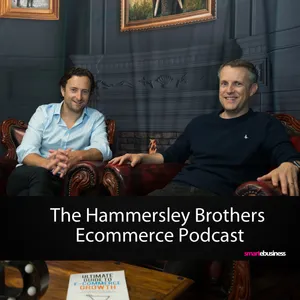
Free Daily Podcast Summary
Ecommerce: The Hammersley Brothers Ecommerce Podcast: Daily Summaries Delivered
by The Hammersley Brothers
The Hammersley Brothers Ecommerce Podcast By Mark & Ian Hammersley
Latest Episodes
The most recent episodes — sign up to get AI-powered summaries of each one.
- 2 days ago29 min
The Ecommerce Scaling Test - What Happens When You Get Punched In The Face Harder
You increase your ad spend. Your ROAS drops. So you reduce the budget again. Then, a few months later, you try exactly the same thing and get exactly the same result. In this episode, Mark and Ian Hammersley break down what they call the Ecommerce Scaling Test, a way of understanding what actually happens inside your business when you try to spend more on advertising. The important question is not simple: Why did ROAS drop? It is: Where did the model break? Mark and Ian compare scaling an ecommerce business to opening a second physical store. Your first store might work brilliantly. But when you open the next one, you are dealing with different customers, different competition, and a different environment. Increasing your advertising budget works in much the same way. You are moving into a new layer of traffic. Those customers may cost more to reach, know less about your brand, convert differently and require more convincing before they buy. Instead of looking at ROAS alone, Mark and Ian explain how to break the scaling attempt apart and look at what actually changed. They discuss: •Why does ROAS often drop when you increase ad spend? •The Hammersley Brothers Scaling Test •Why scaling is like opening another retail store •What happens to the cost per click as you spend more? •How Meta frequency can reveal wasted spend •How Google brand traffic can distort scaling •Why add-to-basket rate matters •Why average order value can fall as you scale •How email should support new customer acquisition •Why stocks can become the hidden scaling bottleneck •How to find the part of your funnel that breaks first •Why some products scale even when the overall account does not •When to move budget between Google and Meta •How to prepare your ecommerce business before attempting to scale The goal is not to increase spending and hope it works. It is to increase spending, understand what breaks, fix it, and test again. That is how businesses gradually move through new layers of customers and build something that can genuinely scale. Subscribe for more practical ecommerce strategy, Google Ads, Meta Ads, Shopify, and business growth discussions from the Hammersley Brothers. P.S. Whenever you’re ready... here are 3 ways Ian and I can help you grow your ecommerce business: 1. Talk to us. Book a call with us and let's talk about accelerating your growth - https://go.hammersleybrothers.com/apply-now/ 2. Grab a copy of our book - https://gohigh.hammersleybrothers.com/get-the-book 3. Follow the Hammersley Brothers on Instagram and connect with e-commerce owners who are scaling too - https://www.instagram.com/hammersleybrothers
- 1 weeks ago29 min
The Image Revolution in Ecommerce: Why Product Photography Matters More Than Ever
Images have always mattered in ecommerce, but right now their importance is changing dramatically. In this episode, Mark and Ian Hammersley discuss the revolution happening in ecommerce imagery, why product photography can have such a major impact on performance, and how AI is completely changing what brands are now able to create. For visually driven ecommerce businesses such as fashion, homeware and jewelry, the image does much of the selling. It affects whether someone clicks on an ad, whether they explore a product, whether they trust the brand and ultimately, whether they buy. Mark and Ian discuss what they have seen in their own ecommerce businesses, including products dramatically improving after their photography was changed. They also look back at how difficult ecommerce photography used to be. Professional shoots meant photographers, models, studios, locations, styling, lighting, editing, and significant organisation. Getting everything exactly right could take weeks or months. AI is changing that. Brands can now create, adjust and test imagery at a speed that would previously have been impossible. But simply having access to AI does not mean the images will be good. Mark and Ian explain why creative direction still matters, why you need to understand what good looks like, and why poorly executed AI imagery can actually make a brand look less trustworthy. They also discuss: Why imagery is so important in ecommerce How product photography affects conversion rate Why fashion and homeware are particularly image-driven How AI is revolutionising product photography Why great photography was previously a competitive advantage How AI is removing barriers for smaller ecommerce brands Why creative direction is still essential How images influence Meta Ads and Google Shopping Why simple product imagery can outperform complicated creative How to test product images and identify winning products Why some lifestyle imagery can actually make products harder to understand How ecommerce brands can use AI without making their site look artificial If your products are bought because of how they look, imagery may now be one of the most important areas of your ecommerce strategy. Subscribe for more practical ecommerce strategy, Meta Ads, Google Ads, AI, Shopify, and business growth discussions from the Hammersley Brothers. #Ecommerce #ProductPhotography #AI P.S. Whenever you’re ready... here are 3 ways Ian and I can help you grow your ecommerce business: 1. Talk to us. Book a call with us and let's talk about accelerating your growth - https://go.hammersleybrothers.com/apply-now/ 2. Grab a copy of our book - https://gohigh.hammersleybrothers.com/get-the-book 3. Follow the Hammersley Brothers on Instagram and connect with e-commerce owners who are scaling too - https://www.instagram.com/hammersleybrothers
- 2 weeks ago51 min
How We Built the Hammersley Brothers Ecommerce Model
Where did the Hammersley Brothers Model actually come from? In this episode, Mark and Ian Hammersley go back to the beginning and explain how their ecommerce model was built, the problems they were trying to solve, and the lessons that shaped the way they approach ecommerce today. The story starts in 2008, when Mark and Ian were working with a group of ecommerce businesses during the financial crisis. Some were growing quickly. Some were stuck. Others were failing. The interesting part was that the difference was not always obvious from the outside. Successful businesses do not necessarily have better websites, better advertising or better teams. So Mark and Ian started looking deeper. They wanted to understand what the businesses that successfully scaled had in common and what was missing from the ones that could not grow. That process eventually became the foundation of the Hammersley Brothers Model. In this podcast, they discuss how that model developed over time, how years of working with ecommerce businesses changed and refined it, and why the same core principles continue to shape how they approach growth today. They also explore: How the Hammersley Brothers Model originally started What they learned from ecommerce businesses during the 2008 financial crisis Why did some businesses scaled while others stayed stuck? How the model developed from real ecommerce experience Why the fundamentals matter more than individual tactics The role of math, psychology and management Why different ecommerce businesses need different strategies How ecommerce has changed since the model was first developed Why cheap traffic and better technology are no longer enough How the model is still used to identify opportunities for profitable growth This episode is a behind-the-scenes look at where the Hammersley Brothers Model came from and how nearly two decades of ecommerce experience helped turn it into the framework they use today. Subscribe for more ecommerce strategy, scaling advice, Google Ads, Meta Ads, and practical business discussions from the Hammersley Brothers. P.S. Whenever you’re ready... here are 3 ways Ian and I can help you grow your ecommerce business: 1. Talk to us. Book a call with us and let's talk about accelerating your growth - https://go.hammersleybrothers.com/apply-now/ 2. Grab a copy of our book - https://gohigh.hammersleybrothers.com/get-the-book 3. Follow the Hammersley Brothers on Instagram and connect with e-commerce owners who are scaling too - https://www.instagram.com/hammersleybrothers
- 3 weeks ago29 min
Ecommerce: Killer Email Sequences for Black Friday
If your Black Friday emails start the week of Black Friday, you've already lost sales to the brands that started weeks earlier. In this episode, Ian and I share the email sequences we actually use for Black Friday: when to start, how often to send, and why sending more emails makes you more money even if you hate getting them yourself. If you sell online and want this to be your biggest November yet, listen before you plan a single email. #BlackFriday #EmailMarketing #Ecommerce P.S. Whenever you’re ready... here are 3 ways Ian and I can help you grow your ecommerce business: 1. Talk to us. Book a call with us and let's talk about accelerating your growth - https://go.hammersleybrothers.com/apply-now/ 2. Grab a copy of our book - https://gohigh.hammersleybrothers.com/get-the-book 3. Follow the Hammersley Brothers on Instagram and connect with e-commerce owners who are scaling too - https://www.instagram.com/hammersleybrothers
- Oct 8, 202637 min
The 5 Ecommerce Businesses Ranked From Easiest to Hardest to Scale
Not all ecommerce businesses are built the same, and some are dramatically easier to scale than others. In this episode, Mark and Ian Hammersley break down the five different types of ecommerce businesses and rank them from easiest to hardest to scale. The five types are: Compounders Volume Retailers Need-Driven Suppliers Seasonal Specialists High Ticket One-Timers Each model behaves completely differently. A strategy that works brilliantly for a supplement brand could be disastrous for a furniture company. A business selling spare parts needs a completely different advertising, stock, and customer-acquisition strategy than a fashion retailer. Mark and Ian explain why understanding your ecommerce type changes the numbers you should look at, the ROAS you can afford, how aggressively you can acquire customers, how much stock you need, and, ultimately, how quickly the business can grow. They also discuss why some of the least exciting ecommerce businesses can quietly create enormous wealth. Need-driven businesses selling things like replacement parts, shelving and specialist products can sometimes dominate markets because competition is lower and the customer already knows exactly what problem they need solving. Meanwhile, Compounders such as supplements, skincare, and consumable products can scale incredibly quickly because repeat purchasing creates a high lifetime customer value. But they can also be brutally competitive and disappear almost as quickly as they grow. The episode covers: The five ecommerce business models Which ecommerce model is easiest to scale? Why repeat purchase businesses can grow so quickly Why boring ecommerce businesses can be incredibly profitable Customer lifetime value and repeat purchasing New customer acquisition ROAS and advertising strategy Margins and scalability Stock forecasting and cash flow Seasonal ecommerce businesses High-ticket ecommerce Why one ecommerce strategy does not work for every business If you're trying to scale an ecommerce brand, understanding which type of business you actually own could completely change how you approach growth. Subscribe for more practical ecommerce strategy, Google Ads, Meta Ads, Shopify, and business growth discussions from the Hammersley Brothers. #Ecommerce #EcommerceBusiness #EcommerceGrowth P.S. Whenever you’re ready... here are 3 ways Ian and I can help you grow your ecommerce business: 1. Talk to us. Book a call with us and let's talk about accelerating your growth - https://go.hammersleybrothers.com/apply-now/ 2. Grab a copy of our book - https://gohigh.hammersleybrothers.com/get-the-book 3. Follow the Hammersley Brothers on Instagram and connect with e-commerce owners who are scaling too - https://www.instagram.com/hammersleybrothers
- Oct 1, 202625 min
Your ROAS Looks Amazing... So Why Aren’t You Making More Money?
Your Google and Meta ROAS looks great. Ad spend is increasing. The platforms are telling you everything is working. So why isn’t the business actually growing? In this episode, Mark and Ian Hammersley unpack one of the most common problems they see in ecommerce businesses: brands dramatically increasing their advertising spend while recruiting the same number, or even fewer, new customers. They explain why a high ROAS inside Google or Meta can give you a completely misleading picture of performance, particularly when existing customers, brand searches and attribution are inflating the numbers. The conversation covers how to step back from the advertising dashboards and answer the question that actually matters: When we put more money into advertising, did we get more money and more new customers out? Mark and Ian also break down the ecommerce advertising S curve, where increasing spend initially drives growth before eventually reaching a point where putting more money into the account stops producing meaningful additional revenue. And when you hit that limit, the answer is not always better ads. Sometimes you need to improve the business itself. They discuss: • Why a high ROAS does not automatically mean your ads are working • How Meta can attribute existing customer sales to advertising • Why one day view attribution can distort performance • How Google brand traffic can inflate ROAS • Why new customer revenue matters more than platform ROAS • How to identify when an ad account has reached its scaling limit • The ecommerce advertising S curve • Why simply increasing your budget eventually stops working • How conversion rate, AOV and lifetime customer value affect how far you can scale • Why agencies can sometimes show you the numbers you want to see instead of the numbers you need to see If you run an ecommerce business and keep increasing your advertising budget without seeing the growth you expected, this episode could help explain exactly what is going wrong. Subscribe for more ecommerce strategy, Google Ads, Meta Ads, Shopify and business growth discussions from the Hammersley Brothers. #Ecommerce #ROAS #GoogleAds P.S. Whenever you’re ready... here are 3 ways Ian and I can help you grow your ecommerce business: 1. Talk to us. Book a call with us and let's talk about accelerating your growth - https://go.hammersleybrothers.com/apply-now/ 2. Grab a copy of our book - https://gohigh.hammersleybrothers.com/get-the-book 3. Follow the Hammersley Brothers on Instagram and connect with e-commerce owners who are scaling too - https://www.instagram.com/hammersleybrothers
- Sep 25, 20261h 7m
Black Friday Isn’t One Day: Our Full Q4 Ecommerce Playbook
Most ecommerce businesses think about Black Friday as a day or a weekend. We think about it as an entire trading period from Halloween through to January. In this episode, Ian Hammersley breaks down how we actually approach the biggest ecommerce trading period of the year, including when to start, how long to run your offers, how aggressively to email, what to do with Google and Meta, and how to make the most of increased demand without destroying your margins or running out of stock. We cover the full Q4 rhythm, starting with Halloween and moving through Better Than Black Friday, Black Friday Week, Cyber Week, Christmas, Boxing Day and the January sales. Ian also explains why ecommerce brands often start too late, why your email database becomes one of your most valuable assets during peak, how to decide how hard you can push based on stock and ROAS, and why merchandising can have a huge impact on what actually sells. Topics include: Black Friday timing and strategy How early you should start Offer architecture Email and SMS frequency Growing your email list before peak New customer ROAS and CAC Stock planning and forecasting Shopify merchandising Black Friday Week and Cyber Week Christmas, Boxing Day and January sales How to trade against daily revenue targets When to push harder and when to hold back If you run an ecommerce business, this episode gives you a practical framework for approaching the most important trading period of the year. Subscribe for more ecommerce strategy, Google Ads, Meta Ads, Shopify, email marketing and business growth discussions from the Hammersley Brothers. #Ecommerce #BlackFriday #Shopify P.S. Whenever you’re ready... here are 3 ways Ian and I can help you grow your ecommerce business: 1. Talk to us. Book a call with us and let's talk about accelerating your growth - https://go.hammersleybrothers.com/apply-now/ 2. Grab a copy of our book - https://gohigh.hammersleybrothers.com/get-the-book 3. Follow the Hammersley Brothers on Instagram and connect with e-commerce owners who are scaling too - https://www.instagram.com/hammersleybrothers
- Sep 19, 202621 min
The Shopify Mistake That Was Costing Us Sales
Your bestsellers can look available while the sizes your customers want are sold out. We made that mistake in our own Shopify bedding business, with replacement products available further down the collection pages. Want help identifying what is holding back growth in your ecommerce business? Apply to work with the Hammersley Brothers: https://go.hammersleybrothers.com/apply-now/?utm_source=youtube&utm_medium=video&utm_campaign=shopify_stock_mistake&utm_content=description In this episode, Mark and Ian explain what happened and discuss the stock, merchandising and advertising decisions to review before Black Friday and Christmas trading. We cover why selling out is not always a success, when spending more on advertising makes little sense, and how to investigate products you could have sold more of last year. We also discuss avoiding panic hires, helping your ecommerce team understand what matters, and using AI to analyse business data without handing over the decisions. Subscribe for practical ecommerce conversations about sales, margins and profitable growth. P.S. Whenever you’re ready... here are 3 ways Ian and I can help you grow your ecommerce business: 1. Talk to us. Book a call with us and let's talk about accelerating your growth - https://go.hammersleybrothers.com/apply-now/ 2. Grab a copy of our book - https://gohigh.hammersleybrothers.com/get-the-book 3. Follow the Hammersley Brothers on Instagram and connect with e-commerce owners who are scaling too - https://www.instagram.com/hammersleybrothers
Get Ecommerce: The Hammersley Brothers Ecommerce Podcast summaries in your inbox
Free AI-powered daily recaps. Key takeaways, quotes, and mentions — in a 5-minute read.
Get Free Summaries →Free forever for up to 3 podcasts. No credit card required.
You Might Also Like
Listeners also like.
Book Marketing Show Podcast with Dave Chesson
Dave Chesson, Founder of Kindlepreneur and KDP Rocket

Building a Furniture Brand with Ethan Abramson
Furniture makers share their business experiences, pricing, and lessons learned while building woodworking companies.

SEO for Established Entrepreneurs: The Basic B
Brittany Herzberg | SEO Coach & Lead Gen Strategist

Marketing Made Simple
Strategies for crafting clear marketing messages that connect with customers and grow businesses.

Everyone Hates Marketers | No-BS Marketing & Brand Strategy Podcast
A marketing podcast offering practical insights on branding, strategy, and customer research from industry professionals.

Elementor Talks
Elementor Page Builder

Go Social Podcast with Josh Hightower
Podgo

Right About Now - Legendary Business Advice
Raw business insights from founders and industry leaders, revealing real wins, failures, and actionable strategies without the fluff.

HBR IdeaCast
Features leading thinkers in business and management discussing key ideas and trends.

BiggerPockets Business Podcast
Real entrepreneurs share practical advice on starting, growing, and selling businesses, covering hiring, marketing, and raising capital.

So, Get This
iHeartPodcasts and Bubbler

EntreLeadership
Leadership strategies and business growth lessons from Dave Ramsey and John Felkins for scaling a multimillion-dollar company.
About Ecommerce: The Hammersley Brothers Ecommerce Podcast
The Hammersley Brothers Ecommerce Podcast By Mark & Ian Hammersley
Customized Recaps
AI-powered recaps with compact key takeaways, quotes, and insights.
Straight to Your Inbox
Get key takeaways from Ecommerce: The Hammersley Brothers Ecommerce Podcast in a 5-minute read.
Save Hours Every Week
Stay current on your favorite podcasts without falling behind.
Frequently Asked Questions
What is Podzilla's Ecommerce: The Hammersley Brothers Ecommerce Podcast daily summary?
It's a free AI-powered email that summarizes new episodes of Ecommerce: The Hammersley Brothers Ecommerce Podcast as soon as they're published. You get the key takeaways, notable quotes, and links & mentions — all in a quick read.
How does the Ecommerce: The Hammersley Brothers Ecommerce Podcast podcast summary work?
When a new episode drops, our AI transcribes and analyzes it, then generates a personalized summary tailored to your interests and profession. It's delivered to your inbox every morning.
Is this an official Ecommerce: The Hammersley Brothers Ecommerce Podcast product?
No. Podzilla is an independent service that summarizes publicly available podcast content. We're not affiliated with or endorsed by The Hammersley Brothers.
Can I get summaries of other podcasts too?
Absolutely! The free plan covers up to 3 podcasts, any in the catalog. Basic raises that to 15, Pro to 40 and Max to 100. Browse our full catalog at /podcasts.
How often does Ecommerce: The Hammersley Brothers Ecommerce Podcast release new episodes?
Ecommerce: The Hammersley Brothers Ecommerce Podcast publishes weekly. Our AI generates a summary within hours of each new episode.
What topics does Ecommerce: The Hammersley Brothers Ecommerce Podcast cover?
Ecommerce: The Hammersley Brothers Ecommerce Podcast covers topics including Business. Our AI identifies the specific themes in each episode and highlights what matters most to you.
Start getting Ecommerce: The Hammersley Brothers Ecommerce Podcast summaries tomorrow morning.
Free forever for up to 3 podcasts. No credit card required.
Free forever for up to 3 podcasts. No credit card required.