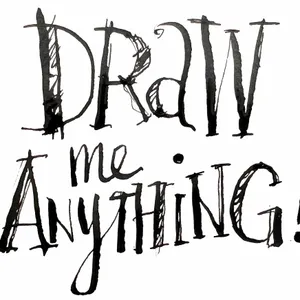
Free Daily Podcast Summary
Draw Me Anything with Jason Chatfield: Daily Summaries Delivered
by Jason Chatfield
Live drawing videos with the most interesting creative minds in the world, hosted by Manhattan-based New Yorker cartoonist and comedian Jason Chatfield. www.newyorkcartoons.com
Latest Episodes
The most recent episodes — sign up to get AI-powered summaries of each one.
- 5 days ago3 min
DMA#60: Disenfranchised Clowns, Election Night Comfort Food, and the Trump Ocean Shark.
This is a free preview of a paid episode. To hear more, visit www.newyorkcartoons.comJessie Kanelos Weiner came back on Draw Me Anything this morning. That makes her my only three-time guest, which I announced live and then immediately wondered aloud whether we still had anything to talk about. (We did. We talked for 45 minutes and I never once got to the drawing I’d prepared.)(Watch the full replay above.)Jessie is an illustrator, an author, a Substacker and a stand-up comedian, and she does all of it from Paris, where she has lived for 18 years. She writes La Vie en Watercolor, she wrote the book Thinking in Watercolor, she runs painting retreats, she teaches at an art school, and she has a kid who fences.The UN of audiences…Last month, in Paris, Jessie very kindly got me a spot at Coucou Comedy, one of the English-speaking clubs over there. We got coffee the morning of the show and I was, by my own admission, terrified. Not of the audience. Of the faux pas. I don’t know the minutiae of a Paris room.Jessie says the thing that unites that room is wanting to hear someone talk badly about the French. The great unifier.She also says Paris audiences are more generous than American ones. She performed in the States for the first time last year and found you really have to beg people for their attention. In Paris, a lot of them have never seen live stand-up before and don’t know what the rules are. There are no rules yet. There is, however, a strong influence from French clown culture, which has apparently produced a number of what she called disenfranchised clowns who have found their way to stand-up.I pointed out that that is just what comedians are.Lean into the fun…Jessie was going through her mum’s old papers and found a Christmas letter from when she was four or five. The recap of her year was: Jessie likes to cut up things and paste them together.
- 3 weeks ago35 min
You’re Not a Real Parent Until... (It’s Out Today!)
Hello again, friend!We did it. Scott Dooley and I birthed a book!You’re Not a Real Parent Until... is out today. It’s pub day! (Publication day, for those of you not in the biz. For those of you in the biz, my condolences.)Earlier today, Scott and I went live here on Substack for our official virtual launch. Thank you to everyone who tuned in live and shared your parenting experiences! (Watch the full replay above.)First, the winners... We promised to give away one free copy of the book. Then, mid-show, without checking with Scott, I gave away two more.Congratulations to: Darlene Campbell, Rhonda, and TELMC If that’s you, reply to this email with your postal address (or a PO box, whatever you’re comfortable sharing with two strange men who draw children wearing underwear on their heads), and we’ll get your copy in the mail.Everyone else: you can buy it right now at yourenotareal.com!The experiment.Normally, when you put a book out, you do press. Podcasts, TV, radio, guest articles, reviews. We’ve done none of that.Instead, we’re trying to sell this book using only Substack. No ad spend, no publicist, no begging an algorithm for mercy.This isn’t a “help me become a New York Times bestseller” thing. (Those are GoFundMes with extra steps.) It’s that we’ve talked to a lot of friends with books out, some with huge publishers, some self-publishing, some with a million followers, and none of them has found a marketing method that reliably works. Worse, the second they post a link to something they’re selling, the platforms quietly bury it.Substack is different. You opted in. You signed up to hear from me about the things I make. So we’re going to see whether a couple of lower-to-middle-rung cartoon-makers can sell a book by talking directly to the humans who actually want to hear from them, and showing you how we made it.We’ll document all of it here, so if you’ve got a book (or anything else) to sell, you’ll see what works and what doesn’t. (We should point out that we have not cleared this with our publishers. This experiment may be career-limiting.)The book follows parents from babies to toddlers to tweens to teens to “all grown up”. Every page is a gag that starts with You’re not a real parent until... and a cartoon underneath.We pump three or four hundred punchlines into a spreadsheet, all with the same setup. Then we hash them out over a series of meetings at bars around Manhattan: the wording, the image, which ones live. (One of the rods for our backs: not starting every single punchline with the word “you”.)Every drawing was done by hand. Pencil, dip pen and ink, then colour. For the first time in my life I used a colourist, the brilliant Nahia Mouhica, and I’ll never go back. We printed it on matte paper so it feels like an art book rather than something you’d find in a dentist’s waiting room.Scott is a parent. His son Leo is two, and the book is dedicated to him. (Technically, Scott says, it was for Messi. He was going through a whole Barcelona thing.) I am not a parent. So we built out families. Divorcees, same-sex couples, mixed-race couples, widows and widowers, all with names and kids of their own, so the gags could run as stories across the book. There’s even a death in the middle. Scott is the guy who dies. (Why not?)Our favourite image in the book is from that storyline:A couple of gags got gentle pushback from the publisher. One was, in the technical language of the industry, “a bit nipply”. Another was “This too shall pass”, which has been said in reference to something a child has swallowed. That one made it in. (You’re welcome.)The whole point of the book, underneath the poo jokes, is that there’s no single right way to do this. Everyone’s figuring it out as they go, and you don’t have to be perfect. As Scott pointed out, the people most outspoken about bad parenting usually don’t have children. It’s like being told how to stack your dishwasher by someone who doesn’t own a dishwasher. (I would like to reiterate: I am not a parent.)From the chat...We asked you to finish the sentence You’re not a real parent until... and you delivered:Rhonda (three kids, two grandkids): ...you’re perfectly fine with your three-year-old’s fashion choice of undies on her head, as long as it keeps her ears warm.This sent us do
- Oct 10, 20260 min
DMA#59: Michael Maslin - Nearly 50 years at The New Yorker, AI-Generated Cartoons & King Kong drawn upside down
This is a free preview of a paid episode. To hear more, visit www.newyorkcartoons.comMichael Maslin has been in The New Yorker for 49 years…He has catalogued every cartoonist who ever drew for the magazine, and wanted me to know that, off camera, he is surrounded by “a lot more books.” (Not his books. Just books. A man after my own heart.)Thank you to everyone who tuned in and left comments during our live stream— a reminder: the live streams are, and will always be, free. If you missed it live, the replay is above. And the recap is written out below. Here’s what happened, (with the links down the bottom…)(This takes me a long while... so I paywall this part. I hope you understand.)First, a correction to my own promo post (oops). I told you the magazine didn’t let him draw his first sale. Wrong. He did draw it. It went in with a regular batch, Lee Lorenz saw the drawing, and then came the note: “We’re just taking the idea.” Whitney Darrow Jr. would draw it instead…“You want your foot in the door, but this wasn’t the foot in the door. This is a toe.”He didn’t even tell his friends. Too confusing to explain. These days, people get a credit line beside the artist; back then it was “kind of hush-hush.”The cartoon, you’ll remember, was a fortune teller telling a man, “Nothing will ever happen to you.” Decades later, Bob Mankoff asked if Michael still had his own drawing of it, and ran it online. “So it got its day in the sun.”His first cartoon under his own name, in April 1978, was a man at a deli counter: “I’ll have a quarter pound of your most reliable cheese.” It would not have been his pick. (Same, Michael. They never take the one you’d pick. Mine was “Vlad The Employer ffs) But he said, “I was extremely glad, of course… that my life changed.”Michael told me he submitted for something like six or seven years before anything sold. His very first batch was drawings with no captions at all, nothing to do with cartoons, sent in because a friend told him to. It came back with the standard rejection slip, and someone at the magazine had pencilled a note along the bottom: next time, send an SASE.He didn’t know what an SASE was. He was a kid. “But the next time you send in is what I focused on.”They haven’t stopped hearing from him since. They created a monster.He moved to New York for one reason: to get into The New Yorker. He was sending 50 or 60 ideas a week on index cards. (He still has the index cards. Of course he does. He’s Michael friggin’ Maslin.) After many, many… many months of nothing, he got a phone appointment with Lee Lorenz and asked what he was doing wrong.“You’re just not right for the magazine.”End of discussion. He thanked Lee for his time and hung up.
- Sep 29, 202653 min
DMA #58: Paul Noth... He Tells It Like It Is
Thursday, midday. Paul Noth is in Milwaukee, where he moved back after 20 years split between the Upper East Side and the Princeton area, and where he now has, as he put it while wandering to another room mid-stream to chase better WiFi, multiple rooms. (We get it, Paul. You don’t live in Manhattan anymore.)First order of business: it’s Noth, rhymes with both. He’s been letting people say “Nawth” for decades out of Midwestern politeness. Gosh. Consider yourselves corrected on his behalf. If you missed it live, the replay is above. Here’s what happened, with every link we promised on air down the bottom…Pre-orderers get a signed bookplate posted to them! Just shoot him an email at paul@paulnoth.com with your mailing address and your desired inscription. (A proof-of-purchase screenshot is also much appreciated.)You know Paul’s most famous cartoon even if you don’t know his name: the flock of sheep gazing up at a billboard of a wolf, captioned “He tells it like it is.” It’s among the most shared cartoons in the magazine’s history; it’s now the cover of his book, and Paul has mixed feelings about its immortality. “It should be a historical document by now,. he said, a little wearily. Here’s the detail that should be laminated and handed to every rejected cartoonist on earth: The New Yorker rejected it the first time he submitted it. So did they reject his other most popular cartoons, first time ‘round. Paul resubmits. He always has, fortified by a story he’d heard about Saul Steinberg, who supposedly used to take his rejected cartoons, put them straight into a fresh envelope, and post them back to the magazine. (The balls on this guy! I love him.)Paul sold to The New Yorker in 2004. The cartoon: a White House press secretary holding a torch under his chin like a kid telling a ghost story, while a reporter asks how he responds to critics who say he’s just trying to scare people. He’d worked on that batch for the best part of 2 months under the wing of Matt Diffee, whom he’d met at the Rejection Show and who walked the batch in to Bob Mankoff.At Paul’s first look meeting, surrounded by his heroes (Gahan Wilson among them), Mankoff greeted the new arrival with two sentences that became his entire art education. The first: “Don’t get cocky.” The second: “I want to see 10 a week from you, even if they’re s**t.” Paul has done 10 a week ever since, through every all-nighter, every TV job, every book. “It was my art school in a lot of ways,” he said. Like me, he’d never been to one. He’d never had art in public before. He learned to draw in public, 10 at a time, and eventually stripped away his early etching-style hatch marks when he realised the truth every gag cartoonist arrives at eventually: “The best style for me was the best execution of the joke.” Or as Lee Lorenz put it in The Art of the New Yorker, which we both worship: a cartoon is beautiful the way a sailboat is beautiful. It has exactly what it needs to function, and nothing else.Mankoff gave me my version of that lecture too, around 2014, back when I wore a suit jacket to the offices like I was auditioning for a bank. He looked at my batch of borrowed styles and asked what I think about when I do my hair in the morning. “Try and think about your drawings as your hairdo. It’s a style you’ve arrived at. You’re not trying to copy Johnny Depp.” This from a man with famously luxurious amounts of hair. It worked, though. It worked on both of us.The Pale Force story is even better than I’d hoped. Jim Gaffigan, it turns out, is Paul’s brother-in-law; he’d married Paul’s sister a year or two before. Paul, not yet a New Yorker cartoonist, pitched Jim an animated bit for Late Night with Conan O’Brien, modelled on Steve Martin turning up to Letterman with something weird in his back pocket. When the head writer asked whether he’d done animation before, Paul said yes. (He had made flip books, so… technically not a lie?)The budget was roughly what a guest gets paid for sitting on the couch, which is not a number that produces animation, and his first delivery came back with the note that a 16-megabyte video file cannot be broadcast on network television. The night the first episode aired, running on no sleep, he watched it freeze for a single millisecond and briefly died. Then it killed, the series got Emmy-nominated, and Paul got a comedy education by osmosis: Robert Smigel, Brian Stack and Demetri Martin down the hall, Conan’s face providing the biggest
- Sep 21, 20261h 6m
DMA #57: The Calligrapher and the Princess
Wednesday, midday… Brian Biggs is alone in his Philadelphia studio, an old garage he describes as a hermit cave, holding his phone in one hand and a pen in the other. I’m at my drawing board doing the same. For the next hour, 90 people watched 2 grown men show each other their doodles.If you missed it live, the replay is above. What follows is what you missed, with links to everything we held up to the camera.Brian has made more than 80 books. The Everything Goes series, Tinyville Town, the New York Times-bestselling Frank Einstein books with Jon Scieszka. So naturally, when he started his Substack, the imposter syndrome turned up anyway. “I had to give myself a break,” he said, “and get past my oh-no ego and just let it happen.”“All I want to do, man, is just draw. I just want to draw. When I was a kid, I got in trouble for drawing and telling stories… and I have to remember that I’m 58 and that’s what I do every day now.The turn came on an exercise bike in his basement, listening to Giuseppe Castellano’s podcast episode with myself and Adam Ming, where Adam Ming said to stop treating Substack as the road to being published and start treating it as being published. “It just was one of those ding moments,” Brian said. He got off the bike and got to work.The work is The Walk, and the story behind it is every author’s recurring nightmare. In 2019, Brian published a picture book with Penguin called The Space Walk: an astronaut, alone in space, who just wants to go outside. It came out, in his words, “to the great yawn of indifference of children’s publishing”, and was out of print within a couple of years.But out of print means the rights come home. So Brian is now turning that orphaned story into a full graphic novel, and serialising every step of it on his Substack: thumbnails, wrong turns, existential wobbles, all of it. “Every stupid thought I’m having about this is going onto my Substack,” he said. The story is already mutinying. “The story has decided it wants to be something bigger than I think I want it to be,” he told me, having informed his wife that morning it might be three 200-page volumes. “I’m 58 years old, man. Do I have a 600-page graphic novel in front of me?”The logic, though, is sound: last time, the book arrived to silence. This time, “at least it’s going to be a thing that there’s an audience built in already following it. And they care about it.” Every page will be hand-lettered, incidentally, because Brian letters the way you’d read it aloud, and he’d rather do that than make a font. He’s seen his hand-lettering redrawn by translators into Hebrew and Chinese, stroke by stroke. “I would love to meet those people one day,” he said, “but I’m afraid they would punch me in the face.”Somewhere in the middle of all this I made him explain the line in his bio about being calligrapher to a princess, and I’m pleased to report it’s all true. Junior year at Parsons, 1988, studying in Paris, he answered a job-board ad to address envelopes for a man in a cravat who threw parties for people like the Rothschilds. Which is how a kid from Texas, whose calligraphy career began with a drugstore Speedball set and the Renaissance Fairs of early-80s Houston, ended up hand-lettering the guest book for Princess Ghislaine de Polignac, whose family had been friends with Marie Antoinette, and who hosted Ronald and Nancy Reagan a few weeks later. Brian was escorted out as the Reagans arrived. He did the work at his apartment drawing table, Enya on the stereo (not sure which album…), his roommate’s Akira comics all over the futon.A year or 2 later, he was waiting tables at a Bennigan’s, telling anyone who’d listen: “I was a calligrapher for a princess for a month.”S**t Brushes and Other Filing SystemsThen I flipped the camera, and we got into the pens, as is my tradition. Highlights of the show-and-tell: his Kuretake brush pens, my Hunt 101, the ink bottle I suction-cup to train tables, and his filing system of labelled coffee cans reading “new brushes”, “good brushes” and (after asking the stream’s permission to swear) “s**t brushes”. He keeps a box labelled “used but might be useful on a rainy day”. He made it in 1994. It’s bloody full. This is a public episode. If you'd like to discuss this with other subscribers or get access to bonus episodes, visit w
- Sep 17, 202610 min
Three Men Talked About Housework for 80 Minutes. On Purpose.
This is a free preview of a paid episode. To hear more, visit www.newyorkcartoons.comOn Wednesday at 8pm, I did something I have never done in 20 years of cartooning: I drew a stork, live, on the internet, while two grown men discussed laundry detergent… (I know. Weird that it took me so long, right?!)Let me back up.I went live on Substack with my co-authors on a book we’re writing about how couples can run a home without slowly startin…
Get Draw Me Anything with Jason Chatfield summaries in your inbox
Free AI-powered daily recaps. Key takeaways, quotes, and mentions — in a 5-minute read.
Get Free Summaries →Free forever for up to 3 podcasts. No credit card required.
You Might Also Like
Listeners also like.
Draftsmen
Art instructors Stan Prokopenko and Marshall Vandruff teach drawing and painting techniques to help listeners improve and pursue art careers.

In the Making
A look at how creators and entrepreneurs use creativity and digital tools to build careers in the evolving content economy.

School of Motion Podcast
Interviews with motion designers, animators, and 3D artists exploring creativity, software techniques, and the business of design.

The Honest Designers Show
A candid look at building a successful creative career, covering client work, personal style, branding, and fulfillment in design.
Parenting is a Joke
Comedians share candid stories about parenting and childhood, exploring the chaos and humor of raising kids while questioning if they’re truly fine.

Humor Me with Robert Smigel and Friends
Comedians help callers rewrite real-life texts for maximum humor, from speeches to dating profiles.

Andy Cohen’s Daddy Diaries Podcast
Andy Cohen shares weekly stories about parenting, reality TV, and his personal life with co-host John Hill.

The Comment Section with Drew Afualo
Pop culture, internet drama, and unfiltered conversations with celebrities and creators, all delivered with sharp humor and wit.

How I AI
A practical guide to using AI tools in work and life, featuring guests who share specific, actionable techniques and workflows.

Fly on the Wall with Dana Carvey and David Spade
Dana Carvey and David Spade talk comedy, impressions, and pop culture with guests and friends.
Let's Talk About Sets!
A playful podcast exploring the science and craft of stand-up comedy, created by comedians in New York City.

ON THE COUCH
Cultural leaders discuss creativity and connection while sitting on John Chamberlain’s iconic foam couches.
About Draw Me Anything with Jason Chatfield
Live drawing videos with the most interesting creative minds in the world, hosted by Manhattan-based New Yorker cartoonist and comedian Jason Chatfield. www.newyorkcartoons.com
Customized Recaps
AI-powered recaps with compact key takeaways, quotes, and insights.
Straight to Your Inbox
Get key takeaways from Draw Me Anything with Jason Chatfield in a 5-minute read.
Save Hours Every Week
Stay current on your favorite podcasts without falling behind.
Frequently Asked Questions
What is Podzilla's Draw Me Anything with Jason Chatfield daily summary?
It's a free AI-powered email that summarizes new episodes of Draw Me Anything with Jason Chatfield as soon as they're published. You get the key takeaways, notable quotes, and links & mentions — all in a quick read.
How does the Draw Me Anything with Jason Chatfield podcast summary work?
When a new episode drops, our AI transcribes and analyzes it, then generates a personalized summary tailored to your interests and profession. It's delivered to your inbox every morning.
Is this an official Draw Me Anything with Jason Chatfield product?
No. Podzilla is an independent service that summarizes publicly available podcast content. We're not affiliated with or endorsed by Jason Chatfield.
Can I get summaries of other podcasts too?
Absolutely! The free plan covers up to 3 podcasts, any in the catalog. Basic raises that to 15, Pro to 40 and Max to 100. Browse our full catalog at /podcasts.
How often does Draw Me Anything with Jason Chatfield release new episodes?
Draw Me Anything with Jason Chatfield publishes 2x weekly. Our AI generates a summary within hours of each new episode.
What topics does Draw Me Anything with Jason Chatfield cover?
Draw Me Anything with Jason Chatfield covers topics including Education, Arts, How To, Visual Arts. Our AI identifies the specific themes in each episode and highlights what matters most to you.
Start getting Draw Me Anything with Jason Chatfield summaries tomorrow morning.
Free forever for up to 3 podcasts. No credit card required.
Free forever for up to 3 podcasts. No credit card required.