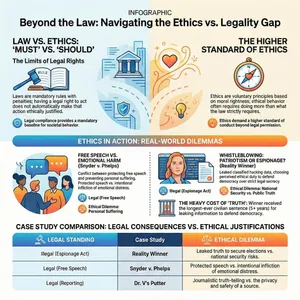
Free Daily Podcast Summary
Dr. Z's Podcasts: Daily Summaries Delivered
by Dr. Z
A series of podcasts to help students and everyday individuals with proper thinking and ethics. Sometimes the best decision an ethical person can make is to just stay silent, detached, and mind their own business. The podcasts include material on other courses such as security analytics, networks and security, history, government, and literature. Popular certifications including CISSP, CGRC, Security+, and Network+ are also covered.
Latest Episodes
The most recent episodes — sign up to get AI-powered summaries of each one.
- 5 days ago21 min
Pen Testing - Module 03 - Malware Threats & Countermeasures
Category: Pen Testing (S131)The provided podcast offers a comprehensive overview of malware threats, detailing how malicious software is defined, structured, and deployed against computer systems. The sources explain various infection vectors and web distribution techniques, such as drive-by downloads, phishing, and removable media, that allow attackers to infiltrate networks. Additionally, the podcast outlines the internal components of malware, including crypters, droppers, and packers, which are designed to evade detection and secure persistent access. Finally, the instruction covers a wide range of malware types, focusing heavily on the mechanisms, indicators, and creation tools associated with Trojans and remote access trojans.
- 1 weeks ago22 min
Pen Testing - Module 02 - Ethical Hacking Fundamentals
Category: Pen Testing (S131)The provided presentation materials introduce ethical hacking fundamentals, detailing the core definitions, necessary technical and non-technical skills, and the primary boundaries of security testing. They categorize various threat actors and hacker classifications, distinguishing between malicious entities like black hats and authorized professionals such as white hats. The content examines the structured phases of the hacking cycle, which encompass reconnaissance, vulnerability scanning, gaining and maintaining access, and clearing tracks. Furthermore, the slides highlight modern technological advancements by discussing AI-driven tools and ChatGPT-powered integrations used to enhance security assessments. Finally, the sources explore tactics, techniques, and procedures (TTPs) alongside adversary behaviors, providing security professionals with the frameworks needed to anticipate and mitigate digital threats.
- 1 weeks ago24 min
Pen Testing - Module 01 - Information Security Fundamentals
Category: Pen Testing (S131)Penetration testing is introduced as an authorized, ethical security assessment used to uncover system vulnerabilities before malicious threat actors can exploit them. The material details the penetration testing process, which progresses through planning and scoping, information gathering, active attacking, and final reporting while strictly adhering to established rules of engagement. To effectively execute these evaluations, various specialized personnel collaborate across red, blue, and purple teams, each fulfilling distinct offensive, defensive, or coordinating roles. Furthermore, the framework contrasts the defensive CIA triad against the attacker's DAD triad to illustrate the core objectives of cybersecurity maintenance versus digital disruption. Ultimately, practitioners rely on a diverse software pen-test toolkit—including network scanners, exploitation platforms, and packet analyzers—to systematically evaluate infrastructure and improve overall organizational security.Furthermore, the podcast establishes the core principles of information security, highlighting its vital role in safeguarding digital infrastructure against evolving technological threats. Aside from breaking down fundamental frameworks like the CIA Triad—confidentiality, integrity, and availability—alongside access management strategies such as authentication, authorization, and accounting, the podcast details robust defense strategies, including network protections, defense-in-depth methodologies, and zero-trust architectures designed to mitigate digital risks. The podcast also categorizes common attack motives and threats, ranging from data theft and business disruption to advanced persistent malware. Ultimately, the podcast serves as a comprehensive foundational guide for ethical hacking essentials, emphasizing systematic safeguards, compliance, and proactive vulnerability management.
- 3 weeks ago1h 17m
How Ancient Scripture Drew Modern Borders
Category: Social Science (S115)This podcast explores complex intersections between comparative religion, historical apologetics, geopolitical ideology, and metaphysical philosophy. It examines foundational arguments for Christianity and Islam, evaluate the contested use of biblical prophecy in modern Israeli settlements, and analyze the etymological evolution of Zion. Furthermore, the podcast investigates religious splinter movements like Mormonism and Ahmadiyya, scrutinize the psychological and sociological appeal of faith, and weigh secular cosmologies against the theological intuition of a supreme Creator.
- 3 weeks ago43 min
Book Analysis - Scofield's Biblical Footnotes - Reshaping American Christianity
Category: Book Analysis (S127)This podcast provides a critical examination of dispensationalism, a theological framework that divides biblical history into distinct eras and separates the identity of the Christian Church from ancient Israel. Rooted in the nineteenth-century teachings of John Nelson Darby, this belief system gained massive popularity and fundamentally shaped American fundamentalism primarily through the widely circulated publications of C. I. Scofield. While critics like William E. Cox argue that dispensationalism relies on arbitrary literalism and creates unscriptural divisions within Christian theology, proponents maintain its validity regarding prophecy and the second coming of Christ. Ultimately, the texts document the historical origins, core doctrines, and widespread controversies surrounding Scofield's annotated reference Bible and its lasting impact on modern evangelicalism.
- 4 weeks ago22 min
Divine Justice vs. Human Understanding
Category: Social Science (S115)The podcast asserts that God is just and truthful, while frankly acknowledging that the conditions of mortal life are broken, chaotic, and unequal. The requirement for humans to act justly is framed not as an emulation of worldly circumstances, but as a direct responsibility for how humans should treat one another within them. As an example, in the Book of Job, Job operates under the assumption of a neat, transactional moral universe—if he does good, good will follow; if evil falls upon him, God must be acting unfairly. When God finally answers from the whirlwind (Job 38–41), He does not offer a moral defense based on human fairness. Instead, He reframes reality: the cosmos was not constructed solely around human convenience or transactional compensation. God is not a vending machine, nor is He a cross between a butler and a sugar daddy.
- 4 weeks ago23 min
Book Analysis - The Prince - Realism vs. Idealism
Category: Book Analysis (S127)The provided podcast explores the complex legacy and ongoing relevance of Niccolò Machiavelli and his famous Renaissance treatise, The Prince. While some commentators view him as a pragmatic realist whose leadership strategies remain valuable in modern business and politics, critics argue that his advocacy for removing morality from governance damages society. Additionally, psychological research examines Machiavellianism as a distinct personality trait characterized by manipulation and self-interest, though researchers note this construct bears little relation to the historical figure himself. Scholars also contrast his ruthless philosophies with alternative humanist viewpoints that prioritize ethical behavior, public welfare, and virtue.
- Oct 7, 202630 min
Book Analysis - Hamlet - The Shift From Justice To Vengeance
Category: Book Analysis (S127)William Shakespeare’s acclaimed tragedy Hamlet has generated centuries of diverse scholarly analysis, focusing on elements like character psychology, dramatic structure, and historical context. A central figure in these discussions is King Claudius, who is frequently evaluated as both a charismatic and manipulative leader and a weak-willed, immoral individual driven by ambition. Critical perspectives on the play also explore various theological and philosophical dimensions, including the friction between Catholic and Protestant doctrines, as well as the presence of existentialism and skepticism. Furthermore, specialized interpretations range from psychoanalytic approaches regarding the Oedipus complex to feminist critiques that reassess the roles and tragedies of characters like Gertrude and Ophelia. Ultimately, these ongoing critical traditions highlight the complex web of political intrigue, revenge, and human doubt that defines the enduring legacy of the play.
Get Dr. Z's Podcasts summaries in your inbox
Free AI-powered daily recaps. Key takeaways, quotes, and mentions — in a 5-minute read.
Get Free Summaries →Free forever for up to 3 podcasts. No credit card required.
You Might Also Like
Listeners also like.

The VPZD Show
Two physicians discuss healthcare, medicine, and policy from a contrarian, middle-ground perspective.
CISSP Cyber Training Podcast - CISSP Training Program
A weekly podcast delivering practical CISSP exam preparation and cybersecurity strategies from an experienced industry professional.

People Who Read People: A Behavior and Psychology Podcast
Explores human behavior through interviews with experts in psychology, law, sports, and poker.

Modern Wisdom
Discussions with experts on psychology, philosophy, and self-improvement to help navigate life’s challenges.
The Jordan B. Peterson Podcast
Explores how values, religion, and culture shape individuals and society through interviews and lectures.

The Dr. Lee Warren Podcast
A neurosurgeon explores how faith and neuroscience combine to rewire the brain for focus, resilience, and hope.

The Modern Good
The Modern Good

Glorian Podcast
Lectures on spirituality, religion, and esoteric traditions including kabbalah, mythology, astrology, alchemy, and sacred practices.

Scope Conditions Podcast
A podcast showcasing cutting-edge research in comparative politics.

Security Now (Audio)
A weekly deep dive into cybersecurity news, hacking trends, and digital defense strategies for professionals and individuals.

Cool People Who Did Cool Stuff
Revolutions, rebellions, and resistance movements throughout history, told through the stories of the people who lived them.
Inquiring Minds
Explores the intersection of science and society through critical thinking and in-depth analysis.
About Dr. Z's Podcasts
A series of podcasts to help students and everyday individuals with proper thinking and ethics. Sometimes the best decision an ethical person can make is to just stay silent, detached, and mind their own business. The podcasts include material on other courses such as security analytics, networks and security, history, government, and literature. Popular certifications including CISSP, CGRC, Security+, and Network+ are also covered.
Customized Recaps
AI-powered recaps with compact key takeaways, quotes, and insights.
Straight to Your Inbox
Get key takeaways from Dr. Z's Podcasts in a 5-minute read.
Save Hours Every Week
Stay current on your favorite podcasts without falling behind.
Frequently Asked Questions
What is Podzilla's Dr. Z's Podcasts daily summary?
It's a free AI-powered email that summarizes new episodes of Dr. Z's Podcasts as soon as they're published. You get the key takeaways, notable quotes, and links & mentions — all in a quick read.
How does the Dr. Z's Podcasts podcast summary work?
When a new episode drops, our AI transcribes and analyzes it, then generates a personalized summary tailored to your interests and profession. It's delivered to your inbox every morning.
Is this an official Dr. Z's Podcasts product?
No. Podzilla is an independent service that summarizes publicly available podcast content. We're not affiliated with or endorsed by Dr. Z.
Can I get summaries of other podcasts too?
Absolutely! The free plan covers up to 3 podcasts, any in the catalog. Basic raises that to 15, Pro to 40 and Max to 100. Browse our full catalog at /podcasts.
What topics does Dr. Z's Podcasts cover?
Dr. Z's Podcasts covers topics including History, Education, Business, Careers, Courses, Self-Improvement. Our AI identifies the specific themes in each episode and highlights what matters most to you.
Start getting Dr. Z's Podcasts summaries tomorrow morning.
Free forever for up to 3 podcasts. No credit card required.
Free forever for up to 3 podcasts. No credit card required.