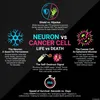
243: Life, Death, and the Lysosome - Architecture of Self-Destruction
Reference research Here are simple, high-level core themes of the research, along with how the specific scientific concepts fit into each category:#CellularResilience (or #CellBiology)The Map: This covers the foundational discovery of how cells fix themselves. The research identifies the LASER complex (LC3/GABARAP Assisted Stimulator for ESCRT Recruitment), a biological emergency response system. When a lysosome (the cell's acid-filled recycling center) suffers a microscopic tear, calcium escapes as an alarm. A protein called TFG acts as the dispatcher, arriving at the damage and calling in the ESCRT machinery—microscopic engineers that physically pull the torn membrane together to seal the leak in a matter of seconds.#SelfDestructSignal (or #CancerResearch)The Map: This maps to the application of this discovery in oncology. Aggressive cancers are relentlessly hungry and produce massive amounts of waste, making them highly dependent on lysosomes for survival. Rather than attacking the cancer's growth, this research suggests attacking its maintenance. By intentionally disabling the LASER repair system with drugs, cancer cells are unable to fix routine lysosomal leaks. This causes the cancer cell to flood with its own acid and digestive enzymes, effectively triggering a mechanism where the tumor consumes and destroys itself.#Neurodegeneration (or #HSP)The Map: This covers the medical origins of the discovery. Neurons, especially the meter-long motor neurons controlling our legs, cannot divide and must constantly repair themselves over a human lifetime. The research maps a specific mutation (R106C) in the TFG gene to a rare paralyzing disease called Hereditary Spastic Paraplegia (HSP). When TFG is mutated, the cellular repair crew never gets the call, causing toxic waste to leak into the neuron and slowly destroy it. This suggests that broader neurodegenerative diseases (like Alzheimer's or Parkinson's) might fundamentally be failures of cellular hardware repair.#CRISPRi (or #Biotech)The Map: This highlights the massive, genome-wide interrogation used to uncover the LASER pathway. Instead of using CRISPR to permanently edit genes, researchers used CRISPR interference (CRISPRi) to temporarily mute 20,000 individual genes one by one. They then deliberately damaged the cells' lysosomes using chemicals (like LLOMe) or microscopic lasers. By seeing which cells died under this stress, they could map exactly which genes were essential for the cellular repair crew.#AIinScienceThe Map: This represents the role of advanced computational tools in the research. Because the ESCRT machinery and LASER complex assemble so quickly and are intrinsically hard to study, scientists relied on #AI platforms like #DeepMind 's #AlphaFold . AlphaFold allowed researchers to accurately predict the complex, 3D atomic architecture of these transient protein structures, accelerating the blueprint for designing future drugs.
Podzilla Summary coming soon
Sign up to get notified when the full AI-powered summary is ready.
Free forever for up to 3 podcasts. No credit card required.
Listen to This Episode
More from Deep Dive with Gemini
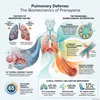
246: The pulmonary boat against INTERNAL DROWNING #Pranayama
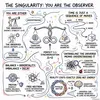
245: What exactly is #Singularity
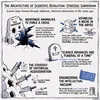
244: architecture of intellectual demolition

242 : Intelligent Time - From #dotProduct based #LLMs to #hamiltonianProduct #worldModels
Get summaries like this every morning.
Free AI-powered recaps of Deep Dive with Gemini and your other favorite podcasts, delivered to your inbox.
Free forever for up to 3 podcasts. No credit card required.