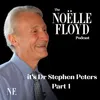
Your Horse Isn't Being Bad — Dr. Stephen Peters on Horse Behavior, the Nervous System & Learned Helplessness Part 1 sponsored by Total Feeds
Every rider has said it. He's being stubborn. She's testing me. He knows better. Here's the harder, truer thing underneath: the horse isn't being anything. The horse is a nervous system, doing the one job every nervous system has — trying to stay safe. Dr. Stephen Peters spends this conversation taking me under the behavior, into the brain that produced it. He's a neuropsychologist, co-author of Evidence-Based Horsemanship, and the person I call when I want to actually understand my horses instead of just managing them. This time we sat down as two diagnosed neurodivergent people talking about horse behavior from the inside — which is its own kind of honesty. He explains why the horse that shoves past you off the trailer isn't defiant. It's running a pathway you built, three good grazes at a time. He calls it myelination, and once you hear how it works, you stop blaming the horse and start watching what you're teaching when you think you're not teaching anything. We go into the thing so many of us get exactly backwards. You hit a wall, so you add pressure. More leg, more spur, more insistence. And Peters says it plainly: almost always the answer was to let the nervous system reset, not to push harder. Push harder and you don't get through the noise — you become the noise. Then we get to the part I asked him to slow down on. Learned helplessness. The old experiment neither of us can listen to without flinching, and what it tells us about the quiet, compliant, "well-behaved" horse who has simply learned that nothing he does matters. That's not a trained horse. That's a horse who stopped voting. And near the end, something bigger opens up. Peters describes the freeze — the shutdown that isn't a choice, the body flooding itself with its own opioids so it can survive what it can't escape. He says the thing I most needed someone with his credentials to say out loud: that response is the nervous system deciding, not the animal, and not the person it happens to. If you've ever been asked why you didn't fight back, this part is for you as much as your horse. What you'll hear, underneath all of it, is a kinder and more accurate way to be with a horse. Not softer for its own sake — more correct. Work with the nervous system and you get performance and behavior far past anything pressure buys you. The willing partner everyone wants isn't obedient. He's involved. Dr. Stephen Peters is a board-certified neuropsychologist and co-author of Evidence-Based Horsemanship with Martin Black. He studies the equine brain and nervous system and is launching a new podcast, The Skeptical Horseman, with Jillian Kreinbring, M.S., dedicated to separating good research from pseudoscience in the horse world. This is Part 1 of our conversation. In Part 2, Steve puts a real horse brain on the table, cut in half, and shows me exactly what agency does to it. If someone you ride with keeps calling their horse the problem — send them this one first. You can find out more about Dr. Stephen Peters here: Horse Brain Science Chapters: 0:00 — "They have good days and bad days": meeting the horse's nervous system where it is <li class= "font-claude-response-body whitespace-normal break-words pl-2" data-sourcepos="87:1-87:84;9116-9199"
Podzilla Summary coming soon
Sign up to get notified when the full AI-powered summary is ready.
Free forever for up to 3 podcasts. No credit card required.
Listen to This Episode
More from The NOËLLE FLOYD Podcast
Your Saddle Fits a Horse That No Longer Exists — Letitia Glenn on Horse Care
Horse Training and the Nervous System: What's Really Happening in Your Horse's Brain | Dr. Stephen Peters (Pt. 2)

Joe Stockdale on Riding Confidence, Grief & the Show Jumping Career He Inherited sponsored by Connaway

How to Read Horse Behavior — Elsa Sinclair on the 5 Types of Leadership
Get summaries like this every morning.
Free AI-powered recaps of The NOËLLE FLOYD Podcast and your other favorite podcasts, delivered to your inbox.
Free forever for up to 3 podcasts. No credit card required.