Free Daily Podcast Summary
Common Faith: Daily Summaries Delivered
by SiriusXM
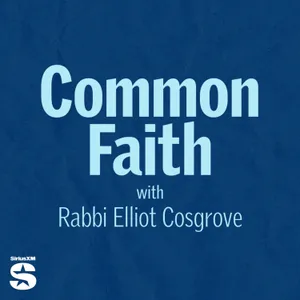
A rabbi and a journalist walk into… not a bar, not a synagogue, but a SiriusXM podcast studio. Each week, Rabbi Elliot Cosgrove, Senior Rabbi of Park Avenue Synagogue, and Jon Frankel, formerly of Real Sports, will banter, question, and explore the big issues of our day through the lens of Jewish tradition and lived experience. The program is designed to be fun, thoughtful, and engaging—where faith matters, and conversation runs deep.
Latest Episodes
The most recent episodes — sign up to get AI-powered summaries of each one.
- 1 weeks ago51 min
Pretend You Believe: A Leap of Faith with Rabbi Noa Kushner
What if you didn't have to believe in God to begin exploring religion? Rabbi Elliot Cosgrove and Jon Frankel welcome Rabbi Noa Kushner, founder of San Francisco's experimental Jewish community The Kitchen and author of Pretend You Believe: How to Enter Religion. Together, they explore why organized religion still matters in an increasingly secular world, and whether faith is something we must understand before we can experience it.From the barriers that keep people outside religious communities to the power of ritual, belonging, and awe, Rabbi Kushner challenges the idea that belief must come first. She shares how The Kitchen is reimagining Jewish communal life without abandoning tradition, why ancient practices may hold answers to modern questions, and how taking a leap into the unknown can open the door to something greater. It's a conversation about doubt, discovery, and finding meaning in a world that often asks us to figure everything out for ourselves. Rabbi Noa Kushner:https://www.thekitchensf.org/staffRabbi Elliot Cosgrove:https://www.instagram.com/elliot_cosgrovehttps://x.com/RabbiCosgrovePark Avenue Synagogue:https://www.pasyn.orghttps://www.instagram.com/parkavenuesyn/#Jon Frankel:https://www.instagram.com/skifrankel Hosted by Simplecast, an AdsWizz company. See pcm.adswizz.com for information about our collection and use of personal data for advertising.
- 2 weeks ago50 min
Israel at a Crossroads: The Future Is on the Ballot
With Israel approaching what could be one of the most consequential elections in its history, the stakes extend far beyond who becomes the next prime minister. Rabbi Elliot Cosgrove and Jon Frankel welcome Avi Mayer, founder of The Jerusalem Journal and former editor-in-chief of The Jerusalem Post, to examine a nation at a crossroads. Three years after October 7, Israelis are confronting difficult questions about leadership, accountability, democracy, national security, and the future of their country.Can Benjamin Netanyahu maintain his grip on power? Could a new government repair Israel's fractured international standing? And what happens when Israelis begin questioning whether their children have a future in the country they love? Mayer explores the political divisions shaping the October 27 election, the growing debate over military service and economic responsibility, and the consequences of Israel's increasing isolation. He also examines the media's portrayal of Israel, rising antisemitism across the political spectrum, and why American Jews must look beyond the headlines to understand a country still living with the trauma of October 7. Avi Mayer:https://www.avimayer.com/Jerusalem Journal:https://www.jerusalemjournal.com/ Rabbi Elliot Cosgrove:https://www.instagram.com/elliot_cosgrovehttps://x.com/RabbiCosgrovePark Avenue Synagogue:https://www.pasyn.orghttps://www.instagram.com/parkavenuesyn/#Jon Frankel:https://www.instagram.com/skifrankel Hosted by Simplecast, an AdsWizz company. See pcm.adswizz.com for information about our collection and use of personal data for advertising.
- 3 weeks ago54 min
From the Pulpit: Taking Agency - Lessons from Yom Kippur
In the second of two special High Holiday episodes, Rabbi Elliot Cosgrove and Jon Frankel return to the pulpit, revisiting sermons delivered during Yom Kippur at Park Avenue Synagogue and discussing the personal experiences and ideas that shaped them.In “Taking Agency,” Rabbi Cosgrove considers one of Yom Kippur's most demanding lessons: even when we cannot control what happens to us, we remain responsible for how we respond. From the biblical story of Judah to the relationships and divisions of our own lives, he challenges us to stop focusing solely on what others have done wrong and instead ask, “How am I responsible? And what is mine to do?”Then, in his deeply personal Yizkor sermon, “Out of the Picture,” Rabbi Cosgrove remembers his late teacher and mentor, Michael Brooks, whose life was devoted to empowering others rather than placing himself at the center. His example becomes a meditation on memory, mentorship and mortality—and on how we honor those we've lost not simply by remembering them, but by carrying their values and unfinished work forward.Together, the sermons offer a challenge for the year ahead: take responsibility for the life you are living, recognize what you have been given, and consider what you will leave behind. Rabbi Elliot Cosgrove:https://www.instagram.com/elliot_cosgrovehttps://x.com/RabbiCosgrovePark Avenue Synagogue:https://www.pasyn.orghttps://www.instagram.com/parkavenuesyn/#Jon Frankel:https://www.instagram.com/skifrankel Hosted by Simplecast, an AdsWizz company. See pcm.adswizz.com for information about our collection and use of personal data for advertising.
- 4 weeks ago55 min
From the Pulpit: Rosh Hashanah Reflections
What goes into a High Holiday sermon—and what happens when you return to its message weeks later? In this special episode of Common Faith, Rabbi Elliot Cosgrove and Jon Frankel look back at Rosh Hashanah at Park Avenue Synagogue, sharing two sermons delivered over the past several weeks and discussing the ideas and experiences behind them.In his Erev Rosh Hashanah sermon, Rabbi Cosgrove turns to The Odyssey and its timeless story of homecoming. Like Odysseus returning from his journey changed by everything he has experienced, Rosh Hashanah invites us to come home—to tradition, community, God, and ourselves—carrying the wounds, wisdom, memories, and scars we've accumulated along the way.Then, in “All in the Jewish Family,” Rabbi Cosgrove draws on the 100-year history of Park Avenue Synagogue's sanctuary to confront a very contemporary question: How can Jews remain one family amid profound disagreements over Israel, Zionism, identity, and the Jewish future? Looking back at earlier generations of American Jews who wrestled with many of the same questions, he makes the case for staying in conversation, making room for disagreement, and remembering what binds us together even when we don't see the world the same way. Rabbi Elliot Cosgrove:https://www.instagram.com/elliot_cosgrovehttps://x.com/RabbiCosgrovePark Avenue Synagogue:https://www.pasyn.orghttps://www.instagram.com/parkavenuesyn/#Jon Frankel:https://www.instagram.com/skifrankel Hosted by Simplecast, an AdsWizz company. See pcm.adswizz.com for information about our collection and use of personal data for advertising.
- Oct 1, 202650 min
Why We Love the Way We Do: Galit Atlas on Childhood Wounds and Adult Relationships
We like to believe that we enter our adult relationships as fully formed people, freely choosing whom we love and how we love them. But what if the frightened, ashamed, guilty, invisible—or even “chosen”—children we once were are still quietly making some of those decisions?Rabbi Elliot Cosgrove and Jon Frankel welcome internationally renowned psychoanalyst and bestselling author Dr. Galit Atlas, whose new book, Come Closer: Childhood Wounds, Adult Love, and the Secrets of Emotional Intimacy, examines the unconscious connection between our earliest relationships and our adult love lives. Atlas explains why we repeatedly return to what feels familiar—even when the familiar once hurt us—and how childhood survival strategies can become patterns that follow us into marriage, intimacy, and family life.The conversation also turns toward Jewish experience and inherited trauma. Born in Israel to parents from Iran and Syria, Atlas reflects on growing up in the shadow of the Holocaust and amid Israel's own layers of trauma. She discusses how October 7 reopened deeper wounds in the Jewish psyche and how those events have entered the therapy room—sometimes exposing profound differences within marriages and families.Ultimately, Atlas offers a hopeful idea: our past shapes us, but it does not have to dictate our future. By recognizing the different selves we carry and understanding where our patterns began, we may gain greater freedom to create something new—in ourselves and in the relationships that matter most. Dr. Galit Atlas:https://www.galitatlas.com/Come Closer: Childhood Wounds, Adult Love:https://www.galitatlas.com/home-1-1 Rabbi Elliot Cosgrove:https://www.instagram.com/elliot_cosgrovehttps://x.com/RabbiCosgrovePark Avenue Synagogue:https://www.pasyn.orghttps://www.instagram.com/parkavenuesyn/#Jon Frankel:https://www.instagram.com/skifrankel Hosted by Simplecast, an AdsWizz company. See pcm.adswizz.com for information about our collection and use of personal data for advertising.
- Sep 24, 202650 min
Sukkot and the Jewish Experience with Rabbi Mark Wildes
Sukkot may be one of Judaism’s most mysterious holidays. We leave the security of our homes for a temporary structure, welcome guests around the table, and are reminded that permanence may be more illusion than reality. Rabbi Mark Wildes joins Rabbi Elliot Cosgrove and Jon Frankel to unpack those ideas—and a particularly moving interpretation of the ushpizin: the biblical figures welcomed into the sukkah who lived in pursuit of dreams they themselves never saw fulfilled.For Wildes, welcoming people in is more than a Sukkot tradition—it has defined his life’s work. Inspired by a mother who taught her children to notice newcomers at synagogue and invite them home for Shabbat, Wildes went on to found Manhattan Jewish Experience, creating a place for Jews who may feel disconnected, intimidated, or unsure where they belong. He explains why warmth can bring someone through the door, but substance is what keeps them there.The conversation also explores Wildes’ book, The Jewish Experience: Discovering the Soul of Jewish Thought and Practice, and the renewed search for Jewish meaning following October 7. Wildes describes seeing more people walk through his doors asking fundamental questions: What does it mean to be Jewish? What do Jews believe about God and Torah? Why do we pray? For Wildes, the challenge—and opportunity—is not simply getting people interested in Judaism, but helping them discover that the tradition was theirs all along. Rabbi Mark Wildes:https://www.markwildes.com/https://www.jewishexperience.org/our-teamThe Jewish Experience: Discovering the Soul of Jewish Thought and Practice:https://www.amazon.com/dp/159264712X?lv=shuf&channelId=500&plpRedirect=mhFallback Rabbi Elliot Cosgrove:https://www.instagram.com/elliot_cosgrovehttps://x.com/RabbiCosgrovePark Avenue Synagogue:https://www.pasyn.orghttps://www.instagram.com/parkavenuesyn/#Jon Frankel:https://www.instagram.com/skifrankel Hosted by Simplecast, an AdsWizz company. See pcm.adswizz.com for information about our collection and use of personal data for advertising.
- Sep 17, 202650 min
Can We Repair What’s Broken? Grief, Yom Kippur, and the Scars We Carry
Yom Kippur asks us to reflect, repent and repair—but what happens when repair cannot return us to what was? Rabbi Elliot Cosgrove and Jon Frankel begin with the meaning and traditions of Judaism’s holiest day before welcoming Rabbis Nicole Guzik and Erez Sherman, the husband-and-wife co-senior rabbis of Sinai Temple in Los Angeles. Their conversation begins with their own preparation for Yom Kippur: the relationships that may never look the same, the stories that remain untold, and the possibility of making room for hope even when remorse or regret remains.That idea takes on deeper meaning through their book, Grieving a Child: A Companion Guide for Clergy. Born from years of conversations with a family that experienced the death of a child, the guide addresses what religious training and traditional rituals cannot always prepare clergy to face: what happens before, during and long after devastating loss. From navigating shiva and anniversaries to remembering milestones a child never reached, Guzik and Sherman argue that pastoral care cannot end when the formal mourning period does.At the heart of the conversation is a powerful image: the scar. Repair may be possible, Rabbi Guzik explains, but repair does not mean returning to what existed before. A scar remains; what can change is how we see it, carry it and allow it to become part of our lives. The rabbis also offer practical wisdom for anyone trying to comfort a grieving family: don't make their loss about your own experience, don't offer assurances, don't be afraid to speak about the child—and don't disappear once shiva ends. Sometimes the most meaningful words are simply, this is heartbreaking, and I'm still thinking about you.As Yom Kippur draws near, the conversation becomes ultimately not only about death, but about life: the people we remember, the relationships we carry, and the community that surrounds us as we enter another year. Rabbi Nicole Guzik:https://www.sinaitemple.org/about/clergy-senior-staff/rabbi-nicole-guzik/Rabbi Erez Sherman:https://www.sinaitemple.org/about/clergy-senior-staff/rabbi-erez-sherman/Grieving a Child: A Companion Guide for Clergy:https://momentmag.com/clergy-child-loss/?srsltid=AfmBOorNTf4Eket9D6YuZSPKW8lfVDlfzqHhrL1VYkOUBqIwx8xAEuXD Rabbi Elliot Cosgrove:https://www.instagram.com/elliot_cosgrovehttps://x.com/RabbiCosgrovePark Avenue Synagogue:https://www.pasyn.orghttps://www.instagram.com/parkavenuesyn/#Jon Frankel:https://www.instagram.com/skifrankel Hosted by Simplecast, an AdsWizz company. See pcm.adswizz.com for information about our collection and use of personal data for advertising.
- Sep 10, 202652 min
Choosing Life: Rosh Hashanah with Rabbi Yitz Greenberg
What does Rosh Hashanah ask of us beyond apples, honey and the promise of a new beginning? Rabbi Elliot Cosgrove and Jon Frankel begin their Rosh Hashanah special with a candid conversation about the High Holidays—the joy of renewal, the weight of Yom Kippur and the difficult work of repairing relationships before we ever enter the synagogue.They are joined by renowned theologian, scholar and activist Rabbi Irving “Yitz” Greenberg, who reframes Rosh Hashanah as something even more fundamental: the holiday of creation. For Greenberg, recognizing that life is finite gives every human being a responsibility to decide how we will use the time we have. Every word, relationship and action presents a choice between forces that strengthen life and those that diminish it.That idea also sits at the heart of Greenberg’s new collection, Life Against Death. The conversation moves from the Holocaust and the renewal of Jewish life to October 7, Israel, Zionism and the increasingly difficult relationship between Israel and American Jewry. Greenberg and Cosgrove wrestle with how Jews can defend Jewish self-determination while remaining willing to criticize Israel and its government—and why a healthy Jewish community needs room for disagreement, competing voices and genuine pluralism.At the beginning of a new year, Greenberg ultimately offers both a challenge and a hopeful vision: human beings have extraordinary agency. We cannot perfect the world all at once, but moment by moment, choice by choice, we can move it toward life. Rabbi Irving “Yitz” Greenberg:https://www.hadar.org/about/people/rabbi-yitz-greenbergLife Against Death:https://tinyurl.com/y3vby2r7 Rabbi Elliot Cosgrove:https://www.instagram.com/elliot_cosgrovehttps://x.com/RabbiCosgrovePark Avenue Synagogue:https://www.pasyn.orghttps://www.instagram.com/parkavenuesyn/#Jon Frankel:https://www.instagram.com/skifrankel Hosted by Simplecast, an AdsWizz company. See pcm.adswizz.com for information about our collection and use of personal data for advertising.
Get Common Faith summaries in your inbox
Free AI-powered daily recaps. Key takeaways, quotes, and mentions — in a 5-minute read.
Get Free Summaries →Free forever for up to 3 podcasts. No credit card required.
You Might Also Like
Listeners also like.

Tablet Studios
Explores Jewish identity, tradition, and culture through diverse podcasts offering insight for contemporary Jewish life.
Chosen People Problems
Two women—one secular, one Haredi—explore faith, tradition, and modern life through candid conversations.
Susie Larson Live
Conversations on living out Christian faith with practical applications of Scripture.
Bible Stories: The Path of Faith
Retells Bible stories with a focus on Jesus, faith, and God's love as living guides for spiritual reflection and personal meaning.
The Frieda Vizel Podcast
Conversations exploring Hasidism, Judaism, New York City, and cultural topics through interviews and personal insights.
The Christian Outlook | Full Interviews
Salem Podcast Network
PrayRadio
iHeartPodcasts and Pray.com
Beyond Belief: Tales of Religious Exodus
Freidom Fighter
Into the Verse - A Parsha Podcast
Aleph Beta
On the Other Hand: Ten Minutes of Torah
ReformJudaism.org
Trust Me: Cults, Extreme Belief, and Manipulation
Survivors and experts explore how people join cults, endure manipulation, and rebuild after leaving.

Pray News
Pray.com
About Common Faith
A rabbi and a journalist walk into… not a bar, not a synagogue, but a SiriusXM podcast studio. Each week, Rabbi Elliot Cosgrove, Senior Rabbi of Park Avenue Synagogue, and Jon Frankel, formerly of Real Sports, will banter, question, and explore the big issues of our day through the lens of Jewish tradition and lived experience. The program is designed to be fun, thoughtful, and engaging—where faith matters, and conversation runs deep.
Customized Recaps
AI-powered recaps with compact key takeaways, quotes, and insights.
Straight to Your Inbox
Get key takeaways from Common Faith in a 5-minute read.
Save Hours Every Week
Stay current on your favorite podcasts without falling behind.
Frequently Asked Questions
What is Podzilla's Common Faith daily summary?
It's a free AI-powered email that summarizes new episodes of Common Faith as soon as they're published. You get the key takeaways, notable quotes, and links & mentions — all in a quick read.
How does the Common Faith podcast summary work?
When a new episode drops, our AI transcribes and analyzes it, then generates a personalized summary tailored to your interests and profession. It's delivered to your inbox every morning.
Is this an official Common Faith product?
No. Podzilla is an independent service that summarizes publicly available podcast content. We're not affiliated with or endorsed by SiriusXM.
Can I get summaries of other podcasts too?
Absolutely! The free plan covers up to 3 podcasts, any in the catalog. Basic raises that to 15, Pro to 40 and Max to 100. Browse our full catalog at /podcasts.
How often does Common Faith release new episodes?
Common Faith publishes weekly. Our AI generates a summary within hours of each new episode.
What topics does Common Faith cover?
Common Faith covers topics including Leisure, Religion & Spirituality, Spirituality, Judaism. Our AI identifies the specific themes in each episode and highlights what matters most to you.
Start getting Common Faith summaries tomorrow morning.
Free forever for up to 3 podcasts. No credit card required.
Free forever for up to 3 podcasts. No credit card required.