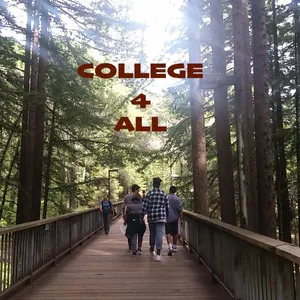
Free Daily Podcast Summary
College 4 ALL: Daily Summaries Delivered
by College 4 All
Sharing college insights from experts in the field on college admissions, financial aid and so much more. We are here to help students and their families make college a reality because "Nothing is impossible unless YOU think it is impossible." College needs to be 4 all.
Latest Episodes
The most recent episodes — sign up to get AI-powered summaries of each one.
- 2 days ago18 min
Why Mentorship Matters: A Faculty Perspective from the College of Wooster - Part Two || E117
What makes the relationship between a college student and a professor so important?College4All visits The College of Wooster in Ohio for an on-campus conversation with a faculty member about teaching, learning, mentorship, research, and what professors hope students gain from their college experience.At Wooster, faculty involvement begins early. First-year students take a small, discussion-based First-Year Seminar with no more than 15 students, designed to strengthen writing, critical thinking, communication, and the ability to explore complicated questions. Faculty members also serve as academic advisors, helping students navigate courses, majors, academic opportunities, and ultimately their Senior Independent Study. We learn why Wooster places such a strong emphasis on students working directly with professors rather than simply sitting in large lecture halls. The College describes its model as four years of faculty mentoring, culminating in the signature Independent Study, when every senior works one-on-one with a faculty mentor to complete an original research, creative, or applied project. That faculty-student partnership can begin well before senior year. Through Wooster's Sophomore Research Program, students can even work as paid research assistants alongside faculty members, gaining firsthand experience in how research is developed and conducted. We also explore how Wooster is connecting classroom learning with experiences beyond campus. Students can participate in internships, research, community projects, field experiences, study away, simulations, and other forms of experiential learning designed to build skills that translate into future careers. For students and families trying to understand the difference between simply attending college and becoming part of an academic community, this episode offers another perspective on The College of Wooster—this time through the eyes of a professor.Learn more about academics and faculty mentorship at www.wooster.edu.Hashtags
- 1 weeks ago12 min
Inside The College of Wooster - Part I: A Student's Campus Experience || E116
What is it really like to attend The College of Wooster?College4All visits Wooster, Ohio, to hear directly from a current student about academics, campus life, friendships, opportunities, and the support available to students throughout their college experience.The College of Wooster is a private liberal arts college with just over 1,600 undergraduate students, an average class size of approximately 13 students, and a 9:1 student-to-faculty ratio. Students come from 45 states and approximately 75 countries, creating a small residential campus with a surprisingly global community. We explore what makes Wooster different, including its nationally recognized emphasis on undergraduate research and faculty mentorship. Every Wooster student completes a Senior Independent Study—a significant research, creative, or applied project developed with one-on-one guidance from a faculty mentor. Students begin preparing for this experience from their first year on campus. Our student interview also looks at the support systems behind the college experience. Through **APEX—Advising, Planning, and Experiential Learning—**students can receive academic advising, career guidance, peer tutoring, academic coaching, disability support, internship assistance, study-abroad guidance, and help connecting their academic interests with their future careers. For students looking for a smaller college where professors know their students, research is part of the undergraduate experience, and support continues from the first semester through career planning, hear what one student has to say about becoming a Fighting Scot.Learn more about The College of Wooster at Wooster.edu.Hashtags#CollegeOfWooster #Wooster #FightingScots #CollegeTour #CollegeVisit #StudentExperience #CampusLife #CollegeAdmissions #CollegeSearch #LiberalArtsCollege #UndergraduateResearch #IndependentStudy #CollegeBound #FirstGenerationCollege #OhioColleges #College4AllCollege of Wooster Facts for Students & FamiliesA small, highly residential collegeWooster reports more than 1,600 undergraduates, with 98% of students living on campus. About 63% of students come from outside Ohio, 12% are international students, and students represent 45 states and 75 countries. That residential percentage is worth emphasizing. Wooster is very different from a commuter school: for most students, campus becomes the center of their academic and social life.Small classes and faculty accessWooster reports a 9:1 student-faculty ratio, and 97% of its full-time faculty hold a Ph.D. or equivalent terminal degree. The college advertises an average class size of approximately 13 students. That fits particularly well with a student who wants professors to know them personally rather than spending most of college in large lecture halls.The Signature Program: Independent StudyThis is probably the single most important thing prospective students should understand about Wooster.Every student completes an Independent Study, or I.S., during senior year. It can involve scientific research, business or economics research, historical or literary analysis, creative work, performance, community-based research, or another substantial project connected to the student's academic field. Each student works one-on-one with a faculty mentor.Wooster actually begins preparing students for this before senior year: research and analytical skills are developed during the first year and then strengthened through the major during the sophomore and junior years. Students eventually present their work during the Senior Research Symposium, while completion of I.S. is celebrated through the well-known Wooster tradition of I.S. Monday. For College4All listeners, I would explain it simply as:At Wooster, undergraduate research isn't reserved for a select group of students. Every student eventually does it.APEX: One of Wooster's Biggest Support SystemsI think APEX deserves attention in your episode because it brings several services together instead of making students figure out which disconnected office to visit.Wooster describes APEX as connecting students from their first academic advising appointment through career preparation. Students can receive help with:Academic advising and choosing a majorFour-year academic planningAcademic life coachingTime management and study strategiesPeer tutoringDisability accommodationsCareer explorationRésumés, cover letters and interviewingInternship and job searchesGraduate-school planningStudy abroad/global engagementFellowships and experiential learningOne statistic really stands out: the Academic Resource Center says it works with 50% or more of the student body. That suggests these services are intended as a normal part of the Wooster experience—not something students use only when they are struggling. First-generation studentsWooster's career-planning resources als
- 2 weeks ago19 min
Inside Loyola University Maryland: A Student's Jesuit College Experience || E115
Loyola's student-support system is a real strengthOne of the programs I would definitely highlight is Messina, Loyola's year-long first-year experience. First-year students take two seminars with a group of roughly 15–16 classmates, develop relationships with faculty and administrators, and receive support from an upper-class student mentor known as an Evergreen. The program addresses academic adjustment, workload, mental health, relationships, and learning how to navigate both Loyola and Baltimore. There is also an Academic Mentor Program, tutoring and academic support, a Writing Center that assists more than 1,300 students in a typical year, academic advising, and accommodations for students with documented learning disabilities and ADHD. First-generation student supportThis is particularly worth mentioning for the College4All audience. Loyola has a dedicated First-Generation Student Success effort. Its LUCEAT peer mentors work with first-year students throughout their entire first year, while the ONE FAMILY pre-fall program helps students become familiar with campus resources and develop a community before classes begin. The new Nursing majorThis is important to clarify because it is no longer just being planned.Loyola's Bachelor of Science in Nursing officially launched in Fall 2025, with an inaugural cohort of approximately 30 students. Loyola plans eventually to grow the entering nursing cohort to approximately 110 students per year. Students begin nursing-specific coursework during their first year, rather than waiting until junior year. Clinical education is being developed through Loyola's partnership with Mercy Medical Center in downtown Baltimore. Another important admissions point: Nursing is direct-entry. Students need to apply directly to the nursing program as first-year applicants; students admitted to another Loyola major currently cannot simply switch into nursing later. Loyola is also expanding its physical facilities for health and STEM education. The expanded Donnelly Science Center and new Bloomfield Hall include nursing simulation spaces, research labs, classrooms, and collaborative areas. And Nursing isn't the only new directionThis is actually a very interesting period for Loyola.For students entering in Fall 2026, Loyola's Sellinger School of Business has introduced three new undergraduate majors:B.S. in Real EstateB.B.A. in Digital Marketing and AnalyticsB.S. in Financial Risk Management and InsuranceLoyola has also expanded health and STEM offerings in recent years with programs including Data Science, Forensic Science, Forensic Pattern Analysis, Biological Forensics, Biohealth, Biochemistry, Environmental Science, and several pre-health pathways. That makes a useful point for prospective students: Loyola is still grounded in the traditional Jesuit liberal-arts model, but it is deliberately adding career-focused programs in areas where employers need graduates.Career preparationLoyola's Rizzo Career Center offers individual career advising, résumé help, interview preparation, career assessments, Handshake opportunities, internships, career fairs, employer connections and alumni networking. Career services remain available to alumni after graduation as well.
- 2 weeks ago7 min
Duke Is Getting More Applications. Syracuse Is Getting Fewer. What Does That Mean for YOUR College List? || E114
College admission season is underway — and the numbers are changing. Some highly selective colleges continue to receive enormous numbers of applications, making already difficult admission rates even tougher. At the same time, other well-known universities are confronting declining applications, enrollment concerns, or changing student demand.So what does all of this mean when you're building your college list? In this episode of College 4 ALL, we talk about why students shouldn't create a list based only on rankings, reputation, or last year's admit rate. We discuss the importance of building a truly balanced college list, finding colleges where you can see yourself succeeding, and staying engaged with schools through college fairs, emails, admissions events, virtual tours, and campus visits. Most importantly, throughout this process, remember: You are enough.A college's acceptance or rejection does not determine your value.The goal isn't simply getting into college — it is finding colleges where you can learn, grow, contribute and thrive.
- 3 weeks ago16 min
Morgan State University: A Student’s HBCU Experience in Baltimore || E113
College4All visits Morgan State University in Baltimore, Maryland, where we hear directly from a Morgan student about her college experience, campus community, opportunities and what makes being a Morganite special.Founded in 1867, Morgan State is a public Historically Black College and University and Maryland’s Preeminent Public Urban Research University. With more than 150 academic programs and a growing student population, Morgan combines the history and traditions of an HBCU with the opportunities of a major urban research university.During our on-campus conversation, we learn about student life from the perspective that matters most — a student living the experience.We also explore some of the resources available to Morgan students, including academic opportunities, internships, career preparation, employer connections and the university’s Center for Career Development.Morgan’s mission focuses on supporting, empowering and preparing diverse graduates to become leaders, while its career programs help students begin thinking about their professional future from their first year through graduation and beyond.For students considering an HBCU, a college in Baltimore, or simply trying to determine what type of campus community feels right, come along with College4All as we experience Morgan State University through the eyes of one of its students.Learn more about Morgan State University and admissions at www.morgan.edu.
- 3 weeks ago17 min
I Didn’t Know That! The College Resources Parents Often Miss || E112
There is so much attention placed on getting into college — but what happens after your student arrives?In this parent-focused episode of “I Didn’t Know That!”, we look at the questions families should be asking about academic support, advising, tutoring, accessibility services, mental-health and wellness resources, career preparation, faculty support, and the people students can turn to when they need help.We also talk about an important part of the college transition: understanding when parents can step in, when students need to advocate for themselves, and how families can identify campuses that truly provide strong support before making a final college decision.If you are the parent or guardian of a high school student preparing for college, this episode can help you look beyond rankings, majors, dorms, and acceptance rates — and start asking the questions that can make a major difference in your student’s college experience.Because sometimes the most important college information makes you say:“I didn’t know that!”
- Aug 18, 202614 min
Starting High School: What Every Student AND Parent Needs to Know || E111
Starting high school can feel exciting, overwhelming—and sometimes a little scary. In this College4All episode, we share practical words of wisdom to help incoming ninth graders begin this new chapter with confidence.High school is about much more than grades. Students will learn why it is important to get involved, explore new interests, build healthy friendships, take care of themselves, and find a trusted adult they can turn to when they need support.For parents and caregivers, this episode offers a helpful reminder: students do not need to have everything figured out on their first day. They need encouragement, meaningful connections, and room to grow.Whether your student is excited, nervous, or somewhere in between, this episode will help your family start high school with a healthier perspective—and remember that success looks different for every student.
- Aug 12, 202650 min
FIRST-GEN COLLEGE STORIES: They Did It — So Can You! || E110
What does it really mean to be the first generation in your family to attend college in the United States?In this special College4All panel, we hear directly from a diverse group of college students and graduate students who are first-generation students themselves.They share their experiences, challenges, lessons learned, and what helped them keep moving forward — even when the college process felt unfamiliar.Their message to students is simple:Yes, you can. They did it — and so can you.You do not have to already know everything about college. You do not have to have a family member who has been through the process before. Ask questions. Find mentors. Use the resources available to you. And remember that there is a place for you in higher education.That is what College4All is all about: helping students see that college opportunities are possible and giving them information to help make those opportunities real.If you are a first-generation student — or think you might be — we hope the stories in this conversation encourage you to keep going.Subscribe to College4All for more college admissions guidance, student stories, financial aid information, application tips, and opportunities to enrich your life.
Get College 4 ALL summaries in your inbox
Free AI-powered daily recaps. Key takeaways, quotes, and mentions — in a 5-minute read.
Get Free Summaries →Free forever for up to 3 podcasts. No credit card required.
You Might Also Like
Listeners also like.

Your College Bound Kid | Admission Tips, Admission Trends & Admission Interviews
Discusses college admissions trends, interviews experts, answers listener questions, and features in-depth college spotlights.

Campus Files: Scandals, Secrets & Crimes at American Universities
Investigates scandals and hidden truths within American universities, including admissions fraud, sports corruption, and campus cover-ups.
Eye On College Basketball
A weekly breakdown of college basketball news, analysis, and insider insights from CBS Sports reporters.

The Signal
Explores human-centered innovation in higher education through interviews on AI, enrollment, student success, and institutional change.

Becoming Something with Jonathan Pokluda
A weekly podcast offering Christian guidance on faith and life for young adults in their 20s and 30s.

The Christy-Faith Show
A podcast offering educational and homeschooling insights for intentional parents.

Cover 3 College Football
Experts break down college football’s top stories, from recruiting to game strategy and betting insights.
The MORE Show
A real estate investor shares systems and interviews successful peers to help listeners build wealth through property investing.

Borrowed Future
A deep look at the student loan crisis, examining the rising cost of college and whether higher education is worth the debt.

Money Making Conversations Master Class
Successful entrepreneurs and leaders share strategies for building businesses and creating wealth.

Andy & Ari On3
Daily college football news, analysis, and interviews covering teams, transfers, NIL, and recruiting with Andy Staples and Ari Wasserman.
Education America Podcast
Explores K–12 education choices and how to align school curriculum with family values.
About College 4 ALL
Sharing college insights from experts in the field on college admissions, financial aid and so much more. We are here to help students and their families make college a reality because "Nothing is impossible unless YOU think it is impossible." College needs to be 4 all.
Customized Recaps
AI-powered recaps with compact key takeaways, quotes, and insights.
Straight to Your Inbox
Get key takeaways from College 4 ALL in a 5-minute read.
Save Hours Every Week
Stay current on your favorite podcasts without falling behind.
Frequently Asked Questions
What is Podzilla's College 4 ALL daily summary?
It's a free AI-powered email that summarizes new episodes of College 4 ALL as soon as they're published. You get the key takeaways, notable quotes, and links & mentions — all in a quick read.
How does the College 4 ALL podcast summary work?
When a new episode drops, our AI transcribes and analyzes it, then generates a personalized summary tailored to your interests and profession. It's delivered to your inbox every morning.
Is this an official College 4 ALL product?
No. Podzilla is an independent service that summarizes publicly available podcast content. We're not affiliated with or endorsed by College 4 All.
Can I get summaries of other podcasts too?
Absolutely! The free plan covers up to 3 podcasts. Upgrade to Pro for 15, or Premium for 50. Browse our full catalog at /podcasts.
What topics does College 4 ALL cover?
College 4 ALL covers topics including Education. Our AI identifies the specific themes in each episode and highlights what matters most to you.
Start getting College 4 ALL summaries tomorrow morning.
Free forever for up to 3 podcasts. No credit card required.
Free forever for up to 3 podcasts. No credit card required.