Free Daily Podcast Summary
Cities Reimagined: Daily Summaries Delivered
by Johannes Riegler
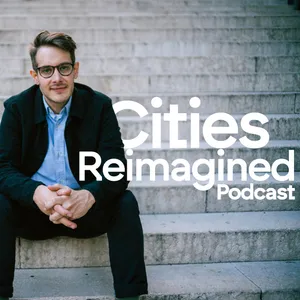
Cities Reimagined is a podcast about the ideas, people and places that are reshaping urban life. It was born out of a simple realisation: too often, the real stories behind urban change go untold. Cities Reimagined opens up space for deeper conversations, where facts meet stories, and policy meets the personal.Join us as we uncover the stories, that challenge the status quo of “doing” urbanism by proving ideas and actions for reshaping our cities. Don't be shy to get in touch with feedback, wishes and your stories by sending an email to johannes@anthropocene.city or via LinkedIn.
Latest Episodes
The most recent episodes — sign up to get AI-powered summaries of each one.
- Today36 min
Reimagining Bruges' Historic Waters - with Ilse Vansevenant and Frederik Roelens
What happens when a city looks beneath its streets for answers to the climate crisis?Bruges may be famous for its canals, but water did much more than create the city’s postcard views. It helped turn medieval Bruges into one of Europe’s largest and most internationally connected cities.Beneath today’s streets, parts of that historic water system still survive. Ancient pipes continue to carry water. Medieval wells are rediscovered during construction work. One was found when the city tried to plant a tree.Could this forgotten infrastructure help Bruges prepare for drought, heavy rainfall and a changing climate?For this episode, I sit beside the canals with Ilse Vansevenant and city archaeologist Frederic Roelens from the City of Bruges. Tourist boats pass as we explore a water story spanning more than 700 years.We talk about the network that once supplied “medieval Manhattan” with fresh water, why residents knew exactly which well provided the best water for peas or tea, and how one of these wells could soon help people water their plants again.But this is not only a story about the past. Ilse explains how sensors are helping the city understand groundwater, water quality and the needs of individual trees. Together, we explore what happens when archaeology, climate adaptation and new technology meet. In this episode:How can a seemingly water-rich city prepare for both drought and flooding?What can Bruges’ medieval water infrastructure teach us about climate resilience?Could ancient underground water pipes be brought back into use?How can sensors reveal when individual trees need water?How can archaeology become an opportunity for urban innovation?Why are citizen ownership and experimentation essential for living with water?Find out more:Blue4Green on PorticoBlue4Green and the City of Bruges on the European Urban Initiative websiteRead: A new chapter in Bruges’ water identity with Blue4GreenListen to the previous Cities Reimagined episode from BrugesExplore all Cities Reimagined episodesSubscribe to the anthropocene.city newsletterBlue4Green is an Innovative Action funded by the European Urban Initiative.
- 1 weeks ago36 min
Reimagining Urban Places - with Vivian Doumpa
What turns a space into a place?Vivian is an urban planner, geographer and board member of Placemaking Europe. For her, placemaking is more than activating a square or adding colourful furniture. It is a mindset that brings communities, public authorities and professionals together to rethink how shared places are used, experienced and cared for.What happens when a city turns back towards the water? And what do we lose when public space becomes too controlled, too polished or too predictable?With Vivian, I talk about Thessaloniki’s rediscovered waterfront, hidden water beneath Athens and why a little friction and chaos might actually be good for urban life.We also get into the bigger questions: climate change, privatisation, democracy and the pressure on the people trying to change cities. Because placemaking is not only about transforming places. It is also about how we relate to them, to each other and to ourselves.IN THIS EPISODE:• Why placemaking is about more than attractive public spaces • How cities can reconnect people with water and nature • Why friction and messiness are part of healthy urban life • How public space supports participation and democracy • Why placemakers also need places of careLinksLearn more about Placemaking EuropeConnect with Vivian Doumpa on LinkedInRead Vivian’s profile at Placemaking EuropeCITIES REIMAGINEDCities Reimagined explores the ideas, people and places reshaping urban life.Find the podcast and previous episodes: https://www.anthropocene.city/podcast/Follow Cities Reimagined on Instagram: https://www.instagram.com/citiesreimagined/Want new episodes, urban stories and updates from anthropocene.city in your inbox?Subscribe to the newsletter: https://preview.mailerlite.io/forms/574810/173951455095424303/share
- 3 weeks ago40 min
Reimaginning Urban Swimming - with Sander Belmans, Barbara Enckels and An Schepers
Reimagining urban swimmingWhat does it take to transform a former industrial dock into a place where people can safely swim?In this episode of Cities Reimagined, Johannes visits the Keerdok in Mechelen, Belgium. Once dominated by warehouses, parking and industrial activity, the area is being transformed into a new urban neighbourhood that opens the city towards the water as part of the 'Water as the Source of Urban Public Space' Innovative Action funded by the European Urban Initiatives.He speaks with Sander Belmans from De Vlaamse Waterweg and An Schepers and Barbara Enckels from the City of Mechelen about the long process behind the city’s open-water swimming zone.After five years of temporary experiments, Mechelen is now preparing a permanent swimming facility at the Keerdok. The new design will combine swimming infrastructure, public space, shade, greenery and floating habitats for animals and plants.Listen to the episode here: 🎧 Spotify: [LINK]🎧 Apple Podcasts: [LINK]▶️ YouTube: [LINK]In this episode:● How can cities make open-water swimming possible when the rules are not yet ready?● How can swimming, shipping, biodiversity and public space coexist in the same waterway?● What does it take to transform an industrial dock into a place where people want to swim?● How can cities build a culture of safe and inclusive open-water swimming?● How can cities overcome cultural barriers to open-water swimming?● How can swimming areas work for different ages, abilities and user groups?Previous Cities Reimagined episodes from MechelenReimagining Mechelen, Parts 1 and 2 Explore how Mechelen is reconnecting people, public space and nature along the River Dijle, including how the city is experimenting with giving nature a voice in urban development.Nature’s comeback to Mechelen A conversation with city ecologist Michiel Van Mele and Maarten De Jonge about biodiversity, water quality and the return of nature to the Binnendijle.Learn moreDiscover WATSUPS on Portico Find articles, podcast episodes, project stories and lessons from Mechelen’s journey to reconnect people, animals and plants with the river.Visit the WATSUPS project page on the European Urban Initiative website Learn more about the project, its partnership and its ambition to develop water as an accessible and inclusive form of public space.WATSUPS, Water as the Source of Urban Public Space, is an Innovative Action supported by the European Urban Initiative and a New European Bauhaus demonstrator.
- 3 weeks ago2 min
Still Reimagining: Introducing Season 4
Season 4 of Cities Reimagined will drop next week. Join me on the journey as we explore everything from urban swimming to medieval infrastructures, from Turkey to Canada. Make sure to subscribe to Cities Reimagined to not miss an episode and get connected to Johannes on LInkedIn: https://www.linkedin.com/in/johannes-riegler/
- Mar 5, 202650 min
Reimagining Cities Beyond Sustainability - with Indy Johar and Caroline Paulick-Thiel
In August 2025, Johannes sat down with Caroline Paulick-Thiel and Indy Johar deep in the Austrian Alps. During the European Forum Alpbach they discussed nothing less than the future of European (urban) civilisation. Looking for a way to make sense of the daily news, current geopolitical shifts, climate catastrophe, and general what feels like insanity around the world? Then, this is an episode you cannot afford to miss.If you like the episode, make sure to subscribe to Cities Reimagined or drop Johannes a line on LinkedIn or at johannes@anthropocene.city .In this episode:Why Europe, in between authoritarian superpowers, can lead the way to new societies.Why this is a post-war-like moment for Europe, demanding structural rebuilding.Why we need to rewire the metabolism of everything.How to reimagine urban economies for a secure Europe.Why we need more honesty in the scope of the current crises.How to embrace insanity and what knowledge our bodies hold.Caroline is a Berlin-based strategic designer and public policy expert, specialising in transformative innovation within the public sector. She is the Director and Co-founder of Politics for Tomorrow, an organisation dedicated to democratising systems change and fostering responsible public innovation. With a background in Design and Public Policy, she focuses on developing participatory processes and innovative frameworks to address complex public challenges.Indy is a London-based architect, social innovator, and serial entrepreneur. He is best known as the co-founder of 00 (Project00.cc) and Dark Matter Labs, organisations focused on systemic change, urban innovation, and sustainable urbanisation. Indy is also a Senior Innovation Associate with the Young Foundation and a Visiting Professor at the University of Sheffield.
- Jan 26, 202640 min
Reimagining Bruges: Water, green spaces and community
If you have ever been to Bruges, or seen it in films or photos, chances are you have noticed at least one of the following: canals, swans, water, tourist boats. What often goes unnoticed is that Bruges, and the wider region of Flanders in Belgium, regularly suffers from droughts. In this episode, we meet Astrid Stroobandt from the City of Bruges and Simon Thys from the non-profit organisation Waterland, who are currently running the Blue4Green project, an Innovative Action funded by the European Urban Initiative. Astrid and Simon explain how the project aims to change the city’s relationship with water in multiple ways, and how children’s dreams can inspire change just as much as data and technological innovation. We also hear how the city is experimenting with medieval infrastructure as water buffers, and how green and blue algae are cutting summer fun short. If you would like to find out more about the project, have a look at the links below, connect with Astrid, Simon and Johannes on LinkedIn and follow Blue4Green on Portico. · European Urban Initiatives: https://www.urban-initiative.eu· Portico - Gateway to urban learning: https://portico.urban-initiative.eu· Article: From smart sensors to medieval cultural heritage: A new chapter in Bruges' water identity with Blue4Green· Article: A hot summer’s wake-up call to the City of Bruges: A blue-green algae crisis and what comes next
- Jan 12, 202654 min
The People Behind Urban Change - with Kristijan Radojcic
I have to start with an apology. To the guest of this episode, Kristijan Radojcic. After we had this conversation in a wild hotel room with tacky wallpaper in Wroclaw, Poland, the raw version of the recording was sitting unedited on my notebook for much too long.Finally, I am more than happy to share this episode with you, where Kris takes on a deep dive into his childhood in Slovenia and how a trip to Southeast Asia changed everything.If you are around urban EU programmes, you might have bumped into Kris on various occasions as he is working with URBACT, a programme that helps cities to develop an integrated set of actions for sustainable change. He and his family live in Paris.Connect with Kristijan and Johannes on LinkedIn and take a look at URBACT.In this episode:How did growing up in 1980s Ljubljana shape everyday urban life?How do music and architecture intersect in shaping cities and communities?How can encounters beyond Europe reshape ideas of sustainable urbanism?How do European cities learn from each other in practice, not theory?How do paradox economies shape our societies?Why does neighbourhood-level community matter for urban resilience?
- Oct 11, 202537 min
Reimagining Urban Biking - with Josip Rotar
Do you remember the first time you learned how to ride a bike? Chances are that you do, and if you kept on kicking those pedals, you might have some fond memories about the (daily) adventures with your bicycle. But… although biking ticks almost all boxes when it comes to urban sustainability, health, livability, affordability and accessibility, our cities still do not unfold the full potential of how urban biking can make our neighbourhoods better places. My guest today, Josip Rotar from the Maribor Cycling Network, is one of those who pushed for change in the city. Find out how advocacy for urban biking led Josip to take a political role and why urban biking is competing with the SUV of your neighbourhood (or your own?). Find out more about Josip and the Maribor Cycling Network here.Josip and the Maribor Cycling Network was part of the first round of Driving Urban Transition’s Urban Doers Community. We recorded this conversation just before the ACT NOW Mayor’s Conference in Vienna.
About Cities Reimagined
Cities Reimagined is a podcast about the ideas, people and places that are reshaping urban life. It was born out of a simple realisation: too often, the real stories behind urban change go untold. Cities Reimagined opens up space for deeper conversations, where facts meet stories, and policy meets the personal.Join us as we uncover the stories, that challenge the status quo of “doing” urbanism by proving ideas and actions for reshaping our cities. Don't be shy to get in touch with feedback, wishes and your stories by sending an email to johannes@anthropocene.city or via LinkedIn.
Customized Recaps
AI-powered recaps with compact key takeaways, quotes, and insights.
Straight to Your Inbox
Get key takeaways from Cities Reimagined in a 5-minute read.
Save Hours Every Week
Stay current on your favorite podcasts without falling behind.
Frequently Asked Questions
What is Podzilla's Cities Reimagined daily summary?
It's a free AI-powered email that summarizes new episodes of Cities Reimagined as soon as they're published. You get the key takeaways, notable quotes, and links & mentions — all in a quick read.
How does the Cities Reimagined podcast summary work?
When a new episode drops, our AI transcribes and analyzes it, then generates a personalized summary tailored to your interests and profession. It's delivered to your inbox every morning.
Is this an official Cities Reimagined product?
No. Podzilla is an independent service that summarizes publicly available podcast content. We're not affiliated with or endorsed by Johannes Riegler.
Can I get summaries of other podcasts too?
Absolutely! The free plan covers up to 3 podcasts. Upgrade to Pro for 15, or Premium for 50. Browse our full catalog at /podcasts.
How often does Cities Reimagined release new episodes?
Cities Reimagined publishes monthly. Our AI generates a summary within hours of each new episode.
What topics does Cities Reimagined cover?
Cities Reimagined covers topics including Science, Education. Our AI identifies the specific themes in each episode and highlights what matters most to you.
Start getting Cities Reimagined summaries tomorrow morning.
Free forever for up to 3 podcasts. No credit card required.
Free forever for up to 3 podcasts. No credit card required.