Free Daily Podcast Summary
Chemstories – a podcast about PnP/chemsex (English-language edition): Daily Summaries Delivered
by Qollab
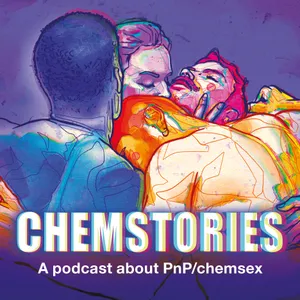
Chemstories is a podcast series created by gay, bisexual, queer men, as well as trans and non-binary people who wish to share their experiences related to chemsex*. For Chemstories, we worked for over a year with our editorial board made up of individuals with firsthand experience of chemsex. Three members even became hosts for group discussions in their respective cities—Toronto, Montreal, and Halifax—whom you will meet in the upcoming episodes. From the very beginning, it was essential that this podcast be truly by and for the community. But Chemstories is more than a podcast — it’s the result of a collaborative investigation into the lived realities of chemsex. Together, we set out to explore one central question: "Why is it important for people with lived experience of PnP/chemsex to tell their stories in their own words?" This question came directly from our editorial board. They saw it as vital — because too often, people with lived experience have been silenced, stigmatized, or spoken about rather than with. Through Chemstories, they take back that space — to speak for themselves, and to be heard. So thank you for listening. The views expressed in this podcast reflect personal experiences and opinions. Chemstories addresses themes that may be sensitive for some listeners. For a list of support resources, visit: https://qollab.ca/en/ressources-services-chemsex/ Visit our website: chemstories.ca and contact us at chemstory@espum.umontreal.ca * “Chemsex” is a contraction of “chemical” and “sex.” It refers to the use of illicit drugs with the intention of having sex, primarily within GBTQ+ communities. It is also known as Party’n’Play (PnP). Chemstory is a research project approved by the ethics committee of the Université de Montréal (CERSES-20-157-D). Chemstory is funded by the Canadian Institutes of Health Research. The testimonies shared in this podcast reflect individual experiences and personal opinions. Your own experiences and opinions may differ from those expressed here.
Latest Episodes
The most recent episodes — sign up to get AI-powered summaries of each one.
- May 22, 202629 min
32. YHZ Maturity-Pt. 2 — I Know What I Am
In this second and last segment of the YHZ Maturity flight, Halifax host Andrew concludes his conversation with Harry and Hector, focusing on the intersection of aging, HIV, and chemsex. The guests discuss how living with HIV has evolved, with U=U (Undetectable = Untransmittable) and PrEP fundamentally changing the landscape of sexual health and intimacy. However, they note a lingering disconnect in the party community, where discussions about status are often skipped entirely in favor of antiretrovirals and substance use. The trio also tackles the scarcity of support services in Atlantic Canada, contrasting it with the accessibility found in larger cities. They share personal strategies for maintaining balance, such as the importance of setting boundaries. The episode wraps up with a nuanced reflection on whether they would recommend chemsex to others, balancing the undeniable pleasure and connection it offers against the risks and consequences. If you’re looking for support, please explore our list of Chemsex resources/services.
- May 21, 202630 min
31. YHZ Maturity-Pt. 1 — Hey Harry & Hector
Halifax host Andrew introduces Harry and Hector, two older participants whose experiences challenge the typical narrative of youth and recklessness often associated with chemsex. Hector, who began using drugs in his mid-50s after retiring, candidly discusses the unexpected slide from isolation to regular use. Harry, with a 20-year history of use, reflects on the "allure" of crystal meth—a "powerful drug" that heightened sexuality in a way no other substance could. The conversation explores the unique dynamics of the Halifax scene compared to larger metropolitan areas. They discuss the "stigma within substances", and the challenges of managing privacy in a smaller city where everyone knows your business. The episode also touches on intergenerational dynamics, with both guests reflecting on the transactional nature of encounters with younger men, often navigating the blurred lines between genuine attraction and the expectation of being a provider. If you’re looking for support, please explore our list of Chemsex resources/services.
- May 15, 202631 min
30. YHZ Resilience-Pt. 2 — Giving Grace
In this second chapter of the YHZ Resilience flight, Halifax host Andrew guides Steven and James through a raw discussion on the complex intersection of trauma, shame, and recovery. James opens up about how a strict religious upbringing led him to repress childhood abuse, and later, how chemsex became a way to enact a self-fulfilling prophecy of being "reduced to just a sex object". Steven explains how relapsing can feel doubly shameful when paired with experiences of sexual assault that occur during use, making it easier to "sweep under the rug" rather than face judgment. The conversation shifts to the limitations of current support systems, critiquing traditional recovery models for their rigidity and lack of space to discuss sexual trauma openly. James describes finding solace in an Anonymous group initially but ultimately stepping away, finding more empowerment in personal accountability and therapy. Steven dreams of a recovery space specifically informed about chemsex. The episode concludes with a powerful reflection on self-compassion, advising listeners to replace shame with curiosity. If you’re looking for support, please explore our list of Chemsex resources/services. 🔗 Other Resources Mentioned Centre for Addiction and Mental Health (CAMH) Direction 180 : non-profit community-based opioid treatment program located in Halifax, Nova Scotia.
- May 15, 202633 min
29. YHZ Resilience-Pt. 1 — Hey Steven & James
Halifax host Andrew opens a challenging yet necessary conversation with guests Steven and James, focusing on the intersection of chemsex, consent, and sexual trauma. Steven, five years into recovery, shares how early experiences of sexual abuse created a "gateway" not just to substance use, but to a pattern of seeking out sexual encounters as a way to regain a sense of control. He describes how substances became tools to facilitate intimacy yet ultimately led to reliving past traumas. James explains how substances lowered his inhibitions enough to express desires that were often self-destructive, rooted in a deep sense of unworthiness. The discussion highlights specificities of the Halifax scene, where an interconnected community means that encounters aren't truly anonymous, leading to the reality of potentially encountering people with personal connections in vulnerable settings. If you’re looking for support, please explore our list of Chemsex resources/services.
- May 8, 202627 min
28. YHZ Activism — Hey Andrew
In the inaugural episode of the YHZ Halifax flights, Investigator Olivier introduces local host Andrew, whose personal journey from daily chemsex use to becoming a key advocate in Nova Scotia shapes the conversation. He candidly addresses the "internalized homophobia" often found in more rural or industrial areas of the East Coast, which can drive chemsex further underground. He discusses a desire to reclaim the narrative around chemsex in smaller cities where privacy is scarce, and stigma runs high. Andrew highlights the unique challenges of the Halifax scene, and the lack of dedicated support services leaves many navigating their use in isolation. The episode delves into his efforts to fill these gaps, from running pilot harm reduction projects to creating an online resource hub. Ultimately, Andrew hopes the podcast will challenge the misconception that chemsex equals a "messy" life, instead showcasing the agency, complexity, and humanity of those involved. If you’re looking for support, please explore our list of Chemsex resources/services. 🔗 Other Resources Mentioned Andrew’s Web site : Coming Spring 2026 Matthew Numer (Dalhousie University) : Philip Joy (Mount Saint Vincent University) : G-emergency Response
- May 8, 20268 min
27. YHZ Prelude — Why It's Important, Halifax
In this prelude to the YHZ Halifax series, this episode centers on the central question of this podcast series: Why is it important for people with lived experience of PnP/chemsex to tell their own stories in their own words? First, Olivier Ferlatte, the principal investigator of Chemstories, asks the question to Halifax Host Andrew who emphasizes that lived experience is a powerful tool for empathy and destigmatization. Andrew then asks the same question to his guests Steven, James, Harry and Hector whose reflections set the tone for the episodes to come. Together, their voices underscore that visibility is key to building a supportive community where no one has to navigate the challenges of chemsex alone. They hope their stories will not only foster personal connections but also drive the creation of more effective, compassionate policies and support systems. If you’re looking for support, please explore our list of Chemsex resources/services.
- May 1, 202626 min
26. YUL Plurality-Pt. 3 — Unapologetically
Éric, Ally, and Michael address the lack of support and visibility for gender-diverse individuals in the chemsex scene. Éric emphasizes that amplifying these rare voices is essential to breaking isolation for those who feel unseen. The group also critiques alienating, abstinence-only recovery models, instead celebrating the emergence of inclusive harm-reduction alternatives. They conclude by advocating for a diverse "safety net" of resources—offering multiple paths to health so fewer people fall through the cracks. If you’re looking for support, please explore our list of Chemsex resources/services.
- May 1, 202625 min
25. YUL Plurality-Pt. 2 — Gender Play
Éric, Ally, and Michael examine performative gender pressures. Éric used chemsex to escape hyper-masculinity while briefly embodying its "super version." Ally similarly built a masculine persona for acceptance but eventually used these experiences to peel back those layers and reject external validation. The group also discusses how identity impacts relationships. Michael highlights the difficulty of finding authentic connection as a trans man in hypersexualized scenes, choosing to de-center sex for his mental health. Ally emphasizes that regular partners provided a safety net, protecting her from the fetishization and risks gender-diverse people often face in anonymous settings. If you’re looking for support, please explore our list of Chemsex resources/services.
About Chemstories – a podcast about PnP/chemsex (English-language edition)
Chemstories is a podcast series created by gay, bisexual, queer men, as well as trans and non-binary people who wish to share their experiences related to chemsex*. For Chemstories, we worked for over a year with our editorial board made up of individuals with firsthand experience of chemsex. Three members even became hosts for group discussions in their respective cities—Toronto, Montreal, and Halifax—whom you will meet in the upcoming episodes. From the very beginning, it was essential that this podcast be truly by and for the community. But Chemstories is more than a podcast — it’s the result of a collaborative investigation into the lived realities of chemsex. Together, we set out to explore one central question: "Why is it important for people with lived experience of PnP/chemsex to tell their stories in their own words?" This question came directly from our editorial board. They saw it as vital — because too often, people with lived experience have been silenced, stigmatized, or spoken about rather than with. Through Chemstories, they take back that space — to speak for themselves, and to be heard. So thank you for listening. The views expressed in this podcast reflect personal experiences and opinions. Chemstories addresses themes that may be sensitive for some listeners. For a list of support resources, visit: https://qollab.ca/en/ressources-services-chemsex/ Visit our website: chemstories.ca and contact us at chemstory@espum.umontreal.ca * “Chemsex” is a contraction of “chemical” and “sex.” It refers to the use of illicit drugs with the intention of having sex, primarily within GBTQ+ communities. It is also known as Party’n’Play (PnP). Chemstory is a research project approved by the ethics committee of the Université de Montréal (CERSES-20-157-D). Chemstory is funded by the Canadian Institutes of Health Research. The testimonies shared in this podcast reflect individual experiences and personal opinions. Your own experiences and opinions may differ from those expressed here.
Customized Recaps
AI-powered recaps with compact key takeaways, quotes, and insights.
Straight to Your Inbox
Get key takeaways from Chemstories – a podcast about PnP/chemsex (English-language edition) in a 5-minute read.
Save Hours Every Week
Stay current on your favorite podcasts without falling behind.
Frequently Asked Questions
What is Podzilla's Chemstories – a podcast about PnP/chemsex (English-language edition) daily summary?
It's a free AI-powered email that summarizes new episodes of Chemstories – a podcast about PnP/chemsex (English-language edition) as soon as they're published. You get the key takeaways, notable quotes, and links & mentions — all in a quick read.
How does the Chemstories – a podcast about PnP/chemsex (English-language edition) podcast summary work?
When a new episode drops, our AI transcribes and analyzes it, then generates a personalized summary tailored to your interests and profession. It's delivered to your inbox every morning.
Is this an official Chemstories – a podcast about PnP/chemsex (English-language edition) product?
No. Podzilla is an independent service that summarizes publicly available podcast content. We're not affiliated with or endorsed by Qollab.
Can I get summaries of other podcasts too?
Absolutely! The free plan covers up to 3 podcasts. Upgrade to Pro for 15, or Premium for 50. Browse our full catalog at /podcasts.
How often does Chemstories – a podcast about PnP/chemsex (English-language edition) release new episodes?
Chemstories – a podcast about PnP/chemsex (English-language edition) publishes daily. Our AI generates a summary within hours of each new episode.
What topics does Chemstories – a podcast about PnP/chemsex (English-language edition) cover?
Chemstories – a podcast about PnP/chemsex (English-language edition) covers topics including Fitness, Health & Fitness. Our AI identifies the specific themes in each episode and highlights what matters most to you.
Start getting Chemstories – a podcast about PnP/chemsex (English-language edition) summaries tomorrow morning.
Free forever for up to 3 podcasts. No credit card required.
Free forever for up to 3 podcasts. No credit card required.