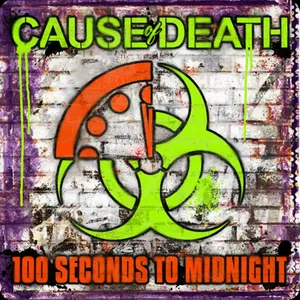
Free Daily Podcast Summary
Cause of Death - 100 Seconds to Midnight: Daily Summaries Delivered
by Jackie Moranty
Cause of Death - 100 Seconds to Midnight explores the things that will kill you through the lens of science, personal experience as a microbiologist and history. For more information, check out my website at www.causeofdeath100secs.net
Latest Episodes
The most recent episodes — sign up to get AI-powered summaries of each one.
- 6 days ago56 min
S8 E11: A Goat's Guide to Eradication: The Story of New World Screwworm
S8 E11: A Goat’s Guide to Eradication: The Story of New World Screwworm Cause of Death – 100 Seconds to Midnight | Season 8 Finale: The Worms Crawl In What do goats have to do with eradicating a flesh-eating parasite? More than you might think. New World screwworm (Cochliomyia hominivorax) is a blowfly whose larvae feed on living tissue. A tiny wound, even an unhealed umbilical stump, can provide a place for a female to lay her eggs. The resulting infestation, called myiasis, can devastate livestock, wildlife, pets, and occasionally people. In this episode, we examine the fly’s life cycle, the mouth hooks and spines that help larvae feed, protein-digesting enzymes, the host’s inflammatory response, and what diagnosis and treatment involve. Then we follow scientists Edward Knipling, Raymond Bushland, Alfred Baumhover, and their collaborators as they develop and test the sterile insect technique. Their early experiments on Sanibel Island, including goats used in field research, exposed the problem of reinfestation. Curaçao demonstrated that eliminating a wild population was possible. Florida, the American Southwest, Mexico, and Central America became the next chapters in an extraordinary multinational campaign. But eradication is not the same as extinction. A maintained barrier in Panama helped protect the cleared regions for decades. The resurgence beginning in 2023 and its spread northward have put that achievement to the test again. We also look at human case reports, the consequences for ranchers and animal movement, and the less visible toll on wildlife and ecosystems. The science tells us what happened. The history reminds us why it matters. · CDC, Clinical Overview of New World Screwworm: https://www.cdc.gov/new-world-screwworm/hcp/clinical-overview/ · USDA APHIS, New World Screwworm Prevention for Animals: https://direct.aphis.usda.gov/livestock-poultry-disease/cattle/ticks/screwworm · USDA APHIS, Using Sterile Insect Technique to Stop Screwworm Spread: https://direct.aphis.usda.gov/animals/animal-health/livestock-and-poultry-disease/stop-screwworm/using-sterile-insect-technique · USDA APHIS, New World Screwworm Ready Reference Guide, Maps and Timelines: https://www.aphis.usda.gov/sites/default/files/screwworm_rrg.pdf · COPEG, History of the Eradication Program: https://www.copeg.org/en/historia/ · USDA APHIS, Current Status and Updates: https://www.aphis.usda.gov/livestock-poultry-disease/stop-screwworm/current-status · Journal of Medical Entomology, New World Screwworm: Past, Present and Future: https://doi.org/10.1093/jme/tjag155 For current outbreak counts, consult USDA and state animal-health updates; numbers cited in the episode refer to its October 2026 reporting period. Website: https://www.causeofdeath100secs.net Email: jackie@causeofdeath100secs.net Support the show on Patreon: https://www.patreon.com/JackieMoranty Cause of Death – 100 Seconds to Midnight is a proud member of the Southern Gothic Network and the Darkcast Network. Southern Gothic Network: https://www.southerngothicmedia.com Darkcast Network: https://www.darkcastnetwork.com Original podcast logo artwork: Chelli Schmac Music: “There Is No Sequel” by Philip Ayers, via Epidemic Sound. #CauseOfDeathPodcast #NewWorldScrewworm #Screwworm #Parasitology #Myiasis #SterileInsectTechnique #ScienceHistory #SouthernGothicNetwork #Darkcast Learn more about your ad choices. Visit megaphone.fm/adchoices
- 2 weeks ago35 min
S8 E10: The Little Parasite That Could: The Story of Crithidia bombi
S8 E10: The Little Parasite That Could: The Story of Crithidia bombi Crithidia bombi is a microscopic gut parasite of bumblebees. Its effects depend on the host and its circumstances. Infection can reduce a queen’s success in founding a colony and affect colony performance without immediately killing every infected bee. The bee’s gut is defended by its immune responses and microbial community. The ileum is an attachment site for the parasite, not an undefended gap in the immune system. Honeybee experiments have found viable parasite cells passing through without demonstrating a successfully multiplying infection. Carrying a parasite and developing an infection are different things. Heather nectar contains callunene. Experiments showed that exposure can cause incoming Crithidia cells to lose the flagellum they use to attach in the ileum. The crop, where bees store nectar, provides an opportunity for that exposure before the parasite establishes itself farther down the gut. The 2019 study demonstrated protection against new infection rather than treatment of established infection. A later colony experiment found lower infection prevalence in colonies supplied with heather extract or callunene. Locally appropriate flowering plants and food across the season matter to bee health. Research around southern Ontario greenhouses found patterns consistent with parasite spillover from commercial bumblebees into wild populations. Shared flowers can connect those populations. In Patagonia, introduced Bombus terrestris spread beyond the places where people wanted crop pollination. The 2009 Bariloche survey found Crithidia bombi and a different parasite, Apicystis bombi, in introduced bees. Failure to detect those pathogens in native bees sampled elsewhere did not establish that the invasion was harmless. Later studies documented native Bombus dahlbomii decline and replacement by introduced bees. Around Villarrica and Pucón in Chile’s Lake District, the native bee was abundant in 2004 but no longer found in 2010. Native populations remained farther south. Competition and the contributions of individual pathogens remained unresolved. Canadian biosecurity guidance calls for disposal of the entire commercial colony, including remaining live bees. One recommended method is freezing the hive and its contents before bagging them for landfill disposal. Containment cannot retrieve bees that have already escaped and established outside. Changes in queen survival and reproduction can affect future colonies and the pollination they provide. Reduced fruit and seed production reaches into food webs, farm livelihoods, food prices, and access to nutritious diets. Diverse pollinator communities, nesting habitat, and flowering resources throughout the season support healthier ecosystems. Colony collapse disorder is a particular honeybee syndrome, not a label for every dying bee colony or declining bumblebee population. No single bacterium has been established as its cause. Research has considered interacting pathogens, mites, nutrition, pesticides, and management stress. Peer-reviewed research Koch et al. (2019). Flagellum Removal by a Nectar Metabolite Inhibits Infectivity of a Bumblebee Parasite. Current Biology. https://doi.org/10.1016/j.cub.2019.08.037 Jones et al. Heather nectar extracts reduce within-colony epidemics of the bumblebee parasite Crithidia bombi. Proceedings of the Royal Society B. https://doi.org/10.1098/rspb.2025.1865 Deshwal and Mallon (2014). Antimicrobial peptides play a functional role in bumblebee anti-trypanosome defense. https://pubmed.ncbi.nlm.nih.gov/24060502/ Mockler et al. (2018). Microbiome Structure Influences Infection by the Parasite Crithidia bombi in Bumble Bees. https://doi.org/10.1128/AEM.02335-17 Koch and Schmid-Hempel (2011). Socially transmitted gut microbiota protect bumble bees against an intestinal parasite. https://pmc.ncbi.nlm.nih.gov/articles/PMC3228419/ Ngor et al. (2020). Cross-infectivity of honey and bumble bee-associated parasites across three bee families. https://pmc.ncbi.nlm.nih.gov/articles/PMC7477370/ Brown et al. (2003). Strong context-dependent virulence in a host–parasite system: reconciling genetic evidence with theory. https://doi.org/10.1046/j.1365-2656.2003.00770.x No impacts of glyphosate or Crithidia bombi, or their combination, on the bumblebee microbiome (2023). Scientific Reports. A reminder that findings in honeybees cannot automatically be transferred to bumblebees. https://doi.org/10.1038/s41598-023-35304-3 Otterstatter and Thomson (2008). Does Pathogen Spillover from Commercially Reared Bumble Bees Threaten Wild Pollinators? https://doi.org/10.1371/journal.pone.0002771 Plischuk and Lange (2009). Invasive Bombus terrestris parasitized by a flagellate and a neogregarine. Original Patagonia parasite survey. https://doi.org/10.1016/j.jip.2009.08.005 Morales et al. (2013). Rapid ecological replacement of a native bumble bee by invasive
- Oct 24, 202633 min
S8 E9: 100 Seconds to Midnight: The Rat Napkin Incident
The Shadow Economy Show Notes The Rat Napkin Incident — Halloween Show Notes Captain Obvious needs gas money. An influencer buys his three-dollar rat napkin. Before long, there are numbered editions, resale listings, forged certificates and collectors borrowing money to buy rats. Somewhere in Roswell, Steve is opening a closet full of luxury bathrobes. This Halloween, we follow the napkins through scarcity, speculation, counterfeiting and a market collapse. Behind the absurdity are questions about where value comes from, who profits when prices climb, and what happens when buyers can no longer trust what they’re getting. The napkin buyer can walk away. Someone looking for food, fuel or medicine may not have that luxury. The Rat Napkin Incident is an original fictional story developed by Jackie Moranty and Quinn, her ChatGPT AI assistant, from the shared lore of the Cause of Death Art Garage. The final script was reviewed and corrected by Jackie Moranty. Captain Obvious, Steve’s collectible-merch closet, the numbered napkins, their prices and the transactions described are invented. They are not accounts of an actual Goodwill operation, influencer scandal or collectible market. The Roswell Goodwill storyline is fictional. The economic concepts and factual claims draw on the sources below. The fictional scenes illustrate those mechanisms; they are not research findings. Written and hosted by Jackie Moranty, with AI-assisted drafting and research. A shadow economy includes activity hidden from public authorities: unreported income from otherwise legal goods and services, as well as illegal trade under the broad definition used here. Some economic studies define it more narrowly. Ordinary collecting, speculation and legitimate resale are not automatically illegal or hidden economic activity. IMF — Hiding in the Shadows: The Growth of the Underground Economy (2002) Supports the broad shadow-economy definition, including concealed income from lawful activity and illegal trade. https://www.imf.org/external/pubs/ft/issues/issues30/index.htm OECD/EUIPO — Mapping Global Trade in Fakes 2025 Estimates international counterfeit trade at approximately $467 billion in 2021, equivalent to 2.3% of global imports. The report was published in 2025; the estimate uses 2021 data and is not a total for the entire shadow economy. It also examines affected products and enforcement challenges. https://www.oecd.org/en/publications/mapping-global-trade-in-fakes-2025_94d3b29f-en.html FTC — Bringing Dark Patterns to Light (2022) Documents misleading countdown timers, false limited-time offers and other tactics that impair consumer choice. A genuinely limited edition is different from falsely claiming scarcity or a deadline. https://www.ftc.gov/reports/bringing-dark-patterns-light USPTO — About Trademark Infringement Explains unauthorized trademark use that is likely to confuse people about the source of goods. Counterfeit branding differs from a product merely having a similar style. https://www.uspto.gov/page/about-trademark-infringement US Code — 18 USC §2320: Trafficking in Counterfeit Goods or Services Federal criminal law addresses intentional trafficking involving knowing use of counterfeit marks. The episode’s fake branded purses and sunglasses illustrate counterfeit trade; its forged napkins also illustrate fraudulent sales. https://uscode.house.gov/view.xhtml?edition=2023&num=0&req=granuleid%3AUSC-2023-title18-section2320 OECD — Countering Illicit Trade in Online Marketplaces Research and policy resources on counterfeit distribution through digital marketplaces. Illegal trade can take place through ordinary-looking online storefronts. https://www.oecd.org/en/topics/sub-issues/countering-illicit-trade-in-online-marketplaces.html UK National Archives — Illegally Selling Coupons A wartime record documenting illegal ration-coupon trading, with historical context on rationing and black markets. https://www.nationalarchives.gov.uk/education/resources/home-front-1939-1945-part-two/illegally-selling-coupons/ Federal Reserve — Financial Stability Report, November 2025: Purpose and Framework Explains valuation pressures, household and business borrowing, financial-sector leverage and funding risks. These vulnerabilities can amplify losses, forced sales and disruptions to credit. The Rat Napkin bubble illustrates the mechanisms; it is not evidence of a real financial crisis. https://www.federalreserve.gov/publications/november-2025-financial-stability-report-purpose-and-framework.htm Cause of Death – 100 Seconds to Midnight explores threats to civilization and the science, history and human decisions that shape them. Website: https://www.causeofdeath100secs.net Email: jackie@causeofdeath100secs.net Linktree: https://linktr.ee/CauseofDeathpod Instagram: @CauseofDeathpod Threads: @causeofdeathpodcast Facebook: @COD100Secs Twitter/X: @CauseofDeath10 TikTok: @causeofdeath100secs Listen on all major
- Oct 10, 202629 min
S8 E8: 100 Seconds to Midnight: To Live or Die Part 2
To Live or Die Part 2: Having Insurance Isn’t the Same as Getting Care The cancer is gone. The nose is reconstructed. The bills? Still here. In Part 1, I told you how getting cancer surgery became a scramble to raise money—even though I had health insurance. This time, I’m finishing that story. Reconstruction and recovery went well, my plastic surgeon promised me the sexiest nose in Springfield, and I’m still waiting on that last part. I also still owe about $600 on the surgery. Further treatment for the scar is considered cosmetic under my coverage, so my insurance won’t pay for it. Then we pick up the history: Medicare and Medicaid, managed care, employer health plans, the Affordable Care Act and the rules shaping access today. We look at deductibles, upfront payment demands, coverage decisions and the companies handling healthcare money. The point is simple: a service can be covered by a policy and still be financially out of reach for the patient. I’m advocating for universal access to healthcare in the US. I’m open to different ways of getting there. We’ll examine public financing, regulated insurance systems and a public option—and ask whether each approach actually gets people the care they need without financial hardship. And our “What if?”: what happens to the next person who needs surgery but doesn’t have an audience, a fundraiser or friends who can afford to help? Research note: medical expenses and illness-related income loss can contribute to bankruptcy. Studies use different definitions and methods; this episode does not claim that healthcare is definitively the leading cause. Policy details reflect September 30, 2026. American Academy of Dermatology — Mohs surgery https://www.aad.org/public/diseases/skin-cancer/types/common/melanoma/mohs-surgery National Archives — Medicare and Medicaid Act (1965) https://www.archives.gov/milestone-documents/medicare-and-medicaid-act CMS — Medicare and Medicaid milestones (1937–2015) https://www.cms.gov/About-CMS/Agency-Information/History/Downloads/Medicare-and-Medicaid-Milestones-1937-2015.pdf US Department of Labor — ERISA https://www.dol.gov/general/topic/health-plans/erisa US Department of Labor — Self-insured health plans (2026 report) https://beta.dol.gov/research-data/surveys-reports-publications/2026-report-congress-annual-report-self-insured-group-health-plans US Department of Labor — COBRA continuation coverage https://www.dol.gov/agencies/ebsa/about-ebsa/our-activities/resource-center/publications/workers-guide-health-benefits-cobra HHS — HIPAA Privacy Rule and the 1996 law https://www.hhs.gov/hipaa/for-professionals/privacy/laws-regulations/index.html HealthCare.gov — ACA rights and protections https://www.healthcare.gov/health-care-law-protections/rights-and-protections/ HealthCare.gov — Annual and lifetime coverage limits https://www.healthcare.gov/health-care-law-protections/lifetime-and-yearly-limits/ IRS — Employer coverage provisions and the 50-employee threshold https://www.irs.gov/affordable-care-act/employers/employer-shared-responsibility-provisions HealthCare.gov — Cost-sharing reductions https://www.healthcare.gov/lower-costs/save-on-out-of-pocket-costs/index.html CMS — No Surprises Act protections https://www.cms.gov/initiatives/your-patient-rights/medical-bill-rights/know-your-medical-bill-rights/know-your-rights-insurance IRS — Premium tax credits and changes for 2026 https://www.irs.gov/affordable-care-act/individuals-and-families/questions-and-answers-on-the-premium-tax-credit CMS — Medicaid community-engagement requirements (2026 rule) https://www.cms.gov/newsroom/fact-sheets/medicaid-community-engagement-requirement-certain-individuals-interim-final-rule-comment-period-cms HealthCare.gov — Premiums, deductibles and total costs https://www.healthcare.gov/choose-a-plan/your-total-costs/ HealthCare.gov — What an out-of-pocket maximum excludes https://www.healthcare.gov/glossary/out-of-pocket-maximum-limit/ HHS OIG — Medicare Advantage denials (2022; sampled 2019 requests) https://www.oig.hhs.gov/reports/all/2022/some-medicare-advantage-organization-denials-of-prior-authorization-requests-raise-concerns-about-beneficiary-access-to-medically-necessary-care/ FTC — Prescription drug middlemen (2025 interim staff report) https://www.ftc.gov/news-events/news/press-releases/2025/01/ftc-releases-second-interim-staff-report-prescription-drug-middlemen FTC — Hospital mergers and prices: New Hanover–Cape Fear https://www.ftc.gov/reports/effect-hospital-mergers-inpatient-prices-case-study-new-hanover-cape-fear-transaction CMS — Historical US health spending (2024 actual totals) https://www.cms.gov/data-research/statistics-trends-and-reports/national-health-expenditure-data/historical Himmelstein et al. — Medical Bankruptcy (AJPH, 2019; survey contributors) https://doi.org/10.2105/AJPH.2018.304901 Dobkin et al. — Economic Consequences of Hospital Admissions (AER, 2018) https://doi.org/10.1257
- Sep 26, 202628 min
S8 E7: 100 Seconds to Midnight: The Apocalypse Has Entered the Podcast
Cause of Death – 100 Seconds to MidnightEpisode: S8 E7: 100 Seconds to Midnight: The Apocalypse Has Entered the Podcast The Doomsday Clock has never been closer to midnight. On January 27, 2026, the Bulletin of the Atomic Scientists moved the Clock from 89 seconds to midnight to 85 seconds—the closest it has ever been to catastrophe. But the Clock isn’t predicting the end of the world. It’s a warning. This year, that warning comes from several directions at once: nuclear weapons, climate change, biological threats, artificial intelligence and other disruptive technologies, and the erosion of international cooperation. The frightening part isn’t simply that these risks exist. It’s that they increasingly interact with one another. The Doomsday Clock: What Does It Actually Mean? The Doomsday Clock grew out of the Manhattan Project. In 1945, scientists who had helped develop the atomic bomb formed the organization that became the Bulletin of the Atomic Scientists. In 1947, artist Martyl Langsdorf designed its famous magazine cover: a clock set at seven minutes to midnight. Originally focused on nuclear danger, the Clock later expanded to include climate change, biological threats and disruptive technologies. In 2026, the Bulletin also emphasized a risk underlying all of them: weakening international cooperation. The Clock isn’t telling us catastrophe is inevitable. It’s telling us we are running out of margin for error. Risk #1: Nuclear Weapons Nuclear weapons are the original reason the Clock exists, and they remain an immediate catastrophic risk. The Bulletin pointed to continuing conflicts and nuclear brinkmanship, deteriorating arms-control relationships and modernization of nuclear arsenals. The concern isn’t simply how many weapons exist; communication and systems designed to prevent escalation have weakened. The Bulletin calls for renewed dialogue, restraint and international cooperation to reduce nuclear risk. Risk #2: Climate Change Climate change is already changing systems on which civilization depends. Global temperatures remain extraordinarily high, atmospheric carbon dioxide continues to reach record levels, and a warming atmosphere and ocean contribute to both flooding and drought. The effects can cascade through water supplies, food security, migration and infrastructure. Then there is another growing pressure: data centers. The Data Center Connection AI and other computational technologies require enormous computing power, electricity and cooling. Lawrence Berkeley National Laboratory’s 2025 United States Data Center Energy Usage Report, published in June 2026, estimates data centers could account for 11.8% of U.S. electricity consumption by 2030, with modeled scenarios ranging from 9.5% to 15.3%. Cooling can require water, while electricity generation can have an indirect water footprint. That matters especially where water is already scarce. Water Scarcity: The Bigger Picture The Middle East and North Africa show how climate, technology and water scarcity can collide. The World Bank identifies MENA as a hotspot of unsustainable water use. Meanwhile, Gulf countries are investing heavily in AI and data-center infrastructure while confronting severe water constraints. The Rio Grande offers another example. It is already stressed by drought, reduced snowpack, heat, reservoir conditions, agriculture and groundwater pressures, while data-center development adds new attention to industrial water use in New Mexico. Important distinction: data centers did not cause the Rio Grande’s water crisis. The question is how we responsibly add new water and energy demands where those resources are already stressed. Risk #3: Biological Threats The Bulletin identified several biological concerns. Mirror Life: Scientists have raised concerns about synthetic organisms built from molecular structures that are mirror images of those found in nature. A self-replicating mirror organism could potentially evade biological systems and defenses; the Bulletin characterized this as a potentially existential risk. AI-Designed Biological Threats: AI can help design proteins and biological systems, offering enormous benefits but also potential for misuse. Biological Weapons: International controls depend heavily on cooperation and shared norms, safeguards the Bulletin warned have weakened. Public Health Preparedness: Natural disease can also become catastrophic when surveillance, preparedness, expertise and public trust are inadequate. Risk #4: Artificial Intelligence & Disruptive Technologies AI can amplify other risks. It can accelerate biological research, influence military decision-making, contribute to misinformation and be incorporated into systems where mistakes could have extraordinary consequences. The Bulletin has specifically raised concerns about AI in military systems, including nuclear command and control. It also warns about degradation of the information environment: collective
- Aug 4, 202434 min
S8 E6: 100 Seconds to Midnight: To Live or Die - Healthcare in the US
Healthcare Show Notes: You can reach me on the website at www.causeofdeath100secs.net or you can email me at Jackie@causeofdeath100secs.net. My Link Tree can be found at: https://linktr.ee/CauseofDeathpod Hello and welcome to Cause of Death – 100 Seconds to Midnight. I’m your host, Jackie Moranty. This episode is going to be a little different since I’m going to give you a glimpse into my life. I normally try to keep my personal life out of the podcast, or at least limit it to entertaining anecdotes that are related to whatever topic I’ve chosen to teach you about. This time, you’re going to be immersed in a personal journey that I’ve been experiencing over the last couple of years. This story will hopefully, give you all some insight about the American healthcare system and the ways that it fails us. It’s 90 Seconds to Midnight and in one of the most powerful countries in the world, only two classes of people can afford healthcare, the very rich and the very poor. I’ve taken the link to my GoFundMe out since I’ve met my goal. Thank you all so much for donating. https://agentsync.io/blog/loa/the-history-of-health-insurance-past-present-and-future https://www.healthsystemtracker.org/chart-collection/u-s-spending-healthcare-changed-time/#Annual%20change%20in%20price%20and%20quantity%20indexes%20of%20health%20services,%201980-2022,%20index%20numbers%202017=100 https://www.ncbi.nlm.nih.gov/books/NBK500098/ https://developmentalpolitics.org/platform-of-policy-recommendations/homelessness-in-the-u-s/?gad_source=1&gclid=CjwKCAjw2Je1BhAgEiwAp3KY71ecsxQGxcCSgQ_9r1NC6z_hyPTyzahtd011WpvpffS2uHLdELsT4BoCRCUQAvD_BwE https://www.audacy.com/wwjnewsradio/news/national/medical-debt-is-forcing-people-into-homelessness https://consumers4qualitycare.org/medical-debt-puts-housing-out-of-reach-for-millions-of-consumers/#:~:text=Nearly%20half%20of%20those%20people,likelihood%20of%20experiencing%20poor%20health. Music: Time Off by Damma Beatz You can reach me on: Instagram: @CauseofDeathpod Threads: @causeofdeathpodcast FB: @COD100Secs Twitter: @CauseofDeath10 TikTok: @causeofdeath100secs Please don’t forget to rate and review on any of the platforms found here: www.causeofdeath100secs.net You can support Cause of Death here: Subscribe on Apple Subscriptions Patreon: https://www.Patreon.com/JackieMoranty Ko-Fi: Learn more about your ad choices. Visit megaphone.fm/adchoices
- Apr 28, 202436 min
S8 E5: 100 Seconds to Midnight: The Dragon's Lair
You can reach me on the website at www.causeofdeath100secs.net or you can email me at Jackie@causeofdeath100secs.net. My Link Tree can be found at: https://linktr.ee/CauseofDeathpod This has been my podversary episode. Three years ago, I had an idea that I could mix my passion for infectious disease with history and help others understand how governments, citizens and researchers view disease. Two years ago, I added the 100 Seconds to Midnight episodes to introduce the concept of global disaster. This year, I’m sprinkling in a bit of humor to break up the infectious disease and disaster. Show Notes for Dragons: “Don’t Slay the Dragons” by Dr. Ben Dover “The Dangers of Dragons: Elimination of an Invasive Species” by Dr. Fran Kenstien Darkcast Network – Promo by Yours Truly Podcast Promos: Missing Magnolias Creepy Tapas Disturbing Interests Special Guests: Jason Usry as Dr. Ben Dover - https://www.santamaybe.com/ https://www.imdb.com/name/nm0882426/ Nina Innstead as Dr. Fran Kenstien – https://www.ninainnsted.com/ https://www.alreadygonepodcast.com/ CJ John as Puff the Magic Dragon – https://beyondtherainbowpodcast.com/ Thank you all for lending your voices to this episode! I’m grateful for all of you. Music: Time Off by Damma Beatz You can reach me on: Instagram: @CauseofDeathpod Threads: @causeofdeathpodcast FB: @COD100Secs Twitter: @CauseofDeath10 TikTok: @causeofdeath100secs Please don’t forget to rate and review on any of the platforms found here: www.causeofdeath100secs.net You can support Cause of Death here: Subscribe on Apple Subscriptions Patreon: https://www.Patreon.com/JackieMoranty Ko-Fi: https://www.ko-fi.com/causeofdeathluckycharmsunplugg Merch can be found at: https://www.teepublic.com/user/causeofdeathluckycharmsunplugged Please share this podcast with everyone you know. Cause of Death – 100 Seconds to Midnight is a proud member of the Darkcast Network. Find us at @darkcastnetwork on Twitter and @DarkcastNetwork on Facebook. I am also a proud member of the Ossa Collective Network. Cause of Death – 100 Seconds to Midnight can be found on all major podcast platforms. Tags: #causeofdeath100secs #dragons #invasive species #wildlifeconservation #podversary Learn more about your ad choices. Visit megaphone.fm/adchoices
- Apr 21, 202431 min
S8 E4: Here Kitty Kitty: The Story of Toxoplasma gondii
You can reach me on the website at http://www.causeofdeath100secs.net or you can email me at mailto:Jackie@causeofdeath100secs.net. My Link Tree can be found at: https://linktr.ee/CauseofDeathpod When I was in college, I had a Microbiology professor who swore that cats were out to kill us all. She told everyone in any class that she taught that cats carried every disease known to man and they were going to pass them all to us. Cats were single-handedly going to end humankind. Now, she knew this wasn’t true and if you’ve listened to any of my past episodes, you know it’s not true, but today, I’m going to talk about a parasite that cats carry that could have a significant impact on cat owners. Toxoplasma gondii Show Notes: https://www.cdc.gov/dpdx/toxoplasmosis/index.html https://www.cdc.gov/parasites/toxoplasmosis/health_professionals/index.html#tx https://www.cdc.gov/parasites/toxoplasmosis/gen_info/faqs.html https://www.vet.cornell.edu/departments-centers-and-institutes/cornell-feline-health-center/health-information/feline-health-topics/toxoplasmosis-cats https://www.ncbi.nlm.nih.gov/books/NBK563286/ https://www.ncbi.nlm.nih.gov/pmc/articles/PMC3162817/ https://emedicine.medscape.com/article/1743814-overview?form=fpf https://journals.asm.org/doi/10.1128/cmr.00115-19 https://www.merckmanuals.com/professional/infectious-diseases/extraintestinal-protozoa/toxoplasmosis https://www.cell.com/trends/parasitology/abstract/0169-4758(88)90018-X https://www.ncbi.nlm.nih.gov/books/NBK7752/ https://www.ncbi.nlm.nih.gov/pmc/articles/PMC3109627/ https://www.sciencedirect.com/topics/medicine-and-dentistry/toxoplasma-gondii https://emedicine.medscape.com/article/229969-overview?form=fpf https://parasitesandvectors.biomedcentral.com/articles/10.1186/s13071-020-04528-x https://www.nature.com/articles/s41467-021-24092-x https://parasitesandvectors.biomedcentral.com/articles/10.1186/s13071-020-04445-z https://www.childrenshospital.org/conditions/congenital-toxoplasmosis https://www.nature.com/articles/s41537-022-00292-2 https://onlinelibrary.wiley.com/doi/epdf/10.1111/j.1550-7408.2008.00345.x https://pubmed.ncbi.nlm.nih.gov/19744303/ https://onlinelibrary.wiley.com/doi/epdf/10.1111/j.1863-2378.2009.01276.x https://emedicine.medscape.com/article/229969-overview?scode=msp&st=fpf&anfErrHint=true&icd=login_error_gg_mismatch_fpf&client=205502&urlCache=aHR0cHM6Ly9lbWVkaWNpbmUubWVkc2NhcGUuY29tL2FydGljbGUvMjI5OTY5LW92ZXJ2aWV3P2Zvcm09ZnBmJnNjb2RlPW1zcCZzdD1mcGYmc29jaWFsU2l0ZT1nb29nbGU&su=EXUHB2/fkQ9sBjQl7hkqDIHTs0Xd4JxI8gikIGYJMIgmCZ+wTe/gcdb9CztGtN/y&form=login https://onlinelibrary.wiley.com/doi/abs/10.1111/j.1863-2378.2009.01276.x https://www.scielo.br/j/mioc/a/c3zTqcQyh8DMhN3NpCddHGs/ https://www.researchgate.net/publication/24416205_Toxoplasma_gondii_1908-2008_homage_to_Nicolle_Manceaux_and_Splendore https://www.semanticscholar.org/paper/Toxoplasma-gondii%3A-1908-2008%2C-homage-to-Nicolle%2C-Ferguson/fe26b8691f59bebf521dd5530b978b23240e68d5 https://www.sciencedirect.com/science/article/abs/pii/S0020751909001064 https://www.academia.edu/61852031/Toxoplasma_gondii_1908_2008_homage_to_Nicolle_Manceaux_and_Splendore https://emedicine.medscape.com/article/229969-overview?form=fpf https://link.springer.com/chapter/10.1007/978-1-4612-2476-1_27 https://pubmed.ncbi.nlm.nih.gov/19430635/ https://pubmed.ncbi.nlm.nih.gov/3535705/ https://link.springer.com/chapter/10.1007/978-1-4612-2476-1_27 https://parasitesandvectors.biomedcentral.com/articles/10.1186/1756-3305-6-334 https://www.sciencedirect.com/science/article/abs/pii/S0020751909000964 https://www.sciencedirect.com/science/article/abs/pii/S0020751909000964#bib76 https://www.sciencedirect.com/science/article/abs/pii/S0020751909000964#bib102 https://www.sciencedirect.com/science/article/abs/pii/S0020751909001064 https://www.sciencedirect.com/science/article/abs/pii/S0020751909000940 https://www.sciencedirect.com/science/article/abs/pii/S0020751909000605... Learn more about your ad choices. Visit megaphone.fm/adchoices
Get Cause of Death - 100 Seconds to Midnight summaries in your inbox
Free AI-powered daily recaps. Key takeaways, quotes, and mentions — in a 5-minute read.
Get Free Summaries →Free forever for up to 3 podcasts. No credit card required.
You Might Also Like
Listeners also like.
This Podcast Will Kill You
Two epidemiologists explore the science, history, and impact of diseases and medical mysteries, one deadly topic at a time.
National Emergency
A wrongly convicted man drives a school bus in a world overrun by deadly emergency broadcasts that demand immediate obedience.
Pathogen Perspectives
pathogenperspectives

Suspicious Minds: AI and the Apocalypse
Explores how artificial intelligence is reshaping humanity’s shared vision of the future and confronting existential fears of apocalypse.
Body Bags with Joseph Scott Morgan
A forensic expert examines real American death cases, analyzing crime scenes and autopsies to explain the science behind violent deaths.

Into The Dark
Explores true crime cases, conspiracy theories, and paranormal mysteries while examining the psychology behind human behavior.
The Cows Are Mad
Investigates the 1990s mad cow disease outbreak in Britain, its spread to humans, and the unresolved scientific questions behind its origins.

Serial Killers & Murderous Minds
Examines the psychology of serial killers and violent criminals through true crime storytelling and forensic analysis.
Symptomatic: A Medical Mystery Podcast
Patients battle undiagnosed illnesses as host Lauren Bright Pacheco investigates their journeys to uncover hidden medical conditions.
Are We Doomed?
Explores real and exaggerated existential threats like climate change, AI, and pandemics through expert interviews and narrative storytelling.
Alive Again
People who survived life-threatening events share how the experience transformed their lives, told in their own words.

Havoc Town
A mysterious illness strikes a New England town, reigniting a centuries-old supernatural panic as a wealthy newcomer and a skeptical local investigate its origins.
About Cause of Death - 100 Seconds to Midnight
Cause of Death - 100 Seconds to Midnight explores the things that will kill you through the lens of science, personal experience as a microbiologist and history. For more information, check out my website at www.causeofdeath100secs.net
Customized Recaps
AI-powered recaps with compact key takeaways, quotes, and insights.
Straight to Your Inbox
Get key takeaways from Cause of Death - 100 Seconds to Midnight in a 5-minute read.
Save Hours Every Week
Stay current on your favorite podcasts without falling behind.
Frequently Asked Questions
What is Podzilla's Cause of Death - 100 Seconds to Midnight daily summary?
It's a free AI-powered email that summarizes new episodes of Cause of Death - 100 Seconds to Midnight as soon as they're published. You get the key takeaways, notable quotes, and links & mentions — all in a quick read.
How does the Cause of Death - 100 Seconds to Midnight podcast summary work?
When a new episode drops, our AI transcribes and analyzes it, then generates a personalized summary tailored to your interests and profession. It's delivered to your inbox every morning.
Is this an official Cause of Death - 100 Seconds to Midnight product?
No. Podzilla is an independent service that summarizes publicly available podcast content. We're not affiliated with or endorsed by Jackie Moranty.
Can I get summaries of other podcasts too?
Absolutely! The free plan covers up to 3 podcasts, any in the catalog. Basic raises that to 15, Pro to 40 and Max to 100. Browse our full catalog at /podcasts.
How often does Cause of Death - 100 Seconds to Midnight release new episodes?
Cause of Death - 100 Seconds to Midnight publishes biweekly. Our AI generates a summary within hours of each new episode.
What topics does Cause of Death - 100 Seconds to Midnight cover?
Cause of Death - 100 Seconds to Midnight covers topics including Science, Life Sciences. Our AI identifies the specific themes in each episode and highlights what matters most to you.
Start getting Cause of Death - 100 Seconds to Midnight summaries tomorrow morning.
Free forever for up to 3 podcasts. No credit card required.
Free forever for up to 3 podcasts. No credit card required.