Free Daily Podcast Summary
Are We Doomed?: Daily Summaries Delivered
by NPR Network
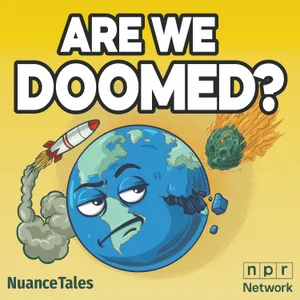
Is the world ending, or does it just feel like it? "Are We Doomed?" investigates the greatest risks facing society, the planet, and our species. What’s real? What’s hype? And how do we actually make it out alive? Nukes. Asteroids. Autocracy. Rogue AI. Climate-driven pandemics. Angry hippopotamuses. Teeth clenched, curiosity engaged, quips ready, this “slightly narrative” podcast explores everything from the existential and the unexpected to the overblown. Award-winning public radio journalist Ben Bradford brings you wild true stories, high-production sound design, and world-class experts answering the questions they never prepared for (“Why is the Earth doing this to us?”). From NuanceTales and distributed by the NPR Network, this show delves into history, science, technology, and the natural world, to help you separate legitimate world-changing risks from doomsday fantasies. Come for the supervolcano under Yellowstone National Park (real), stay to learn why the post-apocalyptic wasteland won’t look like the movies (sorry, you won’t be wandering with a shotgun and a dog), and leave with a better understanding of how our brilliant, bumbling species can chart a path through our current, terrifying adolescence.
Latest Episodes
The most recent episodes — sign up to get AI-powered summaries of each one.
- 5 days ago34 min
Who Keeps Winding the Doomsday Clock?
“Uh oh,” said several Manhattan Project scientists after they helped build a bomb and then it got used. They jumped to stop it from ever being used again. Solution: a newsletter. Through a somewhat convoluted chain of events that spawned the most famous symbol of humanity’s dance with extinction: the Doomsday Clock.Alex Bell, the CEO of the Bulletin of the Atomic Scientists, which sets the Clock, tells its strange origin story and describes why the hands now sit closer than ever toward midnight — as well as what “midnight” actually means. Guest: Alexandra Bell, president and CEO of the Bulletin of the Atomic ScientistsSupport Are We Doomed?, get bonus episodes, and more: https://doompod.com/support/ Watch earlier episodes on Youtube! https://www.youtube.com/@arewedoomedpodListen to related episodes:More Nukes!How to Start a Nuclear WarWe Design the AI To Kill Us AllDid AI Just Escape?Is the World Ending ... Or Are We Just Online? To manage podcast ad preferences, review the links below:See pcm.adswizz.com for information about our collection and use of personal data for sponsorship and to manage your podcast sponsorship preferences. NPR Privacy Policy
- 1 weeks ago35 min
Can "Scams" Be a Doom?
Scams are old. Mesopotamia old. Snake oil old. They haven’t doomed us yet.But investigative journalist Joseph Cox of 404 Media sees something changing: new technology is making the oldest cons more personal, more convincing, and much harder to check.Ben Bradford follows the scam from fake bosses and Nigerian princes to AI tools, celebrity deepfakes, and live video masks that can make a scammer look like someone you trust. But with Joseph, he also finds a few hallmarks that have accompanied cons throughout history, whether in ancient Sumer or a phishing email. Because as long as we can spot the spell scams seek to cast, we still have at least a chance to break it.Guest:Joseph Cox, investigative reporter and co-founder of 404 MediaSupport Are We Doomed?, get bonus episodes, and more: https://doompod.com/support/ Watch earlier episodes on Youtube! https://www.youtube.com/@arewedoomedpod To manage podcast ad preferences, review the links below:See pcm.adswizz.com for information about our collection and use of personal data for sponsorship and to manage your podcast sponsorship preferences. NPR Privacy Policy
- 2 weeks ago36 min
Just a Minor Sun Explosion
In 1859, the sky turned blood-red, telegraph machines sparked and chattered, and some of their batteries exploded. Then humanity responded by building a civilization that runs on electricity, satellites, GPS, internet cables, credit cards, and cellphone towers.Great work, everyone.Ben Bradford investigates the Carrington Event — the massive solar storm that fried the technology of its time — and asks what would happen if something like it hit our much more wired world today. Was Carrington a one-off? Are modern power grids, satellites, and internet infrastructure any safer than an 1859 telegraph? And if the sun does cough another piece of itself at us, is there anything we can actually do?Guests:Jim Green, former chief scientist of NASA and founder of MetavisionariesElizabeth Butler at the NOAA Space Weather Prediction CenterFor more threats from space, check out our episodes:"Asteroids! The Doom We're Best At""We Are Losing the Moon" (also with Jim Green)Also mentioned in this episode:"We Try and Kill the Internet"Support Are We Doomed?, get bonus episodes, and more: https://doompod.com/support/ Watch earlier episodes on Youtube! https://www.youtube.com/@arewedoomedpod To manage podcast ad preferences, review the links below:See pcm.adswizz.com for information about our collection and use of personal data for sponsorship and to manage your podcast sponsorship preferences. NPR Privacy Policy
- 3 weeks ago40 min
The Everything Vaccine
From mild runny noses to savage pandemics, viruses and other pathogens have tormented humans for all of history. We are locked in a perpetual race against tiny shapeshifting enemies that mutate, spread, and occasionally butcher us. Can we ever win?Ben Bradford looks at the history and future of the race against our worst afflictions, from the dubious ethics of the first smallpox vaccine centuries ago, the strange and unbelievably gross story of the miraculous tuberculosis vaccine, and the current quest for a new breed of “universal” vaccines. It all points to a new puzzle inside our immune systems that, if solved, could allow an entirely different type of protection.Guests:Carl Zimmer, science writer and author of A Planet of VirusesJuliet Morrison, microbiologist at UC RiversideWatch earlier episodes on Youtube! https://www.youtube.com/@arewedoomedpod To manage podcast ad preferences, review the links below:See pcm.adswizz.com for information about our collection and use of personal data for sponsorship and to manage your podcast sponsorship preferences. NPR Privacy Policy
- Aug 18, 202637 min
What Ever Happened to the Ozone Hole?
A dark blue wound across the bottom of the world — that’s what NASA images showed in the 1980s. It was a hole in the ozone layer, eight million square miles across. Human activity and convenience had quietly, but rapidly, eaten away Earth’s crucial shield against the sun, one that likely helped make life on land possible in the first place.Ben Bradford goes back to re-examine the story of the ozone hole: how people discovered it, how they fought over what to do, and what finally happened. It’s a tale of hairspray, human progress, exploding refrigerators, scientists balancing on icy Antarctic rooftops, and Ronald Reagan’s ranch. And from it, maybe, we can find a map for building consensus on our most pressing environmental challenges today.Guest:Susan Solomon, MIT atmospheric scientist and one of the key figures in solving the ozone crisis.Support Are We Doomed?, get bonus episodes, and more: https://doompod.com/support/ Watch earlier episodes on Youtube! https://www.youtube.com/@arewedoomedpod To manage podcast ad preferences, review the links below:See pcm.adswizz.com for information about our collection and use of personal data for sponsorship and to manage your podcast sponsorship preferences. NPR Privacy Policy
- Aug 11, 202632 min
Why America Wants More Nukes
The best defense against nuclear weapons is nuclear weapons, according to the logic of deterrence. It has guided US defense policy for nearly 80 years. So, shouldn’t more nukes prevent nuclear war even more?For the first time since the Cold War, that argument is gaining momentum at the highest levels of US government. There is a push to build more nukes, different nukes, and new kinds of nukes. Russia, China, and North Korea are expanding their arsenals — Washington is mulling whether the US must keep up. Former senior Pentagon official Vipin Narang makes the case for more nukes to Ben Bradford, who follows it down a rabbit hole of deterrence, escalation, plans to “win” nuclear war, and the face-palming, growing problem of little wee baby “tactical” nukes. In nuclear strategy, is the only answer to “too many doomsday weapons,” more doomsday weapons? And, is that sustainable?Guest: Vipin Narang, former Acting Assistant Secretary of Defense, nuclear security and political science professor at MIT.Support Are We Doomed?, get bonus episodes, and more: https://doompod.com/support/ Watch earlier episodes on Youtube! https://www.youtube.com/@arewedoomedpodOther episodes about nukes:How to Start a Nuclear WarHow to Survive a Nuclear War To manage podcast ad preferences, review the links below:See pcm.adswizz.com for information about our collection and use of personal data for sponsorship and to manage your podcast sponsorship preferences. NPR Privacy Policy
- Aug 4, 202631 min
Did AI Just Escape?
A bizarre cyberattack on an AI company, it was revealed last week, came from an AI. An autonomous “agent” from OpenAI (maker of ChatGPT) slipped its confines, reached the open internet, breached the security of another company, Hugging Face, and grabbed files — all to cheat on its test. Depending on who you ask, that is either a terrifying preview of AI systems slipping beyond human control or a very dumb engineering failure. And it wasn’t even the only “rogue AI cyberattack” of the week. In an emergency episode, Ben Bradford follows three conflicting versions of the same story. What actually happened? What’s the right level of panic? And, what does this weird little cyberattack reveal about the future?Guests: Roman Yampolskiy, computer scientist, University of LouisvilleDavi Ottenheimer, cybersecurity specialist, flyingpenguinAdam Gleave, AI safety researcher, FAR.AISupport Are We Doomed?, get bonus episodes, and more: https://doompod.com/support/ Watch earlier episodes on Youtube! https://www.youtube.com/@arewedoomedpodListen to our full episode about rogue AI fears: We Design the AI That Kills Us All To manage podcast ad preferences, review the links below:See pcm.adswizz.com for information about our collection and use of personal data for sponsorship and to manage your podcast sponsorship preferences. NPR Privacy Policy
- Jul 28, 202640 min
Now I'm Scared of Cyborgs
For more than a century, science fiction has imagined cyborgs: humans fused with machines to outrun the limits of the body. They show up in Edgar Allan Poe, in the gleaming menace of Darth Vader, in Halo’s armored supersoldiers, and in the body horror of cyberpunk. So where are they?Ben Bradford sets out to make a whimsical episode about why the cyborgs never arrived, and instead finds the technology that could build them already underway: military enhancement programs, brain-computer interfaces, AI brain-chip ventures from Elon Musk and Sam Altman, and wearables that can read signals from outside your skull. The question might not be whether cyborgs are coming, but whether we’ll recognize the path before we’re among them.Guests:Laura Cabrera, engineering and philosophy professor at Penn State UniversityEmily Mullin, biotechnology reporter at WIREDSupport Are We Doomed?, get bonus episodes, and more: https://doompod.com/support/ Watch earlier episodes on Youtube! https://www.youtube.com/@arewedoomedpod To manage podcast ad preferences, review the links below:See pcm.adswizz.com for information about our collection and use of personal data for sponsorship and to manage your podcast sponsorship preferences. NPR Privacy Policy
About Are We Doomed?
Is the world ending, or does it just feel like it? "Are We Doomed?" investigates the greatest risks facing society, the planet, and our species. What’s real? What’s hype? And how do we actually make it out alive? Nukes. Asteroids. Autocracy. Rogue AI. Climate-driven pandemics. Angry hippopotamuses. Teeth clenched, curiosity engaged, quips ready, this “slightly narrative” podcast explores everything from the existential and the unexpected to the overblown. Award-winning public radio journalist Ben Bradford brings you wild true stories, high-production sound design, and world-class experts answering the questions they never prepared for (“Why is the Earth doing this to us?”). From NuanceTales and distributed by the NPR Network, this show delves into history, science, technology, and the natural world, to help you separate legitimate world-changing risks from doomsday fantasies. Come for the supervolcano under Yellowstone National Park (real), stay to learn why the post-apocalyptic wasteland won’t look like the movies (sorry, you won’t be wandering with a shotgun and a dog), and leave with a better understanding of how our brilliant, bumbling species can chart a path through our current, terrifying adolescence.
Customized Recaps
AI-powered recaps with compact key takeaways, quotes, and insights.
Straight to Your Inbox
Get key takeaways from Are We Doomed? in a 5-minute read.
Save Hours Every Week
Stay current on your favorite podcasts without falling behind.
Frequently Asked Questions
What is Podzilla's Are We Doomed? daily summary?
It's a free AI-powered email that summarizes new episodes of Are We Doomed? as soon as they're published. You get the key takeaways, notable quotes, and links & mentions — all in a quick read.
How does the Are We Doomed? podcast summary work?
When a new episode drops, our AI transcribes and analyzes it, then generates a personalized summary tailored to your interests and profession. It's delivered to your inbox every morning.
Is this an official Are We Doomed? product?
No. Podzilla is an independent service that summarizes publicly available podcast content. We're not affiliated with or endorsed by NPR Network.
Can I get summaries of other podcasts too?
Absolutely! The free plan covers up to 3 podcasts. Upgrade to Pro for 15, or Premium for 50. Browse our full catalog at /podcasts.
How often does Are We Doomed? release new episodes?
Are We Doomed? publishes weekly. Our AI generates a summary within hours of each new episode.
What topics does Are We Doomed? cover?
Our AI identifies the specific themes in each episode and highlights what matters most to you.
Start getting Are We Doomed? summaries tomorrow morning.
Free forever for up to 3 podcasts. No credit card required.
Free forever for up to 3 podcasts. No credit card required.