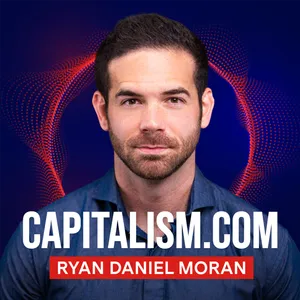
Free Daily Podcast Summary
Capitalism.com with Ryan Daniel Moran: Daily Summaries Delivered
by Capitalism.com
The Capitalism.com Podcast Network presents content for those who are bold enough create change, pursue wealth, find freedom, take control of their health, and reach their full potential.
Latest Episodes
The most recent episodes — sign up to get AI-powered summaries of each one.
- 4 weeks ago22 min
The Controversial Rise of David Protein: $2 Billion in 2 Years
Get the free playbook for building a brand to $100K a month: ► The free $100K playbook: https://capitalism.com/100K David Protein launched in September 2024, and the company behind it is now valued at $2.25 billion. The founder, Peter Rahal, already sold RXBAR to Kellogg for $600 million, and he ran the same playbook again: a product that looks like nothing else on the shelf, an audience the rest of the category ignored, and a waiting list before the first sale. I break down all three, plus the controversial move behind it: David bought the company that makes its key ingredient, and it hit brands my business partner and I were building. How a 2-year-old protein bar got to a $2.25B valuation Peter Rahal and the RXBAR playbook After the RXBAR exit, he went right back to protein bars Building the team before the first sale Stacking the deck, and raising $10M before launch Product: charging 50% more in a saturated market Audience: going after women when protein was marketed to men Sales channel: one product, one page, one waiting list EPG, the controversial ingredient, and why it's personal for me David buys Epogee Gatsby Chocolate, Halo Top and David ice cream Medici and the $2.25B valuation The playbook Peter Rahal ran twice DISCLAIMER: The information contained on this podcast channel and the resources available for download/viewing through this podcast channel are for educational and informational purposes only.
- Oct 1, 202622 min
The Rise and Fall of Black Rifle Coffee
Get the free playbook for building a brand to $100K a month: ► The free $100K playbook: https://capitalism.com/100K Black Rifle Coffee built a nine-figure brand on YouTube videos, a Shopify checkout and 287,000 people on autoship. Then they went public, chased retail shelves, quieted the content that built them, and watched the subscriber base fall to 150,000 while the stock dropped more than 97%. I break down the 3 pillars they had, the 2 they gave up, and why keeping it simple is what lets a brand scale and sell. Resources mentioned in the episode: ► The full step-by-step plan: https://capitalism.com/model How Black Rifle Coffee went from viral videos to a billion dollars, and back The 1 number to remember: 287,000 people on autoship The 3 pillars of a brand you can scale and sell Audience first: a $1,800 Black Friday test and 300 pounds of coffee Viral videos and the exposure that compounded Content, a subscription and a Shopify checkout: that was the whole business The 2021 investor deck: 70% organic traffic, 7% conversion, 43% margin Going public meant new people to please besides the fans The PR controversy did not cause the decline, and the numbers show it Marketing went from over 15% of revenue to under 10% The SPAC, the IPO, and share payouts that triggered in 60 days My theory about the coffee shops, and why I was wrong Retail looks great on paper, and it became their priority 287,000 subscribers down to 150,000 while revenue hit $390 million Every major decision they made after going public Complication kills growth, simplicity scales Coffee prices, tariffs and the pricing power they had given up Lesson 1: audience is the asset Lesson 2: simplicity scales Lesson 3: retail is a one-time event, not a growth machine Why Black Rifle is now on my watch list The 3 pillars, and what Black Rifle teaches about all of them DISCLAIMER: The information contained on this Podcast Channel and the resources available for download/viewing through this Podcast Channel are for educational and informational purposes only. Nothing in this episode is investment advice or a recommendation to buy or sell any security.
- Sep 23, 202626 min
Shark Tank Valued Kodiak Cakes at $1.5M. Then It Sold for $800M
Get the free playbook, trainings, and AI tool that builds your plan to 100K a month: ► The free 100K playbook: https://capitalism.com/100K Kodiak Cakes asked Shark Tank for a $5 million valuation, got told they were a commodity, and walked out with no deal. 7 years later private equity paid a reported $800 million for control of the company. I break down what they actually did in between, then I sit down with Amanda, who is launching a high-protein pancake mix from scratch and is afraid of the exact objection the Sharks made, and we run that same playbook on a 2-year timeline instead of a 20-year one. Resources mentioned in this episode: ► The free 100K playbook: https://capitalism.com/100K ► Amanda's brand, Solea Bakes: https://eatsolea.co/ ► Amanda Carneiro on Instagram: https://www.instagram.com/rawfitnessandnutrition Kodiak Cakes asked for a $5 million valuation on Shark Tank and got nothing The 20-year version of this playbook now takes closer to 2 years They started in Utah ski shops, before Amazon, Instagram or TikTok Shop The Clif Bar parallel: niche local retail first, hundreds of millions later Nearly 10 years to any real distribution, stuck between $1 and $4 million What it actually takes to build a first million-dollar business today The Shark Tank pitch, and how the Sharks tore the brand apart $500,000 for 10% asked, $500,000 for 35% offered, and they walked Doing $4 million at air date, and doubling the year after The 2016 capital raise, and the 3 things they spent it on Best-selling pancake mix at Target, not Amazon, not Meta ads 2018 to 2021: eight figures to nine figures, then private equity called Why a bear on the box tells you who they were really targeting Double down on what is working before you add new distribution You cannot get on a TV show, but you can manufacture the same awareness Meet Amanda, launching a high-protein pancake mix from zero She does not need $800 million, she needs a $5 million business The 3 things she needs before anything else A few hundred people is enough to seed a $10,000 launch 90 days of audience building to a $5,000 to $25,000 launch 300 people on the waiting list, and exactly how she built it Hedging the launch, and why half in does not work The launch plan: build the hot list, then 2 weeks of hard launch A $7 pancake mix versus her $30 bag: the premium problem Stop comparing yourself to your competitors The most expensive pancakes in the world as a content hook 6 organic eggs cost the same, and why that reframe works A few thousand people on auto ship is a seven-figure business Direct to consumer beats fighting for shelf space at Walmart Manufacturing your own big break through relationships Treat early customers like gold and send influencers free product Start the outreach before the product exists 20 well-connected people, care packages, handwritten notes What actually happened when Amanda launched 144 orders and about $9,000 in sales The advice she used, and the advice she ignored She raised her price to $32 a bag and nobody pushed back The headline you never see is somebody's first $10,000 Where to get the free playbook and the AI tool DISCLAIMER: The information contained on this podcast and the resources available for download/viewing through this podcast are for educational and informational purposes only.
- Sep 16, 202622 min
How Huel Went From a Garage to a $1.15 Billion Exit: Case Study
The workshop is where we build your version of this: ► The next workshop: https://capitalism.com/bootcamp Huel sold to Danone for $1.15 billion and most of the internet missed it. Julian Hearn was in his mid-40s coming off a website that lost him money, he launched by posting in a Facebook group, and his first 2 orders went out of his own garage. I break down the 3 things that got him from there to a billion-dollar exit, and the one he never traded away: he treated the community like it was the asset. Resources mentioned in the video: ► The next workshop: https://capitalism.com/bootcamp ► The free $100K playbook: https://capitalism.com/100K ► The full step-by-step plan: https://capitalism.com/model Huel sold to Danone for $1.15 billion and most of the internet missed it Why this one is copyable: no MBA, no private equity spreadsheet behind it Julian Hearn had one win and one expensive failure before Huel Body Hack lost him money and told him exactly why diets fail The Magic Spoon aside: cricket flour flopped, protein cereal did not His failure was the market research for the thing that worked The 3 things that made Huel work out of the gate He built the whole go-to-market on 1,000 true fans Julian in his own words: 1,000 people at 45 pounds a month Product, audience, and a sales channel that compounds Launch day was a post in a Facebook group called London Startups His first 2 sales, fulfilled out of his own garage He asked those 2 customers one question: why did you buy? The Soylent Reddit group became his first real fan base The Hueligans, and the forum he built to keep them The traffic triangle, and what we call the hopper How to get to 1,000 customers when you only have 9 $800,000 in 2015, 10 years before the exit The Shopify Masters interview at a $2 million run rate The PR play then, and what it looks like now $5 million in 2 years, and why failed products did not sink them 20% of new customers were coming from referrals The 1 in 10 rule, and how Steven Bartlett found him Amy is pacing $3 million, and she is in the DMs herself They hired a CEO and doubled down on the Hueligans anyway Danone tried to build their own, then gave up after 8 weeks He treated his failure as tuition They ate a loss rather than raise prices on loyal subscribers Product, audience, sales channel, and the one most people underweight DISCLAIMER: The information contained on this YouTube Channel and the resources available for download/viewing through this YouTube Channel are for educational and informational purposes only.
- Sep 9, 202621 min
How SmartSweets Went From $0 to $360M in 4 Years: Case Study
I help entrepreneurs create their idea, launch, get to the first seven figures, and then prepare for a life-changing exit. The playbook we use to do it is free: ► Get the free playbook: https://capitalism.com/100K Tara Bosch started SmartSweets in her kitchen at 21 with no capital, no experience and no connections in candy, and 4 years later she sold a majority stake for $360 million. I sat down with Tara more than once, so what you get here is the sequence rather than the headline: a giant market changed in one way, a few hundred customers who acted like they worked there, a premium price in a category that competes on price, inventory funded with debt instead of equity, and a hiring order that held as the company grew. It is the same pattern behind Dr. Squatch, Dollar Shave Club and Gruns, and it compresses the timeline more than anything else I know of. Resources mentioned in the episode: ► The $100K Playbook: https://capitalism.com/100K A first-time founder, 4 years, and a $360 million deal in the candy aisle No capital, no experience, no connections in candy What we actually know about the deal, and what never gets disclosed Lesson 1: walk into a giant market and change one thing about it The one thing Mars and Hershey still cannot copy Why better-for-you keeps working as the one thing you change Lesson 2: the Champion Program, and the first 500 people The back road into a market you cannot outspend Lesson 3: $24 for a box of 8, against Sour Patch Kids at a sixth the price A $65 bag of Gruns against $8 Flintstones, and why the premium holds Tara on seeing the company years before it existed Inventory is where a physical product business eats its cash Treating the banks like investors, and a $14M line of credit Hiring for the things she was bad at, in the order she did it Candy is an impulse buy, so the sales channel was already decided Local shelves first, then the national accounts Your excuses, and the ones she had available and did not use The 5 things SmartSweets did well, in order DISCLAIMER: The information contained on this Podcast Channel and the resources available for download/viewing through this Podcast Channel are for educational and informational purposes only.
- Sep 2, 202637 min
I Gave Her a 90-Day Plan to Double Her Business
Our playbook to $100,000 a month is free, and it's where the 90-day plan in this podcast comes from: ► The $100K Playbook: https://capitalism.com/100K Dr. Megan Jolley Milne is a pharmacist, and her company Nutranize does $20,000-$27,000 a month almost entirely off one YouTube channel. She's in a tiny space with a skeptical market and she can't run ads because of medical claims, so when she flew into our in-person mastermind I sat down with her and built a 90-day plan to double the business. I didn't give her a single new thing to do. I took things away. And you can run the same subtraction on yours. Resources mentioned in the podcast: ► The $100K Playbook: https://capitalism.com/100K ► Bootcamp waitlist: https://capitalism.com/bootcamp A business that should be doing a million, stuck in the low six figures Everything runs on one YouTube channel, and she's stuck on what comes next What she sells: a supplement for the side effects of prednisone, $104.99 a month The numbers: $20,000-$27,000 a month, and what made May different What I caught at breakfast: the traffic goes everywhere The inventory: Amazon, a sales page, a checklist, a taper chart, a quiz Thousands of leads and zero buyers The queen bee activity, and why it decides what you work on Leakage, and why scattering a little energy waters nothing Her magnum opus, and the phone calls it produced Make the thing that already converts your only lead magnet One promise up front, everything else stacked behind it "That feels relieving. I just need to do one thing." A separate follow-up series for every lead magnet is exhausting The prescription: one opt-in, and commit to it The lead magnet you have beats the one that doesn't exist Put a discount in the P.S. of every email I don't consider content a call to action 4 offers at checkout, and the 1 upsell worth adding Why she doesn't have to touch ads in a regulated space Why 90 days and not 5 years The million-dollar move: out of a niche of all niches Nutrient depletion is the brand, prednisone is just the first drug A new drug is a new person, and a new funnel 80% of my job is telling people what not to do No permission to launch a 2nd product for 90 days Her last worry: what if they never watch the video The Facebook group with 5,000 members she forgot she had Now the email list and the group promote each other "I just got my money's worth" What I didn't do: I took things away DISCLAIMER: The information contained on this podcast Channel and the resources available for download/viewing through this podcast Channel are for educational and informational purposes only.
- Aug 26, 202619 min
How Thorne Sold for $3.8B in 3 Years: Case Study
I help entrepreneurs build brands to seven figures and then position them for a multi-million dollar payday. The playbook we use to do it is free: ► Get the free playbook: https://capitalism.com/100K Thorne is forty years old, and everything that made it worth $3.8 billion happened in the last three. It had gone public and lost more than half its value when a private equity group took it off the market, and Procter & Gamble has now agreed to buy it with the same products on the shelf. I break down the playbook L Catterton ran, why sales roughly doubled while the price went up more than five times, and the three things besides revenue that decide what a buyer pays you, whether you would rather buy a business like this one or build one worth buying. Resources mentioned in the episode: ► The $100K Playbook: https://capitalism.com/100K The same company, the same products, and a $3.8 billion payday three years later The products sitting on my desk are all saturated markets, and that is the point The terms: Procter & Gamble, all cash, and why a deal like that closes The seller is the real story: L Catterton, from Kodiak Cakes to Nutrafol Buy the whole company, get it off the public exchange, run the playbook in private The new CEO went back to basics and decided who Thorne was actually for Direct-to-consumer acquisition, after years of selling only through physicians Auto-ship, and why keeping the customer was worth more than getting them They refused to discount the brand, and that is what protected the margins Plain old fish oil, sold to the person who wants the best fish oil Lesson one, follow the money: Nutrafol, Gruns, Onnit Thorne grew by doing less, and retention mattered more than acquisition The part that shocked me: sales doubled, the price went up more than 5X What actually moves a valuation: leadership, a growth story, and timing The two ways to compress forty years into three: buy a neglected brand, or run the playbook on your own Primal Kitchen sold to Heinz, and the big money made it better DISCLAIMER: The information contained on this Podcast Channel and the resources available for download/viewing through this Podcast Channel are for educational and informational purposes only.
- Aug 22, 202641 min
The 3-Year Exit: How Create A Life-Changing Payday In (About) 36 Months
The next boot camp is this exact plan. We set your exit number together and build the plan to hit it, in about three hours, for ► Workshop waitlist: https://capitalism.com/bootcamp Most people are told to work 30 years, save, and call that retirement. I think that is a bad plan, so this episode is the whole map to a life-changing exit in about three years: how to set your number, why I would build a high-margin subscription product to get there, and the math that shrinks the whole thing down to four or five subscriptions a day. I also get into the tax rule that can take your capital gains to zero, and the liquidation event you can have without ever selling the business. Resources mentioned on the podcast: ► Workshop waitlist: https://capitalism.com/bootcamp ► The Product GPT: https://capitalism.com/productgpt ► Work with me and my team: https://capitalism.com/join The whole plan for an exit that makes you financially free in three years I built a business in 2013 and sold it four years later in a $16M package Throw out the 30-year retirement playbook Your impossible goal does not have to be a billion dollars The clients who went from zero to $500K a month, and what slowed them down Step one, set a target that would actually change your life Sam Prentice's formula: the passive income you need, times 17 Why product creation beats every other route to an exit right now Poor man's math: the profit that justifies a $4.25M price Gruns sold for $1.2B without the profit to justify it The three years: launch, acquire, then scale and prep the exit $1M in profit a year is $2,750 a day, or 110 sales Why subscription products change the math 3,300 people on auto-ship is four to five new subscriptions a day The gateway product, and doing this with one-time purchases The free GPT that builds your product for you Two paths: build an audience or build a funnel Content or ads to an opt-in, then follow up. Everything else is drama What the free route looks like day to day, and the hours in the DMs The paid route: fewer moving pieces, one big cost Why I tell you to start free even though it is slower The whole model in one paragraph What to do about the exit itself QSBS: hold five years and pay zero capital gains You need close to $1M in profit to attract a good buyer You can have a liquidation event without selling the business My deal was $16M at a 5X multiple, and we only got 60% upfront What I would do differently: take the cash and keep the business Why entrepreneurs get defensive at $1M in profit The target, the math, and the plan in one recap Two ways I can help, starting with the next boot camp DISCLAIMER: The information contained on this Podcast Channel and the resources available for download/viewing through this Podcast Channel are for educational and informational purposes only.
Get Capitalism.com with Ryan Daniel Moran summaries in your inbox
Free AI-powered daily recaps. Key takeaways, quotes, and mentions — in a 5-minute read.
Get Free Summaries →Free forever for up to 3 podcasts. No credit card required.
You Might Also Like
Listeners also like.

The Money Mondays
Business discussions on investments, side hustles, and entrepreneurship with experts, athletes, and influencers in personal settings.

My First Million
Two entrepreneurs analyze market trends and generate business ideas, often with guest collaborators.

David Senra
David Senra hosts conversations with the greatest living founders.
Business for Good Podcast
Entrepreneurs and business leaders discuss building companies that solve global problems while generating profit.

Right About Now - Legendary Business Advice
Raw business insights from founders and industry leaders, revealing real wins, failures, and actionable strategies without the fluff.

Young and Profiting (YAP) with Hala Taha: Entrepreneurship and Self-Improvement Podcast
Interviews with top entrepreneurs and experts deliver actionable strategies for business growth, productivity, and personal development.

The Code To Winning
Interviews with business leaders, entrepreneurs, and CEOs reveal strategies and insights for success in the modern business world.

Proven Podcast
Charles Schwartz
Coffeez with Joe Shalaby
Conversations with entrepreneurs, investors, and cultural figures reveal the real strategies, struggles, and costs behind success.

The Vault Unlocked
Founders share hard-earned lessons on what actually worked, what failed, and the pivotal decisions behind growing successful companies.

Founder's Story
Raw conversations with entrepreneurs about the struggles, doubts, and pivotal moments behind their ventures.
Afford Anything | Get Smarter With Money
Explores the five pillars of financial freedom through expert interviews on wealth-building, investing, and behavioral finance.
About Capitalism.com with Ryan Daniel Moran
The Capitalism.com Podcast Network presents content for those who are bold enough create change, pursue wealth, find freedom, take control of their health, and reach their full potential.
Customized Recaps
AI-powered recaps with compact key takeaways, quotes, and insights.
Straight to Your Inbox
Get key takeaways from Capitalism.com with Ryan Daniel Moran in a 5-minute read.
Save Hours Every Week
Stay current on your favorite podcasts without falling behind.
Frequently Asked Questions
What is Podzilla's Capitalism.com with Ryan Daniel Moran daily summary?
It's a free AI-powered email that summarizes new episodes of Capitalism.com with Ryan Daniel Moran as soon as they're published. You get the key takeaways, notable quotes, and links & mentions — all in a quick read.
How does the Capitalism.com with Ryan Daniel Moran podcast summary work?
When a new episode drops, our AI transcribes and analyzes it, then generates a personalized summary tailored to your interests and profession. It's delivered to your inbox every morning.
Is this an official Capitalism.com with Ryan Daniel Moran product?
No. Podzilla is an independent service that summarizes publicly available podcast content. We're not affiliated with or endorsed by Capitalism.com.
Can I get summaries of other podcasts too?
Absolutely! The free plan covers up to 3 podcasts, any in the catalog. Basic raises that to 15, Pro to 40 and Max to 100. Browse our full catalog at /podcasts.
How often does Capitalism.com with Ryan Daniel Moran release new episodes?
Capitalism.com with Ryan Daniel Moran publishes weekly. Our AI generates a summary within hours of each new episode.
What topics does Capitalism.com with Ryan Daniel Moran cover?
Capitalism.com with Ryan Daniel Moran covers topics including Business, Entrepreneurship. Our AI identifies the specific themes in each episode and highlights what matters most to you.
Start getting Capitalism.com with Ryan Daniel Moran summaries tomorrow morning.
Free forever for up to 3 podcasts. No credit card required.
Free forever for up to 3 podcasts. No credit card required.