Free Daily Podcast Summary
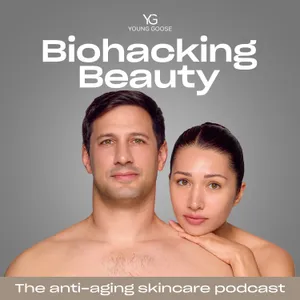
Biohacking Beauty: The Anti-Aging Skincare Podcast: Daily Summaries Delivered
by Young Goose
Welcome to Biohacking Beauty – your anti-aging skincare podcast. This podcast focuses on how to reduce the age of your skin (and body) by giving you tips and tricks for aging gracefully (say goodbye to fine lines and wrinkles!). We dive into topics like mature skin care, anti-aging skincare, anti-aging serums, retinol benefits, boosting skin elasticity, vitamin C for skin, wrinkle prevention and so much more. We also share lifestyle shifts and other biohacks you can use to not only reduce the functional age of your skin, but also the functional age of your body. If you're looking for skin rejuvenation and more youthful skin, this podcast is for you!
Latest Episodes
The most recent episodes — sign up to get AI-powered summaries of each one.
- 4 days ago57 min
271. Dr. Mamina Turegano: What Your Skin Reveals About Your Health, Aging & Hormones
Most of us assume that if something serious was happening inside our body, we would know. We would feel sick. Something would hurt. A blood test would catch it. But some health problems can develop quietly for years, and sometimes the clue that finally gets your attention is sitting right where you can see it: on your skin.In this episode of Biohacking Beauty, we get into the skin changes that can point to something happening beyond the surface, from psoriasis and multiple skin tags to persistent rashes, hair loss, and subtle signs of skin cancer. We also talk about what makes a dermatologist look deeper, how long sun damage can build before it becomes visible, and when a skin concern deserves more than another product or treatment.Dr. Mamina Turegano is a triple board-certified dermatologist, internist, and dermatopathologist, giving her a unique perspective that connects what is happening on the skin with what may be happening throughout the body. Her background in internal medicine and dermatopathology allows her to look beyond the appearance of a skin change and consider the metabolic, autoimmune, inflammatory, and systemic conditions that may be connected to it.What’s Discussed: Why you can feel perfectly healthy while something is already changing internally. Why psoriasis can warrant looking at cardiovascular and metabolic health too. What multiple skin tags may tell you about insulin resistance. When an unexplained rash or chronic itching deserves a deeper workup. The skin cancer signs people may overlook and when hair loss needs more attention. How sugar, alcohol, stress, sleep, and circadian disruption can accelerate skin aging. Why Dr. Mamina is comfortable with topical peptides but not injectable peptides yet. Whether Google, AI skin scanners, and self-diagnosis are helping or hurting. How long sun damage may be building before you finally see it.Listen to this episode of Biohacking Beauty to learn which skin changes are worth paying closer attention to, and why treating what you see is not always the end of the conversation.Resources mentioned:Want to find out more about Autophagy? Listen here: The Overlooked Side of Autophagy Causing Aging - Part 1The Overlooked Side of Autophagy Causing Aging - Part 2Find more from Young Goose:Website: younggoose.comUse code PODCAST10 to get 10% OFF your first purchase, and if you’re a returning customer use code PODCAST5 to get 5% OFF.Instagram: @young_goose_skincareFind more from Dr. Mamina Turegano:Website: DrMamina.com Instagram: @dr.maminaTikTok: @dr.maminaYouTube: @dr.mamina
- 1 weeks ago33 min
270. Your Most-Asked Skincare Questions, Answered With Science
Social media has made skincare information easier to access than ever. One video can convince you to increase your retinol. Another influencer can tell you an ingredient is “toxic.” Then someone else swears your skin has stopped responding because you have used the same product for too long.But think about what that can do to your skin when you follow every new rule without understanding what the product is actually doing. More stimulation is not always better. “Clean” does not automatically mean effective. A rosacea flare is not always something another soothing serum can fix. And moving to a stronger retinol just because your current one feels less intense may be the wrong move entirely.In this Biohacking Beauty Class, we are answering the skincare questions our community keeps asking and unpacking the advice that sounds simple online but becomes much more complicated once you understand how skin actually responds. We also get into collagen supplements and share a few of the new Young Goose products and technologies we have been working on behind the scenes.What’s Discussed: Can your skin actually get used to skincare products? Why “clean skincare” does not automatically mean better skincare. What may be driving rosacea when nothing seems to help. Why stronger retinol is not always the smarter next step. Do collagen supplements actually help your skin? The new cleanser and eye product coming to Young Goose. The new skincare technology we are testing in ampule form.Listen to this episode of Biohacking Beauty before the next skincare tip on your feed convinces you to change something that may not need changing at all.And before you go, we have a little listener bonus.If you want to receive a product from us, leave us a review on Apple Podcasts. That is all you have to do.If we read your review out loud on the podcast, we will send you a product in the mail. So leave us a review, make it cute, make it honest, and you might hear it in an upcoming Biohacking Beauty Class episode.Find more from Young Goose:Website: Use code PODCAST10 to get 10% OFF your first purchase, and if you’re a returning customer use the code PODCAST5 to get 5% OFF at younggoose.comInstagram: @young_goose_skincare
- 2 weeks ago52 min
269. Cynthia Thurlow: What Midlife Gut Changes Have To Do With Your Skin
When your skin starts changing in midlife, it is easy to assume the products that used to work suddenly stopped working. And when changing the routine does not fix it, hormones usually get the blame.But there is another shift happening at the same time that rarely gets brought into the skin conversation: your gut. In this episode of Biohacking Beauty, we get into what starts changing in the gut through perimenopause and menopause, the surprising ways those changes can show up far beyond digestion, and why some of the health strategies women swear by before 40 may need to be reconsidered later.Cynthia Thurlow is a nurse practitioner, host of the Everyday Wellness podcast, author of The Menopause Gut, and an international speaker with more than 25 years of experience in women’s health, metabolic health, perimenopause, menopause, and intermittent fasting.What’s Discussed: The health crisis that changed the way Cynthia understood midlife health. The gut-hormone connection most women do not know exists. What changes when estrogen, immunity, and the gut start shifting together. The early signs that progesterone may be changing. What your gut may have to do with ovarian and mitochondrial aging. The part of longevity Cynthia thinks we are seriously underestimating. Why Cynthia changed her own approach to intermittent fasting after 40.Listen to this episode of Biohacking Beauty to learn what midlife gut changes may have to do with your skin, and why the answer may go much deeper than changing your skincare routine.Find more from Young Goose:Website: Use code PODCAST10 to get 10% OFF your first purchase, and if you’re a returning customer use the code PODCAST5 to get 5% OFF at younggoose.comInstagram: @young_goose_skincareFind more from Cynthia Thurlow:Twitter: @_CynthiaThurlowInstagram: @cynthia_thurlow_LinkedIn: cynthia-thurlowYouTube: cynthiathurlowWebsite: cynthiathurlow.com/The Midlife Pause supplements: themidlifepause.com
- 3 weeks ago19 min
268. 10 Habits for Younger Skin That Have Nothing To Do With Skincare
Everyone wants skin that looks brighter, firmer, smoother, and healthier for longer.But sometimes the thing holding your skin back is not the serum you forgot to buy. It is the blood sugar spike you keep missing, the protein you are not getting enough of, the sleep window you keep pushing, the strength training you keep delaying, or the daily stress your skin has to keep recovering from.In this Biohacking Beauty Class episode, we are talking about the habits we actually use to support skin health outside of skincare. We get into the choices that help your skin repair better, age slower, respond better to treatments, and build the kind of foundation no product can fully replace.What’s Discussed: The dessert rule that helps reduce daily sugar exposure. Why fiber matters beyond digestion. What a glucose monitor can show you about foods that look “healthy.” Why lifting weights can change how your skin looks over time. What protein and micronutrients have to do with collagen support. How morning sunlight, sleep, and circadian rhythm connect to skin repair. Where red light therapy, antioxidants, and consistency fit into the bigger skin longevity picture.Listen to this episode of Biohacking Beauty to learn the habits we swear by when we want our skin to have more to work with than skincare alone.And before you go, we have a little listener bonus.If you want to receive a product on us, leave us a review on Apple Podcasts. That is all you have to do.If we read your review out loud on the podcast, we will send you a product in the mail. So leave us a review, make it cute, make it honest, and you might hear it in an upcoming Biohacking Beauty Class episode.Find more from Young Goose:Website: Use code PODCAST10 to get 10% OFF your first purchase, and if you’re a returning customer use the code PODCAST5 to get 5% OFF at younggoose.comInstagram: @young_goose_skincare
- Aug 19, 202655 min
267. Dr. Amie Hornaman: The Thyroid Mistake That Keeps Women From Getting Answers
Thyroid dysfunction is often treated like it is easy to rule out. You ask for labs, your doctor checks TSH, and if that one marker is not flagged, you are told your thyroid is fine.But what if that is the problem?In this episode of Biohacking Beauty, we sit down with Dr. Amie Hornaman to unpack what most thyroid conversations skip: the difference between being “normal” on paper and having enough active thyroid hormone available to your cells. She explains why TSH is not a thyroid hormone, why T4-only medication may not be enough for many people, and why women can keep struggling even after being told their thyroid is not the issue.Dr. Amie is known as The Thyroid Fixer, a functional medicine doctor, host of The Thyroid (and Hormone) Fixer podcast, founder of the Advanced Thyroid and Hormone Clinic, and author of The Thyroid Fix. After being misdiagnosed by six different doctors, she built her practice around helping patients get the answers conventional medicine often misses.What’s Discussed: Why so many women feel like their body is rebelling against them. Why the diagnosed hypothyroidism number may not reflect the real problem. The difference between being undiagnosed, undertreated, and mistreated. Why skin aging after 40 is not only an estrogen conversation. How quickly thyroid and hormone changes can show up in the skin. Why skin aging needs an inside-out and outside-in approach. What markers belong on a full thyroid panel beyond TSH. Why free T3, reverse T3, and thyroid antibodies matter. What thyropause is and why it can overlap with perimenopause and menopause. A one-morning plan to support thyroid, insulin, protein, sleep, and skin health.Listen to this episode of Biohacking Beauty to understand why your thyroid labs may not be telling the whole story, and why your skin, hair, metabolism, mood, and energy may be showing what one marker missed.Find more from Young Goose:Use code PODCAST10 to get 10% OFF your first purchase, and if you’re a returning customer use the code PODCAST5 to get 5% OFF at younggoose.comInstagram: @young_goose_skincareFind more from Dr. Amie Hornaman: Website: dramie.comInstagram: @dramiehornaman Podcast: dramie.com/podcast/
- Aug 12, 202639 min
266. Q&A: Your Questions Answered on Exosome Skincare (Everything You Need To Know Before You Try)
Exosomes have become one of the most talked-about ingredients in advanced skincare, but the conversation around them can get confusing fast. Some people hear “cellular messaging” and worry about DNA. Others see plant exosomes, stem cell claims, growth factors, or vampire facial comparisons and assume all exosome products are working the same way.The problem is that the word “exosome” does not tell you enough. Exosomes are messengers, and the message depends on the source. A plant-derived exosome, a mesenchymal-derived exosome, and a platelet-derived exosome are not carrying the same type of signal for the skin. So before you trust the trend, it helps to understand what kind of message your skin is actually receiving.In this Biohacking Beauty Q&A, we break down the biggest questions listeners have been asking about exosomes. We get into why exosomes do not change your DNA, what microRNA messaging means, why consistency matters, how plant exosomes compare to human-derived options, why platelet-derived exosomes may be especially relevant for skin repair, and what makes Vampire Exosomes® different from other exosome serums.What’s Discussed:03:05 Whether exosomes can change your DNA or transfer genetic material.07:08 How exosomes work through microRNA messaging instead of changing your genome.09:21 Why exosome messages do not stick around forever and need consistency.11:02 Where exosomes come from and why the source of the message matters.13:45 Why plant exosomes may offer some benefits, but may not be the strongest fit for skin repair.21:34 How mesenchymal-derived and platelet-derived exosomes differ in their relationship to skin repair.27:29 What makes Vampire Exosomes® different from other exosome serums, including dose, NAD support, barrier support, and batch verification.32:25 How Vampire Exosomes® compares to a vampire facial and why topical exosomes work differently.Listen to this episode of Biohacking Beauty to understand what exosomes actually are, what questions to ask before buying an exosome product, and why the source, dose, formula, and proof matter as much as the word “exosome” itself.Find more from Young Goose:Use code PODCAST10 to get 10% OFF your first purchase, and if you’re a returning customer use the code PODCAST5 to get 5% OFF at younggoose.comYoung Goose Vampire Exosomes® https://www.younggoose.com/products/vampire-exosomesInstagram: @young_goose_skincare
- Aug 5, 202653 min
265. Anastasia (Beauty Fascia) Part 2: The Hidden Cost of Fillers, Botox, and Skin Tightening Devices
A lot of beauty treatments are sold around the result people want most: tighter skin, fewer lines, more volume, and a face that looks refreshed without going under the knife.And because these treatments have become so common, it can feel like the decision is simply about when to start, who to go to, or which device or injectable will give the most natural-looking result.But Anastasia looks at the face through a different lens. In Part 2 of this conversation, she challenges the idea that a visible result is the only thing worth paying attention to. She brings the conversation back to the tissue underneath the skin, the movement of the face, how the body responds, and what people may want to question before choosing treatments that promise to tighten, fill, freeze, or stimulate the face.What’s Discussed:35:15 Why tightening devices are often positioned as an alternative to plastic surgery.36:55 What people may want to consider before choosing treatments that rely on stimulation or controlled damage.41:51 Why the risks of beauty shortcuts are not always obvious at first.45:24 What to know about training, devices, and the person performing the treatment.51:15 What Anastasia wants people to think about before getting fillers.53:53 Why the body’s response to fillers deserves more attention.1:02:47 Why preventative Botox deserves a deeper conversation than wrinkle prevention.1:12:21 Where Anastasia lands on sun exposure, SPF, and skin protection.1:19:43 What she wants women to start questioning about beauty, aging, and the tissue underneath the skin.Before choosing the next treatment that promises to lift, tighten, smooth, or freeze time, this conversation asks you to slow down and look at what may be happening beneath the result.Find more from Young Goose:Use code PODCAST10 to get 10% OFF your first purchase, and if you’re a returning customer use the code PODCAST5 to get 5% OFF at younggoose.comInstagram: @young_goose_skincareFind more from Anastasia: Website: BeautyFascia.com/ Instagram: @anastasiabeautyfascia
- Jul 29, 202637 min
264. Anastasia (Beauty Fascia) Part 1: Do Red Light Masks, Gua Sha, and Facial Devices Actually Work?
Red light masks, facial sculpting devices, gua sha tools, and at-home lifting treatments are everywhere. And when a tool promises less puffiness, a sharper jawline, or younger-looking skin, it is easy to believe the right device could finally create the change you have been looking for.But a face is not a collection of surface-level problems. The way it looks and ages is also influenced by muscle tension, facial structure, breathing patterns, soft tissue, posture, and how fluid moves through the tissue. So when a beauty tool does not create the result you expected, the problem may be that the tool was never addressing what was actually driving the change.Anastasia, a board-certified Structural Integration Therapist and founder of Beauty Fascia, returns to explain what she looks at beyond skin appearance and what some of the biggest at-home beauty trends can realistically do. She shares why she prefers a red light panel over a mask, where facial devices may fall short, when gua sha can help, and why doing more is not always better for the skin.What’s Discussed: 03:13 What Anastasia looks at beyond wrinkles and skin appearance.04:35 How facial structure, muscle tension, breathing, and fluid flow influence the way the face looks.09:02 Why Anastasia prefers a red light panel over a mask.10:04 What to consider before spending money on a red light device.17:54 Why buying a beauty tool does not automatically create a self-care habit.23:56 What at-home facial devices can realistically change.28:48 When gua sha may help, why under-eye bags are not always a lymphatic problem, and how overdoing it can backfire.Before investing in another device or adding another technique to your routine, it helps to know what problem you are actually trying to solve and whether the tool was designed to address it.Find more from Young Goose:Use code PODCAST10 to get 10% OFF your first purchase, and if you’re a returning customer use the code PODCAST5 to get 5% OFF at younggoose.comInstagram: @young_goose_skincareFind more from Anastasia: Website: BeautyFascia.com/Instagram: @anastasiabeautyfascia
Get Biohacking Beauty: The Anti-Aging Skincare Podcast summaries in your inbox
Free AI-powered daily recaps. Key takeaways, quotes, and mentions — in a 5-minute read.
Get Free Summaries →Free forever for up to 3 podcasts. No credit card required.
You Might Also Like
Listeners also like.
Skin Anarchy
Explores the science and stories behind skincare, makeup, haircare, and fragrance through interviews with beauty industry innovators.
Beauty Bytes with Dr. Kay: Secrets of a Plastic Surgeon
A plastic surgeon breaks down trends in cosmetic procedures, skincare, and wellness with expert and influencer guests.

Skincare Podcast
Explores skincare routines, acne solutions, and the emotional and holistic aspects of body care and well-being.

The Beauty Brains
Scientists answer consumer questions about beauty products and ingredients.

Breaking Beauty Podcast
Two veteran beauty editors review products, discuss skincare and makeup trends, and interview industry insiders weekly.

Biohack-it
A weekly exploration of biohacking, holistic health, and science-driven strategies for optimizing physical and mental well-being.

Forever35
Two friends explore self-care, wellness, and growing older with humor and guest insights.

The Dan Buettner Podcast
Shares practical habits and insights from the world’s longest-lived populations to improve longevity and well-being.

Skinquiries
A deep dive into skin health, exploring how lifestyle, nutrition, and mindset reflect in the body's largest organ.

LONGEVITY with Nathalie Niddam
Explores science-backed strategies for extending healthspan through nutrition, biohacking, peptides, and emerging longevity research.

The Human Upgrade: Biohacking for Longevity & Performance
Discusses biohacking, longevity, and performance with experts in science and medicine.

Gloss Angeles
Two beauty journalists analyze makeup, skincare, and wellness trends through pop culture and celebrity influence.
About Biohacking Beauty: The Anti-Aging Skincare Podcast
Welcome to Biohacking Beauty – your anti-aging skincare podcast. This podcast focuses on how to reduce the age of your skin (and body) by giving you tips and tricks for aging gracefully (say goodbye to fine lines and wrinkles!). We dive into topics like mature skin care, anti-aging skincare, anti-aging serums, retinol benefits, boosting skin elasticity, vitamin C for skin, wrinkle prevention and so much more. We also share lifestyle shifts and other biohacks you can use to not only reduce the functional age of your skin, but also the functional age of your body. If you're looking for skin rejuvenation and more youthful skin, this podcast is for you!
Customized Recaps
AI-powered recaps with compact key takeaways, quotes, and insights.
Straight to Your Inbox
Get key takeaways from Biohacking Beauty: The Anti-Aging Skincare Podcast in a 5-minute read.
Save Hours Every Week
Stay current on your favorite podcasts without falling behind.
Frequently Asked Questions
What is Podzilla's Biohacking Beauty: The Anti-Aging Skincare Podcast daily summary?
It's a free AI-powered email that summarizes new episodes of Biohacking Beauty: The Anti-Aging Skincare Podcast as soon as they're published. You get the key takeaways, notable quotes, and links & mentions — all in a quick read.
How does the Biohacking Beauty: The Anti-Aging Skincare Podcast podcast summary work?
When a new episode drops, our AI transcribes and analyzes it, then generates a personalized summary tailored to your interests and profession. It's delivered to your inbox every morning.
Is this an official Biohacking Beauty: The Anti-Aging Skincare Podcast product?
No. Podzilla is an independent service that summarizes publicly available podcast content. We're not affiliated with or endorsed by Young Goose.
Can I get summaries of other podcasts too?
Absolutely! The free plan covers up to 3 podcasts. Upgrade to Pro for 15, or Premium for 50. Browse our full catalog at /podcasts.
How often does Biohacking Beauty: The Anti-Aging Skincare Podcast release new episodes?
Biohacking Beauty: The Anti-Aging Skincare Podcast publishes weekly. Our AI generates a summary within hours of each new episode.
What topics does Biohacking Beauty: The Anti-Aging Skincare Podcast cover?
Biohacking Beauty: The Anti-Aging Skincare Podcast covers topics including Arts, Fashion, Fitness, Health & Fitness, Alternative, Beauty. Our AI identifies the specific themes in each episode and highlights what matters most to you.
Start getting Biohacking Beauty: The Anti-Aging Skincare Podcast summaries tomorrow morning.
Free forever for up to 3 podcasts. No credit card required.
Free forever for up to 3 podcasts. No credit card required.