Free Daily Podcast Summary
Beyond the Cave Podcast: Fitness in Modern Life: Daily Summaries Delivered
by Brad Young
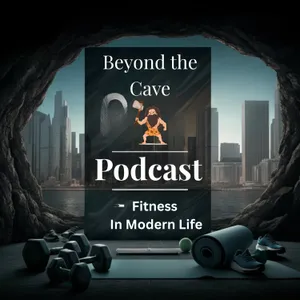
Welcome to Beyond the Cave, hosted by Brad Young—multi-time bestselling author and lifelong explorer of human potential. This is where ancient wisdom meets modern living. Each episode dives into the fascinating intersection between prehistoric lifestyles and today’s world, uncovering what our early ancestors can teach us about functional strength, nutrition, and daily habits. We break down the natural movements, diets, and routines that shaped the bodies and minds of cavemen—and reveal how those same principles can elevate your fitness, resilience, and overall well-being right now. Join us as we bridge the gap between past and present, offering practical strategies and thought-provoking conversations designed to help you live stronger, healthier, and more intentionally in the modern age.
Latest Episodes
The most recent episodes — sign up to get AI-powered summaries of each one.
- 5 days ago13 min
Escape The Modern Cave
Picture your ancestor, ten thousand years ago, waking up with the light. Before the sun is fully over the horizon, that person is already moving. Walking to water. Climbing for food. Carrying, lifting, tracking, sprinting when the moment called for it. Every hour of the day asked something of the body. And here is the thing that gets me. That person had a sharper mind, a steadier mood, and a more resilient body than most of us walking around with everything we could ever want at our fingertips. We beat them on comfort. They beat us on almost everything that actually matters. And I think it is time we asked ourselves honestly why.
- 1 weeks ago11 min
Primal Strength in a Sedentary World: Perform at Your Peak, Every Day
So let me name the thing straight out. We live in a world that has quietly stolen our strength. Not violently, not all at once. It took it in tiny withdrawals. A chair here. An escalator there. A delivery instead of a trip. A screen instead of a field. Every single one of those choices felt like convenience, and every single one of them was a small loan taken out against your body. And the interest on that loan is the stiff back, the low energy, the two o clock crash, the feeling that you are running your mind on a full tank and your body on fumes.Your ancestors did not have a fitness problem, and it is worth sitting with why. Strength was not a hobby for them. It was the price of being alive. They squatted to rest. They carried what they needed. They walked for miles because the food was not going to walk to them. They lifted, hauled, climbed, and sprinted, not because a program told them to, but because life demanded it. Strength was woven into the ordinary hours of every single day. It was not something they went and got. It was something they simply were.
- 2 weeks ago14 min
From Cubicle to Caveman: Reclaiming Movement Your Body Was Built For
Let me tell you something I noticed the other morning.I was sitting at my desk, coffee in hand, third meeting of the day already loaded up on my screen, and my back was screaming at me. Not a dramatic scream. Just that dull, tired ache that says, hey, you have been in this chair for four hours and your body is not built for this. And I stopped, and I thought about my grandfather, who worked with his hands his whole life, who walked everywhere, who never once in his life said the words core stability or mobility routine. And yet the man moved better at seventy than most of us move at thirty five.That is what today is about. This is the disconnect I want to talk through with you, because I think it sits at the root of so much of what we struggle with. We have built a world that is comfortable in every way except the ways that actually matter for our bodies.
- 3 weeks ago18 min
Weaving Ancient Wisdom Into Your Modern Life Every Day
Modern life moves fast — faster than the human body and mind were ever designed to operate. Yet beneath the noise, the schedules, and the constant digital pull, the same biological blueprint that guided early humans still shapes how we thrive today. This episode, Weaving Ancient Wisdom Into Your Modern Life Every Day, explores how timeless ancestral principles can be integrated seamlessly into daily routines to improve strength, clarity, resilience, and overall well‑being. Listeners will learn how natural movement, nutrient‑dense eating, environmental exposure, community connection, and intentional rest formed the foundation of human health long before modern fitness culture existed. We examine how these ancient behaviors align with current research in physiology, neuroscience, and longevity — and how small, consistent changes can create powerful results. This episode is designed to help you reconnect with practices that once came naturally: moving often, eating simply, sleeping deeply, managing stress through rhythm instead of reaction, and living with purpose. By blending ancestral wisdom with modern science, Beyond the Cave offers a practical roadmap for building a lifestyle that supports peak performance in today’s world without abandoning the realities of modern living.
- 4 weeks ago23 min
Hardwired for Hardship: Why Comfort Is Making You Soft and What to Do About It
Let me start with a picture, the way I always do. I want you to see your ancient ancestor standing at the edge of a cold morning. The air bites at their skin. Their breath hangs in the frosty air. They have not eaten since yesterday, and there is no promise of food today. The sun is climbing, and soon the heat will press down hard on their shoulders as they walk for miles across rough country. Cold in the morning, heat by midday, hunger the whole way through. Hardship on every side. And yet that person rises, and moves, and lives, and grows stronger through every bit of it. Their body does not break under the difficulty. Their body was built by the difficulty. Now set that picture next to a modern one. Picture most of us, and be honest about it. We wake in a home held at the perfect temperature, never too cold, never too hot. We eat the moment we feel the faintest whisper of hunger, and often long before that. We avoid every discomfort we possibly can. If it is chilly, we turn up the heat. If it is warm, we turn on the cool air. If our stomach grumbles, we reach for a snack within minutes. We have wrapped ourselves in comfort from the moment we wake until the moment we sleep. And then we wonder why we feel so soft, so fragile, so easily rattled by the smallest hardship life throws our way.
- Aug 20, 202623 min
The Strength of the Wild: Building a Body Without a Gym
Let me start with a picture, the way I always do. I want you to see your ancient ancestor in the middle of a working day. Watch what their body actually does. They crouch low to the earth and dig with their hands. They wrap their arms around a heavy log and haul it up onto their shoulder. They drag a fallen animal across the ground, leaning into it with their whole body. They climb a steep rise, gripping with their hands and pushing with their legs. They scramble on all fours over rocks and roots. They pull, they push, they lift, they carry, they twist, they bend. And every single one of those movements uses the whole body, working together, exactly the way it was built to work. Now set that picture next to a modern one. Picture most of us, and be honest about it. We press a button and the door opens. We tap a screen and the food arrives. We sit down to pick something up, and if it is heavy, we call someone else. Our arms rarely carry anything heavier than a phone. Our legs rarely do anything harder than walk from the car to the desk. Our bodies have almost nothing real to do anymore, and so, slowly and quietly, they forget how to do it.
- Aug 15, 202624 min
Daily Rhythms: Living in Sync With Your Ancient Design
So let me start with a picture, the way I like to. I want you to see your ancient ancestor moving through an entire day. The sun comes up, and their body comes awake with it. There is no jolt, no alarm, no panic. Light fills the world, and light fills them. They move through the morning with energy. They work through the heat of the day. And then, as the sun begins to sink and the sky turns to gold and then to dark, their body begins to settle. The fire glows low. The talking softens. And when darkness truly falls, they sleep. Deep, unbroken, natural sleep, in rhythm with a world that told them exactly when to rise and exactly when to rest. Now set that picture next to a modern day. Look at how most of us live. We wake up in the dark to a screaming alarm, before our body is ready. We flood our eyes with bright light and glowing screens the moment we open them. We push through the day on caffeine and stress, ignoring every signal our body sends. And then at night, when the world has gone dark and our body is begging to wind down, we keep the lights blazing, we keep the screens glowing right up against our faces, and we wonder why we lie there staring at the ceiling, unable to shut our minds off.
- Aug 10, 202623 min
Eating Like You Were Built To Eat
So let me start with a picture, the way I like to. I want you to see your ancient ancestor sitting down to eat after a long day of walking and working and hunting and gathering. Look at what is in front of them. There is meat, real meat, from an animal that lived a wild and natural life. There are plants pulled from the earth that very day. There are roots, dug up with their own hands. There are berries, gathered from a bush. There are nuts, cracked open one at a time. Every single thing on that plate came directly from the living world around them. Nothing came from a box. Nothing came from a bag. Nothing had a list of thirty ingredients on the side that nobody could pronounce. Now set that picture next to a modern plate. Look at how most of us eat today. We eat food that was made in a factory, not grown in a field. We eat things designed by scientists to be as addictive as possible, engineered to hit us with just the right blend of sugar, salt, and fat so that we cannot stop. We drink our calories in sweet liquids. We snack all day long on things that barely resemble food at all. And then we wonder why we feel tired, why we feel heavy, why our energy crashes every afternoon, and why we never quite feel right. Learn more about your ad choices. Visit megaphone.fm/adchoices
About Beyond the Cave Podcast: Fitness in Modern Life
Welcome to Beyond the Cave, hosted by Brad Young—multi-time bestselling author and lifelong explorer of human potential. This is where ancient wisdom meets modern living. Each episode dives into the fascinating intersection between prehistoric lifestyles and today’s world, uncovering what our early ancestors can teach us about functional strength, nutrition, and daily habits. We break down the natural movements, diets, and routines that shaped the bodies and minds of cavemen—and reveal how those same principles can elevate your fitness, resilience, and overall well-being right now. Join us as we bridge the gap between past and present, offering practical strategies and thought-provoking conversations designed to help you live stronger, healthier, and more intentionally in the modern age.
Customized Recaps
AI-powered recaps with compact key takeaways, quotes, and insights.
Straight to Your Inbox
Get key takeaways from Beyond the Cave Podcast: Fitness in Modern Life in a 5-minute read.
Save Hours Every Week
Stay current on your favorite podcasts without falling behind.
Frequently Asked Questions
What is Podzilla's Beyond the Cave Podcast: Fitness in Modern Life daily summary?
It's a free AI-powered email that summarizes new episodes of Beyond the Cave Podcast: Fitness in Modern Life as soon as they're published. You get the key takeaways, notable quotes, and links & mentions — all in a quick read.
How does the Beyond the Cave Podcast: Fitness in Modern Life podcast summary work?
When a new episode drops, our AI transcribes and analyzes it, then generates a personalized summary tailored to your interests and profession. It's delivered to your inbox every morning.
Is this an official Beyond the Cave Podcast: Fitness in Modern Life product?
No. Podzilla is an independent service that summarizes publicly available podcast content. We're not affiliated with or endorsed by Brad Young.
Can I get summaries of other podcasts too?
Absolutely! The free plan covers up to 3 podcasts. Upgrade to Pro for 15, or Premium for 50. Browse our full catalog at /podcasts.
How often does Beyond the Cave Podcast: Fitness in Modern Life release new episodes?
Beyond the Cave Podcast: Fitness in Modern Life publishes 2x weekly. Our AI generates a summary within hours of each new episode.
What topics does Beyond the Cave Podcast: Fitness in Modern Life cover?
Beyond the Cave Podcast: Fitness in Modern Life covers topics including Nutrition, Fitness, Health & Fitness. Our AI identifies the specific themes in each episode and highlights what matters most to you.
Start getting Beyond the Cave Podcast: Fitness in Modern Life summaries tomorrow morning.
Free forever for up to 3 podcasts. No credit card required.
Free forever for up to 3 podcasts. No credit card required.