Free Daily Podcast Summary
Better Life for Animals: Daily Summaries Delivered
by Cheryl Moss
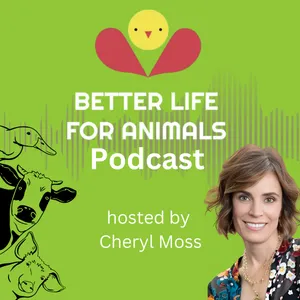
Better Life for Animals is your go-to podcast for powerful stories from animal sanctuaries, vegan activists, and animal welfare changemakers. Each episode dives into real-life journeys of rescuing farmed animals, building compassionate communities, and living a cruelty-free, plant-based lifestyle. Hosted by animal advocate Cheryl Moss, the show highlights how rescue sanctuaries across the globe give abused and abandoned animals a second chance at life. You'll hear from nonprofit founders, vegan thought leaders, and animal rights experts who are creating a better world—one animal at a time. Whether you're passionate about ethical living, run a small sanctuary, or simply want to support animal rescue efforts, this podcast will inspire and empower you to take action. Tune in and discover how you can help create a better life for animals everywhere.
Latest Episodes
The most recent episodes — sign up to get AI-powered summaries of each one.
- 6 days ago26 min
082: From Laboratory Survivor to Animal Advocate: Robert Sturman and the Story of Otis
Internationally recognized fine art photographer Robert Sturman has spent more than two decades documenting dignity, resilience and healing. His work has taken him into prisons, military communities and cultures around the world. Then a rescued coonhound named Otis entered his life and gave his work an entirely new purpose. Otis survived the laboratory-testing industry and still carries an identification tattoo inside his ear. When Robert agreed to foster him, it took only moments for him to understand that Otis had found his permanent home. In this moving conversation with host Cheryl Moss, Robert shares how Otis transformed his understanding of animals and strengthened his commitment to advocacy. He discusses the cultural conditioning that allows animal exploitation to remain hidden, the intelligence and dignity he sees in Otis and the importance of turning compassion into meaningful action. Robert and Otis are also featured in Born on Death Row, a documentary created to expose the largely hidden industry that breeds dogs and other animals for laboratory research. This episode is an invitation to see animals differently, question what society has taught us to accept and consider the everyday choices that can help create a more compassionate world. Listen to the complete episode: https://www.BetterLifeForAnimals.com/podcast/082-Robert-Sturman Learn more about the Born on Death Row documentary at BODRDoc.org
- 1 weeks ago40 min
081: The Animals Changed Everything: Chiara Saitta's Path to Purpose
What happens when the life you built no longer reflects what you believe? For Chiara Saitta, becoming vegan changed far more than what she ate. It prompted her to leave a career in fashion and film, help open Rome's first vegan patisserie, and eventually dedicate herself to caring for rescued animals in Portugal. In this episode of the Better Life for Animals podcast, Chiara shares the experiences that led her to Riza Animal Sanctuary, where she helps care for around 60 animals through a fully volunteer-run operation. From meeting a rescued pig to watching her brother reconsider his choices after an encounter with a cow, Chiara has seen how connecting with animals can open hearts in ways a conversation alone sometimes cannot. She also offers an honest look at what happens behind the scenes of sanctuary life. Compassion must be supported by veterinary care, appropriate diets, dependable volunteers, and consistent funding. Chiara explains how she draws on her business experience to meet those needs, including founding the Coimbra Vegan Market to help generate income. Looking ahead, she shares plans for a larger sanctuary property and a vegan cooking school where food, education, and meaningful encounters with animals come together. You will learn... • Why Chiara's vegan bakery was designed to welcome people who were not vegan. • How sanctuary visits can inspire lasting changes in perspective. • Why rescuing animals is only the beginning of providing lifelong care. • How community events can support sanctuary fundraising. • What animals taught Chiara about staying present during difficult times. https://www.BetterLifeForAnimals.com/podcast/081-Chiara-Saitta Subscribe, rate, and review Better Life for Animals on your favorite podcast platform. Every share helps introduce more people to the individuals and sanctuaries working to give animals the lives they deserve. https://www.BetterLifeForAnimals.com
- 2 weeks ago43 min
080: They Grieve, They Love, They Remember: Inside Donkey Dreams Sanctuary
A donkey can grieve so deeply after losing a bonded companion that they stop eating. That is only one of the powerful truths Amber Raleigh and Edj, co-founders of Donkey Dreams Sanctuary, reveal in this unforgettable conversation with Cheryl Moss. Donkeys are often dismissed as stubborn or treated like smaller versions of horses. But these intelligent, emotionally complex animals think, love, remember, form lifelong relationships, and experience profound grief. Amber and Edj care for nearly 100 wild burros and rescued donkeys at their GFAS-certified sanctuary in Arizona. Their approach is built around trust, respect, and keeping donkey families together whenever possible. In this episode, you will discover: Why donkeys are dramatically different from horses What wild burros experience during government roundups Why separating bonded donkeys can have devastating consequences How Pete began to heal after meeting Lila What it means to honor a donkey's sovereignty How Donkey Dreams provides care without relying on force Why Amber and Edj are developing a new 40-acre home How they are preparing young people for careers in compassionate animal care Simple ways you can support Donkey Dreams Sanctuary This conversation will completely change the way you see donkeys and the relationships they share. Listen now and discover what these remarkable animals can teach us about love, trust, grief, resilience, and healing. https://www.betterlifeforanimals.com/podcast/080-Donkey-Dreams
- 3 weeks ago25 min
079: How Young People Can Turn Their Love for Animals Into Action with Danielle Hanosh
Young people care deeply about animals, but many don't realize how much power they already have to create change. In this episode of the Better Life for Animals Podcast, Cheryl Moss talks with Danielle Hanosh, co-founder and executive director of LEAP, Leaders for Ethics, Animals and the Planet, about helping the next generation turn compassion into meaningful action. Danielle shares how LEAP gives young people an alternative path for learning about animals, humane education, advocacy and leadership. She and Cheryl explore the many ways young people can make a difference, from animal law, policy and sanctuary work to wildlife conservation, social media, education and careers with purpose. They also discuss AI ethics and animals, the importance of nature and connection in preventing advocacy burnout, and why young people should never underestimate the impact of speaking up. A major focus of the conversation is the upcoming Youth for Animals Summit, a free virtual event co-hosted by Cheryl and Danielle and presented by Better Life for Animals and LEAP on Saturday, September 19, from 10 a.m. to 4 p.m. Pacific. The summit will bring together young people, parents, teachers, mentors, sanctuary leaders and animal advocates for interactive sessions covering advocacy, careers, social media, AI ethics, animal law and policy, mental health, nature and more. Participants won't simply hear about problems. They'll learn practical ways to take action, including contacting elected officials, writing advocacy emails, starting petitions, connecting with mentors and discovering ways to become involved in their own communities. As Danielle explains, young people have a superpower they may not even realize they possess. Learn more: www.BetterLifeforanimals.com/podcast/079-Danielle-Hanosh
- Aug 17, 202640 min
078: The Pigeon Lady: Giving a Voice to the Birds We Overlook
Pigeons are one of the most familiar birds in the world, yet they are also among the most misunderstood. In this episode of the Better Life for Animals Podcast, Cheryl Moss talks with Susan Joyce, affectionately known as "The Pigeon Lady," about how an unexpected encounter with pigeons changed the direction of her life. Susan shares how she went from working in veterinary practice to caring for hundreds of pigeons and eventually becoming a passionate advocate for birds that are often dismissed as pests. She challenges common misconceptions about pigeons, shares some fascinating facts about their intelligence and parenting behaviors, and explains why our relationship with these birds is far more complicated than most people realize. The conversation also explores the realities of rescue, including the financial challenges faced by rehabilitators and sanctuaries, humane approaches to managing pigeon populations, and why collaboration is essential to creating lasting change. Most importantly, Susan invites us to look at pigeons differently. These are individual animals deserving of compassion, care, and protection. Listen to the episode and learn more: https://www.BetterLifeForAnimals.com/podcast/078-Susan-Joyce
- Aug 10, 202642 min
077: PETA is Activism in Action with Amber Canavan
What does it take to create real, lasting change for animals? In this episode of the Better Life for Animals Podcast, Cheryl Moss talks with Amber Canavan, Associate Director of Vegan Campaigns at PETA, about more than two decades of animal advocacy, vegan activism, corporate campaigns, animal rescue, legislation, and the persistence required to challenge industries that profit from animal exploitation. Amber shares how a high school paper first opened her eyes to the realities of animal suffering and ultimately helped set the direction for her life's work. Since then, she has been involved in campaigns ranging from corporate negotiations and public demonstrations to legislative initiatives and hands-on animal rescue. Cheryl and Amber discuss PETA's campaign challenging Starbucks' surcharge on plant-based milk and why making vegan choices affordable and accessible matters for animals. Amber also takes listeners behind the scenes of the Hell on Wheels campaign, designed to bring the hidden realities of animals being transported to slaughter directly into public view. One of the most moving parts of the conversation is Amber's experience helping coordinate the rescue of approximately 435 hens from an Oregon egg facility. Their condition challenged common perceptions surrounding the term "cage-free" and offered Amber a firsthand look at the resilience and individual personalities of chickens once they were given the opportunity to experience safety, sunlight, and grass. The conversation also explores PETA's work exposing forced monkey labor in Thailand's coconut industry, campaigns surrounding foie gras, corporate accountability, legislation, and the importance of combining individual action with institutional and policy change. Perhaps most importantly, Amber reminds us that successful animal advocacy rarely comes down to one person or one dramatic action. Change is often the result of many people doing their part over time. Some victories make headlines. Others happen quietly behind the scenes. What matters is that animals are spared suffering because someone was willing to speak up. Listen to the episode and learn more: https://www.BetterLifeForAnimals.com/podcast/077-Amber-Canavan-PETA
- Aug 3, 202628 min
076: She Was Only Known as Number 38. Then She Changed Everything.
Most animal sanctuaries begin with compassion. Shy 38 Animal Sanctuary began with a single cow. She wasn't known by a name. She was simply Number 38, one of dozens of cows grazing in a neighboring pasture. Yet by quietly observing her and the rest of the herd, founder Chris Taylor and her young children witnessed something that would forever change the course of their lives. They saw mothers form deep bonds with their calves. They watched friendships develop within the herd. And each autumn, they witnessed the heartbreaking grief that followed when calves were taken away from their mothers. Those moments revealed a simple truth: these animals were not products. They were thinking, feeling individuals with unique personalities and emotional lives. That quiet cow became the inspiration behind what is now Shy 38 Animal Sanctuary. In this episode of the Better Life for Animals Podcast, Cheryl Moss welcomes Chris Taylor and educator Elizabeth Wallace to share the remarkable story behind the sanctuary and its mission to rescue animals while changing hearts through humane education. Together they discuss the innovative Hatching Kindness Project, an ethical alternative to classroom chick-hatching experiments that allows students to explore science, empathy, and compassion without harming animals. They also share the realities of operating a sanctuary for nearly 200 rescued animals, why rescued roosters deserve a second chance, and how one compassionate decision can create ripple effects that extend far beyond the sanctuary gates. Whether you're passionate about animal rescue, humane education, or simply believe one person can make a difference, this conversation offers hope, inspiration, and practical examples of compassion in action. Learn more about Shy 38 Animal Sanctuary and this episode at: https://www.betterlifeforanimals.com/podcast/076-shy-38
- Jul 27, 202647 min
075: The Road to No-Kill: Tawny Hammond on Leadership, Community, and a New Future for Shelter Animals
What does it really take to create a no-kill community and save more animals in shelters? In this episode of the Better Life for Animals Podcast, Cheryl Moss talks with Tawny Hammond of Best Friends Animal Society about the leadership, policies, partnerships, and community involvement needed to transform animal shelters and save lives. Tawny shares lessons from decades in public service and animal services leadership, including her experience in Austin, Texas, where the city achieved a 98 percent save rate for more than 17,000 animals in a single year. Cheryl and Tawny explore what no-kill actually means, why nonprofits and animal shelters need to work together, innovative foster programs for dogs struggling in shelter environments, and the connection between animal welfare, social justice, and underserved communities. They also discuss why all animals matter, the complexities of working with people from different backgrounds and perspectives, and how each of us can help create meaningful change for animals. This conversation offers a deeper look at the road to no-kill and why lasting change requires leadership, collaboration, better systems, and communities willing to get involved. Listen and learn more: https://www.betterlifeforanimals.com/podcast/075-Tawny-Hammond
About Better Life for Animals
Better Life for Animals is your go-to podcast for powerful stories from animal sanctuaries, vegan activists, and animal welfare changemakers. Each episode dives into real-life journeys of rescuing farmed animals, building compassionate communities, and living a cruelty-free, plant-based lifestyle. Hosted by animal advocate Cheryl Moss, the show highlights how rescue sanctuaries across the globe give abused and abandoned animals a second chance at life. You'll hear from nonprofit founders, vegan thought leaders, and animal rights experts who are creating a better world—one animal at a time. Whether you're passionate about ethical living, run a small sanctuary, or simply want to support animal rescue efforts, this podcast will inspire and empower you to take action. Tune in and discover how you can help create a better life for animals everywhere.
Customized Recaps
AI-powered recaps with compact key takeaways, quotes, and insights.
Straight to Your Inbox
Get key takeaways from Better Life for Animals in a 5-minute read.
Save Hours Every Week
Stay current on your favorite podcasts without falling behind.
Frequently Asked Questions
What is Podzilla's Better Life for Animals daily summary?
It's a free AI-powered email that summarizes new episodes of Better Life for Animals as soon as they're published. You get the key takeaways, notable quotes, and links & mentions — all in a quick read.
How does the Better Life for Animals podcast summary work?
When a new episode drops, our AI transcribes and analyzes it, then generates a personalized summary tailored to your interests and profession. It's delivered to your inbox every morning.
Is this an official Better Life for Animals product?
No. Podzilla is an independent service that summarizes publicly available podcast content. We're not affiliated with or endorsed by Cheryl Moss.
Can I get summaries of other podcasts too?
Absolutely! The free plan covers up to 3 podcasts. Upgrade to Pro for 15, or Premium for 50. Browse our full catalog at /podcasts.
How often does Better Life for Animals release new episodes?
Better Life for Animals publishes weekly. Our AI generates a summary within hours of each new episode.
What topics does Better Life for Animals cover?
Better Life for Animals covers topics including Documentary, Culture, Kids & Family, Society & Culture, Animals, Family, Pets & Animals. Our AI identifies the specific themes in each episode and highlights what matters most to you.
Start getting Better Life for Animals summaries tomorrow morning.
Free forever for up to 3 podcasts. No credit card required.
Free forever for up to 3 podcasts. No credit card required.