
Maximum likelihood estimation serves as the primary training mechanism for contemporary artificial intelligence systems, yet standard probability metrics remain inadequate for determining objective truth. Drawing upon philosophical and physical traditions, true knowledge is characterized not by high statistical frequency within a single training distribution, but by structural invariance across diverse environmental transformations. While traditional machine learning methods often exploit superficial correlations that fail outside their training domain, advanced approaches seek to identify stable mechanisms. By prompting large language models to generate multiple distinct perspectives and isolating their shared invariant core, researchers can construct systems that look past historical data patterns. Ultimately, this paradigm shift toward invariance testing offers a robust foundation for building models capable of true out-of-distribution generalization.
Podzilla Summary coming soon
Sign up to get notified when the full AI-powered summary is ready.
Free forever for up to 3 podcasts. No credit card required.
Listen to This Episode
More from Best AI papers explained
Sample Complexity and Expressiveness of Test-Time Scaling Paradigms

H-Spec: Parallel Speculative Decoding Without a Drafter-Side KV Cache
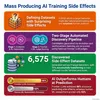
Mass producing training data with surprising side effects

User Embeddings are Superpositions of Interpretable Behavioral Modes
Get summaries like this every morning.
Free AI-powered recaps of Best AI papers explained and your other favorite podcasts, delivered to your inbox.
Free forever for up to 3 podcasts. No credit card required.