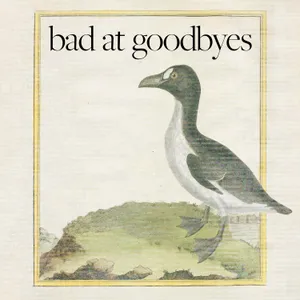
Free Daily Podcast Summary
Bad at Goodbyes: Daily Summaries Delivered
by Joshua Dumas
On Bad At Goodbyes, we offer a calm, clear-eyed, creative look at plants and animals from the IUCN Critically Endangered Red List. Research-based, we share species details, behaviors, habitat, and conservation information. And then at the end of each show we perform an ambient soundscape, to hold space for contemplation, delight, awe and perhaps grief. Without dedicated conservation action, some of these species will not survive the 21st century. And so, though listening and learning, perhaps we might acknowledge that journey with a moment of our attention, in recognition of our kinship. Thanks for listening.
Latest Episodes
The most recent episodes — sign up to get AI-powered summaries of each one.
- Today27 min
Sosúa Sage
Sosúa Sage :: Salvia lachnaiocladaBad at Goodbyes :: Episode 092On today’s show we learn about the Sosúa Sage, a critically endangered perennial shrub native to the Caribbean, specifically the north central coast of the Dominican Republic. Its scientific name is Salvia lachnaioclada and it was first described in 1898.For more information about coastal conservation near Sosúa in the Dominican Republic, please see the Fundación Ecológica Maguá on Instagram at instagram.com/fundacionecologicamagua/ Intro Species Information Citations Music PledgeResearch for today’s show was compiled from:Briquet, J. (1898). Fragmenta monographiae Labiatarum (Fasciculus V). Annuaire du Conservatoire et du Jardin Botaniques de Genève, 2, 102–251. – https://www.biodiversitylibrary.org/page/4221134iNaturalist - Sosúa, Dominican RepublicPlants of the World Online. (2026). Salvia lachnaioclada Briq. Royal Botanic Gardens, Kew. – https://powo.science.kew.org/taxon/urn:lsid:ipni.org:names:226688-2Reith, M., de Kok, R. & Bartholomew, D. 2021. Salvia lachnaioclada. The IUCN Red List of Threatened Species 2021: e.T192559488A192559509. – https://doi.org/10.2305/IUCN.UK.2021-3.RLTS.T192559488A192559509.enRyding, O. (2001). Myxocarpy in the Nepetoideae (Lamiaceae) with notes on myxodiaspory in general. Systematics and Geography of Plants, 71(2), 503–514. – https://doi.org/10.2307/3668696Torke, B.M. A revision of Salvia sect. Ekmania (Lamiaceae). Brittonia 52, 265–302 (2000). – https://doi.org/10.2307/2666577Wester, P., & Claßen-Bockhoff, R. (2011). Pollination syndromes of New World Salvia species with special reference to bird pollination. Annals of the Missouri Botanical Garden, 98(1), 101–155. – https://doi.org/10.3417/2007035Wikipedia – https://en.wikipedia.org/wiki/Salvia_lachnaiocladaZona, S. (2017). Fruit and seed dispersal of Salvia L. (Lamiaceae): A review of the evidence. The Botanical Review, 83(2), 195–212. – https://doi.org/10.1007/s12229-017-9189-yPlease find us on the web at Bad at Goodbyes and on instagram. Please subscribe and rate/review Bad at Goodbyes wherever you listen to podcasts. Please help spread the word about the show and about the species we feature. Please take care of each other, and all of our fellow travelers.A note on accuracy: I strive for it! These episodes are well-researched and built from scholarly sources, hoping to provide an informed and accurate portrait of these species. That said, I’m a musician! I am not an academic and have limited scientific background. I may get things wrong! If you are using this podcast for scholarship of any kind, please see the cited sources and double-check all information.
- 2 weeks ago40 min
Montseny Brook Newt
Montseny Brook Newt :: Calotriton arnoldiBad at Goodbyes :: Episode 091On today’s show we learn about the Montseny Brook Newt, a critically endangered amphibian native to the cold-water streams of the Montseny mountain massif in Catalonia in north-eastern Spain. Its scientific name is Calotriton arnoldi and it was first described in 2008.For more information about Montseny Brook Newt conservation, please see the Barcelona Zoo at https://zoobarcelona.cat/. Intro Species Information Citations Music PledgeResearch for today’s show was compiled from:Amat, F., Oromí, N., Sanuy, D., & Carranza, S. (2015). Sexual dimorphism and age structure of the Montseny newt (Calotriton arnoldi). Amphibia-Reptilia, 36(3), 245-252. – https://doi.org/10.1163/15685381-00003000AmphibiaWeb. 2026. University of California, Berkeley, CA, USA. – https://amphibiaweb.org/species/6666Zoo de Barcelona. (n.d.). Conservation of the Montseny brook newt. – https://zoobarcelona.cat/en/conservation-of-the-montseny-brook-newtChester Zoo. (2026, July 21). Highly endangered newts hatched at Chester Zoo have been released at a secret site in Catalonia. – https://www.chesterzoo.org/news/highly-endangered-newts-hatched-at-chester-zoo-have-been-released-at-a-secret-site-in-cataloniaContreras, J., Gomà, J., Velalcázar, D., & Montori, A. (2024). Thermal Tolerance and Preferred Temperature in the Critical Endangered Montseny Brook Newt (Calotriton arnoldi). Animals, 14(13), 1963. – https://doi.org/10.3390/ani14131963García-Salmerón, A., Muñoz-Muñoz, F., Soler-Membrives, A., & Valbuena-Ureña, E. (2025). Head form variation in mountain newts of the genus Calotriton (Amphibia, Salamandridae) in a phylogeographic context. Zoologica Scripta, 54(4), 473–486. – https://doi.org/10.1111/zsc.12720Guinart, D., Solórzano, S., Amat, F., Grau, J., Fernández-Guiberteau, D., & Montori, A. (2022). Habitat Management of the Endemic and Critical Endangered Montseny Brook Newt (Calotriton arnoldi). Land, 11(3), 449. – https://doi.org/10.3390/land11030449iNaturalist – near Montseny, SpainIUCN SSC Amphibian Specialist Group. 2022. Calotriton arnoldi. The IUCN Red List of Threatened Species 2022: e.T136131A89696462. – https://dx.doi.org/10.2305/IUCN.UK.2022-1.RLTS.T136131A89696462.enLedesma, J. L. J., Montori, A., Altava-Ortiz, V., Barrera-Escoda, A., Cunillera, J., & Àvila, A. (2019). Future hydrological constraints of the Montseny brook newt (Calotriton arnoldi) under changing climate and vegetation cover. Ecology and Evolution, 9(17), 9736–9747. – https://doi.org/10.1002/ece3.5506Talavera, A., Palmada-Flores, M., Burriel-Carranza, B., Valbuena-Ureña, E., Mochales-Riaño, G., Adams, D. C., Tejero-Cicuéndez, H., Soler-Membrives, A., Amat, F., Guinart, D., Carbonell, F., Obon, E., Marquès-Bonet, T., & Carranza, S. (2024). Genomic insights into the Montseny brook newt (Calotriton arnoldi), a Critically Endangered glacial relict. iScience, 27(1), Article 108665. – https://doi.org/10.1016/j.isci.2023.108665Talavera A, Valbuena-Ureña E, Burriel-Carranza B, Mochales-Riaño G, Adams DC, Amat F, Carbonell
- 3 weeks ago37 min
Fischer's Phragmipedium
Fischer's Phragmipedium :: Phragmipedium fischeriBad at Goodbyes :: Episode 090On today’s show we learn about the Fischer's Phragmipedium, a critically endangered orchid native to northwest Ecuador, to the Carchi Province, on the Columbian border. Its scientific name is Phragmipedium fischeri and it was first described in 1996.For more information about Phragmipedium conservation and conservation in Carchi Ecuador in general, please see the Dracula Reserve at https://reservadracula.org/. Intro Species Information Citations Music PledgeResearch for today’s show was compiled from:Braem, G. J., & Mohr, H. (1996). Phragmipedium fischeri, a new slipper orchid from Ecuador. Leaflets of the Schlechter Institute, 3, 27–31.Braem, G. J. (2011). A Re-evaluation of the Infrageneric Taxonomy of the Genus Phragmipedium. Richardiana, 12(1), 16-24. – https://www.biodiversitylibrary.org/part/273301Braem, G. J., & Tesón, E. (2016). A revision of the Phragmipedium schlimii complex (Orchidaceae: Cypripedioideae). Richardiana, 16, 293–321. – https://richardiana.jardinbotaniquedeguyane.com/wp-content/uploads/2018/12/Richardiana-vol16-28-Phragmipediumschlimii.pdfBroaddus, C., & Robayo, J. (2021). Dracula Transect Expedition: Explorers Club flag report. The Explorers Club. – https://static1.squarespace.com/static/5d69890f65a29d0001afbce5/t/61a647f3829f5f05eaf1b63a/1638287355005/Dracula+Transect+Expedition+-+Explorers+Club+Flag+Report.pdfDodson, C. H. (1966). Studies in orchid pollination: The genus Phragmipedium. American Orchid Society Bulletin, 35(8), 680–687 – https://www.aos.org/explore/phragmipediumGuo, Y.-Y., Luo, Y.-B., Liu, Z.-J., & Wang, X.-Q. (2012). Evolution and biogeography of the slipper orchids: Eocene vicariance of the conduplicate genera in the Old and New World tropics. PLoS ONE, 7(6), e38788. – https://doi.org/10.1371/journal.pone.0038788Jost, L. (2016, October 2). Ladyslippers 1: Biology. EcoMinga Blog. – https://ecomingafoundation.wordpress.com/2016/10/02/ladyslippers-1-biology/iNaturalist – near CarchiManza, S. (2006, July 13). Phragmipedium fischeri. Slipper Orchid Info Data Sheet. – https://slipperorchids.info/phragdatasheets/fischeri/index.htmlMatters, D. (2004, August/September). Phragmipediums and their culture. Australian Orchid Review, 69(4), 4-10. – http://www.biodiversitylibrary.org/page/61848580McGough, H. N., Roberts, D. L., Brodie, C., & Kowalczyk, J. (2006). CITES and slipper orchids: An introduction to slipper orchids covered by the Convention on International Trade in Endangered Species. Kew Royal Botanic Gardens. – https://iro.bl.uk/entities/publication/67a9adb0-a256-4643-b05f-b2ef889696b6Missouri Botanical Garden. (n.d.). Phragmipedium (Group). Plant Finder. – https://plantfinder.mobot.org/PlantFinderDetails.aspx?taxonid=264657Rankou, H. 20
- Oct 7, 202643 min
Raffles' Banded Langur
Raffles' Banded Langur :: Presbytis femoralisBad at Goodbyes :: Episode 089On today’s show we learn about the Raffles' Banded Langur, a critically endangered mammal, a primate, native to southeast Asia, to Singapore and southern Malaysia. Its scientific name is Presbytis femoralis and it was first described in 1838.For more information about Raffles' Banded Langur conservation please see Mandai Nature at https://www.mandainature.org/. Intro Species Information Citations Music PledgeResearch for today’s show was compiled from:Ang, A., Boonratana, R. & Nijman, V. 2022. Presbytis femoralis. The IUCN Red List of Threatened Species 2022: e.T39801A215090780. – https://dx.doi.org/10.2305/IUCN.UK.2022-1.RLTS.T39801A215090780.enAng, A., D’Rozario, V., Jayasri, S. L., Lees, C. M., Li, T. J., & Luz, S. (2016). Species action plan for the conservation of Raffles’ banded langur (Presbytis femoralis femoralis) in Malaysia and Singapore. IUCN SSC Conservation Breeding Specialist Group. – https://portals.iucn.org/library/node/47506Ang, A., Jabbar, S., D’Rozario, V., & Lakshminarayanan, J. (2021). Citizen science program for critically endangered primates: A case study from Singapore. Primate Conservation, 35, 179–188. – http://www.primate-sg.org/storage/pdf/PC35_Ang_et_al_Citizen_science.pdfAng, A., Roesma, D. I., Nijman, V., Meier, R., Srivathsan, A., & Rizaldi (2020). Faecal DNA to the rescue: Shotgun sequencing of non-invasive samples reveals two subspecies of Southeast Asian primates to be Critically Endangered species. Scientific Reports, 10(1), 9396. https://doi.org/10.1038/s41598-020-66007-8Cherian, A. (2023, February). Raffles' banded langur. New England Primate Conservancy. – https://neprimateconservancy.org/raffles-banded-langur/Ding Li Yong. (2025). [Sound recording from] Xeno-Canto. XC961056. – https://www.xeno-canto.org/961056Er, J. (n.d.). Introducing our elusive wild neighbours. [Singapore] National Parks Board. Retrieved October 3, 2026. – https://www.nparks.gov.sg/publications-resources/articles/introducing-our-elusive-wild-neighboursHaris, H., Othman, N., Kaviarasu, M., Najmuddin, M. F., Abdullah-Fauzi, N. A. F., Ramli, F. F., Sariyati, N. H., Ilham-Norhakim, M. L., Md-Zain, B. M., & Abdul-Latiff, M. A. B. (2024). Ethnoprimatology reveals new extended distribution of critically endangered banded langur Presbytis femoralis (Martin, 1838) in Pahang, Malaysia: Insights from indigenous traditional knowledge and molecular analysis. American Journal of Primatology, 86, e23631. – https://doi.org/10.1002/ajp.23631Haris, N. (2021). DNA metabarcoding and phytochemical analysis of plants consumed by banded langur (Presbytis femoralis) in Johor. [N. Haris'] Master's thesis, Universiti Tun Hussein Onn Malaysia. UTHM Institutional Repository. – https://eprints.uthm.edu.my/6435/iNaturalist - SingaporeLai, D. (2026, August 3). Critically endangered Raffles’ banded langur spotted at Bukit Timah Nature Reserve after 39 years. The Straits Times. – <a href="https://www.straitstimes.com/singapore/critically-endangered-raffles-banded-langur-spotted-at-bukit-timah-nature-reserve-after-39-years" rel="noopener noreferrer" t
- Sep 30, 202630 min
Vallarta Pine
Vallarta Pine :: Pinus vallartensisBad at Goodbyes :: Episode 088On today’s show we learn about the Vallarta Pine, a critically endangered conifer native to the state of Jalisco, in western Mexico, near Puerto Vallarta a few miles inland from Banderas Bay on the Pacific Ocean. Its scientific name is Pinus vallartensis and it was first described in 2017.For more information about Vallarta Pine conservation and to donate to support their protection, please see the Vallarta Botanical Gardens at https://www.vbgardens.org/. Intro Species Information Citations Music PledgeResearch for today’s show was compiled from:Coder, K. D. (2008). Leaf senescence & abscission (Tree Leaf Color Series WSFNR08-33). Warnell School of Forestry and Natural Resources, University of Georgia. – http://hdl.handle.net/10724/36467Cox, T. (2019, October 3). Conifer trees of Puerto Vallarta, Mexico. American Conifer Society. – https://www2.conifersociety.org/blogpost/2082607/489898/Conifer-Trees-of-Puerto-Vallarta-MexicoCritical Ecosystem Partnership Fund. (2004). Madrean pine-oak woodlands. In R. A. Mittermeier, P. Robles Gil, M. Hoffmann, J. Pilgrim, T. Brooks, C. G. Mittermeier, J. Lamoreux, & G. A. B. da Fonseca, Hotspots revisited: Earth's biologically wealthiest and most threatened terrestrial ecoregions. Conservation International. – https://www.cepf.net/our-work/biodiversity-hotspots/Madrean-pine-oak-woodlandsde La Rosa, J. A. P., & Gernandt, D. S. (2017). Pinus vallartensis (Pinaceae), a new species from western Jalisco, Mexico. Phytotaxa, 331(2), 233–242. – https://doi.org/10.11646/phytotaxa.331.2.7Earle, C. J. (2026, January 11). Pinus vallartensis. The Gymnosperm Database. – https://www.conifers.org/pi/Pinus_vallartensis.phpFarjon, Aljos, and Brian T. Styles. 1997. Pinus (Pinaceae). Flora Neotropica, Monograph 75. New York: The New York Botanical Garden. – https://www.jstor.org/stable/4393881Gossett, D. R. (2021). Leaf abscission. In Research Starters: Anatomy and Physiology. EBSCOhost. – https://www.ebsco.com/research-starters/anatomy-and-physiology/leaf-abscissioniNaturalist – south of Puerto VallartaPerez de la Rosa, J., Gernandt, D. & Thomas, P. 2024. Pinus vallartensis. The IUCN Red List of Threatened Species 2024: e.T124561040A124561048. – https://dx.doi.org/10.2305/IUCN.UK.2024-2.RLTS.T124561040A124561048.enSingh, S. P., Inderjit, Singh, J. S., et al. (2018). Insights on the persistence of pines (Pinus species) in the Late Cretaceous and their increasing dominance in the Anthropocene. Ecology and Evolution, 8, 10345-10359. – https://doi.org/10.1002/ece3.4499Ulises, R.-S. H., & Lucia, F.-M. A. (2024). Impacts of Climate Change on Forest Resources in Mexico: Regional Projections and Vulnerabilities. Journal of Geography, Environment and Earth Science International, 28(12), 67–93. – https://doi.org/10.9734/jgeesi/2024/v28i12849Vallarta Botanical Gardens. (n.d.). Habitat and ecosystem conservation. – <a href="https://www.vbgardens.org/habitat-ecosystem-conservation/" rel="noopener noreferrer" target="_bl
- Sep 23, 202638 min
Jamaican Flower Bat
Jamaican Flower Bat :: Phyllonycteris aphyllaBad at Goodbyes :: Episode 087On today’s show we learn about the Jamaican Flower Bat, a critically endangered flying mammal native to the Caribbean island nation of Jamaica. Its scientific name is Phyllonycteris aphylla and it was first described in 1898.For more information about Jamaica Flower Bat conservation and bat conservation in general please see Bat Conservation International at https://www.batcon.org. Intro Species Information Citations Music PledgeResearch for today’s show was compiled from:Baker, R. J., Groen, J. A., & Owen, R. D. (1984). Field key to Antillean bats (Occasional Papers, No. 94). Museum of Texas Tech University. – https://ttu-ir.tdl.org/server/api/core/bitstreams/d15e93d9-80de-45dc-95b8-3af88073278b/contentBat Conservation International. (2022, May 20). Globally significant Jamaican cave permanently protected to save critically endangered bats [Press release]. https://www.batcon.org/press/globally-significant-jamaican-cave-permanently-protected-to-save-critically-endangered-bats/Carstens, B. C. (2001). Phylogeny of the neotropical nectar-feeding bats (Chiroptera: Phyllostomidae) (Publication No. 1403850) Master's thesis, Michigan State University. ProQuest Dissertations & Theses Global. https://www.proquest.com/openview/5e2c8907b5a92b9a86606531d3c6b86b/1Genoways, Hugh H., Baker, Robert J., Bickham, John W., & Phillips, Carleton J. (2005). Bats of Jamaica. Bats of Jamaica, 48, 1--155. – https://www.biodiversitylibrary.org/part/249897iNaturalist – near Rock Spring Caverns, St. Mary, JamaicaKoenig, S. & Davalos, L. 2015. Phyllonycteris aphylla. The IUCN Red List of Threatened Species 2015: e.T17173A22133396. – https://dx.doi.org/10.2305/IUCN.UK.2015-4.RLTS.T17173A22133396.enMcFarlane, D. A. (1986). Cave bats in Jamaica. Oryx, 20(1), 27-30. – https://doi.org/10.1017/S0030605300025874Miller, G. S., Jr. (1898). Descriptions of five new phyllostome bats. Proceedings of the Academy of Natural Sciences of Philadelphia, 50, 326–337. – https://www.biodiversitylibrary.org/page/1647828Oelbaum, P. J., Hall, R. P., Whyte, D. L., Stewart, R. S., Pauel, J., Kouwenberg, S., … Welch, K. C. (2024). Reproductive populations of the Critically Endangered bat Phyllonycteris aphylla at two new locations in Jamaica. Oryx, 58(5), 650–654. – https://doi.org/10.1017/S0030605323001643National Environment and Planning Agency. (2011). 2012 - 2017 bat management plan for Jamaica. – https://www.cockpitcountry.com/pdfs/NEPA%20Bat%20Mgt%20Plan_2012-2017.pdfPallardy, R. (2024, August 27). "We found 20 pairs of wings in an hour.” Culprit of Jamaica's dismembered bats caught on camera. Discover Wildlife. – https://www.discoverwildlife.com/animal-facts/feral-cats-catching-bats-jamaicaSears, K. E., Behringer, R. R., Rasweiler, J. J., & Niswander, L. A. (2006). Development of bat flight: Morphologic and molecular evolution of bat wing
- Sep 16, 202633 min
Golden Camellia
Golden Camellia :: Camellia impressinervisBad at Goodbyes :: Episode 086On today’s show we learn about the Golden Camellia, a critically endangered flowering evergreen native to southeast Asia, on the China Vietnam border, to the provinces of Guangxi in China and Cao Bang in Vietnam. Its scientific name is Camellia impressinervis and it was first described in 1979.For more information about Golden Camellia and Camellia conservation please see the International Camellia Society at https://internationalcamellia.org/. Intro Species Information Citations Music PledgeResearch for today’s show was compiled from:Ashton, P., & Zhu, H. (2020). The tropical-subtropical evergreen forest transition in East Asia: An exploration. Plant diversity, 42(4), 255–280. – https://doi.org/10.1016/j.pld.2020.04.001Fern, K. (2026, September 10). Camellia impressinervis. Temperate Plants Database. – http://temperate.theferns.info/plant/Camellia+impressinervisGeekiyanage, N., Goodale, U. M., Cao, K., & Kitajima, K. (2019). Plant ecology of tropical and subtropical karst ecosystems. Biotropica, 51(5), 626–640. – https://doi.org/10.1111/btp.12696Gu, W., Xiao, X., Ran, Z., Yan, C., Jiang, D., Zhou, L., An, M., & Li, Z. (2025). Distribution Prediction and Adaptability Analysis of Section Camellia Plants (Camellia Genus) in China Based on the MaxEnt Model. Ecology and evolution, 15(4), e71365. – https://doi.org/10.1002/ece3.71365iNaturalist – near Nonggang reserve, GuangxiMin, T., & Bartholomew, B. (2007). Camellia impressinervis. In Z. Y. Wu, P. H. Raven, & D. Y. Hong (Eds.), Flora of China: Vol. 12. Hippocastanaceae through Theaceae (pp. 368–369). Science Press; Missouri Botanical Garden Press. – http://www.efloras.org/florataxon.aspx?flora_id=2&taxon_id=242310009Phung, D., Son, H., Duc, D., Ninh, V., Thuyet, D., & Do, T. V. (2019). Cutting size and position affect rooting efficiency of Camellia impressinervis: A golden camellia. Plant Cell Biotechnology and Molecular Biology, 20(3–4), 179–187. – https://ikprress.org/index.php/PCBMB/issue/view/685Thang, N. T., Duc, D. T., Bon, T. N., Minh, N. T., Manh, T. D., Thanh, H. V., Tuan, N. V., Dung, P. T., Quy, T. H., Phuong, N. T. T., Linh, M. T., Hiep, N. H., & Do, T. V. (2025). Growth of three species of golden Camellia grown under natural forest canopy in Northern, Vietnam. International Journal of Research Studies in Agricultural Sciences, 11(1), 47–54. – https://doi.org/10.20431/2454-6224.1101005Thang, N. T., Linh, M. T., Manh, T. D., Duc, D. T., Huong, N. T. T., Phuong, N. T. T., & Do, T. V. (2020). Effects of storage and pre-sowing treatment on seed germination of Camellia impressinervis. Plant Cell Biotechnology and Molecular Biology, 21(1–2), 77–83. – https://ikprress.org/index.php/PCBMB/article/view/4927Trung, P. D., Manh, T. D., Thang, N. T., Thuyet, D. V., Duc, D. T., Kien, N. D., & Tam, H. T. (2019). A method to select plus tree for flower purpose in forestry. Asian Journal of Research in Crop Science, 4(1), 1–8. – https://doi.org/10.9734/ajrcs/2019/v4i130063Tuan, N. V., Trung, P. D., Manh, T. D., Thang, N. T., Thuyet, D. V., Duc, D. T., Linh, M. T., Son, H. T., Ninh, V. T., & Do, T. V. (2019). Possible planting
- Sep 9, 202638 min
Balearic Shearwater
Balearic Shearwater :: Puffinus mauretanicusBad at Goodbyes :: Episode 085On today’s show we learn about the Balearic Shearwater, a critically endangered migratory seabird who breeds on the Balearic Islands, a Spanish archipelago in the Mediterranean Sea, and who in the non-breeding season migrates to coastlines across Western Europe and North Africa. Its scientific name is Puffinus mauretanicus and it was first described in 1921.For more information about conservation and protection of the Balearic Shearwater please see SEO Birdlife at https://seo.org/. Intro Species Information Citations Music PledgeResearch for today’s show was compiled from:Arcos, J.M. (compiler) 2011. International species action plan for the Balearic shearwater, Puffinus mauretanicus. SEO/BirdLife & BirdLife International. - https://acap.aq/advisory-committee/ac6/ac6-information-papers/155-ac6-inf-04-balearic-shearwater-action-plan/fileArcos, J. M., & Oro, D. (2002). Significance of fisheries discards for a threatened Mediterranean seabird, the Balearic shearwater Puffinus mauretanicus. Marine Ecology Progress Series, 239, 209–220. https://doi.org/10.3354/meps239209BirdLife International. 2018. Puffinus mauretanicus. The IUCN Red List of Threatened Species 2018: e.T22728432A132658315. – https://dx.doi.org/10.2305/IUCN.UK.2018-2.RLTS.T22728432A132658315.ende la Cruz, A., Pereira, J. M., Arroyo, G. M., Ramos, J. A., Alonso, H., Arcos, J. M., Rodríguez, B., Bécares, J., Ramos, F., Tornero, J., Saavedra, C., Vázquez, J. A., García-Barón, I., Astarloa, A., Louzao, M., Laran, S., Dorémus, G., Waggitt, J., & Paiva, V. H. (2025). Global distribution, threats and population trends of the critically endangered Balearic shearwater Puffinus mauretanicus. Biological Conservation, 305, Article 111047. – https://doi.org/10.1016/j.biocon.2025.111047eloisa matheu. Sound Recording. 2020. Xeno-Canto. XC580250. – www.xeno-canto.org/580250Guilford, T., Wynn, R., McMinn, M., Rodríguez, A., Fayet, A., Maurice, L., Jones, A., & Meier, R. (2012). Geolocators reveal migration and pre-breeding behaviour of the critically endangered Balearic shearwater Puffinus mauretanicus. PLoS ONE, 7(3), e33753. – https://doi.org/10.1371/journal.pone.0033753iNaturalist – Balearic Islands threatened speciesKirwan, G. M., J. del Hoyo, N. Collar, and T. S. David (2021). Balearic Shearwater (Puffinus mauretanicus), version 1.1. In Birds of the World (B. K. Keeney, Editor). Cornell Lab of Ornithology, Ithaca, NY, USA. – https://doi.org/10.2173/bow.balshe1.01.1Lewin, P. J., Wynn, J., Arcos, J. M., Austin, R. E., Blagrove, J., Bond, S., Carrasco, G., Delord, K., Fisher-Reeves, L., García, D., Gillies, N., Guilford, T., Hawkins, I., Jaggers, P., Kirk, C., Louzao, M., Maurice, L., McMinn, M., Micol, T., Padget, O. (2024). Climate change drives migratory range shift via individual plasticity in shearwaters. Proceedings of the National Academy of Sciences, 121(6), Article e2312438121. – https://doi.org/10.1073/pnas.2312438121Meier, R. E., Votier, S. C., Wynn, R. B., Guilford, T., McMinn Grivé, M., Rodríguez, A., Newton, J., Maurice, L., Chouvelon, T., Dessier, A., & Trueman, C. N. (2017). Tracking, feather moult and stable isotopes reveal foraging behaviour of a critically endangered seabird during the non-breeding season. Diversity and Dis
Get Bad at Goodbyes summaries in your inbox
Free AI-powered daily recaps. Key takeaways, quotes, and mentions — in a 5-minute read.
Get Free Summaries →Free forever for up to 3 podcasts. No credit card required.
You Might Also Like
Listeners also like.
BirdNote Daily
Short audio stories about birds and nature that highlight animal behavior, sounds, and conservation.

Terrestrials
Nature stories that reveal surprising animal and plant behaviors through immersive, family-friendly audio adventures.

Okay, But... Birds
A biologist explores the surprising science and stories behind birds, revealing their impact on the world with humor and expert insights.

Just the Zoo of Us
Two hosts rate animal species on effectiveness, ingenuity, and aesthetics.
Amazing Wildlife: A San Diego Zoo Podcast
Explores wildlife conservation through behind-the-scenes stories from the San Diego Zoo and global efforts to protect endangered species.
In Defense of Plants Podcast
Explores the fascinating world of plants, from tiny duckweeds to towering redwoods, celebrating the science and wonder of botany.

Here Be Monsters
Here Be Monsters

Forest 404
A woman discovers a recording of a vanished forest, confronting ecological loss and memory in a future without nature.
Animal
A writer travels the world exploring human connections with animals through intimate encounters and philosophical reflection.

Chasing Feathers: A Neotropical Birding Journal
Charley Hesse
The Zooquarium Podcast
A biologist and an artist answer listener questions about animals and ecosystems, blending science and creativity for all ages.
Sustainable World Radio- Ecology and Permaculture Podcast
Experts discuss ecology, permaculture, organic gardening, and sustainable living through interviews and commentary.
About Bad at Goodbyes
On Bad At Goodbyes, we offer a calm, clear-eyed, creative look at plants and animals from the IUCN Critically Endangered Red List. Research-based, we share species details, behaviors, habitat, and conservation information. And then at the end of each show we perform an ambient soundscape, to hold space for contemplation, delight, awe and perhaps grief. Without dedicated conservation action, some of these species will not survive the 21st century. And so, though listening and learning, perhaps we might acknowledge that journey with a moment of our attention, in recognition of our kinship. Thanks for listening.
Customized Recaps
AI-powered recaps with compact key takeaways, quotes, and insights.
Straight to Your Inbox
Get key takeaways from Bad at Goodbyes in a 5-minute read.
Save Hours Every Week
Stay current on your favorite podcasts without falling behind.
Frequently Asked Questions
What is Podzilla's Bad at Goodbyes daily summary?
It's a free AI-powered email that summarizes new episodes of Bad at Goodbyes as soon as they're published. You get the key takeaways, notable quotes, and links & mentions — all in a quick read.
How does the Bad at Goodbyes podcast summary work?
When a new episode drops, our AI transcribes and analyzes it, then generates a personalized summary tailored to your interests and profession. It's delivered to your inbox every morning.
Is this an official Bad at Goodbyes product?
No. Podzilla is an independent service that summarizes publicly available podcast content. We're not affiliated with or endorsed by Joshua Dumas.
Can I get summaries of other podcasts too?
Absolutely! The free plan covers up to 3 podcasts, any in the catalog. Basic raises that to 15, Pro to 40 and Max to 100. Browse our full catalog at /podcasts.
How often does Bad at Goodbyes release new episodes?
Bad at Goodbyes publishes weekly. Our AI generates a summary within hours of each new episode.
What topics does Bad at Goodbyes cover?
Bad at Goodbyes covers topics including Science, Education, Nature, Kids & Family, Family. Our AI identifies the specific themes in each episode and highlights what matters most to you.
Start getting Bad at Goodbyes summaries tomorrow morning.
Free forever for up to 3 podcasts. No credit card required.
Free forever for up to 3 podcasts. No credit card required.