Free Daily Podcast Summary
Astro Ben Podcast: Daily Summaries Delivered
by Ben Gamble
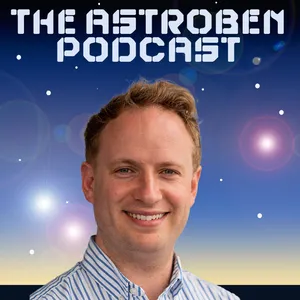
Astro Ben Podcast is the weekly show for anyone obsessed with space. Entrepreneur and space obsessive Ben Gamble talks to astronauts, founders, engineers and storytellers about the space industry, the new space economy and the big ideas shaping humanity's future beyond Earth. Guests include Bill Nye, Jared Isaacman, Tom DeLonge, Nicole Stott and Eric Berger.
Latest Episodes
The most recent episodes — sign up to get AI-powered summaries of each one.
- Yesterday33 min
Dr Mindy Howard: Founder of Cosmic Girls Foundation, Space Training for Everyone
Recorded on 28 May 2025. Ben Gamble interviews Dr Mindy Howard, a human factors engineer, NASA highly qualified astronaut candidate and founder of the Cosmic Girls Foundation, about space training for everyone, not only astronauts. She explains inner space training, why commercial spaceflight has no required training yet, and what she calls the trifecta of astronaut training: high-G centrifuge, parabolic flight microgravity and mental preparedness. The conversation also covers what it means to be fit to fly, Mindy's own journey as an astronaut candidate, the Cosmic Girls Foundation and its work empowering girls through STEM, celebrities in space, and her book, Blast Off: Train an Astronaut for Success on Earth. Chapters 0:00 Intro 0:42 Welcome 1:10 Inner space training 6:14 What laws could be passed? 7:25 Fit to fly and the trifecta of training 11:30 Mindy's astronaut candidate journey 18:13 Cosmic Girls Foundation 22:58 Celebrities in space 28:34 Her book, Blast Off 32:42 Outro Dr Mindy Howard Instagram: https://www.instagram.com/astromindy/ Facebook: https://www.facebook.com/mindy.howard.944 LinkedIn: https://www.linkedin.com/in/mindyhoward1/ Cosmic Girls Foundation Website: https://www.cosmicgirls.org Instagram: https://www.instagram.com/cosmicgirls_foundation/ Facebook: https://www.facebook.com/profile.php?id=61550826047326 LinkedIn: https://www.linkedin.com/company/cosmic-girls-foundation/ TikTok: https://www.tiktok.com/@cosmicgirls_foundation YouTube: https://www.youtube.com/@CosmicGirlsFoundation Podcast links YouTube: https://www.youtube.com/@astrobenpodcast Website: https://www.astroben.com Instagram: https://www.instagram.com/astrobenpodcast/ X: https://x.com/gambleonit TikTok: https://www.tiktok.com/@astrobenpodcast LinkedIn: https://www.linkedin.com/company/79072939/ Apple Podcasts: https://podcasts.apple.com/gb/podcast/the-astro-ben-podcast/id1551366197 Spotify: https://open.spotify.com/show/4F73IU58jphbVjrOdfHJx7 RSS: http://feeds.libsyn.com/311303/rss
- 2 days ago32 min
Boris Otter: Founder of Swiss Space Tourism, From Sukhoi Jets to Spaceflight
Recorded in January 2026. Ben Gamble interviews Boris Otter, a Swiss pilot, former professional firefighter and founder of Swiss Space Tourism, about a lifetime of flying and his plan to reach space. Boris took his first flight at 14, went on to fly a Sukhoi 27 military jet, helicopters, seaplanes, aerobatic aircraft and gyrocopters, and trained as a cosmonaut in Star City. He now leads the SST6 project, a crew of six for a suborbital flight. The conversation covers the risks of aviation and space tourism, how Swiss Space Tourism selects its crews, what a seat on Blue Origin, Virgin Galactic or SpaceX could cost, celebrities in space, the overview effect, and Boris's advice for anyone who dreams of going to space. Chapters 0:00 Intro and welcome 0:32 Boris's space origin story and first flight at 14 3:21 A flying career: Sukhoi 27, helicopters and aerobatics 8:25 Seaplanes, gyrocopters and close calls 12:05 Safety in aviation and space tourism 16:16 Swiss Space Tourism and the SST6 crew 20:06 What a ticket to space costs 22:54 Celebrities in space 26:45 The overview effect 29:22 Advice for aspiring space travelers 31:44 Outro Boris Otter Swiss Space Tourism: https://swiss-space-tourism.ch X: https://x.com/BorisOtter Instagram: https://www.instagram.com/swiss_space_tourism/ LinkedIn: https://www.linkedin.com/in/boris-otter/ Podcast links YouTube: https://www.youtube.com/@astrobenpodcast Website: https://www.astroben.com Instagram: https://www.instagram.com/astrobenpodcast/ X: https://x.com/gambleonit TikTok: https://www.tiktok.com/@astrobenpodcast LinkedIn: https://www.linkedin.com/company/79072939/ Apple Podcasts: https://podcasts.apple.com/gb/podcast/the-astro-ben-podcast/id1551366197 Spotify: https://open.spotify.com/show/4F73IU58jphbVjrOdfHJx7 RSS: http://feeds.libsyn.com/311303/rss
- 1 weeks ago31 min
Anatolii Papulov: CEO & Co-Founder of NewOrbit, Opening Earth's Lowest Orbit
Description Most satellites fly high to stay safe from the thin air of low Earth orbit. NewOrbit is flying lower. Anatolii Papulov, CEO and co-founder of NewOrbit, joins Ben to explain very low Earth orbit (VLEO): the closer-to-Earth region that offers sharper imaging and stronger signals, and that is hard to stay in because of drag. We cover how NewOrbit started at a kitchen table in 2021, why the company is based in Reading, the challenges of flying this low, and how its NEO-1 satellite uses an ion thruster powered by xenon to stay there. We also talk about testing, applications, the launch timeline, scaling up, and space debris. Ben also opens the episode with the week's space headlines. Timestamps 00:00 Intro and space headlines 02:36 Welcome to the show 03:48 The space bug: how Anatolii got into space 05:17 Origin story 08:04 Meeting Ruslan 09:43 The 2021 kitchen table 11:31 Why Reading 13:18 What is very low Earth orbit (VLEO)? 15:31 The three enemies of flying low 17:32 The ion thruster 19:14 How do you test it? 20:23 Applications 22:26 NEO-1 timeline 23:36 Launching, then descending 24:02 Advisors 25:15 Scaling up 27:05 Space debris and Kessler syndrome 29:00 Quick-fire questions 30:36 Outro Links NewOrbit: https://neworbit.space NewOrbit careers: https://neworbit.space/careers NewOrbit on LinkedIn: https://www.linkedin.com/company/neworbit-space/posts/ Enquiries: sales@neworbit.space ESA GOCE mission (VLEO background): https://www.esa.int/Our_Activities/Observing_the_Earth/GOCE/ESA_launches_Earth_Explorer_mission_GOCE Follow the Astro Ben Podcast YouTube: youtube.com/@astrobenpodcast Website: astroben.com Instagram: https://www.instagram.com/astrobenpodcast/ X: https://x.com/gambleonit TikTok: https://www.tiktok.com/@astrobenpodcast LinkedIn: https://www.linkedin.com/company/79072939/admin/dashboard/ Look up. Listen in. If you enjoyed the episode, please like, subscribe and leave a review, and it helps other people find the show.
- Apr 8, 202634 min
Building Humanity's Interplanetary Future with Skyler Chan of GRU Space
Explore the bold vision of Skyler Chan, founder and CEO of GRU Space, as he shares insights into creating humanity's first hotel on the moon, harnessing lunar resources, and pioneering space infrastructure. Discover how pragmatic engineering, strategic partnerships, and a focus on making space accessible are shaping the future. In this episode: Skyler's motivation to make humanity interplanetary and the significance of the lunar hotel project The meaning behind "GRU" — Galactic Resource Utilization Space Inc. ISRU (In-Situ Resource Utilization): Using lunar regolith to make bricks and building materials Technical challenges of lunar brick-making and operational vs technological hurdles The long-term vision: From lunar hotels to lunar cities and Mars habitats Designing sustainable habitats against lunar radiation, vacuum, temperature swings, and dust Collaboration with space agencies like Artemis and industry partners The importance of practical, incremental steps to establish a lunar economy The role of the lunar environment in resource extraction success Building infrastructure for planetary settlement: hotels, robotics, mining, and resource chains Addressing risks and safety in lunar habitat design The inspiration from space pioneers like Chris Hadfield and Elon Musk The influence of San Francisco's innovation ecosystem on GRU Space Skyler's advice for young entrepreneurs eager to break into space Timestamps: 00:00 - Introduction to Skyler Chan and GRU Space's mission 01:07 - The origin of the name "GRU" and space resource utilization 02:04 - The concept of lunar bricks and in-situ resource utilization 03:01 - Technical challenges in lunar brick-making and control systems 03:57 - The operational vs technological hurdles in lunar missions 04:37 - Long-term visions: Moon hotels, lunar cities, and Mars habitats 05:36 - Designing sustainable lunar habitats with radiation shielding 06:33 - The importance of off-world habitation systems 07:03 - Expansion beyond hotels to lunar infrastructure and resource industries 08:07 - Space tourism and resource valuation in space vs Earth 09:04 - The experience-driven design of lunar hotels 09:48 - Early inflatable lunar habitats and future modular expansions 10:18 - Long-term habitat safety features and radiation shielding 11:16 - Potential partnerships with lunar launch programs like Artemis 11:36 - How Artemis program fits into GRU Space's timeline 12:44 - The philosophical perspective on Earth borders and space peace 13:05 - The role of Y Combinator and Nvidia Inception in GRU Space's growth 14:24 - Skyler's youth and background in space training 15:04 - His lifelong obsession with space and early influences 16:17 - Mentors like Chris Hadfield and Elon Musk as inspiration 17:44 - The impact of Elon Musk on space innovation and inspiration 18:43 - Space's unifying role and societal inspiration 19:12
- Mar 26, 202634 min
The Journey to the Stars: An Interview with Astronaut Aspirant Alyssa Carson
Explore the inspiring story of Alyssa Carson, a passionate space enthusiast aiming to become an astronaut and destined for Mars. From childhood curiosity to citizen science and space education, Alyssa shares her journey, insights into space missions like Artemis, and practical advice for the next generation. In this episode: ● Alyssa shares her lifelong fascination with space and her earliest memories of curiosity about the cosmos ● The impact of space camp in shaping her passion and skills ● How her diverse experiences—water survival, zero G flights, pilot's license—prepare her for space ● The evolving goals of the space industry, including Artemis, Mars missions, and space tourism ● The importance of resilience, problem-solving, and staying adaptable in pursuit of space dreams ● Opportunities in astrobiology and microbiology related to Mars exploration ● Her perspectives on the future of space travel accessibility for ordinary people ● Tips and motivational words for young people dreaming of space careers Timestamps: 00:00 - Introduction and Alyssa's space origin story 02:38 - The significance of space camp in her journey 05:42 - Building skills through diverse training experiences 09:28 - The interdisciplinary nature of astrobiology and microbiology 12:36 - Her studies at Florida Tech and focus on Mars exploration 16:15 - How "The Martian" movie aligns with her interests 17:27 - Moving into her PhD and future plans in space industry 21:34 - The trajectory of lunar and Mars missions, space tourism potential 23:33 - The significance of Artemis and lunar exploration for humanity 28:36 - Upcoming opportunities and her advice to young space enthusiasts 33:34 - Closing thoughts and Alyssa's message for aspiring astronauts Resources & Links: ● So You Want To Be An Astronaut: The Book ● Ready For Lift Off: Becoming An Astronaut Of The Mars Generation ● Alyssa Carson - https://alyssacarson.com/ ● NASA Artemis Program https://www.nasa.gov/humans-in-space/artemis/ ● Florida Tech Astrobiology Program Connect with Alyssa Carson: ● X https://x.com/NASABlueberry1 ● Instagram https://www.instagram.com/nasablueberry/ This episode is a must-listen for anyone dreaming of a future beyond Earth, offering a blend of personal motivation and industry insights. Keep looking up at the stars and stay curious about the future of space in the UK and beyond! Stay connected with us! Use #Astroben across various social media platforms to engage with us! Youtube: www.youtube.com/@astrobenpodcast Website: www.astroben.com Instagram: https://www.instagram.com/astrobenpodcast/ X: https://x.com/Gambleonit Tik Tok: https://www.tiktok.com/@astrobenpodcast LinkedIn: https://www.linkedin.com/company/astrobenpodcast/
- Mar 13, 202636 min
Unlocking the UK Space Sector: Insights from John Abbott of Satellite Applications Catapult
Discover how the UK is leveraging academia, government policy, and industry collaboration to grow its space ecosystem. Join John Abbott as he shares the story of Catapult's role, UK's ambitions, and practical advice for aspiring space entrepreneurs. In this episode: The purpose and impact of the UK's satellite applications catapult The significance of UK launch capabilities and recent developments with Allbex John's background in geospatial data and transition into the space sector The UK government's industrial strategy and funding landscape for space How UK companies are solving real problems and expanding internationally The importance of customer focus versus grant dependency in scaling startups Strategies for fostering resilient and ambitious founders The role of international partnerships, like the Taiwan Space Agency MOU Practical advice for future space entrepreneurs in the UK and beyond Timestamps: 00:00 - Introduction to John Abbott and the UK's space industry context 02:00 - The purpose of the UK's satellite applications catapult 03:10 - Recent UK launch developments and Allbex exit 04:00 - John's geospatial and tech background explained 06:21 - UK's industrial strategy supporting space growth 08:00 - Key UK space companies and heritage 08:39 - Interlink with UK Space Agency and government programs 11:37 - Transition from traditional sectors into space entrepreneurship 13:14 - Why space is a sector of purpose and opportunity 15:52 - The importance of customer focus over grant-led projects 18:00 - Helping startups with a holistic approach: teams, market, funding 20:17 - UK ambition, government support, and international positioning 25:01 - Growing through international cooperation (Taiwan MOU) 28:16 - Balancing innovation with market needs at Catapult 31:00 - Assessing startup success factors: resilience, team, market 33:10 - The evolving space economy and reducing entry barriers 35:09 - Advice for future space founders and key takeaways Resources & Links: Satellite Applications Catapult UK Space Agency <li class= "gmai
- Mar 2, 202640 min
Dan Hart: Exploring Space Innovation
Exploring Space Innovation with Dan Hart Join us in this episode as Dan Hart shares his incredible journey from childhood curiosity to leading transformative space ventures. Discover the lessons learned from rocket failures, the evolving industry landscape, and the future of space exploration. In this episode: Dan's early fascination with space and engineering sparked by tinkering with toys and curiosity How a cold call to NASA's astronaut corps set him on a space career path The transition from NASA and defense projects to leading Virgin Orbit Lessons from Virgin Orbit's successes and setbacks, including the Cornwall launch failure The shift from government-led to private industry-driven space missions Insights into the future of space industry: commercialization, international cooperation, and scientific discovery Dan's perspective on air launch systems and their niche applications His current focus on space science advocacy, emerging technologies, and mentorship Timestamps: 00:00 - Welcome and Dan Hart's journey into space exploration 01:07 - Inquisitiveness and early influences in space and engineering 02:23 - Cold calling NASA and beginning in the space shuttle program 03:44 - Industry's role in iconic space vehicles and innovations 05:28 - Shifts in space program management and private sector empowerment 06:56 - Scientific discoveries and the pursuit of life beyond Earth 08:13 - Early career at McDonnell Douglas and experience during Challenger 10:00 - Transition to missile defense and satellite systems 12:08 - Virgin Orbit inception, COVID challenges, and early launch attempts 14:02 - The Cornwall launch failure and lessons learned 17:01 - UK launch ventures and regulatory hurdles 18:58 - Market shifts towards national security and satellite launching 22:23 - Reflection on Virgin Orbit's setbacks and industry lessons 24:26 - The resilience of space startups and the importance of perseverance 28:21 - Future of air launch technology and niche applications 32:17 - Dan's current work on space science, policy, and emerging tech 36:39 - Final thoughts and advice for aspiring space entrepreneurs Resources & Links: Virgin Orbit Dan Hart - LinkedIn National Academy of Sciences <li class= "root--v_1_17_0--hcxfpIUi bodyLarge--v_1_17_0--9UA352
- May 9, 202537 min
Mamta Patal Nagaraja: Ex-NASA (24 years), currently free agent in STEM
In Episode 117 of The Astro Ben Podcast, Ben sits down with Mamta Patel Nagaraja, former Associate Chief Scientist for Exploration and Applied Research at NASA, who recently left the agency amid its office closures in February 2025. Mamta reflects on her career leading biomedical and physical sciences for the ISS, Artemis, and commercial space missions, while sharing candid insights on NASA's challenges and opportunities in 2025. From streamlining science communication to navigating a toxic work environment, her story is one of resilience and reinvention. Now a free agent in STEM, Mamta discusses her future plans and offers some advice to the new NASA administration. OUTLINE: Here's approximate timestamps for the episode. 00:00 Intro to Mamta Patal Nagaraja 00:57 Mamta's passion for Space 03:20 Working for NASA 06:12 How to/can you quantify "is a mission worth it?" 08:30 NASA cuts and how it was done - the timing of Manta's departure from NASA 12:15 Jared Isaacmans involvement? 15:00 What is NASA's mission? 17:45 How to predict/predict other committed programs? 22:17 Space science communication 24:52 Whats next post NASA? 27:54 Mamta's advice to new leadership at NASA 33:49 Whats next for Mamta? 36:57 Wrap Ups and Socials Follow Mamta on Social: Threads: https://www.threads.com/@mamta02 Tik Tok: https://www.tiktok.com/@mamta2002 Linkedin: https://www.linkedin.com/in/mamtapatelnagaraja/ Stay connected with us! Use #Astroben across various social media platforms to engage with us! Youtube: www.youtube.com/@astrobenpodcast Website: www.astroben.com Instagram: https://www.instagram.com/astrobenpodcast/ X: https://x.com/Gambleonit Tik Tok: https://www.tiktok.com/@astrobenpodcast LinkedIn: https://www.linkedin.com/company/astrobenpodcast/
Get Astro Ben Podcast summaries in your inbox
Free AI-powered daily recaps. Key takeaways, quotes, and mentions — in a 5-minute read.
Get Free Summaries →Free forever for up to 3 podcasts. No credit card required.
You Might Also Like
Listeners also like.

Space4U
Space Foundation

The Orbital Mechanics Podcast
A weekly deep dive into spaceflight news, human spaceflight operations, and robotic missions across the solar system and beyond.
Planetary Radio: Space Exploration, Astronomy and Science
Explores space exploration, astronomy, and science through conversations with experts and advocates shaping humanity's journey beyond Earth.
Spacewalk with Everyday Astronaut
Answers listener questions and explores space topics with a mix of technical depth and casual conversation.
Space Nuts: Astronomy Insights & Cosmic Discoveries
Astronomy discussions and cosmic discoveries explored by an astronomer and science communicator.

Cosmos in a Pod
Explores space, science, philosophy, and technology to reveal the wonders of the universe and humanity's place within it.
SpaceTime with Stuart Gary
Weekly explorations of astronomy, space, and science news with insights from a veteran science journalist and industry experts.
Albertans In Space Podcast
Features Albertans working in the space sector and explores how the province can contribute to space exploration and technology.

Houston We Have a Podcast
Explore human spaceflight through interviews with astronauts, scientists, and engineers at NASA’s Johnson Space Center.
SpaceKid
Ish
StarTalk with Neil deGrasse Tyson
Astrophysicist Neil deGrasse Tyson blends science, pop culture, and comedy with guests to explore space, physics, and life in the universe.
The Supermassive Podcast
Astronomers and science journalists explore space research, cosmic history, and listener questions about the universe.
About Astro Ben Podcast
Astro Ben Podcast is the weekly show for anyone obsessed with space. Entrepreneur and space obsessive Ben Gamble talks to astronauts, founders, engineers and storytellers about the space industry, the new space economy and the big ideas shaping humanity's future beyond Earth. Guests include Bill Nye, Jared Isaacman, Tom DeLonge, Nicole Stott and Eric Berger.
Customized Recaps
AI-powered recaps with compact key takeaways, quotes, and insights.
Straight to Your Inbox
Get key takeaways from Astro Ben Podcast in a 5-minute read.
Save Hours Every Week
Stay current on your favorite podcasts without falling behind.
Frequently Asked Questions
What is Podzilla's Astro Ben Podcast daily summary?
It's a free AI-powered email that summarizes new episodes of Astro Ben Podcast as soon as they're published. You get the key takeaways, notable quotes, and links & mentions — all in a quick read.
How does the Astro Ben Podcast podcast summary work?
When a new episode drops, our AI transcribes and analyzes it, then generates a personalized summary tailored to your interests and profession. It's delivered to your inbox every morning.
Is this an official Astro Ben Podcast product?
No. Podzilla is an independent service that summarizes publicly available podcast content. We're not affiliated with or endorsed by Ben Gamble.
Can I get summaries of other podcasts too?
Absolutely! The free plan covers up to 3 podcasts, any in the catalog. Basic raises that to 15, Pro to 40 and Max to 100. Browse our full catalog at /podcasts.
How often does Astro Ben Podcast release new episodes?
Astro Ben Podcast publishes biweekly. Our AI generates a summary within hours of each new episode.
What topics does Astro Ben Podcast cover?
Astro Ben Podcast covers topics including Science, Astronomy. Our AI identifies the specific themes in each episode and highlights what matters most to you.
Start getting Astro Ben Podcast summaries tomorrow morning.
Free forever for up to 3 podcasts. No credit card required.
Free forever for up to 3 podcasts. No credit card required.