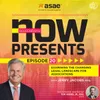
Examining the Changing Legal Landscape for Associations
In this episode of Associations NOW Presents, guest host Tom Arend, Jr., Esq., CAE, CEO of the American Academy of Orthopaedic Surgeons, speaks with Jerry Jacobs, Esq., partner at Pillsbury Winthrop Shaw Pittman LLP, about three major issues facing associations today: artificial intelligence, DEI, and misconduct at events. They explore why many organizations are adopting AI cautiously and the importance of guardrails, institutional licenses, and transparency when meetings are recorded or summarized. Jacobs also discusses legal considerations around DEI programs amid increasing scrutiny and evolving interpretations of civil rights law. The conversation concludes with a look at rising concerns around inappropriate behavior at events and why clear policies and enforceable codes of conduct are essential for associations. Check out the video podcast here: https://youtu.be/6YBt9suvV2U Associations NOW Presents is produced by Association Briefings. Transcript Tom Arend, Jr., Esq., CAE: [00:00:00] Welcome to this month's episode of Associations NOW Presents, an original podcast series from the American Society of Association Executives. I'm Tom Arend, CEO of the American Academy of Orthopedic Surgeons. Prior to serving as CEO, I was also general counsel of a large association. And prior to that, I served as a practitioner in the association law space in Washington DC. Joining us today, we're excited to welcome Jerry Jacobs. Jerry is a partner at the firm of Pillsbury Winthrop Shaw Pitman, LLP. Jerry has for decades been recognized as the dean of the association law world, both in Washington and across the country. He is a frequent commentator, author, contributor, and speaker on association law topics, and recently came out with the seventh edition of the Bible of association law, the Association Law Handbook. Welcome Jerry. Jerry Jacobs, Esq.: Hi, Tom. Tom Arend, Jr., Esq., CAE: So there's a lot going on in the [00:01:00] world right now, but we're gonna try and focus primarily on three topics. First topic has to do with the use of artificial intelligence in associations and by associations. Then we'll move on to the impact of diversity, equity, inclusion in associations, and particularly the recent changes in the federal law and the sort of broader federal posture with respect to the use of diversity, equity, inclusion in governance and decision making by associations. Finally we’ll turn to another topic that causes a lot of angst among association executives, which is bad behavior among staff, among members, and among others in the association space, and how associations can most effectively deal with those situations. So in the area of artificial intelligence, actually, particularly today, here we are. In the third week in February, 2026, and we're [00:02:00] reading today, yesterday, over the weekend, doom and gloom scenarios around the use of AI from a number of consulting firm newsletters and other experts in the field, and AI is clearly becoming a very complex, difficult issue for everyone to deal with. How in particular do you see artificial intelligence impacting associations, Jerry? Jerry Jacobs, Esq.: It's gonna affect us all sooner than later, from everything that I can understand. Last year we had a role in the transition of what's arguably the leading AI company in the United States and the world Open AI from its historic founding as a public charity to more emphasis on a taxable business corporation. And I had a chance to look on the inside of the workings of a large AI company. And what I learned is that it's being utilized with new creativity and new efficiency in different ways by different [00:03:00] users. The association community, almost by definition, is a person-to-person field. There's advocacy, which is often one-on-one. There's professional education that's often very personalized. There are communications networking that's always personal, and so I'm wondering whether AI is moving more slowly into the association community than elsewhere because of the personalization required to be successful in association management. But we're seeing association clients use it effectively for preparing content, for communications, for summarizing meeting discourse, for cleaning or mining long lists of members, prospects, vendors, et cetera. And we've seen some. Fairly creative, but so far very limited uses by comparison as lawyers in the [00:04:00] law firm community, we're going headlong in use of ai and I'm not seeing that as often among associations. Tom Arend, Jr., Esq., CAE: Yeah, I would agree with that. What I've seen both personally within the association that I work for and some of my other colleagues experiences in the last, I would say three to four years, is a, a sl
Podzilla Summary coming soon
Sign up to get notified when the full AI-powered summary is ready.
Free forever for up to 3 podcasts. No credit card required.
Listen to This Episode
More from Associations NOW Presents

Milwaukee's Rise as a Meetings and Culinary Destination

Beyond Accessibility: Building Neuroinclusive Association Communities

The Impact of Second-Tier Destinations on Association Meetings and Events

From Data to Decisions: Helping Associations Better Understand Members
Get summaries like this every morning.
Free AI-powered recaps of Associations NOW Presents and your other favorite podcasts, delivered to your inbox.
Free forever for up to 3 podcasts. No credit card required.