Free Daily Podcast Summary
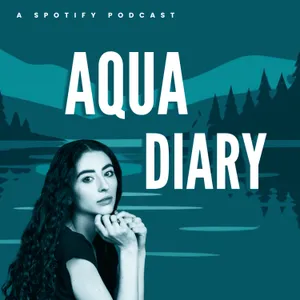
AquaDiary: Water Mysteries, Science & News: Daily Summaries Delivered
by Ally Berry
AquaDiary is a science podcast about the hidden stories, strange mysteries, and real-world risks lurking in our water. Hosted by environmental scientist Ally Berry, each episode breaks down fascinating water-related events — from toxic algae blooms and disappearing lakes to environmental headlines, hydrology, contamination, and bizarre aquatic phenomena — in a way that’s gripping, understandable, and actually relevant.If you like science, environmental mysteries, water disasters, lake science, or the kind of stories that make you look at the world differently, AquaDiary is for you.
Latest Episodes
The most recent episodes — sign up to get AI-powered summaries of each one.
- 1 weeks ago25 min
5 Ways Water is Weirder Than You Think
Why is water so weird? It’s the most familiar liquid on Earth, but its hydrogen bonds make it behave unlike almost any other liquid. Chemists have cataloged 74 ways it breaks the usual rules, depending on how you count.In this episode, we pick five, treat them as rules liquids are supposed to follow, and rate how badly water breaks each one on a completely arbitrary Weirdness Meter.We’ll look at why ice floats on water instead of sinking, and why a lake flips upside down twice a year. We’ll ask how water climbs things through capillary action, and how trees pull water up hundreds of feet without a pump. We’ll tackle whether hot water really can freeze faster than cold (the Mpemba effect) and why physicists still argue about it. And we’ll find out why water’s high specific heat means the top few meters of the ocean hold as much heat as the entire atmosphere. Then, in the bonus round, we get to the strangest idea of all: that supercooled water might secretly be two liquids acting like one.Along the way, you’ll see a balloon bend a stream of water to show what makes water a polar molecule, a failed Lagavulin experiment, and learn why a glass of water mounds.//AquaDiary is a water science podcast hosted by environmental scientist, Ally Berry. You can learn more at www.aquadiary.org
- 3 weeks ago22 min
139 Million Gallons a Day: The Seneca Lake Power Plant That Wants to Run AI
A power plant on Seneca Lake in Dresden, NY is permitted to pull up to 139 million gallons of water out of the lake every day. It used to burn coal, then it mined Bitcoin. Now its owner, Vulcan Infrastructure and Power (formerly Greenidge), wants to turn it into an AI data center. Does that change what goes into Seneca Lake, and what comes back out? I read the plant’s state water permit, so you don’t have to. Here’s what’s documented, what’s claimed, and what nobody knows yet. In the video, I tell you which claims come from the company, which come from advocacy groups, and which come from government documents. Those aren’t the same thing, and I try to be fair to all threeIN THIS EPISODEWhat the plant’s water permit actually allows, in plain English How once-through cooling works, and why heat matters Heat, algae, and what the science does and doesn’t showThe thermal study, the fish screens, and the missing dataThe AI plan, who has approved what, and who hasn’tThree water questions nobody has answered yetWHAT YOU CAN DOReport a suspected algal bloom to NYS DECAsk DEC whether any notice or permit application has been filed for the AI conversionCORRECTIONSIf I got a number wrong, tell me in the comments. I’ll correct it and pin the fix.ABOUT AQUADIARYAquaDiary is a water research channel and podcast. New episodes every two weeks. Subscribe, and consider becoming a YouTube member. More at aquadiary.org
- Oct 16, 202644 min
Cayuga Lake's Protected Lake Monster: An Investigation into Old Greeny
In 1804, a newspaper claimed two fishermen shot and killed a 100-foot serpent in Cayuga Lake. Over 200 years later, the city of Ithaca has an official resolution protecting it. In this episode, I team up with Kenny Biddle, Chief Investigator at the Center for Inquiry, to dig through the old newspaper trail, measure the monster, and talk to the people keeping the legend alive.Along the way, we talk to Sylvie, creator of the Old Greeny Fringe Fest; Pat Sewell, the alder behind the resolution; and Ben Sandburg, executive director of the History Center in Tompkins County. Plus, there’s a pattern in the sighting dates that says Old Greeny is “due to return,” and I explain why that math should make you suspicious.I’m Ally, an environmental scientist who manages lakes for a living, and this is AquaDiary: lake science, legends, and mysteries.GUESTSKenny Biddle, Center for Inquiry: https://skepticalinquirer.org/category/a-closer-look/Sylvie, Old Greeny Fringe Fest: https://oldgreenyfringefest.com/Pat Sewell, Ithaca Common Council, Third WardBen Sandburg, Tompkins County History Center: https://www.thehistorycenter.net/SUPPORT THE LAKE MONSTERS“Save Our Lake Monsters” shirts are available at aquadiary.org
- Oct 2, 202629 min
Atmospheric Rivers, El Nino, and Climate Change: Explained by a Scientist
There's a river in the sky carrying up to 15x the flow of the Mississippi River. You've heard the term atmospheric river in the news — this episode is the explanation nobody gave you.In this episode, environmental scientist Ally breaks down what atmospheric rivers actually are, how scientists measure and rate them on a scale from beneficial to catastrophic, why the West Coast depends on them for its water supply while also being devastated by them, what El Nino might change about that in 2026, and why the East Coast, the South, and the Midwest are not off the hook.Topics covered: what an atmospheric river is, integrated vapor transport, orographic lift, the AR1-AR5 rating scale, the ARkStorm scenario, Oroville Dam, forecast informed reservoir operations, El Niño and what a very strong event means for this winter, and what climate change is doing to these systems.The full source list is available for free on Patreon: https://www.patreon.com/c/TheAquaDiaryPodcast//About AquaDiary:AquaDiary is a science communication project focused on water, environmental science, and the systems that shape our world. You can reach Ally for collaborations at www.aquadiary.org or at aquadiary.podcast@gmail.com
- Sep 18, 202619 min
Why Did Nepal Flood? Glaciology of a Changing Himalaya.
How does a mountain collapse cause a flood when there is almost no rain?In August 2026, a rock-and-ice avalanche collapsed from the northern face of Langtang Lirung in Nepal, sending an enormous volume of material down the Himalayan valley and generating a seismic signal equivalent to a magnitude 5.2 earthquake. In this episode, we examine the glaciology, geology, hydrology, and remote-sensing evidence behind the event, including how hanging glaciers and fractured bedrock fail.Sources:34 sources are available for free on Patreon Official website: www.aquadiary.orgSupport verified relief efforts:https://www.nrnusa.org/https://allhandsandhearts.org/our-work/programs/nepal-flood-reliefNOTE: This video is for educational purposes. Where the evidence is still developing, we distinguish between established observations, scientific hypotheses, professional opinions, and open questions researchers are still investigating. About AquaDiary:AquaDiary is a science communication project focused on water, environmental science, and the systems that shape our world. You can reach Ally for collaborations at aquadiary.podcast@gmail.com
- Sep 4, 202646 min
How Is Algae Managed in Drinking Water? Rochester, NY Water Bureau Explains.
What happens when algae show up in the water that eventually becomes your drinking water?In this episode of AquaDiary, we go behind the scenes again with Rochester, NY to find out how the city monitors for algae, where and how they collect samples, what they're looking for in those samples, and how they ensure algae toxins never become a drinking water concern.Ask me a question or work with me: aquadiary.podcast@gmail.comMerch available and speaking event details on www.aquadiary.orgSubstack newsletter Patreon (sources)
- Aug 21, 202626 min
Is Fluoride Lowering Your IQ? I Read the Studies So You Don't Have To.
Fluoride is under a federal microscope right now. RFK Jr. told the CDC to drop its fluoridation recommendation, Utah already banned it, and the EPA fast-tracked a new toxicity review. So, is your tap water lowering your IQ?I spent a while reading the actual primary sources both sides cite so you don't have to.Short version: the studies finding an IQ effect are real and well-designed. So are the studies finding none. They're mostly answering different questions. Dose and timing turn out to matter more than "fluoride: yes or no." I walk through where the evidence actually lines up, and where the genuine open question still is.//Full citations and in-text citations on Patreon: https://www.patreon.com/cw/TheAquaDiaryPodcastFree newsletter for updates and resources: substack.com/@aquadiarypodcastLearn more at aquadiary.org
- Aug 14, 202623 min
120 Homes, 40 Years, One Radioactive Story: Niagara County
Radioactive material has been found in the yards of over 120 homes in the Town of Niagara, NY, and four families have been relocated. But is this just a soil problem, or could it reach the water too?In this episode, I break down what's actually been found, why officials reportedly knew about radioactive hotspots in this area for nearly 40 years, and what the peer-reviewed science says about whether thorium contamination can migrate into groundwater.Questions this episode answers:What is happening in Niagara County, NY right nowHow does soil radiation impact water supplies?What is "slag" and why is it radioactive?Is Niagara County linked to the Manhattan Project?Why did officials know about this for 40 years?What are agencies doing about Niagara County's radiation?Sources & further reading:This episode cites 22 sources. Full source list free on Patreon: https://www.patreon.com/c/TheAquaDiaryPodcastFull script with in-text citations available to $3/mo membersGet involved:Local advocacy: Save Our Backyards Niagara Sign up for updates: https://substack.com/@aquadiarypodcastUpcoming events: aquadiary.org Work with me:Municipality, lake association, or organization needing help communicating a science or environmental issue clearly? Want me to speak at your next event? Email aquadiary.podcast@gmail.com📍 Town of Niagara, NY | Niagara County, NY
Get AquaDiary: Water Mysteries, Science & News summaries in your inbox
Free AI-powered daily recaps. Key takeaways, quotes, and mentions — in a 5-minute read.
Get Free Summaries →Free forever for up to 3 podcasts. No credit card required.
You Might Also Like
Listeners also like.
ScienceSphere
A weekly exploration of scientific discoveries across physics, biology, astronomy, and technology, explained clearly for all listeners.

Scientista
Scientista
Short Wave
A daily science podcast exploring discoveries, everyday mysteries, and the stories behind scientific headlines.
Ologies with Alie Ward
Alie Ward interviews scientists about their fields, from volcanoes to slug sex, blending humor and curiosity to explore how the world works.

The Weirdest Thing I Learned This Week
Three science journalists share bizarre and little-known facts they’ve recently discovered.

Curiosity Weekly
A science podcast breaking down recent discoveries in fields like neuroscience, climate tech, AI, and genetics with expert interviews.

The Aquarium Everything Podcast
Jeffrey Senske

Terrestrials
Nature stories that reveal surprising animal and plant behaviors through immersive, family-friendly audio adventures.

Science Quickly
A bite-sized science podcast exploring discoveries with journalists and experts.

Science for Kids / Science's Not Boring: The Kids Science Podcast
Two fictional siblings host a science podcast for kids, exploring topics like space, nature, and the human body through engaging stories.

American Shoreline Podcast Network
Experts discuss coastal business, policy, science, engineering, and advocacy to inform and prepare listeners on American shoreline issues.

Wild Times: Wildlife Education
Wildlife biologist Forrest Galante and co-hosts share expert insights and adventurous stories about wildlife, conservation, and expeditions.
About AquaDiary: Water Mysteries, Science & News
AquaDiary is a science podcast about the hidden stories, strange mysteries, and real-world risks lurking in our water. Hosted by environmental scientist Ally Berry, each episode breaks down fascinating water-related events — from toxic algae blooms and disappearing lakes to environmental headlines, hydrology, contamination, and bizarre aquatic phenomena — in a way that’s gripping, understandable, and actually relevant.If you like science, environmental mysteries, water disasters, lake science, or the kind of stories that make you look at the world differently, AquaDiary is for you.
Customized Recaps
AI-powered recaps with compact key takeaways, quotes, and insights.
Straight to Your Inbox
Get key takeaways from AquaDiary: Water Mysteries, Science & News in a 5-minute read.
Save Hours Every Week
Stay current on your favorite podcasts without falling behind.
Frequently Asked Questions
What is Podzilla's AquaDiary: Water Mysteries, Science & News daily summary?
It's a free AI-powered email that summarizes new episodes of AquaDiary: Water Mysteries, Science & News as soon as they're published. You get the key takeaways, notable quotes, and links & mentions — all in a quick read.
How does the AquaDiary: Water Mysteries, Science & News podcast summary work?
When a new episode drops, our AI transcribes and analyzes it, then generates a personalized summary tailored to your interests and profession. It's delivered to your inbox every morning.
Is this an official AquaDiary: Water Mysteries, Science & News product?
No. Podzilla is an independent service that summarizes publicly available podcast content. We're not affiliated with or endorsed by Ally Berry.
Can I get summaries of other podcasts too?
Absolutely! The free plan covers up to 3 podcasts, any in the catalog. Basic raises that to 15, Pro to 40 and Max to 100. Browse our full catalog at /podcasts.
What topics does AquaDiary: Water Mysteries, Science & News cover?
AquaDiary: Water Mysteries, Science & News covers topics including Science, Natural Sciences. Our AI identifies the specific themes in each episode and highlights what matters most to you.
Start getting AquaDiary: Water Mysteries, Science & News summaries tomorrow morning.
Free forever for up to 3 podcasts. No credit card required.
Free forever for up to 3 podcasts. No credit card required.