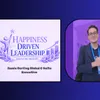
The Conductor of Culture: Why Enablement is the True Driver of Workplace Happiness
At SHRM 2026, the panel “HR Executive Insights: Architecting the Future of the Global Frontline Workforce” delivered some of the most grounded, strategic conversations of the entire conference. The focus wasn’t on HR theory, it was on business reality.I approached Jamie Durling, a Global C-Suite Executive, immediately after the panel. I asked him to expand on what he talked about during the session regarding his philosophy on enablement.His answer shifted the conversation entirely away from emotions and directly into operations, resources, and business acumen.What Jamie Said About Enablement“One of the things we were talking about is happiness and wellness... enablement is the means to the end. Rather than focusing on what the outcome is, organizations, HR leaders, and executives need to focus on what they’re doing to get to the outcome. It’s really about the tools and the resources... training, compensation, leadership feedback, physical products. That drives whether or not the employees are actually being supported and whether or not they are going to ultimately be engaged. Enablement really is the key.”Earlier at the conference, I also attended an exclusive Braindate hosted by Jamie titled, “HR as the Conductor of the Orchestra: How He Drives Top and Bottom Line Growth.” Connecting his thoughts on enablement to this concept, I asked him to explain what it means for an HR leader to act as the conductor. He added:“As an HR executive, nobody knows the organization better than we do. In order for HR to be impactful, they need to understand the business. My superpower is understanding the business... Understanding how all the functions effectively integrate is just like how a conductor leads his orchestra.”(Note: Keep an eye out for Jamie’s upcoming book on this exact topic!)The Enablement Principle: Breaking Down the InsightJamie’s perspective is a masterclass in operationalizing culture. He provides two critical frameworks for modern leaders:1. Happiness is an Outcome; Enablement is the StrategyMany leaders make the mistake of targeting “happiness” or “engagement” directly with superficial perks. Jamie argues that happiness is the end, but enablement is the means. If you want happy, engaged employees, you must provide the tangible resources they need to succeed: proper training, fair compensation, clear feedback, and the right physical tools.2. The Leader as the ConductorA conductor doesn’t play every instrument, but they must understand how the strings, brass, and percussion integrate to create a symphony. Similarly, an HR executive doesn’t need to be an expert in every department, but they must possess deep business fluency to orchestrate how these functions work together to drive top and bottom-line growth.The Science: The Job Demands-Resources (JD-R) ModelJamie’s assertion that “tools and resources” drive engagement isn’t just a great leadership philosophy; it is the foundation of one of the most heavily validated theories in Industrial/Organizational Psychology.The Study: “The Job Demands-Resources Model: State of the Art”Researchers: Dr. Arnold B. Bakker and Dr. Evangelia Demerouti Published: 2007, Journal of Managerial PsychologyThe JD-R model revolutionized how psychologists understand workplace wellbeing. It proposes that every occupation has two general categories of working conditions:* Job Demands: The physical, psychological, social, or organizational aspects of the job that require sustained effort (e.g., high workload, emotional labor, poor physical environment). These lead to exhaustion and burnout.* Job Resources: The physical, psychological, social, or organizational aspects of the job that are functional in achieving work goals, reduce job demands, or stimulate personal growth (e.g., performance feedback, autonomy, physical tools, training).The Findings:* The Motivational Process: Job resources are the exclusive predictors of work engagement. When employees have high resources (enablement), they are highly engaged, motivated, and happy.* The Buffer Effect: High job resources actually buffer the impact of high job demands. Even in high-stress environments, if employees are properly “enabled” with the right tools and support, they do not burn out.The Conclusion: You cannot mandate engagement. You can only provide the resources that naturally produce it.Jamie is describing the practical application of the JD-R model. When he says his superpower is “und
Podzilla Summary coming soon
Sign up to get notified when the full AI-powered summary is ready.
Free forever for up to 3 podcasts. No credit card required.
Listen to This Episode
More from AgilEmpath
Happy Employees, Happy Results: The Science That Proves Your VP of HR Is Right
Happiness at Work Is the Ability to Be Oneself: How Belonging, Authenticity, and Psychological Safety Drive Performance
The Happiness Blueprint: What a World Series Organization Knows About Joy

Why the Church Must Stop Hiding Sin and Start Having Real Conversations
Get summaries like this every morning.
Free AI-powered recaps of AgilEmpath and your other favorite podcasts, delivered to your inbox.
Free forever for up to 3 podcasts. No credit card required.