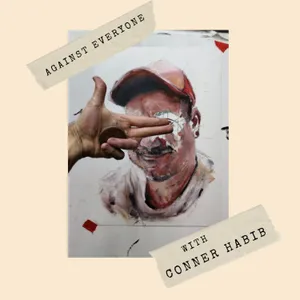
Free Daily Podcast Summary
Against Everyone with Conner Habib: Daily Summaries Delivered
by Against Everyone With Conner Habib
Against Everyone with Conner Habib is a podcast of deep but accessible and fun explorations of art, spirituality, philosophy, activism, and culture. This is big talk in a friendly tone with some of. the most compelling people of our time.
Latest Episodes
The most recent episodes — sign up to get AI-powered summaries of each one.
- 5 days ago1h 37m
AEWCH 332: WHY RUDOLF STEINER MATTERS NOW with WOLFGANG MÜLLER
At the center of this podcast is esotericism, and within that, esoteric Christianity.It's a Christianity that seems almost unrecognizable if you are looking from a mainstream point of viewAnd it's an esotericism that is also often at odds with many magickal and occult approaches.In fact, if esoteric Christianity looks like anything, it is probably more like continental philosophy than anything else, or maybe like an art of togetherness, a social artform. I don’t mean to reduce it to this, of course - it is much more than some intellectual but ultimately secularized exercise.One of a few main figures or spiritual teachers of my life who has remained consistent for me is Rudolf Steiner. You know him if you listen to this show. And the fruits of his labor are everywhere. For instance, if you’ve ever had biodynamic wine, or known someone who sent their kids to Waldorf school, or if you use Weleda products, or if you’re part of a CSA…But plenty of people access these fruits while either not knowing or deliberately obscuring the origins. Furthermore, Steiner is either dismissed as being part of a generalized milieu of esotericism which depends on outdated and problematic ideas about social issues.When you approach with a sense of clarity, it is clear that Steiner is a radical thinker whose politics can be read coherently from an anarchist or leftist perspective.In fact, this is something I did with his biographers Aaron French and Henry Holland on AEWCH 311.But also I have to add that this has been part of my struggle with many anthroposophists today (and historically, of course). As someone with a Syrian father, as a gay person, as someone with a clear and thought-through solidarity with marginalized people, I have endured plenty of directly racist and homophobic comments; not to mention endured transphobic, and Islamophobic commentaries and monologues from people who claim to be adherents of anthroposophy.Of course, so much of this can simply be ascribed to the fact that anthroposophy originated in a white European context and that its headquarters are in a mostly white European country, and that most of its adherents are white Europeans and/or white settlers in non-European countries. But it would be unfair to dismiss the questions and concerns about Steiner's work entirely based on my own own good or bad experiences. Many people encounter this roadblock when they approach. Even as they long for the insights derived from his esoteric landscape, they find themselves hesitant to enter the territory.It’s also complicated enough as it is! Esotericism -- particularly anthroposophy -- goes into so many aspects of life with a revolutionary, or maybe better said, redemptive impulse. So if we grapple with the historical social questions and come through interested, will we be on board with radical reevaluations of science, medicine, politics, and more?I do think there are many lessons to be learned and that can infuse us with new perspectives.The call of the esoteric is not an ancient call filled with timeless truths that ask to be believed. Rather, esotericism is new.It offers indications of new ideas, new gestures of compassionate mutual aid, and newly creative participations with worldly discoveries and events. I’m so happy, therefore to welcome WOLFGANG MULLER onto the show. Wolgang is the author of many books, but the one you can find in English now is THROUGH THE LENS OF ANTHROPSOPHY: WHAT A SPIRITUAL WORLDVIEW HAS TO SAY ABOUT RELIGION, RACE, SCIENCE AND SOCIETY TODAY.Wolfgang was a former editor at NDR (German Radio) in Hamburg, focusing particularly on history. And he's an especially appropriate guest for this discussion, as he went through his own period of skepticism regarding Steiner, even writing an article criticizing anthroposophy.SUPPORT THE SHOW: PATREON.COM/CONNERHABIB
- 1 weeks ago2h 9m
AEWCH 331: THE SPIRITUAL STATE OF THE WORLD with JAMES ELLIS (HERMITIX PODCAST)
On this episode. I’ll be talking about the spiritual state of the world with the creator and host of the HERMITIX PODCAST, podcast host and creator JAMES ELLIS. Talking about the constitutive forces working through all the cultural, political and economic things going on in the world today is no easy feat. And it brings special danger when talking about what’s coming. Predictions that come from prophecy can lead to a dense, spiritual error. For example, see spiritual author, teacher, and practitioner Alan Chapman on episode 383 of the Guru Viking Podcast. Speaking with host Steve James, he recounts the prediction and prophecy he made about a terrible event in September, which he publicly warned others about. The events didn't come to pass. The interview is powerful and bracing, largely because Steve is patient and Alan is vulnerable. He looks into the potency of spiritual error, the error in this case not being receiving the intensity of the vision he had, but rather reporting it and formulating a prediction based on it. I respect Alan's work (he's has been on this show too - on AEWCH 241 with Duncan Barford and then later, offering a New Year reflection on AEWCH 312), and his honesty offers its own potency which I think most spiritual "teachers" would learn so much from.I’ve addressed a lot of the pitfalls of this sort of thing and other spiritual challenges on AEWCH 231 where I talk about true and false spiritual paths. But let me state directly here that when we go into the future for pictures, the spiritual pictures what we encounter will be fixed; and fixed pictures can only (or almost only) be offered to by spiritual forces that are not interested in human freedom. That’s not to say that those pictures are always wrong but that when they are fixed, they are not open to human directive.This is, by the way, a big problem for a lot of astrologers, for example end up being anti-human because they make fixed predictions. (Not all of them of course!)So when I do an episode like this one with James, where we’re giving a picture of what’s happening spiritually, and also think about where it’s all heading, it's really important to do all that and leave human freedom intact, and the ability for human beings to change anything at any moment.Total liberation is always available, and so is development. I recorded this episode of just before the elections in the US. I certainly don’t want to designate US representative politics as some giant sign of change in the world.But that feeling that things are changing can show us what is possible in each of our hearts.The outward picture tells us about something inwardly available that can truly be brought into the world.I do hope that this spiritual state of the world is something I do with James each year.Until then, look for me on Hermitix in an upcoming episode! You can also check out James's "school," the Hermitage, here and listen to us talking on Hermitix back in July.To the present, the future coming towards us, and the past we're creating,
- 2 weeks ago1h 33m
AEWCH 330: HORROR UPON HORROR PT 4 - KEITH ROSSON on PUNK ROCK HORROR & GREEN ROOM
Friends,The aesthetics of horror, at least in the US, have traditionally overlapped with heavy metal and death metal music. You know what I mean here: dark-clad figures and crazed clowns, bats, black clouds, and thorn-branched fonts. Sometimes they even share imagery, like the band Obituary’s cover for their Cause of Death album and a book of short stories by HP Lovecraft (painted by artist of the fantastique, Michael Whelan).I love horror with these aesthetics - but I’m glad another form seems to have opened up too. Sometime in the past 30 years, the horror trope of the final girl - the last surviving character of a horror novel or movie - began to highlight not the scariness of the monster, but the resilience of the monster’s victims.The trope of the final girl insists on survival in the face of a world of danger. Often dangers that were at first hard to believe, hard to convince people of, and those included (until the final girl became a thing in horror) the expectations and beliefs of the audience. For me, the final girl shows a shift of footing for horror as metal - immersion in the spectacle of the grotesque and dramatic - to punk: determination to fight back and connect with a force of will that was always there but not always expressed.Punk rock is more than just survival, however. Its starting point is a knowingness that things are not okay. Punk is music with lyrics about the state of the world, and it has a sound that reveals a world that looks and feels differently than the one we’re told to accept.It’s also the antithesis to the time spent in so many horror movies, where characters must spend inordinate amounts of time convincing each other that a threat exists. Punk already knows there's a problem. By the time you get to the show or play the record, you’re in the observation and receiving the sounds of the community, the solution, the alternate reality that we know can exist. In a horror movie, there's the monster monster, and there's the monster of people who refuse to believe what is apparent, obvious. The final girl and punk decides to live against both adversaries. So now that the final girl has created a sort of bridge for us from what I’ll call metal horror to punk rock horror, who is developing punk horror? Who's pushing it forward?On this episode - the final in this year’s horror upon horror series, I’ll be talking with an author who does just that about a film that does the same.KEITH ROSSON is the author of eight books so far, including Folk Songs for Trauma Surgeons, and his masterwork, Coffin Moon which is one of the most compelling novels I've ever read. What a huge surprise for a vampire novel! It is a swift, unstoppable thing. His most recent novel, Crone is about a girl that disappears and a correlating sightings of a strange and threatening witch-like being. Keith and I talk about punk rock and horror and then move into a conversation about Jeremy Saulnier's 2015 punk rock slasher horror film GREEN ROOM, in which a punk band pisses off a bunch of murderous neo-Nazis and has to figure out how to escape disastrous and confining circumstances.Punk rock and horror are two of my favorite genres of art - and this episode is my first comingling of the two - I’m so excited to share it with youSupport the show via patreon: patreon.com/connerhabib
- 3 weeks ago1h 56m
AEWCH 329: HORROR UPON HORROR PT 3 - SARA GRAN & PAUL TREMBLAY on URBAN LEGENDS & THE BLAIR WITCH PROJECT
Six authors.Four horror movies. Four episodes of Against Everyone with Conner HabibThis is Horror upon Horror.Friends, I’m sure you know the THE BLAIR WITCH PROJECT (1999) by now but if not, here’s the plot: three students go out into the woods to make a documentary about local legend of a witch. They’re never seen again. A video is found later of their footage. That’s it. You probably also know that it wasn’t like other movies when it came out, but was marketed in the most bizarre and convincing ways: missing posters were put out of the three actors that appear in the film (Rei Hance, known in the film as Heather, Donaghue' Michael, C, Williams; and Joshua Leonard); and in fact their IMDB pages listed them as deceased. There was a short documentary about the documentary made, and aired as if it were real. There was all kinds of chatter on the then-burgeoning Internet about what it happened to these three students. On top of that. it wasn't filmed like other movies, not even found footage ones. The cast themselves were directors of the film, along with the overall directors of the film along with Daniel Myrick and Eduardo Sánchez, since they filmed the bulk of the movie.While the characters of the Blair Witch Project were investigating folklore, the actors and producers were also creating it.In other words, the found footage was actually found footage. The directors did not know what the cast had filmed because they sent them out on missions to film and turn the refults to them later. For instance, they were sent to certain locations to talk to town residents about the legends of the Blair witch and some adjacent murders. The promptings were brilliant. There was, for instance, a actor who was a plant in a diner not spoken to until after the main actors walked around and talked to other unknowing people. The effect is that they were stimulating the idea of witch for everybody else in the diner but not involved. Later, when the cast members enter the woods to go looking for signs of the witch, they are prompted by the directors to certain sites and cues at those sites, and told to film the whole time. Their moods were intensified by bad weather, long shoots, surprises, coldness and camping. All of it brings out tremendous performances from the three of them. I went to see the Blair witch project in the theater right when it came out I saw it in Allentown, Pennsylvania was with some friends. We all thought it was real.The whole movie is tense, horrifying, truly frightening. There are moments when the screen is pitch black, so the entire theater was was pitch black too. And people were screaming.When it was done -- and I’d never had this experience before nor have had it since -- the entire audience sat in silence until the credits finished rolling.What a new dimension of horror to be brought into the world!And it’s one that echoes into our own time, with the difficulty of interpreting what is and what isn’t real on the screens that we face and encounter each day. The Blair Witch Project is the forerunner of DIY projects, of found footage, of the tensions between reality and unreality, of constant surveillance of our most vulnerable moments... So many things were set free into the world by this movie. There was nothing like it at the time, and few films take such great risks to such great effect.My guests are PAUL TREMBLAY, last on the show on AEWCH 235 (with CJ Leede) and is the author, most recently of Dead But Dreaming of Electric Sheep, and also Horror Movie, his most famous novel A Head Full of Ghosts and my favorite novel of his, Disappearance at Devil's Rock.&SARA GRAN was last on the show on AEWCH 233 (with Nathan Ballingrud) </s
- Oct 13, 20261h 31m
AEWCH 328: HORROR UPON HORROR PT 2 - DAN CHAON on HIDDEN LIVES and 28 YEARS LATER: THE BONE TEMPLE
AGAINST EVERYONE WITH CONNER HABIB 328: HORROR UPON HORROR PT 2 - DAN CHAON on HIDDEN LIVES and 28 YEARS LATER: THE BONE TEMPLE Six authors. Four horror movies. Four episodes of Against Everyone with Conner Habib. This is Horror upon Horror.Friends, we all have hidden lives. From the lives of our internal organs, which are working within you right now, to the lives that we imagine and fantasize for ourselves yet will not achieve. The most obvious, and yet in some ways the most hidden life, is that life of death itself.We carry this death within us every day. The skeleton which lurks just beneath our flesh, washed by fluids and blood each day, is death's emblem. And each of us makes our own deaths the project of our lives. Every step draws us closer, every action has a result, an effect, that shapes the way in which we will change from a living person to a dead one.Inside all of our choices, there lives death.The same is true fro the lives of civilizations, which hide away the seeds of their own demise in the flourishes of progress. In apocalypse movies, death reveals itself as the coexisting state. This is most apparent in Nia DaCosta's 28 YEARS LATER: THE BONE TEMPLE, the movie my guest DAN CHAON chose to talk about on this episode.In Dan's fiction, hidden away lives lead people down the path to their own doom. In his frightening story “The Bees" in which a man’s second, secret, hidden family, creeps back into his circumstances and destroys the life he’s built for himself. In his novel Await Your Reply, in which a man looks into sinews of conspiracy to figure out where his brother has disappeared to. Of course, to look at sinews is to cut into anatomy, to bleed out. And in Chaon’s latest, One of Us (which takes inspiration for its title from the 1930s Todd Browning film, Freaks) the lives 1915 circus performers are explored, as well as the lives of two children fleeing a murderer who speaks to the dead. The lives we hide away always whisper to us. They have their own secret voices that ask:Can your surface-life endure me? Or will your world end the second I’m revealed?Support the show on patreon: Patreon.com/connerhabib
- Oct 6, 20261h 37m
AEWCH 327: HORORR UPON HORROR PT. 1 - NATHAN BALLINGRUD + SARAH MARIA GRIFFIN on NOSTALGIA & THE BLOB (1988)
Six authors. Four horror movies. Four episodes of Against Everyone with Conner HabibThis is HORROR UPON HORROROn these episodes, we'll be thinking through the creation, reading, and viewing of the most vital and visceral art: Horror, and I'll be doing it with the frightening luminaries of the genre. People who are unafraid to endure the horrific imagination, and able to bring it to you.On this first episode, I’ll be talking about nostalgia in horror with authors Nathan Ballingrud and Sarah Maria Griffin and then we'll move onto our discussion of the amoebic violent power of Chuck Russell’s 1988 remake of The Blob.Unlike other monsters, the blob has no direction, no real personality. It doesn’t want anything. It’s not even hungry; hunger would imply some sort of desire or longing. Instead, it’s drawn to whatever is close and warm, drawn to incorporate it, to grow with the heat of flesh, bone, and blood.As it gets bigger, it needs more heat, more blood, to keep going. This is Horror upon Horror. The blob. A form older than vampires but newer in consciousness. It’s outside of time. It’s what was in the microscope made large, larger, until it envelops everything in its path with crushing pressure and dissolving acidity.The blob is the pure inertia of motion. NATHAN BALLINGRUD has also been on the show before, last time talking with me and Sara Gran on AEWCH 233 about cruelty in horror. His book of short stories, North American Lake Monsters is one of my very favorite horror collections. And his trilogy of retro future horror, The Lunar Gothic trilogy, begins with the utterly hideous (in the best way possible), The Crypt of the Moon Spider. SARAH MARIA GRIFFIN is the author of the psychic vampire botany horror novel, Eat the Ones You Love, and most recently Strange Is the Light. Sarah has been on the show many times (her latest until now was AEWCH 252 where we talked about working as writers) and does an annual tarot reading event for patreon patrons.SUPPORT THE SHOW: patreon.com/connerhabib
- Sep 15, 20261h 41m
AEWCH 326: FELIX JOHN TAYLOR on THE LIGHT OF THE HERMETIC ORDER OF THE GOLDEN DAWN
AGAINST EVERYONE WITH CONNER HABIB 326: FELIX JOHN TAYLOR on THE LIGHT OF THE HERMETIC ORDER OF THE GOLDEN DAWNThe first time I heard about the Golden Dawn, I was in high school. I was gay, Syrian, reading all the time, shunning sports. My town was filled with neo-Nzis and fundamentalists, celebrated stupidity and football players.I wanted to feel something like power in a disempowering place, so I went to Brentano’s and found the most startling magic book there. On its cover was a person drawing a pentagram of crackling blue light with a wand. In it, instructions on making magical tools and spellcasting. And in its title, the word magick was written with a K. In contrast to the hell of school, the book represented an academy of magic. I found there allusions to The Golden Dawn, a group from almost a century prior, with secrets of not just power, but antiquity and the cosmos.But they also seemed rigid, too elaborate and hierarchical. Plus I didn't like their most infamous member, Aleister Crowley, so I turned away from them. As I deepened my interests in occultism into adulthood, my pursuit of esoteric christianity, particularly the work of Rudolf Steiner, I steered clear.I've become more sympathetic over time to the Golden Dawn. That doesn't mean I'm going to wade into their rituals, but that a real re-assessment has occurred. So this episodes’s guest, librarian and scholar FELIX JOHN TAYLOR ’s beautiful book, The Hermetic Order of the Golden Dawn: Magic Arts and the Occult Revival was a great find for me. In it, he gives a portrait of the Golden Dawn through its key members and its art. A picture emerges of not just a magickal group, but an art and social movement, working to redefine morality for the sake of inclusiveness and creativity. After all, Crowley fell in love with a drag queen at a gay bar in 1897. Oscar Wilde and Edward Carpenter influenced the group. So did Steiner, for that matter! W.B. Yeats brought his Golden Dawn work to revitalize Irish identity.I’m so happy you’ll be joining me and Felix John Taylor in this reappraisal.Support the show on Patreon!Make a one-time donation!Buy Felix's book.
- Sep 8, 20261h 38m
AEWCH 325: THOMAS WATERS / WELCOME TO THE NEW MAGICKAL WORLD
Friends, I've been doing this podcast for over eight years and one thing I've noticed since the beginning: guests always want to talk about spirituality. I know, I know, it's self-selecting. I'M the one who wants to talk about it. Sure, that's true. But also, everyone is EXCITED to discuss it when I bring it up. It's like it's on the tip of everyone's tongues and has been for a decade. Now, it's starting to be fully pronounced, like a spell shouted into the air. I’m sure you’ve seen it too: whether it’s the convergence of witchcraft and feminism, the popularization of political wellness which has ritual components, the appearance of crystals in the Los Angeles mayoral race, the conspiratorial intimations about black magick during lockdowns... People have been trying to interpret the world through a spiritual lens that religion doesn't seem up to - but the political realm has so overwhelmed people’s perceptions that instead of being TRANSFORMED by spiritual encounter, they're merely grafting it onto already-established, politicized worldviews.This includes political pundits and secularized media ridiculing spiritual perspectives as a distraction from their failure to scrutinize 60 hour work weeks, economic bamboozling, or outdated attitudes about gender.I've done my best to mediate this, because I could see it all coming (not bragging, promise, you can hear me discuss it on early episodes!). I’ve tried to occupy a sort of cultural position that was largely held in the past by de-witchers, fairy doctors, alchemical scientists and more, people who separated what's true and false when it came to spiritual paths, critiques, and pursuits. They constituted a whole classes of laborers people largely disappeared by the materialist, academic, and professional world.But we can’t wait any longer, we need experts in this field. An expert I trust and appreciate so deeply on these matters is Thomas Waters, lecturer in history at Imperial College London (and AEWCH 98 guest) So we talk together about magick’s role today, and the new magickal realm we find ourselves in.I’m so excited to share this episode with you. support the show: patreon.com/connerhabibbuy Magick: Decoding the Visual Culture of Spells, Illusions and Psychic Powers by Thomas Waters from an indie bookshop buy Cursed BritainA History of Witchcraft and Black Magic in Modern Times by Thomas Waters from an indie bookshop
Get Against Everyone with Conner Habib summaries in your inbox
Free AI-powered daily recaps. Key takeaways, quotes, and mentions — in a 5-minute read.
Get Free Summaries →Free forever for up to 3 podcasts. No credit card required.
You Might Also Like
Listeners also like.

Digital Social Hour
Unfiltered conversations with controversial and influential figures exploring their lives, challenges, and ideas.

The Deep End w/Taylor Welch
Explores taboo and controversial topics through in-depth conversations that challenge long-held beliefs.

Darkness Radio
Explores ghosts, aliens, monsters, and mysteries with experts and eyewitnesses in paranormal talk radio.

Forum Borealis
In-depth interviews with authors and thinkers on unconventional topics in history, science, philosophy, and politics.

The Esau McCaulley Podcast
A theologian and guests explore the spiritual and cultural themes in movies, music, news, and politics with insight and humor.

Culture Apothecary with Alex Clark
Experts share holistic remedies to heal cultural wounds through candid conversations on wellness, identity, and systemic change.

The Jeremy Boreing Show
Jeremy Boreing talks with entrepreneurs, artists, and thinkers about building the future and resisting cultural decline.

GET CANCELLED PODCAST
Explores uncomfortable cultural and philosophical truths through candid conversations in an era of oversimplified discourse.
Undaunted.Life: A Man's Podcast by Kyle Thompson
A podcast for men exploring faith, culture, and politics with a focus on building spiritual, mental, and physical resilience.

DarkHorse Podcast
Biologists Bret Weinstein and Heather Heying apply evolutionary theory to analyze culture, science, and societal challenges.

The Daily Zeitgeist
A daily comedy-news podcast where hosts break down the week’s biggest stories with sharp analysis and humor to help make sense of the chaos.

Chameleon
A weekly true crime podcast exploring elaborate cons and impostors through stranger-than-fiction stories of deception.
About Against Everyone with Conner Habib
Against Everyone with Conner Habib is a podcast of deep but accessible and fun explorations of art, spirituality, philosophy, activism, and culture. This is big talk in a friendly tone with some of. the most compelling people of our time.
Customized Recaps
AI-powered recaps with compact key takeaways, quotes, and insights.
Straight to Your Inbox
Get key takeaways from Against Everyone with Conner Habib in a 5-minute read.
Save Hours Every Week
Stay current on your favorite podcasts without falling behind.
Frequently Asked Questions
What is Podzilla's Against Everyone with Conner Habib daily summary?
It's a free AI-powered email that summarizes new episodes of Against Everyone with Conner Habib as soon as they're published. You get the key takeaways, notable quotes, and links & mentions — all in a quick read.
How does the Against Everyone with Conner Habib podcast summary work?
When a new episode drops, our AI transcribes and analyzes it, then generates a personalized summary tailored to your interests and profession. It's delivered to your inbox every morning.
Is this an official Against Everyone with Conner Habib product?
No. Podzilla is an independent service that summarizes publicly available podcast content. We're not affiliated with or endorsed by Against Everyone With Conner Habib.
Can I get summaries of other podcasts too?
Absolutely! The free plan covers up to 3 podcasts, any in the catalog. Basic raises that to 15, Pro to 40 and Max to 100. Browse our full catalog at /podcasts.
How often does Against Everyone with Conner Habib release new episodes?
Against Everyone with Conner Habib publishes biweekly. Our AI generates a summary within hours of each new episode.
What topics does Against Everyone with Conner Habib cover?
Against Everyone with Conner Habib covers topics including Religion & Spirituality, Spirituality. Our AI identifies the specific themes in each episode and highlights what matters most to you.
Start getting Against Everyone with Conner Habib summaries tomorrow morning.
Free forever for up to 3 podcasts. No credit card required.
Free forever for up to 3 podcasts. No credit card required.