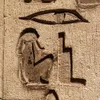
Anatomy of the Ancient Egyptian Soul: The Ren
Part three of our ongoing series on the anatomy of the ancient Egyptian soul. Previously: the Ba and the Ka. Next up: the Akh, the Ib, the Shut, and the Khat.In turbulent times, let Egyptology be your resistance. That’s the spirit in which we (Kara and Amber) sat down for this episode — and if that sounds like an unusual rallying cry, well, you’ve come to the right place.Today’s topic is the Ren: the name. And before you go, I know what a name is, you don’t. Because the ancient Egyptians understood something about names that we’ve spent the last several thousand years forgetting (and that the modern American government is actively exploiting right now; yes, I know, we make everything political and history is now and all that…).What Is the Ren?In Faulkner’s Concise Dictionary of Middle Egyptian, the entry for rn (ren as we would say it in an Egyptian reading class) is almost insultingly short. Two phonetic characters, the mouth hieroglyph (r) and a single water sign (n). No dramatic determinative. No elaborate sign to illustrate it. Compare this to the Ba — the human-headed bird that flutters, moves and exists visually in the world — or the Ka, with its famous outstretched arms, intimate and embodied, ready to embrace. The Ren just sits there with no explanatory symbolism whatsoever. The writing of the word betrays the secrecy surrounding the name itself.But that spareness is the point. The Ren’s power is its abstraction. It is not a thing you can see or touch. It is a sound, an utterance, a vibration shaped by lips and tongue and the specific quality of a human mind. And this is where things get interesting: the hieroglyphic word rn begins with the mouth sign, because of course it does. The name lives in speech. It is born from the human body in the most literal sense possible. The name is utterance incarnate, which takes us to the Egyptian understanding of creation.In the Beginning Was the NameThe Memphite Theology is an inscription said to be copied from an ancient, worm-eaten papyrus, even though this particular version comes to us as the so-called Shabaka Stone of the 25th Dynasty Kushite kings, and it describes the god Ptah creating the world through utterance. Ptah conceives (sia, abstract thought) of things with his heart (ib) and then brings them into material existence through his mouth (r) using the force of heka (magic). He speaks the name of something, and it becomes real by passing through the lips, tongue, and teeth.In the beginning was the word, as we know from the Bible. The idea that spoken language is a creative force, that naming something is a form of making it, runs through ancient Egyptian creation theology, including the Memphite Theology, through the Hebrew Bible, through Neoplatonic philosophy, and straight into the digital age, where the naming of things (brands, identities) still confers power. The ancient Egyptians were not doing something primitive or naive when they enshrined this idea. They were identifying something true. A name captures the essence of something.And crucially, in this theology, the name is not just descriptive. It doesn’t label something that already exists. It creates the thing. Which means that whoever speaks the name first, whoever utters it properly, with the right cadence and pronunciation, has a claim on the essence of the thing named. They hold a piece of it. And this is where the Ren gets genuinely dangerous.Isis and the Secret Name of the Sun GodThe most famous story about the power of the Ren comes from Papyrus Turin 1993, a 20th Dynasty text currently in the Egyptian Museum in Turin. It tells the story of Isis and Re.Re, the sun god, is old. He is aging and drooling—both poignant and humanizing for the head of the Egyptian pantheon—and Isis, the Mistress of Magic, decides to use the moment to her advantage. She collects his spittle and uses it to fashion a clay snake, which she places in his path. Re is bitten by this snake made from his own essence. He cannot heal himself: you cannot cure a wound that comes from within your own body, apparently. And so he has to call upon Isis.She shows up, calm and helpful, and says: I can heal you. But first, I need to know your secret name. She doesn’t want the name that priests chant in temples, or the name carved onto obelisks. She wants his other name, the real name, the one that encapsulates his true essence, the name that, if you knew it, would give you power over the sun god himself.Re, who is dying, tells it to her. She heals him. And the text informs us he passes the name to her with the stipulation that she share it only with her son Horus, who can use it only for healing.There is so much to unpack here. Isis is conniving—she engineers the crisis herself, lest we
Podzilla Summary coming soon
Sign up to get notified when the full AI-powered summary is ready.
Free forever for up to 3 podcasts. No credit card required.
Listen to This Episode
More from Afterlives of Ancient Egypt with Kara Cooney

Art in Motion, a Social Tool of Power and Resistance
Crafted to Last
Anatomy of the Ancient Egyptian Soul: The Akh
Building Tutankhamun's Digital Afterlife
Get summaries like this every morning.
Free AI-powered recaps of Afterlives of Ancient Egypt with Kara Cooney and your other favorite podcasts, delivered to your inbox.
Free forever for up to 3 podcasts. No credit card required.