Free Daily Podcast Summary
Advisor Talk with Frank LaRosa: Daily Summaries Delivered
by Elite Consulting Partners
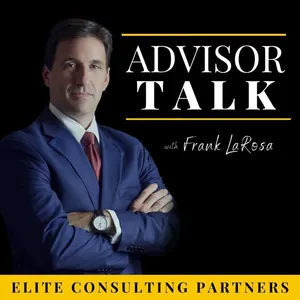
Advisor Talk with Frank LaRosa offers unfiltered guidance and advice for financial advisors, wealth management professionals, and entrepreneurs alike who are interested in maximizing both their business and personal potential. Informed by Frank's unique insights and his personal conversations with industry leaders, the dynamic discussion topics of Advisor Talk include business ownership, leadership, practice management, transition and recruiting, marketing and branding, as well as a host of financial services related topics related to wirehouse, regional, and RIA advisors, firms, and teams. Frank’s goal, and the goal of his team at Elite Consulting Partners, is now as ever to be the go-to resource for actionable information and trusted guidance to elevate you and your career at whatever stage you may be.
Latest Episodes
The most recent episodes — sign up to get AI-powered summaries of each one.
- 3 days ago40 min
Perfect Clients: The Financial Advisor Who Built a Practice Around Giving
Michael Brady says he has perfect clients and he means it.Frank sits down with Michael, founder of Generosity Wealth Management, to unpack how his career took a hard turn away from traditional financial planning. Michael shares the story of a longtime client, one of the first AIDS doctors in Boulder, who retired and went on to train doctors in Uganda, a moment that pushed Michael to eventually take two years off with his wife to travel and volunteer before starting his own firm in 2008.Michael shares how upfront he was with prospective clients from day one about exactly what kind of advisor he is, so the people who are not a fit filter themselves out naturally, a dynamic Frank names himself, calling it positive friction. Frank pushes him to explain what having perfect clients actually looks like in practice and Michael walks through how deeply charity is woven into his firm, from inviting clients onto nonprofit boards alongside him to requiring every advisor at Generosity Wealth Management to serve on a board of their own.The conversation covers how this approach builds real trust and referrals, not just goodwill and why Michael believes purpose driven practices attract clients who stay for decades.Questions answered in this episode include:What does it mean for a financial advisor to have perfect clients?How do you build a financial advisory practice around philanthropy?What is positive friction and how does it help attract the right clients?How can financial advisors get their clients involved in charitable boards?Why does Generosity Wealth Management require advisors to serve on a nonprofit board?How do you know if a charity or nonprofit is legitimate before getting involved?What does it look like to build a business centered on purpose instead of just revenue? Chapters:00:00 Introduction: Perfect Clients 01:06 From Financial Planning to Purpose 06:35 Founding Generosity Wealth Management 07:24 What Perfect Clients and Positive Friction Really Mean 12:14 Integrating Charity Into Every Client Relationship 19:28 Turning Clients Into Board Members 29:30 Why Every Advisor at the Firm Must Give Back 37:10 How to Reach Michael Brady Michael Brady, Generosity Wealth Management: https://generositywealth.comResources:- Elite Consulting Partners: https://eliteconsultingpartners.com- Elite Marketing Concepts: https://elitemarketingconcepts.com- Elite Advisor Successions: https://eliteadvisorsuccessions.com- JEDI Database Solutions: https://jedidatabasesolutions.com- Elite Wealth Management Insights Report: https://eliteconsultingpartners.com/insight-report- Listen to more: https://eliteconsultingpartners.com/podcasts/- LinkedIn: https://www.linkedin.com/company/elite-consulting-partners/
- 1 weeks ago22 min
Are You Really Independent? The Question Every Financial Advisor Should Ask
Stacey opens this episode with a hot take before Frank even gets a word in.Frank breaks down a comment made online by Cheryl Penny, founder and CEO of Dynasty Financial Partners, who argued that a financial advisor is only truly independent if they own their own RIA. Frank explains why he disagrees, using real examples of RIAs having their custodial agreements pulled by firms like Schwab and Raymond James, proving that ownership alone does not remove risk or outside control.Stacey pushes back on the idea of captive independence, pointing out that advisors at firms like LPL or Centera are not captive at all, they own their clients and their data and they can leave whenever they want. Frank walks through the real math behind a transition deal to show why taking a check from a firm does not trap an advisor either, since the note can simply be paid back.Stacey introduces what she jokes she should trademark, the spectrum of independence, the idea that independence is not binary but exists on a range from heavily branded wirehouse structures to fully self built RIAs, with plenty of legitimate options in between. Frank adds a real client example of an advisor who has stayed an IAR of an RIA for years because building his own simply is not worth the time and energy and explains how firms like Dynasty help advisors avoid reinventing the wheel with technology and pricing.The conversation turns pointed when Frank and Stacey discuss financial advisors being quietly penalized for keeping smaller clients as their book grows and whether that pressure from a firm should count against how independent an advisor really is. The episode closes with Stacey's real test for independence, if you cannot pick up and leave without restrictions, ask yourself how independent you actually are. Questions answered in this episode include:Is a financial advisor only truly independent if they own their own RIA?What is captive independence and is it a real risk for advisors?What is the spectrum of independence?How does a financial advisor transition deal actually work if you want to leave early?Why do some financial advisors stay as an IAR instead of building their own RIA?Should financial advisors be penalized for keeping smaller clients?What is the real test of whether a financial advisor is independent? Chapters:00:00 Introduction: You're Not as Independent as You Think 01:55 The Comment That Started the Debate 03:19 Layers of Termination and What True Independence Means 04:21 Captive Independence: Is It Real 09:38 The Spectrum of Independence 13:12 Finding the Right RIA Fit Without Reinventing the Wheel 16:23 Is Your Firm Punishing You for Smaller Clients 21:02 How to Reach Frank and Stacey Resources:- Elite Consulting Partners: https://eliteconsultingpartners.com- Elite Marketing Concepts: https://elitemarketingconcepts.com- Elite Advisor Successions: https://eliteadvisorsuccessions.com- JEDI Database Solutions: https://jedidatabasesolutions.com- Elite Wealth Management Insights Report: https://eliteconsultingpartners.com/insight-report- Listen to more: https://eliteconsultingpartners.com/podcasts/- LinkedIn: https://www.linkedin.com/company/elite-consulting-partners/
- 2 weeks ago25 min
Greatest Hits: Leaving Your Firm? What Advisors Wish They Knew
Most advisors go into a transition focused on the upfront money. Very few are prepared for everything that happens after they walk out the door. Some surprises are good ones. Clients move faster than expected. Assets go up, not down. The income jump is real. But there are also things advisors consistently underestimate, overlook, and wish they had negotiated differently. In this episode of Advisor Talk, Frank LaRosa and Stacey Frank do a post transition breakdown of the things advisors wish they had known going in, including what they underestimate about client loyalty, what they leave on the table in negotiations, and the operational realities that no one warns them about until it is too late. Frank also breaks down the shrink to grow concept, why payout structure matters more than the upfront check long term, and why the first 30 days of a transition can make or break the entire move. Frank and Stacey also discuss what separates advisors who have a smooth transition from those who struggle, and why the more preparation you put in before the move, the less stress you will face after it. Questions answered in this episode include: How many clients do financial advisors actually retain when they switch firms? What do advisors consistently underestimate when making a move? Should a financial advisor negotiate payout or upfront money? What is the shrink to grow concept in financial advisor transitions? What operational issues do advisors face in the first 30 days after a transition? How should a financial advisor prepare their support staff before making a move? What should advisors ask firms to include in their transition support package? Chapters: 00:00 – What Advisors Wish They Knew Before Leaving 01:07 – Welcome to Advisor Talk 02:26 – The Biggest Surprise: Client Loyalty Is Stronger Than You Think 09:01 – The Income Jump Is Real: What the Math Actually Looks Like 12:50 – What Advisors Wish They Negotiated Differently 15:41 – Shrink to Grow: Why Not Every Client Should Come With You 18:13 – Operational Realities Nobody Warns You About 23:54 – How to Reach Frank and Stacey Learn more about Elite and our resources: Elite Consulting Partners | Financial Advisor Transitions https://eliteconsultingpartners.com Elite Marketing Concepts | Marketing Services for Financial Advisors https://elitemarketingconcepts.com Elite Advisor Successions | Advisor Mergers and Acquisitions https://eliteadvisorsuccessions.com JEDI Database Solutions | Technology Solutions for Advisors https://jedidatabasesolutions.com Elite Wealth Management Insights Report https://eliteconsultingpartners.com/insight-report Listen to more Advisor Talk episodes https://eliteconsultingpartners.com/podcasts/
- 3 weeks ago31 min
Inside the Chairman's Trip: Lessons from Elite's Top Producers
Five of Elite's top producers sat down together in Cancun to talk about what actually makes this job matter. Frank goes around the table asking each consultant what they enjoy most about the work. Tricia talks about relationships and education, Julie compares every advisor conversation to solving a puzzle, Stacey points to the reward of bringing advisors accurate information in an industry full of misconceptions, Bruce talks about the value of being authentic and getting to know clients on a personal level and Dom shares how twenty-five years as a wholesaler let him rekindle old relationships in a brand new context. Tricia opens up about how eye opening the tax side of W2 versus 1099 was once she crossed over to this side of the business and why she likes to show advisors both paths so they can learn something new about their own business along the way. Bruce lays out a universal truth, that most financial advisors only understand the world inside their own firm and explains why a twenty thousand foot view changes everything. Dom breaks down why even advisors with decades of relationships still benefit from a genuinely objective third party. Stacey shares her go-to answer for advisors who ask why they should work with her over someone they already know and introduces one of the firm's guiding beliefs, that the right answer always surfaces. Frank closes with his Tom Brady analogy for why even elite performers rely on an agent instead of going it alone. The panel wraps by weighing in on whether the industry is shifting back toward W2 structures, especially for advisors nearing retirement who are being offered deals north of four hundred percent. Questions answered in this episode include: What do Elite's consultants enjoy most about helping financial advisors? What does it mean to be authentic with a client instead of just closing a deal? Why do advisors who already have industry relationships still need a consultant? What is the universal truth most financial advisors don't realize about their own knowledge? Why does the right answer always surface during the due diligence process? Is the financial advisor industry shifting back toward W2 firms? Should advisors ignore the money when it comes to major transition deals? Chapters: 00:00 Introduction: Inside the Chairman's Trip 02:17 What Every Consultant Loves About This Work 04:27 What Sets a Real Consultant Apart 04:51 Rekindling Relationships as a Former Wholesaler 12:21 The Universal Truth About Financial Advisors 15:40 Why the Right Answer Always Surfaces 23:06 Is the Shift Back to W2 Real 30:34 How to Reach the Elite Team Meet the panel: - Frank LaRosa, Chief Executive Officer: frank@eliteconsultingpartners.com | 856-316-4651 - Stacey Frank, Chief Revenue Officer and Executive VP of Sales: stacey@eliteconsultingpartners.com | 856-816-6322 - Bruce Fox, Private Client Consultant: bruce@eliteconsultingpartners.com - Domenic Diele, Senior Business Consultant: dle@eliteconsultingpartners.com - Tricia Fischer, Private Client Consultant: 703-395-1147 - Julie Mizerany, Private Client Consultant: julies@eliteconsultingpartners.com Resources: - Elite Consulting Partners: https://eliteconsultingpartners.com - Elite Marketing Concepts: https://elitemarketingconcepts.com - Elite Advisor Successions: https://eliteadvisorsuccessions.com - JEDI Database Solutions: https://jedidatabasesolutions.com - Elite Wealth Management Insights Report: https://eliteconsultingpartners.com/insight-report - Listen to more: https://eliteconsultingpartners.com/podcasts/ - LinkedIn: https://www.linkedin.com/company/elite-consulting-partners/
- Aug 20, 202627 min
The One Last Move: An Alternative to Selling Your Practice
Frank LaRosa is literally getting a text about this exact scenario while recording this episode. Frank opens with a real client story, an advisor in his mid to late sixties who has spent a year and a half weighing a full sale against a transition. The multiples sound incredible on paper, ten, twelve, even fourteen times EBITDA but once junior partners, payout structures and sell and stay scenarios come into play, the math gets a lot more complicated than the headline number suggests. Stacey brings in the psychology most advisors never plan for. She explains why so many get stuck at the altar right before retirement, not because the numbers do not work but because their identity and purpose are tied up in the business and they are not ready to let that go. That is where Frank's trademarked concept, dual monetization, comes in. Instead of selling outright, an advisor can transition to a new firm today to unlock a major payout, then set up a succession plan or sale into that same firm years later. Stacey adds important context here, pointing out that transition deals sitting at twenty to sixty percent of trailing twelve just a few years ago are now regularly exceeding one hundred percent. Frank also explains how this same strategy applies to advisors who want to pass their practice down to a son, daughter, or longtime junior partner without forcing them to come up with cash out of pocket and shares a blunt piece of advice about not letting attachment to a specific custodian cost you millions of dollars. The episode closes with a story that sticks with you, a friend of Frank's who left ten million dollars on the table because his junior partners were not willing to do the work required to make one last move. Stacey wraps things up with the reminder that the hardest part of any transition is rarely the mechanics, it is figuring out who will actually take over your clients the way you have for your entire career. Questions answered in this episode include: What is a one last move for a financial advisor nearing retirement? What is dual monetization and how does it apply to a transition instead of a sale? Why do many financial advisors struggle to actually retire? How much have financial advisor transition deals grown in the last few years? Can a financial advisor pass their practice to a child or junior partner without a traditional loan? Should switching custodians affect a financial advisor's decision to move firms? What is the biggest hurdle for financial advisors thinking about succession? Chapters: 00:00 Introduction: The One Last Move 01:33 What Is the One Last Move 03:39 Redefining Retirement and Purpose 05:37 Introducing Dual Monetization 11:33 Passing the Business to the Next Generation 19:16 Think Before You Sign 20:19 The Ten Million Dollar Lesson 25:20 How to Reach Frank and Stacey Learn more about Elite and our resources: - Elite Consulting Partners: https://eliteconsultingpartners.com - Elite Marketing Concepts: https://elitemarketingconcepts.com - Elite Advisor Successions: https://eliteadvisorsuccessions.com - JEDI Database Solutions: https://jedidatabasesolutions.com - Elite Wealth Management Insights Report: https://eliteconsultingpartners.com/insight-report - Listen to more: https://eliteconsultingpartners.com/podcasts/ - LinkedIn: https://www.linkedin.com/company/elite-consulting-partners/
- Aug 13, 202620 min
Solo vs Team: What Exception Debt Costs Financial Advisors
Frank LaRosa says most financial advisors never notice exception debt building until it's already too late. Frank opens with a real client story, an advisor on a team who set clear non-negotiables for the business he wanted, then slowly compromised on them one at a time until he wasn't building anything close to his original vision. That same advisor is now telling Frank he isn't sure he wants his team to come with him when he moves firms. Frank explains why that kind of self-awareness is actually a good sign and why the right answer isn't always joining a bigger team, sometimes it's building a vertical structure with one clear vision at the top. Stacey challenges the idea that every advisor needs partners, breaking down why key person risk still has to be solved for even as a solo practitioner and introducing the idea that what got you here won't necessarily get you where you are trying to go next. The conversation gets personal when Frank and Stacey each share stories about helping advisors finally separate from partnerships that weren't working. Frank recalls playing referee between two wirehouse advisors who wanted completely different things, and Stacey shares how she guided a younger advisor through finally having a hard conversation with a senior partner after six months of hesitation. Frank wraps up with a mentoring story about a young advisor named Dylan, someone he originally told to join a team, then later told to build his own practice instead once he saw his work ethic and winning attitude. The episode closes with a warning worth remembering, firms often push advisors toward teams because it helps their own retention numbers, not necessarily because it is what is best for the advisor. Questions answered in this episode include: What is exception debt and how does it quietly derail a financial advisor's vision? Should a financial advisor build a team or stay a solo practitioner? What is the difference between a vertical team and a horizontal team? Why do firms push advisors to join teams? What does it mean when people say what got you here won't get you there? How do you know when it's time to part ways with your team? Should a young financial advisor join a team or build their own book of business? Chapters: 00:00 Introduction: Exception Debt 01:47 Should You Stay Solo or Join a Team 03:23 What Is Exception Debt 07:54 What Got You Here Won't Get You There 08:56 Sometimes the Team Needs to Break Up 14:48 Bet on Yourself Before You Join a Team 15:50 Why Not Every Practice Needs to Be a Team 19:12 How to Reach Frank and Stacey Learn more about Elite and our resources: - Elite Consulting Partners: https://eliteconsultingpartners.com - Elite Marketing Concepts: https://elitemarketingconcepts.com - Elite Advisor Successions: https://eliteadvisorsuccessions.com - JEDI Database Solutions: https://jedidatabasesolutions.com - Elite Wealth Management Insights Report: https://eliteconsultingpartners.com/insight-report - Listen to more: https://eliteconsultingpartners.com/podcasts/ - LinkedIn: https://www.linkedin.com/company/elite-consulting-partners/
- Aug 6, 202640 min
Your Industry Defining Goal: Why Most Financial Advisors Never Find It
Frank LaRosa says most financial advisors never take the time to find their industry defining goal. Frank opens by explaining what he calls a workation, time away from the office where real strategic thinking can actually happen. Stacey shares how she caught him working by the pool at five thirty in the morning on their most recent trip and Frank explains how that kind of deliberate space led him to write an entire internal operating playbook after reading eight books in eleven days. That same thinking space is where Frank landed on his industry defining goal, or IDG, a concept similar to the big hairy audacious goal from books like Scaling Up and Traction. Frank explains why a goal like this needs to feel nearly impossible and shares that his own goal is to help one out of every ten financial advisors who move firms. Frank gets personal about applying that framework to his own life, questioning whether the time and money he spends racing is helping or slowing down his progress. Stacey shifts the conversation into practice management, walking through how advisors should audit their client list by tier and why investing more time in fewer high value clients almost always outperforms spreading yourself across everyone. The episode closes with a direct challenge. Stacey lays out why so much of an advisor's success comes down to what they can actually control and Frank adds that once you know better, you cannot place the blame elsewhere. Together they push financial advisors to stop chasing the next move and start figuring out the right move for their business and their life. Questions answered in this episode include: What is an industry defining goal and how do financial advisors find theirs? Why do financial advisors need a place to think outside their normal routine? How do you know if a personal passion is distracting you from your business goals? Should financial advisors segment their clients by tier? How do you know which clients are actually helping you reach your goals? Why is it important to filter out negative people in your life? What does it mean to make the right move instead of just the next move? Chapters: 00:00 Introduction: Your Industry Defining Goal 02:13 Finding a Place to Think Strategically 03:34 Building an Internal Operating Playbook 09:02 What Is an Industry Defining Goal 12:48 Is Your Passion a Distraction From Your Goal 25:01 Auditing Your Clients and the People Around You 31:01 Taking Ownership and Making the Right Move 39:13 How to Reach Frank and Stacey Learn more about Elite and our resources: - Elite Consulting Partners: https://eliteconsultingpartners.com - Elite Marketing Concepts: https://elitemarketingconcepts.com - Elite Advisor Successions: https://eliteadvisorsuccessions.com - JEDI Database Solutions: https://jedidatabasesolutions.com - Elite Wealth Management Insights Report: https://eliteconsultingpartners.com/insight-report - Listen to more: https://eliteconsultingpartners.com/podcasts/ - LinkedIn: https://www.linkedin.com/company/elite-consulting-partners/
- Jul 30, 202630 min
Nobody Is Training Young Advisors Anymore
Frank LaRosa says the problem with young financial advisors is not work ethic, it is training. Frank opens with a story about a young advisor he has been mentoring, a twenty-three-year-old working on the asset management side at a wirehouse who was outperforming his targets but getting dinged for small administrative mistakes. Frank explains the advice he gave him and why building your own book of business might be the harder but more rewarding path compared to joining an established team. Stacey widens the conversation into something bigger, the age gap opening up in the industry between advisors in their late fifties and sixties and the wave of twenty-three to thirty-year-olds coming in behind them, with almost nobody in the middle. Frank frames it as a barbell problem, pointing out the gap in the middle where mid-career advisors should be and explains why it is creating real opportunity for young advisors, even if most of them do not fully realize it yet. Frank does not soften his opinion on where the real failure sits. He argues that big firms preach hard work while their own people clock out at five and that most of the industry has quietly abandoned the old school training programs that actually produced successful advisors. He breaks down what real training used to look like, why cold calling still works and why rushing new advisors toward designations like the CFP before they understand the business is a mistake he has watched play out for years. The episode wraps with a direct challenge to firm owners and independent practitioners. If you are bringing young people into this business, you owe them a real system and enough time to succeed, not just a desk and a quota. Questions answered in this episode include: Should a young financial advisor join a team or build their own book of business? What is the age gap problem happening in the financial advisor industry right now? What is the barbell approach and why does it matter for advisor recruiting? Why do old school training programs work better than what most firms offer today? What mistakes do firms make when training young financial advisors? How many cold calls should a trainee financial advisor be making every day? Why is it a mistake to push new advisors toward designations like the CFP too early? Chapters: 00:58 Introduction: Nobody Is Training Young Advisors Anymore 01:59 The Mentoring Story That Changed Everything 03:19 Wirehouse vs Building It Yourself 08:34 You Don't Know What Hard Work Really Is 17:05 Why Firms Need to Bring Back Old School Training 21:42 Getting Younger Blood Back Into the Business 24:05 The Barbell Problem in Financial Advisor Recruiting 29:10 How to Reach Frank and Stacey Learn more about Elite and our resources: - Elite Consulting Partners: https://eliteconsultingpartners.com - Elite Marketing Concepts: https://elitemarketingconcepts.com - Elite Advisor Successions: https://eliteadvisorsuccessions.com - JEDI Database Solutions: https://jedidatabasesolutions.com - Elite Wealth Management Insights Report: https://eliteconsultingpartners.com/insight-report - Listen to more: https://eliteconsultingpartners.com/podcasts/ - LinkedIn: https://www.linkedin.com/company/elite-consulting-partners/
Get Advisor Talk with Frank LaRosa summaries in your inbox
Free AI-powered daily recaps. Key takeaways, quotes, and mentions — in a 5-minute read.
Get Free Summaries →Free forever for up to 3 podcasts. No credit card required.
You Might Also Like
Listeners also like.

The Paul Morris Podcast
Entrepreneurs and investors share strategies for building wealth, scaling businesses, and leading high-performance teams.

The Jedburgh Podcast
Former Green Beret Fran Racioppi interviews elite leaders on leadership, preparation, and personal transformation.

Frankly Speaking - with Frank Seravalli
Hockey insider Frank Seravalli hosts candid, free-flowing conversations with figures from the hockey world about the sport and their lives.

Let's Talk Offline
Two career experts discuss real talk on work-life balance, pay negotiation, and office relationships for early-career professionals.
Money Making Conversations Master Class
Successful entrepreneurs and leaders share strategies for building businesses and creating wealth.

Impact Podcast, Mentorship with Eddie Wilson
A seasoned entrepreneur shares insights on building businesses, leadership, and living with purpose to create meaningful impact.

Founder's Story
Real founders share raw stories of building, scaling, and leading companies, revealing the grit and purpose behind entrepreneurial success.

Young and Profiting (YAP) with Hala Taha: Entrepreneurship and Self-Improvement Podcast
Hala Taha interviews business leaders and experts to share practical advice on entrepreneurship, productivity, and personal growth.

The Home Service Expert Podcast
Home service business strategies from industry entrepreneurs and experts on growth, marketing, and scaling.

Expert Intelligence with Paul Estes
Examines how AI and human expertise are reshaping work, freelancing, and workplace dynamics through expert conversations.

Wake Up to Wealth
A real estate expert shares strategies and stories on building wealth through real estate, entrepreneurship, and financial mindset.

The Level Up Podcast w/ Paul Alex
Real stories and strategies from an ex-detective turned entrepreneur to help build passive income, mindset, and financial freedom.
About Advisor Talk with Frank LaRosa
Advisor Talk with Frank LaRosa offers unfiltered guidance and advice for financial advisors, wealth management professionals, and entrepreneurs alike who are interested in maximizing both their business and personal potential. Informed by Frank's unique insights and his personal conversations with industry leaders, the dynamic discussion topics of Advisor Talk include business ownership, leadership, practice management, transition and recruiting, marketing and branding, as well as a host of financial services related topics related to wirehouse, regional, and RIA advisors, firms, and teams. Frank’s goal, and the goal of his team at Elite Consulting Partners, is now as ever to be the go-to resource for actionable information and trusted guidance to elevate you and your career at whatever stage you may be.
Customized Recaps
AI-powered recaps with compact key takeaways, quotes, and insights.
Straight to Your Inbox
Get key takeaways from Advisor Talk with Frank LaRosa in a 5-minute read.
Save Hours Every Week
Stay current on your favorite podcasts without falling behind.
Frequently Asked Questions
What is Podzilla's Advisor Talk with Frank LaRosa daily summary?
It's a free AI-powered email that summarizes new episodes of Advisor Talk with Frank LaRosa as soon as they're published. You get the key takeaways, notable quotes, and links & mentions — all in a quick read.
How does the Advisor Talk with Frank LaRosa podcast summary work?
When a new episode drops, our AI transcribes and analyzes it, then generates a personalized summary tailored to your interests and profession. It's delivered to your inbox every morning.
Is this an official Advisor Talk with Frank LaRosa product?
No. Podzilla is an independent service that summarizes publicly available podcast content. We're not affiliated with or endorsed by Elite Consulting Partners.
Can I get summaries of other podcasts too?
Absolutely! The free plan covers up to 3 podcasts. Upgrade to Pro for 15, or Premium for 50. Browse our full catalog at /podcasts.
What topics does Advisor Talk with Frank LaRosa cover?
Advisor Talk with Frank LaRosa covers topics including Business, Marketing, Management, Entrepreneurship. Our AI identifies the specific themes in each episode and highlights what matters most to you.
Start getting Advisor Talk with Frank LaRosa summaries tomorrow morning.
Free forever for up to 3 podcasts. No credit card required.
Free forever for up to 3 podcasts. No credit card required.