Free Daily Podcast Summary
You Asked, Let's Talk.: Daily Summaries Delivered
by Clear Faith Foundation
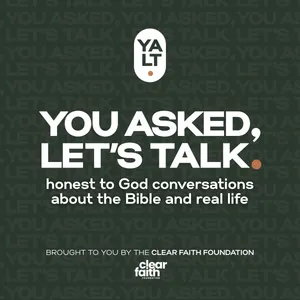
You Asked, Let’s Talk is a podcast for people who still have questions about faith. Every episode starts with a real question someone is asking about God, the Bible, doubt, suffering, church, purpose, or real life. Host Bobby McGraw sits down with thoughtful guests to stay with the question long enough to make sense of it. No pressure. No spin. No easy answers. Just Honest to God conversations about the Bible and real life for people who are still asking, still thinking, and still open to where the conversation might lead.
Latest Episodes
The most recent episodes — sign up to get AI-powered summaries of each one.
- 2 days ago33 min
Can Archaeology Prove the Bible? (feat. Dr. Mike Fanning)
Could one archaeological discovery settle your questions about the Bible? And what happens when a discovery turns out to be something different than people first thought?Bobby McGraw talks with Dr. Mike Fanning about what archaeology can tell us about the Bible and where its limits lie. Drawing on decades of study and excavation work in Israel, Mike shares the story of a tiny silver amulet bearing a familiar biblical blessing. He also brings ancient lamps, pottery, and glassware that help make everyday life in the Bible easier to picture.Their conversation moves from searches for Noah’s ark to questions about Jonah, Jericho, and seemingly conflicting historical accounts. Mike explains why context and different kinds of writing matter when reading Scripture, and why he does not expect archaeology to resolve every question of faith.If parts of the Bible feel difficult to believe, this conversation makes room to ask questions and keep exploring.Key TakeawaysArchaeology can illuminate the people, places, and everyday experiences behind biblical stories. Mike cautions against expecting it to prove matters of faith.Before asking how a passage applies today, consider what it meant to the people who first heard it.History, poetry, metaphor, and parables communicate differently. Recognizing the kind of writing helps us read a passage more carefully.Archaeological interpretations can change as researchers examine the evidence. Mike encourages listeners to avoid making their faith depend on a single discovery.Questions about difficult Bible stories do not have to end the conversation. Mike sees honest questioning as part of growing in faith.Chapter Markers00:00 - Can Archaeology Prove the Bible?06:25 - What Ancient Discoveries Can Tell Us11:57 - Bringing the World of the Bible to Life17:48 - Reading Scripture in Context28:14 - When the Evidence Raises More QuestionsResourcesConnect with Dr. Mike Fanning to ask a question or learn more about his work.Explore Clear Faith for more conversations about God, the Bible, and real life.Find your next YALT conversation and submit a question you’d like the show to explore.
- 2 weeks ago36 min
Does God Play Favorites? (feat. Matt Davis)
In the Old Testament, God chose the Israelites to be His people, the family of God. But the New Testament declares that because of Jesus’ life, death, and resurrection, all the peoples of the world can belong to God’s family by believing in Jesus.These two statements seem contradictory, yet knowing the entire biblical story removes the confusion, revealing a God who wants all people to come into relationship with Him and who is faithful to His promises.Bobby McGraw talks with Matt Davis, a Jewish believer in Jesus and co-founder of The Jewish Road, shedding light on this compelling subject.Matt connects the Old and New Testaments as two acts of one story, revealing a God who is unfolding His plan for the world.They also discuss spiritual conflict, God’s faithfulness, and the importance of relying on God’s biblical promises rather than the actions of modern government.For anyone who has wondered if God plays favorites, or whether His invitation extends to everyone, this conversation offers a fresh perspective on God’s larger story and our place within it.Key TakeawaysMatt explains God’s choice of Israel as a calling to bless the nations, rather than a declaration that everyone else matters less.Reading the Old and New Testaments together helps make sense of Jesus’ identity, teaching, and place in the biblical story.Matt describes spiritual conflict as part of the Bible’s larger story, while acknowledging how unfamiliar that idea can sound to someone exploring faith.Matt believes God remains faithful to His promises to the Jewish people. He distinguishes that conviction from agreement with every decision made by Israel’s government.You do not need to understand every part of the Bible to begin exploring it. Matt invites listeners to look for the connections and consider where God may already have been present in their own lives.Chapter Markers00:00 - Does Having a Chosen People Mean God Picks Favorites?07:32 - Israel’s Struggles and the Bible’s Spiritual Battle16:03 - Where Jesus Fits in the Story21:43 - Has the Church Replaced Israel?28:38 - Finding Your Place in the StoryResourcesThe Jewish Road - The ministry Matt and his father started to help people connect the Bible’s Jewish roots with faith in Jesus. Its website includes their podcast, articles, and teaching resources.He Was There All Along: Finding Jesus in the First Half - Matt’s 30-day journey through the promises and connections that lead toward Jesus’ birth. He describes a book, a YouVersion reading plan, short daily videos, and a Jesse tree ornament set. Explore the resources through The Jewish Road.The 30-Minute Bible - By Craig G. Bartholomew and Paige P. Vanosky. Recommended in the outro as an approachable way to understand the Bible’s larger story.InterVarsity Press - Thanked in the outro for supporting the reach of the podcast.Share this conversation with someone who has wondered why God chose Israel or how the two halves of the Bible fit together. Have a question you would like the show to explore? Send it to Clear Faith for a possible future episode.
- Oct 27, 202627 min
What Makes Life Feel Like Enough? (feat. Joshua Becker)
What happens when you get the thing you thought would finally be enough, and still want more?Bobby McGraw talks with Joshua Becker, author and founder of Becoming Minimalist, about possessions, achievement, and where we look for security. Joshua remembers a Saturday spent cleaning his garage while his five-year-old son waited outside for him to play. That moment changed what he wanted to own and how he wanted to spend his time.But owning less did not end every struggle. Joshua also shares how reaching the New York Times bestseller list left him wanting a higher spot or another week on the list. He explains how minimalism helped him see Jesus’ teachings about money and generosity differently, and why he looks to God for the contentment achievement cannot give him.If you keep moving the finish line, this conversation offers a chance to consider what you’re hoping the next thing will do for you.Key TakeawaysPossessions can cost more than money. Caring for them can take time and attention away from the people you love.Owning less does not automatically end the need to prove yourself. Joshua still recognizes that pull in his accomplishments.Minimalism, as Joshua describes it, means owning what you need so you can give more attention to what matters.Giving away excess possessions helped Joshua understand Jesus’ teachings as a better way to live, rather than only a demand to sacrifice.Joshua finds his foundation for contentment in God’s care. For those curious about Jesus, he suggests exploring a church with someone they trust or reading Mark or John.Chapter Markers00:00 - Why More Never Seems Like Enough05:35 - The Garage Moment That Changed Joshua’s Life10:00 - Money, Possessions, and the Cost of Wanting More16:12 - Finding Security in God and Rethinking Jesus’ Teachings21:28 - Where to Start Exploring JesusResourcesJoshuaBecker.com - Joshua’s recommended starting point for his books, projects, and other work.Becoming Minimalist - Joshua’s website about intentionally owning less.Listen to the full episode of You Asked, Let’s Talk, and share this conversation with someone wondering why the next achievement never seems to feel like enough. Have a question of your own? Send it to Clear Faith for a possible future conversation.Music licensed through Soundstripe.Code: XCAR3AJ5ZK8ARWRF
- Oct 13, 202628 min
Job or Calling: What's the Difference? (feat. Brad Lomenick)
How do you know what you’re supposed to do with your life without letting what you do become who you are?Leadership expert Brad Lomenick joins Bobby McGraw to talk about calling, identity, work, and what happens when an assignment that once felt right no longer fits. Brad shares how looking for “breadcrumbs” from earlier in life can reveal gifts and patterns that have been there all along, and why your calling is bigger than any job title or season.They also explore what it means to remain faithful when your current work does not feel like the best expression of who you are, why relational intelligence matters in an increasingly digital world, and how to think about faith when Christian leaders disappoint you.For anyone questioning their career, purpose, identity, or faith, this conversation offers a way to think about the season you are in without assuming you have to have the next one figured out.Key TakeawaysLook for “breadcrumbs” from your past that reveal the gifts and patterns that come naturally to you.Your job is an assignment, not your identity. Calling can remain consistent even as your work changes.Faithfulness still matters when your current season does not feel like the perfect fit.In an age of AI, curiosity and relational intelligence can make a meaningful difference in how we connect with people.Disappointment with Christian leaders does not have to end your exploration of faith. Get curious about where your cynicism comes from and keep asking questions.Chapter Markers03:45 - Breadcrumbs Lead to Calling05:22 - Assignment vs. Calling06:10 - Be Curious About Your Gifts09:30 - The Importance of Humble Leadership11:44 - Who Am I When the Title Changes?13:52 - When Your Job Doesn’t Satisfy You16:31 - Relational Intelligence in the Age of AI17:49 - Spiritual and Vocational Calling19:07 - Can You Trust Faith After Leaders Fail?20:58 - How Curiosity Helps You Be Heard23:29 - Why Christianity?25:04 - Conclusion and Where to Find BradResourcesH3 Leadership - Brad Lomenick’s book on becoming a more integrated leader.H3 Leadership Podcast - Brad recommends his podcast as the best place to follow his current work.Have a question about God, faith, or the Bible you have been afraid to ask out loud? Visit clearfaith.org/podcast to submit it for a future episode of You Asked, Let’s Talk.
- Sep 29, 202635 min
Why Are Christians So Judgmental? (feat. Greg Jao)
Why do Christians sometimes come across as so judgmental, especially toward people who believe, live, or think differently? Bobby McGraw sits down with Greg Jao of InterVarsity Christian Fellowship to talk about disagreement, cultural blind spots, curiosity, and what it looks like to hold real convictions without reducing people to their worst ideas.He also explains why Christians need to acknowledge where the church has caused real harm and why humility can open conversations that defensiveness shuts down. Keep looking, keep asking questions, and do not let someone else’s failures end your curiosity.Key TakeawaysChristians can read the same Bible differently because culture shapes what we notice and what we overlook.Curiosity helps us understand people without requiring us to abandon our convictions.Christians should be willing to acknowledge and apologize for real harm done by the church.Disagreement becomes judgmental when we stop seeing the other person as a whole human being.If judgmental Christians have made faith difficult to explore, keep looking at Jesus and keep asking questions.Chapter Markers- 00:00 - Welcome to Greg Jao- 13:02 - How Culture Shapes the Way We Read the Bible- 19:11 - Why Curiosity Changes the Conversation- 23:35 - Owning the Church’s Baggage- 30:21 - How to Disagree Without Being DisagreeableLinks and MentionsInterVarsity Christian Fellowship - Greg’s ministry serving students on college and university campuses. Greg recommends it as a place where believers, doubters, and people exploring Christianity can ask questions together.Clear Faith Foundation - Have questions about faith, God, or Christianity? Visit clearfaith.org to explore honest conversations and resources for the questions that matter most.30-Minute Bible - Want to understand the bigger story of Scripture? Visit 30minutebible.com for a simple, accessible way to see how the Bible fits together.Music licensed through Soundstripe. Code: I8ZVCGXNL5ICVQAJ
- Sep 22, 202647 min
Is God Punishing Me? (feat. Suzanne Nadell)
When something painful happens, it is easy to wonder: Did I do something wrong? Is God punishing me?Bobby McGraw sits down with Suzanne Nadell to explore that question through her story of two cancer diagnoses, years of uncertainty, and a faith that changed along the way.Suzanne talks honestly about being angry with God, powering through pain, and learning to slow down and process what was happening. She reflects on how suffering clarified her purpose and taught her to receive help from others.For anyone facing a diagnosis, disappointment, or season that feels unfair, this conversation is a reminder that hardship is not proof that God has abandoned you.Key TakeawaysA painful season is not proof that God is punishing you.You can be angry or confused with God and still turn toward Him.God can bring good from painful circumstances without pretending the pain itself is good.Sometimes healing means slowing down instead of outrunning what hurts.Other people matter in hard seasons. Let them help carry the weight.Chapter Markers00:00 - Welcome to Suzanne Nadell03:43 - Growing Up With Faith That Felt Like Rules06:51 - Finding a Faith of Her Own08:03 - Suzanne’s First Cancer Diagnosis10:25 - Facing Cancer as a Young Mom12:34 - What Cancer Did to Her Faith14:52 - A Second Cancer Diagnosis16:20 - When Suzanne Got Angry With God18:24 - What She Did With the Anger21:02 - The Moment She Finally Stopped and Felt It24:23 - Is God Punishing Me?28:23 - How Suffering Changed Her Faith32:04 - Why God’s Timing Can Feel So Slow34:31 - What to Do in the Middle of a Diagnosis40:09 - How Suzanne’s Calling Became Clearer44:12 - Remember That You Are LovedLinks and MentionsWired to Lead - Suzanne’s book about leadership lessons from the newsroom and leading in the church: https://www.amazon.com/Wired-Lead-Being-Leader-Church/dp/0827243464SuzanneNadell.com - Suzanne’s book, speaking, and current work: http://SuzanneNadell.comCalled To All of It - A program for women navigating faith, family, and career: https://suzannenadell.com/called-to-all-of-it-1She Leads Church - A community and conference for Christian women in leadership: https://www.sheleadschurch.com/CaringBridge - The online journal Suzanne used during her cancer experiences: https://www.caringbridge.org/Follow You Asked, Let's Talk and share it with someone going through something hard and wondering where God is in the middle of it.
- Sep 15, 202651 min
What Does God Want Me to Do With My Life? (feat. Dr. Jennifer Keitt)
What does God want me to do with my life, especially when the path I’m on no longer feels right? Bobby McGraw sits down with Dr. Jennifer Keitt to talk about success, purpose, waiting, emotions, and recognizing God’s direction when life stops making sense.At 27, Jennifer had checked every box but still found herself deeply dissatisfied. What followed was her “summer of chaos,” a season that changed the direction of her life.She shares how waiting, trial and error, Scripture, relationships, and even disorientation helped shape her next steps. For anyone wondering whether they are behind, missing God, or simply unsure what to do next, this conversation offers a different way to think about finding purpose.Key TakeawaysSuccess does not automatically mean you are living the life you were made for.Feeling disoriented can be an invitation to pay attention to what is happening beneath the surface.Hearing God can look like Scripture, wise questions, trial and error, peace, and taking the next step.Purpose usually unfolds over time rather than arriving as a complete roadmap.Your emotions can provide important clues as you discern what is happening in your life.Chapter Markers00:00 - Welcome to Dr. Jennifer Keitt03:06 - A New Faith in a Confusing Season05:26 - The Summer of Chaos07:17 - When Aloneness Becomes an Invitation10:22 - What Does It Mean to Hear God?15:21 - What Abraham Teaches Us About Waiting16:08 - Why Time Is Not the Enemy19:16 - How Jennifer’s Purpose Kept Expanding23:18 - Why Bigger Audiences Did Not Grow Her Faith24:33 - When Success Feels Empty Again26:19 - When God’s Math Does Not Make Sense32:46 - Learning to Lead Yourself First36:25 - What to Do When You Do Not Know Your Next Step39:38 - God, Emotions, and Paying Attention41:11 - What Jennifer Wishes She Knew at 2742:31 - Learning to Wait for Something New44:50 - Where to Connect With Jennifer47:57 - A Final Word for the JourneyLinks and MentionsKeitt Institute - Jennifer’s work in self-awareness, leadership, emotional health, and personal development: keittinstitute.orgJenniferKeitt.com - Jennifer’s personal website.Jolt Academy - A Keitt Institute program focused on personal development and understanding how you think, respond, and lead.Listen to the full episode of You Asked, Let’s Talk, follow the podcast, and share it with someone wondering what God wants them to do next.
- Sep 8, 202651 min
Is the God of the Old Testament Really Good? (feat. Dr. Heath Thomas)
Why does God seem angry, violent, or even mean in parts of the Old Testament while Jesus seems so loving?Bobby McGraw sits down with Old Testament scholar and Oklahoma Baptist University president Heath Thomas to wrestle honestly with that question.Heath argues that we often begin the biblical story in the wrong place. Before God is described as judge, He is revealed as the Creator and giver of life. From there, the Old Testament tells a larger story of rescue, blessing, discipline, and restoration.Along the way, Heath explores difficult questions about war, judgment, poetry, doubt, and why following Jesus does not mean having every answer. Sometimes, he says, Jesus is less a simple answer and more the clue we keep following.Key TakeawaysThe Old Testament begins with God as Creator and giver of life, not as an angry judge.God’s relationship with Israel is part of a larger rescue story meant to bring blessing to the world.Difficult passages about war and judgment make more sense within the Bible’s larger story.Faith does not require an answer to every question. Sometimes “I don’t know” is an honest place to begin.Much of the Old Testament is poetry, meant to shape how we see reality rather than simply give us information.Chapter Markers00:00 - Welcome to Heath Thomas02:01 - All of Life, All for Jesus04:03 - From Rules to Relationship08:39 - Jesus Is the Clue10:22 - What Does a Relationship With God Look Like?14:13 - Personality and the Way We Experience God16:36 - How Heath Became an Old Testament Scholar19:20 - Why Does God Seem Angry in the Old Testament?21:49 - Israel and God’s Rescue Mission25:18 - A Kingdom of Priests and a Blessing to the World27:36 - What About War in the Old Testament?30:25 - Starting the Story With the God of Life33:03 - Why Did God Allow Us to Sin?36:10 - Faith When You Do Not Have the Answer39:03 - Why, How Long, and the Presence of God41:24 - Are We Reading the Old Testament Wrong?42:52 - Why So Much of the Old Testament Is Poetry47:42 - Where to Start Exploring the Old Testament48:21 - Where to Connect With HeathLinks and MentionsThe 30-Minute Bible - An accessible introduction to the larger story of Scripture.Reading the Old Testament as Christian Scripture - Heath’s book on the Old Testament, God’s character, and its connection to the New Testament.Oklahoma Baptist University - Heath serves as president.Listen to the full episode of You Asked, Let’s Talk, follow the podcast, and share this conversation with someone who has wrestled with the God of the Old Testament or wondered whether difficult Bible passages can still be trusted.
Get You Asked, Let's Talk. summaries in your inbox
Free AI-powered daily recaps. Key takeaways, quotes, and mentions — in a 5-minute read.
Get Free Summaries →Free forever for up to 3 podcasts. No credit card required.
You Might Also Like
Listeners also like.

Life.Church with Craig Groeschel
Teachings from Craig Groeschel and Life.Church pastors on practical, biblical topics for everyday life.

What's God Got To Do With It? With Leanne Ellington
A woman explores faith, doubt, and spiritual identity through personal stories and conversations about finding God in unexpected places.

Becoming Something with Jonathan Pokluda
A weekly podcast offering Christian guidance on faith and life for young adults in their 20s and 30s.
Therapy and Theology
A Christian therapist, a theologian, and a ministry leader discuss emotional healing and faith through conversational episodes.

Let's Talk Offline
Two career experts discuss real talk on work-life balance, pay negotiation, and office relationships for early-career professionals.

The Daily Grace Podcast
A weekly podcast helping women grow in their knowledge of Scripture and theology through accessible, in-depth Bible study.

The Christian Outlook | Full Interviews
Salem Podcast Network

Live Free with Josh Howerton
A Christian teaching podcast focused on helping listeners know Christ, live free, and impact the world for God's glory.

The Counsel of Trent
Catholic teachings are explained and discussed with interviews from prominent Church writers and speakers.

Ask NT Wright Anything
A weekly podcast where listeners submit questions on theology and scripture for scholar NT Wright to answer, hosted by Mike Bird.

Faith Adjacent
Explores the intersection of faith and pop culture through honest, critical conversations.

The Better Question with Kaitlyn Schiess
Kaitlyn Schiess examines the underlying assumptions behind faith, culture, and daily life to help people ask deeper questions.
About You Asked, Let's Talk.
You Asked, Let’s Talk is a podcast for people who still have questions about faith. Every episode starts with a real question someone is asking about God, the Bible, doubt, suffering, church, purpose, or real life. Host Bobby McGraw sits down with thoughtful guests to stay with the question long enough to make sense of it. No pressure. No spin. No easy answers. Just Honest to God conversations about the Bible and real life for people who are still asking, still thinking, and still open to where the conversation might lead.
Customized Recaps
AI-powered recaps with compact key takeaways, quotes, and insights.
Straight to Your Inbox
Get key takeaways from You Asked, Let's Talk. in a 5-minute read.
Save Hours Every Week
Stay current on your favorite podcasts without falling behind.
Frequently Asked Questions
What is Podzilla's You Asked, Let's Talk. daily summary?
It's a free AI-powered email that summarizes new episodes of You Asked, Let's Talk. as soon as they're published. You get the key takeaways, notable quotes, and links & mentions — all in a quick read.
How does the You Asked, Let's Talk. podcast summary work?
When a new episode drops, our AI transcribes and analyzes it, then generates a personalized summary tailored to your interests and profession. It's delivered to your inbox every morning.
Is this an official You Asked, Let's Talk. product?
No. Podzilla is an independent service that summarizes publicly available podcast content. We're not affiliated with or endorsed by Clear Faith Foundation.
Can I get summaries of other podcasts too?
Absolutely! The free plan covers up to 3 podcasts, any in the catalog. Basic raises that to 15, Pro to 40 and Max to 100. Browse our full catalog at /podcasts.
How often does You Asked, Let's Talk. release new episodes?
You Asked, Let's Talk. publishes biweekly. Our AI generates a summary within hours of each new episode.
What topics does You Asked, Let's Talk. cover?
You Asked, Let's Talk. covers topics including Business, Religion & Spirituality, Spirituality, Christianity, Non-Profit. Our AI identifies the specific themes in each episode and highlights what matters most to you.
Start getting You Asked, Let's Talk. summaries tomorrow morning.
Free forever for up to 3 podcasts. No credit card required.
Free forever for up to 3 podcasts. No credit card required.