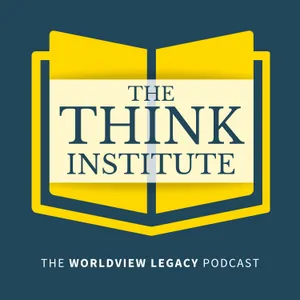
Free Daily Podcast Summary
Worldview Legacy | The Think Institute: Daily Summaries Delivered
by The Think Institute
The show that helps Christian men become the worldview leaders their families and churches need. Join Joel Settecase as he answers the questions the world is asking and discusses the Christian worldview with teachers, preachers and theologians. Together, they will help you build a legacy for your family: you, your kids and your wife will be able to confidently give answers from the Bible and see Jesus change lives as you share your faith.
Latest Episodes
The most recent episodes — sign up to get AI-powered summaries of each one.
- Yesterday9 min
#237 Does the Incarnation Contradict Logic? | Christian vs. Atheist Debate
If God is immaterial spirit, how can Jesus Christ be God in human flesh without violating the law of non-contradiction?In this Christian vs. atheist debate clip, Joel Settecase responds to a thoughtful challenge concerning the incarnation.The atheist asks whether Jesus can be both material and immaterial at the same time. Joel explains the Christian doctrine of the hypostatic union: the eternal Son of God took on a true human nature without surrendering, diminishing, or contradicting His divine nature.Jesus did not cease to be God when He became man. The incarnation was an addition of human nature—not the subtraction or negation of deity.The conversation then turns to another foundational issue: are the laws of logic genuinely universal and necessary, or are they contingent upon our desire to communicate intelligibly?Can someone disprove the universality of logic simply by speaking nonsense? Or does our ability to recognize nonsense actually confirm that objective standards of intelligibility already exist?This exchange explores the relationship between logic, meaningful communication, the incarnation, and the Christian claim that God is the necessary foundation for rational thought.Go DeeperBecome the worldview leader your family and church need. Learn more about the Hammer & Anvil Society at https://thethink.institute/society.Pastors and church leaders can bring practical worldview and apologetics training to their congregations through The Think Institute. Learn more at https://thethink.institute/forchurches.The Think Institute is a Christian nonprofit ministry equipping believers to explain, share, and defend the Christian message. Give now at https://thethink.institute/partner.
- 5 days ago9 min
#236 Can Atheists Use Logic Without Borrowing From God? | Debate Highlight
Can an atheist use logic while admitting that only the Christian worldview can account for it?In this Christian vs. atheist debate clip, Joel Settecase and his opponent discuss whether the laws of logic are universal, objective, necessary, and unchanging—and what kind of worldview can explain them.The atheist proposes a clever escape: even if the Christian God grounds logic, why can’t an atheist simply borrow that explanation and continue using logic without becoming a Christian?Joel argues that this concession gives away the debate. If the atheist must step into the Christian worldview to justify reason, then atheism cannot provide the foundation it needs. And the God who grounds logic is not an abstract philosophical principle. He is the triune God revealed in Scripture—the same God who commands sinners to repent and believe the Gospel.The exchange also addresses whether the Bible is merely one self-authenticating book among many. Joel explains why every ultimate standard involves circular reasoning at the foundational level, but argues that Scripture provides an all-encompassing and internally consistent framework for God, man, knowledge, morality, and the world.This debate presses beyond whether atheists can practically use logic. The deeper question is whether their worldview can justify the reasoning they rely on—or whether every argument against Christianity must first borrow from Christianity.Go DeeperBecome the worldview leader your family and church need. Learn more about the Hammer & Anvil Society at https://thethink.institute/society.Pastors and church leaders can bring practical worldview and apologetics training to their congregations through The Think Institute. Learn more at https://thethink.institute/forchurches.The Think Institute is a Christian nonprofit ministry equipping believers to explain, share, and defend the Christian message. Give now at https://thethink.institute/partner.
- 1 weeks ago10 min
#235 Morality Question: Does Saving the Mother Ever Require Killing the Baby?
Is abortion ever medically necessary to save the life of a pregnant mother?In this interview clip, Joel Settecase speaks with an experienced anesthesiologist about one of the most emotionally powerful arguments in the abortion debate: what should doctors do when pregnancy threatens a woman’s life?The conversation examines a real hospital case in which a pregnant woman suffering from heart failure was offered an abortion—only to recover after receiving appropriate treatment from cardiology and pulmonary specialists.They also discuss high-risk pregnancies, emergency delivery after fetal viability, prenatal surgery, and conditions such as hydrocephalus that can sometimes be treated while the baby is still in the womb.The episode then addresses ectopic pregnancy. Is removing a pregnancy developing outside the uterus morally and medically equivalent to an elective abortion? The guest explains why ectopic pregnancy is a distinct medical condition in which the child cannot develop to term and the mother faces grave danger.This conversation challenges Christians to think carefully about medical terminology, distinguish directly killing an unborn child from legitimate treatment intended to save life, and refuse simplistic answers in difficult situations.Go DeeperBecome the worldview leader your family and church need. Learn more about the Hammer & Anvil Society at https://thethink.institute/society.Pastors and church leaders can bring practical worldview and apologetics training to their congregations through The Think Institute. Learn more at https://thethink.institute/forchurches.The Think Institute is a Christian nonprofit ministry equipping believers to explain, share, and defend the Christian message. Give now at https://thethink.institute/partner.
- 1 weeks ago20 min
#234 Debate: The Atheist’s Argument Collapses Into a Logic Problem
Can an atheist demand evidence for Christianity without first accounting for evidence, reason, and logic within his own worldview?In this Christian vs. atheist debate clip, Joel Settecase challenges an atheist who argues that Christianity lacks evidence and that the Bible contains contradictions.But the discussion quickly moves beneath those objections to a more fundamental question: what makes logical reasoning possible at all?The atheist describes the laws of logic as concepts, mental processes, and human conventions. Joel presses him to explain how universal, immaterial, and unchanging logical laws can be grounded in a materialistic worldview.The conversation also addresses alleged biblical contradictions, whether atheism is truly a neutral default position, and whether rejecting Christianity amounts to positive evidence for atheism.Joel argues that the atheist must rely on logic, objective truth, and meaningful evidence to argue against God—yet those realities cannot be justified apart from the transcendent mind of God. In other words, atheism must borrow from the Christian worldview in order to attack it.The exchange ultimately moves beyond abstract philosophy to the Gospel. The deepest problem is not merely intellectual inconsistency, but sin against the God in whose image we were made. Jesus Christ died for sinners, was buried, rose from the dead, and offers forgiveness to everyone who repents and believes.Go DeeperBecome the worldview leader your family and church need. Learn more about the Hammer & Anvil Society at https://thethink.institute/society.Pastors and church leaders can bring practical worldview and apologetics training to their congregations through The Think Institute. Learn more at https://thethink.institute/forchurches.The Think Institute is a Christian nonprofit ministry equipping believers to explain, share, and defend the Christian message. Give now at https://thethink.institute/partner.
- 2 weeks ago1h 7m
#233 Can Women Be Pastors? And What Makes a Church Biblical?
What is the church—and how can you tell whether a congregation is organized according to God’s word?In this teaching episode, Joel Settecase presents a biblical doctrine of the church, also known as ecclesiology.The discussion covers the relationship between the local, visible church and the universal body of Christ; why believers should commit to a local congregation; and how baptism, the Lord’s Supper, worship, membership, discipline, and restoration fit into the life of the church.Joel also examines the biblical offices of elder and deacon. Are bishops, overseers, pastors, presbyters, and elders different offices—or different names for the same role? What qualifications does Scripture establish for church leaders? And what responsibilities belong to older men, older women, younger men, and the congregation as a whole?The episode concludes by addressing one of the most controversial questions in modern Christianity: can women serve as pastors or elders? Joel argues that men and women possess equal dignity and value before God, while Scripture assigns them distinct and complementary roles within the church.Ultimately, the church does not belong to pastors, elders, denominations, or congregations. It belongs to Jesus Christ. He is its head, king, and chief shepherd.Go DeeperBecome the worldview leader your family and church need. Learn more about the Hammer & Anvil Society at https://thethink.institute/society.Pastors and church leaders can bring practical worldview and apologetics training to their congregations through The Think Institute. Learn more at https://thethink.institute/forchurches.The Think Institute is a Christian nonprofit ministry equipping believers to explain, share, and defend the Christian message. Give now at https://thethink.institute/partner.
- 2 weeks ago1h 15m
#232 Why I’m Pursuing Ordination as a Protestant
Why pursue ordination if it does not make you a priest, confer a special spiritual status, or place an indelible mark on your soul?In this episode, Joel Settecase explains why he is pursuing ordination through his local church as a Protestant, evangelical, and member of a non-denominational Bible church.Drawing from both the Old and New Testaments, Joel examines the biblical pattern of setting apart qualified men for ministry through prayer, fasting, the laying on of hands, and public commissioning. He also explains why the local church—not merely a distant denomination—is best positioned to evaluate, train, affirm, and hold a minister accountable.The episode explores what ordination does and does not mean. Ordination does not create an elite class of Christians or automatically make someone a pastor. Instead, it publicly confirms a man’s calling, recognizes his qualifications, establishes accountability, and sets him apart for a specific work of ministry.Joel also shares the personal reasons behind his decision: deeper theological training, greater preparedness, stronger credibility with churches, and a meaningful connection between The Think Institute and his home church.Ultimately, ordination is not about gaining a title. It is about submitting to biblical authority, honoring the gravity of ministry, multiplying qualified leaders, and serving Christ’s church faithfully.Go DeeperBecome the worldview leader your family and church need. Learn more about the Hammer & Anvil Society at https://thethink.institute/society.Pastors and church leaders can bring practical worldview and apologetics training to their congregations through The Think Institute. Learn more at https://thethink.institute/forchurches.The Think Institute is a Christian nonprofit ministry equipping believers to explain, share, and defend the Christian message. Give now at https://thethink.institute/partner.
- 3 weeks ago20 min
#231 If God Is Obvious, Why Are There So Many Religions?
If God is real and His existence is obvious, why are there so many religions—and why doesn’t everyone believe in Him?In this episode, Joel Settecase answers one of the most common objections to Christianity by turning to Romans 1.The Bible does not teach that God is hidden or that people simply lack enough evidence. Instead, it says that God has made Himself known through creation. His eternal power and divine nature are clearly seen, and all people are without excuse.So why do unbelievers deny Him?Joel explains the biblical doctrine of truth suppression: people genuinely know God, yet resist, distort, and suppress that knowledge because they do not want to glorify Him or give Him thanks.This means the existence of many religions does not prove that God is unclear. False religions are not evidence that humanity knows nothing about God. They are evidence that sinners take the truth they know and reshape it into something more comfortable.This episode also explores how creation reveals God’s power and character, why unbelief is a moral as well as intellectual issue, and how Christians should respond with truth, compassion, and thoughtful questions.The goal is not to insult unbelievers, but to draw out the knowledge of God they already possess—and point them to the only true way of knowing Him personally: Jesus Christ.Go DeeperBecome the worldview leader your family and church need. Learn more about the Hammer & Anvil Society at https://thethink.institute/society.Pastors and church leaders can bring practical worldview and apologetics training to their congregations through The Think Institute. Learn more at https://thethink.institute/forchurches.The Think Institute is a Christian nonprofit ministry equipping believers to explain, share, and defend the Christian message. Give now at https://thethink.institute/partner.
- 3 weeks ago10 min
#230 | Debate Highlight: Stop Letting the Skeptic Set the Rules
Why do some skeptics keep demanding more evidence—no matter how much evidence Christians provide?In this episode, Joel Settecase explains the difference between skeptic-first apologetics and Scripture-first apologetics.Apologetics is the discipline of defending the truth of the Christian message. According to 1 Peter 3:15, Christians must always be prepared to give a reasoned defense for the hope within them. But how should that defense begin?Many believers instinctively allow the skeptic to set the terms of the conversation. The skeptic claims to need more evidence, so the Christian gathers arguments, historical facts, and scientific data. Yet after hearing it all, the skeptic simply says, “I’m still not convinced.”Joel calls this the cycle of doom.The problem is not a lack of evidence. The deeper issue is that the skeptic interprets every piece of evidence through a worldview that has already rejected God and His word.This episode challenges Christians to stop treating the unbeliever as neutral and to build their apologetic method on Scripture. If defending the faith is a good work, then Scripture—which equips the believer for every good work—must govern how apologetics is done.Go DeeperBecome the worldview leader your family and church need. Learn more about the Hammer & Anvil Society at https://thethink.institute/society.Pastors and church leaders can bring practical worldview and apologetics training to their congregations through The Think Institute. Learn more at https://thethink.institute/forchurches.The Think Institute is a Christian nonprofit ministry equipping believers to explain, share, and defend the Christian message. Give now at https://thethink.institute/partner.
Get Worldview Legacy | The Think Institute summaries in your inbox
Free AI-powered daily recaps. Key takeaways, quotes, and mentions — in a 5-minute read.
Get Free Summaries →Free forever for up to 3 podcasts. No credit card required.
You Might Also Like
Listeners also like.

Breakpoint
Daily analysis of culture, politics, and media from a Christian worldview perspective.

Ask NT Wright Anything
A weekly podcast exploring theology and biblical questions through discussions with NT Wright, hosted by Mike Bird.
Pints With Aquinas
Discussions and teachings on the Catholic faith inspired by the works of Thomas Aquinas.
The Holy Post
Phil Vischer and Skye Jethani discuss pop culture, media, and theology from a Christian perspective in a post-Christian world.

Issues, Etc.
Discusses a wide range of topics with experts, centered on Christian faith and teachings.

Worldview Matters With David Fiorazo
A pastor and media contributor examines current events, cultural issues, and biblical prophecy through a Christian worldview.

The Alisa Childers Podcast
Addressing progressive Christianity and skeptical challenges to the gospel from a biblical perspective.
Knowing Faith
Explores the Christian faith through Scripture, examining belief, practice, and biblical foundations in an accessible way.
TheThinkingAtheist
A former Christian examines atheism and skepticism through calm, reasoned discussions on religion and belief.
Meeting of Minds Podcast
Conversations with leading thinkers across history, theology, finance, economics, math, and science exploring truth with clarity and depth.

The Daily Blade: Joby Martin & Kyle Thompson
A daily devotional podcast helping Christians apply biblical teachings to everyday life.

Live Free with Josh Howerton
A Christian teaching podcast focused on helping listeners know Christ, live free, and impact the world for God's glory.
About Worldview Legacy | The Think Institute
The show that helps Christian men become the worldview leaders their families and churches need. Join Joel Settecase as he answers the questions the world is asking and discusses the Christian worldview with teachers, preachers and theologians. Together, they will help you build a legacy for your family: you, your kids and your wife will be able to confidently give answers from the Bible and see Jesus change lives as you share your faith.
Customized Recaps
AI-powered recaps with compact key takeaways, quotes, and insights.
Straight to Your Inbox
Get key takeaways from Worldview Legacy | The Think Institute in a 5-minute read.
Save Hours Every Week
Stay current on your favorite podcasts without falling behind.
Frequently Asked Questions
What is Podzilla's Worldview Legacy | The Think Institute daily summary?
It's a free AI-powered email that summarizes new episodes of Worldview Legacy | The Think Institute as soon as they're published. You get the key takeaways, notable quotes, and links & mentions — all in a quick read.
How does the Worldview Legacy | The Think Institute podcast summary work?
When a new episode drops, our AI transcribes and analyzes it, then generates a personalized summary tailored to your interests and profession. It's delivered to your inbox every morning.
Is this an official Worldview Legacy | The Think Institute product?
No. Podzilla is an independent service that summarizes publicly available podcast content. We're not affiliated with or endorsed by The Think Institute.
Can I get summaries of other podcasts too?
Absolutely! The free plan covers up to 3 podcasts. Upgrade to Pro for 15, or Premium for 50. Browse our full catalog at /podcasts.
What topics does Worldview Legacy | The Think Institute cover?
Worldview Legacy | The Think Institute covers topics including Religion & Spirituality, Spirituality, Christianity. Our AI identifies the specific themes in each episode and highlights what matters most to you.
Start getting Worldview Legacy | The Think Institute summaries tomorrow morning.
Free forever for up to 3 podcasts. No credit card required.
Free forever for up to 3 podcasts. No credit card required.