Free Daily Podcast Summary
Women's Health Interrupted with Dr. Liisa Galea: Daily Summaries Delivered
by Dr Liisa Galea
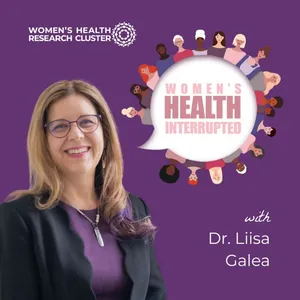
Women’s Health Interrupted explores women’s health through scientific inquiry and storytelling. Spanning across four overarching and multidisciplinary themes: general health and wellness, brain health, socio-cultural determinants of health, as well as politics, policy and advocacy, this podcast brings you content about women's health from every angle.Women's Health Interrupted is produced by the Women's Health Research Cluster.
Latest Episodes
The most recent episodes — sign up to get AI-powered summaries of each one.
- 1 weeks ago44 min
S4E9: From Undervalued to Unavoidable: Why Women’s Health Is the Foundation of Strong Economies
Welcome back to Season 4 of Women’s Health Interrupted! In this episode of Women’s Health Interrupted, we talk about women’s health as infrastructure. Women aren’t a niche. We’re half the population. Our guest Marissa Fayer takes us through her path from MedTech into the broader world of women’s health, and what it was like to found and operate a women’s health nonprofit. Along the way, she talks about what she learned from health systems and communities around the world, and how it changed the way she sees the field. From there, we dive into the argument at the heart of her new book, Undervalued to Unavoidable: Women’s Health As Infrastructure. Roads, power grids, and hospitals aren’t optional, Marissa argues, and neither is the health of half the population. Women’s health isn’t a niche market or a charitable cause. It’s the foundation that economies and communities are built on. You can’t build a strong economy without healthy women. You can’t build strong communities without them. We explore why women’s health has been treated as an afterthought, what it means to rethink it from the ground up, and what changes when we start funding and building it like the essential system it is. Host: Dr. Liisa GaleaEditor: Dr. Andrew McGovernProducer: Dr. Andrew McGovernMarketing: Felicia Gisondi Music by Dr. Andrew McGovernNew episodes of Women’s Health Interrupted will be available every Wednesday. Please rate, review, and subscribe to our podcast wherever you find your podcasts. Learn more about the Women's Health Research Cluster on their website: https://womenshealthresearchcluster.com/
- 2 weeks ago48 min
S4E8: Understanding Emotional Regulation Across Hormonal Transitions
Welcome back to Season 4 of Women’s Health Interrupted! In this episode, we speak with Dr. Birgit Derntl, whose research explores emotional processing, stress, and mental health across hormonal transitions. Dr. Derntl discusses how hormonal changes can influence (positive and negative) emotional regulation and susceptibility to mental health challenges, why some individuals are more sensitive than others, and what we know about the relationship between hormonal contraceptives and depression. She explores the importance of evidence-based emotional regulation strategies, and the gaps in our understanding of women’s mental health across the lifespan. We also discuss how science communication, research funding, and policy can better support women’s health—and why investing in women’s health research benefits everyone. Host: Dr. Liisa Galea Editor: Dr. Andrew McGovern Producer: Dr. Andrew McGovern Marketing: Felicia Gisondi Music by Dr. Andrew McGovern New episodes of Women’s Health Interrupted will be available every Wednesday. Please rate, review, and subscribe to our podcast wherever you find your podcasts. Learn more about the Women's Health Research Cluster on their website: https://womenshealthresearchcluster.com/
- 3 weeks ago48 min
S4E7: How Do Sex, Gender, and Sexual Orientation contribute to the cumulative effects of stress?
In this episode of Women’s Health, Interrupted, we’re joined by Dr. Robert-Paul Juster, a researcher who has done a deep dive into how sexual orientation can influence the stress and the brain. We explore allostatic load—the cumulative physiological wear and tear associated with chronic stress—and the pioneering work of Bruce McEwen that helped shape the field. We unpack cortisol, why it has gotten a bad reputation, and what stress hormones can tell us about health. We also explore how sex, gender, and sexual orientation shape stress physiology, including research on sexual and gender minority populations, structural stigma, and how the environment we live in can affect health. From differences across age and sexual orientation to the biology of coming out, we ask: who carries the greatest physiological burden of stress, and how might that affect mental health? Host: Dr. Liisa Galea Editor: Dr. Andrew McGovern Producer: Dr. Andrew McGovern Marketing: Felicia Gisondi Music by Dr. Andrew McGovern New episodes of Women’s Health Interrupted will be available every Wednesday. Please rate, review, and subscribe to our podcast wherever you find your podcasts. Learn more about the Women's Health Research Cluster on their website: https://womenshealthresearchcluster.com/
- Oct 21, 202639 min
S4E6: Included, But Not Investigated: The Missing Pieces in Women’s Health Research
"In this episode of Women’s Health, Interrupted, we speak with Kathryn “Katie” Schubert, President and CEO of the Society for Women’s Health Research (SWHR), about the progress made in women’s health research and why significant gaps remain. We explore the landmark 1993 NIH Revitalization Act, which required the inclusion of women in NIH-funded clinical research, and why inclusion alone is not enough. We discuss the importance of analyzing sex differences, investigating women’s health conditions, and ensuring research findings translate into better care for everyone. Katie also shares insights into the National Strategy to Close the Women’s Health Gap, including its proposed $20 billion investment over 10 years, and why sustained funding is essential to addressing decades of neglect. Because including women in research is only the first step—understanding how health and disease affect them differently is what drives progress." Host: Dr. Liisa Galea Editor: Dr. Andrew McGovern Producer: Dr. Andrew McGovern Marketing: Felicia Gisondi Music by Dr. Andrew McGovern New episodes of Women’s Health Interrupted will be available every Wednesday. Please rate, review, and subscribe to our podcast wherever you find your podcasts. Learn more about the Women's Health Research Cluster on their website: https://womenshealthresearchcluster.com/
- Oct 14, 202648 min
S4E5: Why Aren’t We Studying Sex Differences in Medical Research with Dr Maria Teresa-Feretti?
In this episode of Women’s Health, Interrupted, we speak with Dr. Maria Teresa Ferretti about why sex and gender differences matter in health research, what happens when they are overlooked and where are the barriers. We explore women’s brain health and Alzheimer’s disease, asking why women experience a disproportionate burden of Alzheimer’s and how studying biological sex differences could help advance prevention, diagnosis, and treatment. We also discuss the immune system and what differences in immune responses can teach us about women’s brain health. Dr. Ferretti also shares her own experience with precision medicine, and her hope for the future of Alzheimer’s disease and precision medicine. Because understanding sex differences is an important step towards precision medicine. Host: Dr. Liisa Galea Editor: Dr. Andrew McGovern Producer: Dr. Andrew McGovern Marketing: Felicia Gisondi Music by Dr. Andrew McGovern New episodes of Women’s Health Interrupted will be available every Wednesday. Please rate, review, and subscribe to our podcast wherever you find your podcasts. Learn more about the Women's Health Research Cluster on their website: https://womenshealthresearchcluster.com/
- Oct 7, 202646 min
Why PMDD Isn’t “Just PMS”: A Deep Dive with Dr. Tory Eisenlohr‑Moul
Welcome back to season 4 of Women’s Health Interrupted! On this episode we speak with Dr. Tory Eisenlohr‑Moul, Associate Professor of Psychiatry and Psychology at the University of Illinois Chicago College of Medicine and a leading expert in premenstrual and hormone‑sensitive mood disorders. Dr. Eisenlohr‑Moul breaks down what PMDD actually is — why it’s not a simple one‑to‑one disorder, how timing and ovulation shape symptoms, and why current diagnostic criteria miss so many people. She explains how hormone sensitivity drives the dramatic shifts across the menstrual cycle and what emerging evidence suggests about how PMDD should be diagnosed. We also zoom out to the bigger picture: why sex differences matter in science, how menstrual‑cycle research has been historically overlooked, and what it will take to build treatments that truly reflect lived experience. Host: Dr. Liisa Galea Editor: Dr. Andrew McGovern Producer: Dr. Andrew McGovern Marketing: Felicia Gisondi Music by Dr. Andrew McGovern New episodes of Women’s Health Interrupted will be available every Wednesday. Please rate, review, and subscribe to our podcast wherever you find your podcasts. Learn more about the Women's Health Research Cluster on their website: https://womenshealthresearchcluster.com/
- Sep 30, 202657 min
S4E3: One Woman’s Journey Navigating Dementia Care When the System Isn’t Built for You
On this episode of Women’s Health Interrupted, we speak with Ngozi Iroanyah, the Director of Health Equity and Access at the Alzheimer Society of Ontario. Ngozi’s discusses her path into dementia advocacy beginning with her father’s diagnosis an experience that forced her to navigate both the healthcare system she worked within and the emotional reality of watching a loved one face dementia. Even as a health professional, she felt the same fear, grief, and overwhelm that so many families carry. Caring for her father revealed how heavily Canada’s dementia system relies on caregivers to fill gaps in Personal Support Worker coverage, care coordination, and culturally responsive services. She saw how 24/7 caregiving leads to burnout with 40% of caregivers experiencing negative mental health outcomes and how inequities shape who gets diagnosed, who receives support, and who is left navigating the system alone. Her lived experience made clear that dementia care isn’t just medical — it’s cultural, structural, and deeply shaped by the “isms” that influence health: racism, sexism, and ageism. Women and equity‑seeking communities face higher risks and greater barriers, making equity‑centered dementia care essential. Today, Ngozi brings her personal story and professional expertise together to push for a dementia care system in Canada that truly supports families, honours caregivers, and delivers culturally grounded, bias‑aware care Host: Dr. Liisa Galea Editor: Dr. Andrew McGovern Producer: Dr. Andrew McGovern Marketing: Felicia Gisondi Music by Dr. Andrew McGovern New episodes of Women’s Health Interrupted will be available every Wednesday. Please rate, review, and subscribe to our podcast wherever you find your podcasts. Learn more about the Women's Health Research Cluster on their website: https://womenshealthresearchcluster.com/
- Sep 23, 202642 min
S4E2: The Woman Behind the Research — Microbes, Mood & Mental Health
In this episode of Women's Health Interrupted, we speak with Dr. Tamar Gur — a scientist whose candor and energy make every conversation unforgettable. Before we get anywhere near the microbiome, Tamar opens up about what it means to be a woman in science: the constant advice‑getting, the second‑guessing, the charm you learn to wield, and the grit required to stay loud in rooms that weren’t built for you. From there, we dive into her core philosophy: sound mind and sound body cannot be separated. Studying mental health in isolation, Tamar argues, isolates the science itself. You can’t understand the brain without understanding the immune system. You can’t understand mood without understanding inflammation. And you certainly can’t understand depression without understanding the microbiome — the fungi, viruses, bacteria, and microorganisms living in every orifice of the body. Because, as Dr. Tamar puts it, there is nothing more personal than the microbes in your orifices. We explore why depression research has been flattened by over‑generalization, why nuance is essential, and why the microbiome demands that medicine get more comfortable with complexity. The body is not a set of disconnected systems — it’s a conversation. And Dr. Tamar’s work listens to all of it. Host: Dr. Liisa Galea Editor: Dr. Andrew McGovern Producer: Dr. Andrew McGovern Marketing: Felicia Gisondi Music by Dr. Andrew McGovern New episodes of Women’s Health Interrupted will be available every Wednesday. Please rate, review, and subscribe to our podcast wherever you find your podcasts. Learn more about the Women's Health Research Cluster on their website: https://womenshealthresearchcluster.com/
About Women's Health Interrupted with Dr. Liisa Galea
Women’s Health Interrupted explores women’s health through scientific inquiry and storytelling. Spanning across four overarching and multidisciplinary themes: general health and wellness, brain health, socio-cultural determinants of health, as well as politics, policy and advocacy, this podcast brings you content about women's health from every angle.Women's Health Interrupted is produced by the Women's Health Research Cluster.
Customized Recaps
AI-powered recaps with compact key takeaways, quotes, and insights.
Straight to Your Inbox
Get key takeaways from Women's Health Interrupted with Dr. Liisa Galea in a 5-minute read.
Save Hours Every Week
Stay current on your favorite podcasts without falling behind.
Frequently Asked Questions
What is Podzilla's Women's Health Interrupted with Dr. Liisa Galea daily summary?
It's a free AI-powered email that summarizes new episodes of Women's Health Interrupted with Dr. Liisa Galea as soon as they're published. You get the key takeaways, notable quotes, and links & mentions — all in a quick read.
How does the Women's Health Interrupted with Dr. Liisa Galea podcast summary work?
When a new episode drops, our AI transcribes and analyzes it, then generates a personalized summary tailored to your interests and profession. It's delivered to your inbox every morning.
Is this an official Women's Health Interrupted with Dr. Liisa Galea product?
No. Podzilla is an independent service that summarizes publicly available podcast content. We're not affiliated with or endorsed by Dr Liisa Galea.
Can I get summaries of other podcasts too?
Absolutely! The free plan covers up to 3 podcasts, any in the catalog. Basic raises that to 15, Pro to 40 and Max to 100. Browse our full catalog at /podcasts.
How often does Women's Health Interrupted with Dr. Liisa Galea release new episodes?
Women's Health Interrupted with Dr. Liisa Galea publishes weekly. Our AI generates a summary within hours of each new episode.
What topics does Women's Health Interrupted with Dr. Liisa Galea cover?
Women's Health Interrupted with Dr. Liisa Galea covers topics including Science, Education, Medicine, Fitness, Health & Fitness, Life Sciences. Our AI identifies the specific themes in each episode and highlights what matters most to you.
Start getting Women's Health Interrupted with Dr. Liisa Galea summaries tomorrow morning.
Free forever for up to 3 podcasts. No credit card required.
Free forever for up to 3 podcasts. No credit card required.