Free Daily Podcast Summary
Wildlands Podcast — National Parks, Public Lands & Survival: Daily Summaries Delivered
by National Parks & Survival Podcast
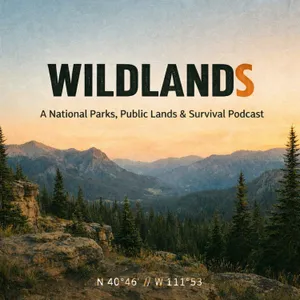
Wildlands Podcast is an audio field guide to America's wild places, national parks, forests, monuments, and the public lands most shows overlook. Hosted by a former Army officer, Shawn Spainhour brings the discipline of someone trained where preparation was life-or-death and the curiosity of someone who explores these places for the love of it. Every marquee park gets a multi-part series: the history that shaped it, the visit that prepares you for it, and where to stay when you get there. Between parks, standalone Field Skills episodes cover the survival knowledge that keeps people alive outdoors: altitude, flash floods, navigation, bear country, and more. It's the show you put on while the trailhead is still hours away. Inside the Episodes: In-Depth National Park Guides: Deep dives into the history, hidden trails, and logistics for iconic destinations like Yosemite, Zion, Yellowstone, and the Grand Canyon, as well as lesser-known national forests and public lands. Wilderness Survival & Safety: Practical outdoor skills and field skills covering backcountry land navigation, flash flood preparation, bear safety, altitude sickness, and wilderness first aid. Trip Planning & Gear: Expert advice on backcountry permits, seasonal weather, trail safety, where to camp, and how to avoid the crowds on BLM and public lands. Whether you are an experienced backpacker prepping for a rugged backcountry trek, a casual hiker hitting the trails for a weekend camping trip, or an overlander exploring remote wilderness, this is your ultimate audio guide.
Latest Episodes
The most recent episodes — sign up to get AI-powered summaries of each one.
- 2 days ago16 min
#024 - Field Skills: Hypothermia | Why Fifty-Five Degrees Kills More Than the Deep Cold
Here's the number that changes how you think about cold: fifty-five degrees. Not twenty below, not a blizzard — a cool, light-jacket afternoon. It's the temperature at which more people die of hypothermia than any other, because fifty-five degrees plus rain and wind pulls heat faster than your body can replace it, and nobody takes it seriously until they're already in trouble. Hypothermia doesn't feel like dying. It feels like being tired, then confused, then fine — and that final warmth is the body shutting down.Host Shawn Spainhour, a former Army officer who learned cold injury the hard way, breaks it down. The physics of why wet and windy at fifty-five is deadlier than dry and still at twenty — water pulls heat roughly thirty times faster than air. The three-layer system and why cotton kills. Recognizing the progression through the umbles — stumbles, mumbles, fumbles, grumbles — and why you trust those signs over what the person tells you about themselves. Field rewarming: stop heat loss first, then add heat, the hypothermia wrap, why you insulate from the ground, and why alcohol is exactly wrong. Plus the principle that a person isn't dead until they're warm and dead, and the habits that keep you from ever needing any of it.This is a Wildlands Field Skills episode — the survival curriculum that runs between the park series.Wildlands — know the land before you reach it.
- 1 weeks ago13 min
#023 - Acadia, Part 3: Where to Stay | Blackwoods, Duck Harbor & Bar Harbor Lodging
There's no grand historic inn inside Acadia — no Old Faithful equivalent at the center of the experience. What there is instead suits the park better: campgrounds close enough to the ocean that you hear it at night, a remote island reachable only by mailboat with five primitive sites and nothing else, and one of the better small towns in New England to spend time in between trail days. This closes out the Wildlands Acadia trilogy.Host Shawn Spainhour, a former Army officer who grew up returning to these campgrounds, breaks down every option. Blackwoods — the spruce-forest base on the eastern side, minutes from the Park Loop Road and Cadillac. Quieter Seawall on the western side. The modern Schoodic Woods, with the park's only real electric hookups. And Duck Harbor on Isle au Haut — five lean-tos, an hour by mailboat, and a reservation coveted by the people who know about it. Then the Bar Harbor lodging picture, from the waterfront Bar Harbor Inn to the mid-range B&Bs, plus the quieter harbors and the budget base in Ellsworth. Finally, what to actually pack for coastal Maine, where a July morning can be fog and forty-five degrees. Throughout, the standing reminder that booking systems change, so verify current policy directly before you rely on any of it.This is Part 3 of the Wildlands Acadia series. Part 1 covers the deep history; Part 2 covers planning your visit.Wildlands — know the land before you reach it.
- 2 weeks ago18 min
#022 - Acadia, Part 2: The Visit | Cadillac Sunrise, the Iron-Rung Trails & the Carriage Roads
There's one morning in Acadia people talk about for years: standing on the granite summit of Cadillac Mountain, the highest point on the eastern seaboard, watching the sun come over the Atlantic before it reaches anywhere else in the lower 48. But you need the reservation — and the release windows have their own strict logic. This is the most personal episode in the series; Acadia is the park the host grew up with.Host Shawn Spainhour, a former Army officer who spent his childhood on these carriage roads, walks you through the whole visit. The exact mechanics of the Cadillac sunrise reservation — the ninety-day window, the ten-a.m.-two-days-out window, and why you save the QR code offline. The Park Loop Road and its string of stops: Sand Beach and its punishingly cold water, Thunder Hole, Otter Cliff, the Ocean Path. The iron-rung trails found almost nowhere else — the Beehive and the more serious Precipice, plus the peregrine-falcon closures and the hard rule against wet granite. The carriage roads at their best, from the Eagle Lake loop to popovers at the Jordan Pond House. The quieter Schoodic Peninsula. And the practical layer — the fare-free Island Explorer shuttle that solves the parking problem, and why September is the best version of this park.This is Part 2 of the Wildlands Acadia series. Part 1 covers the deep history; Part 3 covers where to stay.Wildlands — know the land before you reach it.
- 3 weeks ago33 min
#021 - Acadia, Part 1: The History | The Wabanaki, George Dorr & the Carriage Roads
On the coast of Maine, granite mountains drop almost directly into the Atlantic. There are no canyons or geysers here — what Acadia has instead is depth: layers of history and ecology packed into a park that would fit inside Yellowstone several times over. This kicks off the Wildlands Acadia trilogy.Host Shawn Spainhour, a former Army officer, traces the full arc. Twelve thousand years of Wabanaki presence on the island they called Pemetic, the sloping land — the shell middens, the sophisticated management of the tidal zones, and the epidemics that reduced them before colonial settlement even arrived. Champlain naming the island of bare mountains in 1604, the glacial forces that shaped it, and Somes Sound, the only fjord on the East Coast. Then the Hudson River School painters whose canvases sent the wealthy rusticators north, the Gilded Age estates that followed, and the conservation collision that produced the park's founding. George Dorr — the Boston heir who spent his entire family fortune and forty-three years assembling Acadia and died on the land with nothing left. Rockefeller's 57 miles of hand-built, motor-free carriage roads. And the great fire of 1947 that ended one era of the island and made the one we see today.This is Part 1 of the Wildlands Acadia series. Part 2 covers the visit; Part 3 covers where to stay.Wildlands — know the land before you reach it.
- Oct 29, 202617 min
#020 - Field Skills: Navigation | Map, Compass & When the Phone Dies
At some point on a ridgeline in the cloud, or in dense forest where the terrain stopped matching your memory of the map twenty minutes ago, the phone in your pocket becomes a small dark powerless rectangle. This episode is about navigating the way people did for most of history — by what you can see and what you can read on paper.Host Shawn Spainhour, a former Army officer who spent years navigating with topo maps and a lensatic compass, walks through the whole system. How to read contour lines and see the landscape in them before you leave the trailhead, and why identifying your bailout routes matters as much as your planned one. Magnetic declination — the angle most hikers never think about until it walks them 270 meters off line per kilometer — and how to correct for it. Taking and following a bearing, and terrain association: continuously matching what you see to what the map predicts, so a small drift gets caught early instead of a mile later. Handrails and catch features as a built-in alarm system. And the STOP protocol — Stop, Think, Observe, Plan — for when you're already uncertain, plus the pre-trip checklist that makes all of it work.This is a Wildlands Field Skills episode — the survival curriculum that runs between the park series.Wildlands — know the land before you reach it.
- Oct 22, 202614 min
#019 - Great Smoky Mountains, Part 3: Where to Stay | LeConte Lodge, Campgrounds & the Gateway Towns
There's exactly one place to sleep inside this park that isn't a tent or a trail shelter — and you can't drive to it, can't even take a shuttle. LeConte Lodge sits near 6,600 feet, reachable only on foot, up one of five trails, with propane lanterns for light and llamas hauling in the supplies. People wait a year for a bed there. That's the flavor of a park that never built a grand rail hotel and offers something stranger instead. This closes out the Wildlands Great Smoky Mountains trilogy.Host Shawn Spainhour, a former Army officer, breaks down every way to stay. LeConte Lodge — the five approach trails, the family-style meals, and the roughly year-ahead lottery you need to win. The frontcountry campgrounds and how to choose: Elkmont for the fireflies and scale, Cades Cove for the wildlife and the early loop drive, Cataloochee for elk, Smokemont for the quiet North Carolina side. The backcountry and Appalachian Trail shelter permit system. And the gateway towns, each with a distinct personality — convenient Gatlinburg, family-focused Pigeon Forge, peaceful Townsend, and Cherokee on the Qualla Boundary with genuine ties to the history. Throughout, the standing reminder that park booking systems change constantly, so verify current policy directly before you rely on any of it.This is Part 3 of the Wildlands Great Smoky Mountains series. Part 1 covers the deep history; Part 2 covers planning your visit.Wildlands — know the land before you reach it.
- Oct 15, 202618 min
#018 - Great Smoky Mountains, Part 2: The Visit | Cades Cove, Kuwohi & the Synchronous Fireflies
In September 2024, the highest peak in the park got its name back — Kuwohi, mulberry place, the sacred Cherokee summit renamed after a Confederate general in 1859 and formally corrected by unanimous federal vote after a campaign led by two Eastern Band citizens. That's the spirit of this whole visit: the busiest national park in the country rewards people who know what they're looking at before they arrive.Host Shawn Spainhour, a former Army officer, walks you through the greatest hits and the practical skill of not spending your vacation in traffic. The Park It Forward parking tag and the near-total lack of cell service. Cades Cove — the historic cabins, the reliable bears and elk, the four-hour bear-jam problem, and how the early hours and the car-free summer Wednesdays beat it. Kuwohi and its flying-saucer tower with views into seven states. The synchronous fireflies near Elkmont and how the lottery actually works. A walkable piece of the Appalachian Trail at Newfound Gap and Charlies Bunion. Plus the quieter waterfall hikes — Laurel, Grotto, Abrams, Chimney Tops — the wildlife rules, season-by-season timing, and a realistic weekend itinerary.This is Part 2 of the Wildlands Great Smoky Mountains series. Part 1 covers the deep history; Part 3 covers where to stay.Wildlands — know the land before you reach it.
- Oct 8, 202630 min
#017 - Great Smoky Mountains, Part 1: The History | The Cherokee, Tsali & the Park That Was Bought
Twelve million people visit the Smokies every year — more than Grand Canyon and Yellowstone combined. But unlike almost every other major park, the federal government didn't set this land aside from territory it already owned. It had to be bought, farm by farm, from thousands of families, with schoolchildren donating pennies and Rockefeller closing the gap. This kicks off the Wildlands Great Smoky Mountains trilogy.Host Shawn Spainhour, a former Army officer, traces the full arc. The Cherokee homeland — Shaconage, the place of blue smoke — and twelve thousand years of presence in one of the most biologically diverse temperate regions on Earth. The Indian Removal Act and the Trail of Tears, and the story of Tsali, the man who surrendered himself so a remnant of his people could stay — the ancestors of the Eastern Band still living on the Qualla Boundary today. Then the Appalachian farming families of Cades Cove, the industrial logging that nearly stripped the last old-growth forest east of the Mississippi, and the improbable seventeen-year campaign to buy the park into existence. Plus the lifetime leases, the holdouts who fought to the state supreme court, the CCC crews who built it, and why there's still no entrance fee to this day.This is Part 1 of the Wildlands Great Smoky Mountains series. Part 2 covers the visit; Part 3 covers where to stay.Wildlands — know the land before you reach it.
Get Wildlands Podcast — National Parks, Public Lands & Survival summaries in your inbox
Free AI-powered daily recaps. Key takeaways, quotes, and mentions — in a 5-minute read.
Get Free Summaries →Free forever for up to 3 podcasts. No credit card required.
You Might Also Like
Listeners also like.
National Park After Dark
Two friends examine dark stories from U.S. National Parks to foster connection with public lands through narrative.
Natural Causes
Explores the intersection of outdoor access, conservation, and environmental justice in an era of climate crisis and political threat.
How Wild
Explores the evolving idea of wilderness through voices of rangers, scientists, hikers, and Tribal leaders across American trails.

Fieldcraft Survival
Survival skills, preparedness tactics, gear reviews, and military-inspired training for self-reliance in the wild and urban environments.

Out Alive from Backpacker
Real people recount their survival stories from wilderness disasters, detailing mistakes, bad luck, and the moments that saved them.
Real Survival Stories
Ordinary people recount real experiences surviving extreme situations in the wilderness and at sea.
Call of the Outdoors
Explores Pennsylvania wildlife, hunting, habitat, and conservation through stories and insights from the state’s Game Commission.

Wild Times: Wildlife Education
Wildlife biologist Forrest Galante and co-hosts share expert insights and adventurous stories about wildlife, conservation, and expeditions.
Gaze At the National Parks
Dustin Ballard and Michael Ryan
MeatEater Conservation
A podcast about outdoor news and conservation issues, featuring interviews with experts and hunters.

Hello, Nature
Dustlight Productions, REI Co-op Studios

Wild Edible World: A Foraging Podcast
Explores wild edible plants and mushrooms, sharing global foraging knowledge and ways to identify and use them safely.
About Wildlands Podcast — National Parks, Public Lands & Survival
Wildlands Podcast is an audio field guide to America's wild places, national parks, forests, monuments, and the public lands most shows overlook. Hosted by a former Army officer, Shawn Spainhour brings the discipline of someone trained where preparation was life-or-death and the curiosity of someone who explores these places for the love of it. Every marquee park gets a multi-part series: the history that shaped it, the visit that prepares you for it, and where to stay when you get there. Between parks, standalone Field Skills episodes cover the survival knowledge that keeps people alive outdoors: altitude, flash floods, navigation, bear country, and more. It's the show you put on while the trailhead is still hours away. Inside the Episodes: In-Depth National Park Guides: Deep dives into the history, hidden trails, and logistics for iconic destinations like Yosemite, Zion, Yellowstone, and the Grand Canyon, as well as lesser-known national forests and public lands. Wilderness Survival & Safety: Practical outdoor skills and field skills covering backcountry land navigation, flash flood preparation, bear safety, altitude sickness, and wilderness first aid. Trip Planning & Gear: Expert advice on backcountry permits, seasonal weather, trail safety, where to camp, and how to avoid the crowds on BLM and public lands. Whether you are an experienced backpacker prepping for a rugged backcountry trek, a casual hiker hitting the trails for a weekend camping trip, or an overlander exploring remote wilderness, this is your ultimate audio guide.
Customized Recaps
AI-powered recaps with compact key takeaways, quotes, and insights.
Straight to Your Inbox
Get key takeaways from Wildlands Podcast — National Parks, Public Lands & Survival in a 5-minute read.
Save Hours Every Week
Stay current on your favorite podcasts without falling behind.
Frequently Asked Questions
What is Podzilla's Wildlands Podcast — National Parks, Public Lands & Survival daily summary?
It's a free AI-powered email that summarizes new episodes of Wildlands Podcast — National Parks, Public Lands & Survival as soon as they're published. You get the key takeaways, notable quotes, and links & mentions — all in a quick read.
How does the Wildlands Podcast — National Parks, Public Lands & Survival podcast summary work?
When a new episode drops, our AI transcribes and analyzes it, then generates a personalized summary tailored to your interests and profession. It's delivered to your inbox every morning.
Is this an official Wildlands Podcast — National Parks, Public Lands & Survival product?
No. Podzilla is an independent service that summarizes publicly available podcast content. We're not affiliated with or endorsed by National Parks & Survival Podcast.
Can I get summaries of other podcasts too?
Absolutely! The free plan covers up to 3 podcasts, any in the catalog. Basic raises that to 15, Pro to 40 and Max to 100. Browse our full catalog at /podcasts.
How often does Wildlands Podcast — National Parks, Public Lands & Survival release new episodes?
Wildlands Podcast — National Parks, Public Lands & Survival publishes weekly. Our AI generates a summary within hours of each new episode.
What topics does Wildlands Podcast — National Parks, Public Lands & Survival cover?
Wildlands Podcast — National Parks, Public Lands & Survival covers topics including Sports, Culture, Wilderness, Society & Culture, Travel, Places & Travel. Our AI identifies the specific themes in each episode and highlights what matters most to you.
Start getting Wildlands Podcast — National Parks, Public Lands & Survival summaries tomorrow morning.
Free forever for up to 3 podcasts. No credit card required.
Free forever for up to 3 podcasts. No credit card required.