Free Daily Podcast Summary
What The Hell Just Happened?!: Daily Summaries Delivered
by Paul Edwards
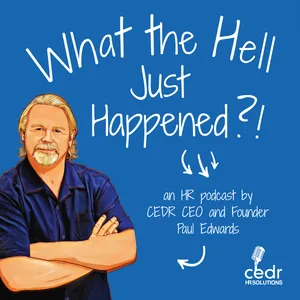
You don’t know what you don’t know. And, when it comes to HR and employment laws, most employers are SHOCKED by what they learn from talking to CEDR CEO and Founder Paul Edwards for just ten minutes. But Paul’s a busy man. And, though he would love nothing more than to talk one-on-one with each and every business owner and manager interested in learning about HR compliance, team management strategies, and how to protect their businesses, there’s only so much Paul to go around. So, we’ve got the next best thing for you - Introducing ”What the Hell Just Happened?” In this new podcast, Paul sits down with a different HR expert from his Solution Center team each week to discuss the burning HR questions facing you now, and to offer expert insights on important HR considerations you didn’t know you didn’t know.
Latest Episodes
The most recent episodes — sign up to get AI-powered summaries of each one.
- 3 days ago17 min
You're About to Fire an Employee. Then They Reveal a Medical Condition… What The Hell Happens Now?
You've made the decision to fire an employee. You've had the conversations, offered coaching, and watched the behavior affect the rest of your practice. Then, just before the termination meeting, the employee tells you something you didn't know: they're dealing with a medical condition, a change in medication, or a pregnancy-related issue. Can you still fire them? In this episode of What The Hell Just Happened!?, Paul Edwards and CeCe Delgado take on a common, complicated question from healthcare practice owners and managers. The employee may once have been a dependable high performer, but their recent behavior has become disruptive. Now a last-minute disclosure may introduce rights, restrictions, and accommodation obligations the employer cannot ignore. Paul and CeCe walk through both the legal side and the human side: why consistent coaching and documentation matter, how one person's behavior affects an entire team, what an interactive accommodation process can look like, and why a new disclosure doesn't automatically mean an employee can continue behaving the same way without accountability. They also discuss the significance of the underlying misconduct, including the difference between persistent irritability and a serious incident, plus a real practice example where longstanding performance problems and a later pregnancy disclosure created a challenging termination decision. In this episode: Why a high-performing employee's sudden change in behavior deserves a careful conversation and how the rest of the team can be affected. What changes when an employee raises a medical issue, pregnancy, or accommodation need just before termination. Why an at-will workplace is not a substitute for reviewing protected rights and the facts of the situation. How the interactive process, job requirements, and appropriate documentation can help an employer evaluate next steps. Why reasonable accommodation does not mean ignoring performance, attendance, patient-care needs, or serious misconduct. What a practice owner can learn from a termination case involving years of uncollected revenue and a later pregnancy disclosure. 🎙️ Special Offer: CEDR Payroll Thinking about switching payroll providers? New CEDR Payroll customers who sign up by December 31, 2026, can get, 3 months of free payroll services! Whether you're already a CEDR HR member or new to CEDR, this offer is for first-time CEDR Payroll customers. Learn more and see the offer details: https://www.cedrsolutions.com/our-products/payroll/ Download the Free Payroll Oversight Toolkit: https://www.cedrsolutions.com/resources/guides/payroll-guide/ CEDR members: Have a difficult employee or termination question? Submit an HR request through backstageHR® so the Solution Center can review the facts and help you determine the right next steps. Not a CEDR member? Explore CEDR HR Solutions: https://www.cedrsolutions.com/our-products/overview/ RELATED LINKS / RESOURCES Employees with Disabilities: Understanding the Interactive Process https://www.cedrsolutions.com/blog/employee-disability-interactive-process/ Reasonable Accommodations in the Workplace Explained https://www.cedrsolutions.com/blog/reasonable-accommodations/ Pregnant Workers Fairness Act: What You Need to Know https://www.cedrsolutions.com/blog/understanding-the-pregnant-workers-fairness-act/ Employee Protected Classes Explained https://www.cedrsolutions.com/blog/protected-classes-explained/ Mental Health in the Workplace https://www.cedrsolutions.com/blog/mental-health-in-the-workplace/ Explore CEDR HR Support for Your Practice https://www.cedrsolutions.com/our-products/overview/
- 2 weeks ago36 min
Your Employee Handbook Comes Back to Haunt You... What The Hell Happens Now?
What is one of the scariest things an HR professional can hear from a business owner? “I wrote my own employee handbook.” In this Halloween edition of What The Hell Just Happened!?, Paul Edwards and CeCe Delgado unpack the risks hiding inside DIY, borrowed, outdated, and AI-generated employee handbooks. A handbook can look official and still be missing the policies, state-specific requirements, reporting procedures, and practical safeguards your business actually needs. And adding a rule does not automatically make the rule legal, useful, or easy to enforce. Paul and CeCe dig into examples including rigid attendance rules, unauthorized-overtime language, no-gossip policies, copied handbook provisions, and the problems that can arise when an office manager is expected to maintain an HR document without specialized HR or employment-law expertise. They also talk about the hidden cost of doing it yourself: the owner's time spent researching, writing, revising, and trying to keep the handbook current as laws and workplace practices change. And then comes the truly scary part: if an employee dispute turns into a claim, the handbook does not disappear. It can become evidence. In this episode: Why borrowing another business’s handbook can create problems you never intended. Why a policy can sound reasonable and still create compliance risk. What “unauthorized overtime” language can and cannot do. How rigid attendance and discipline rules can box an employer into bad outcomes. Why a generic or AI-generated handbook may miss the context your business needs. Why putting an office manager in charge of maintaining a DIY handbook does not solve the expertise problem. How quickly a handbook can become outdated. Why the handbook may become evidence when an employee dispute reaches an attorney or agency. CEDR members: If you have a handbook or HR question, submit a request through backstageHR® so your team can help you work through the specific situation. Not a CEDR member? https://www.cedrsolutions.com/our-products/ RELATED LINKS / RESOURCES Learn About CEDR’s Custom Employee Handbooks https://www.cedrsolutions.com/get-started/ Explore CEDR HR Support for Your Practice https://www.cedrsolutions.com/our-products/ Learn How to Handle Unauthorized Overtime https://www.cedrsolutions.com/resources/guides/wage-complicance/ Why “No Gossip” Policies Can Be a Problem https://www.cedrsolutions.com/blog/nlrb-no-gossiping/ Learn More About Attendance Policies and Protected Absences https://www.cedrsolutions.com/blog/limiting-absences-basecamp/ https://www.cedrsolutions.com/blog/safely-navigating-maternity-leave-absence/ https://www.cedrsolutions.com/resources/forms/leave-of-absence-request/ Employee Handbook Guide / Handbook Best Practices https://www.cedrsolutions.com/our-products/employee-handbook/
- Oct 7, 202625 min
Secret Patients, Ghost Employees, and a DOL Investigation... What The Hell Happens Now?
An employee secretly opens your dental practice on Saturdays, sees patients, keeps the cash, and leaves no patient records behind. A trusted long-term employee sells practice inventory on the side and adds family members who do not work there to payroll. Then a worker-classification problem turns into a Department of Labor investigation asking for years of financial records. This is the scary edition of What The Hell Just Happened!? In this episode, Paul Edwards and Jennie McLaughlin share real HR horror stories that show how quickly a problem can grow when trust, weak controls, or “we’ve always done it this way” collide with employee misconduct and compliance risk. They break down a hygienist secretly using a dental office as her own Saturday practice, an embezzlement scheme involving inventory and ghost employees, and a misclassification case that was exposed after a worker filed for unemployment. Along the way, Paul and Jennie talk about why “trust but verify” matters, how hidden payroll and inventory problems can continue for years, and why employee classification decisions deserve more attention than simply choosing “salary” or “contractor” in a payroll system. In this episode: An employee has keys to your practice and secretly starts seeing patients there when you are closed. What happens when a patient comes back and your office has no record they were ever seen? You trust a longtime employee so completely that you stop checking the systems they control. What can happen when that same person controls inventory, reporting, and payroll? A family member who never works for the practice is getting a paycheck. What is a “ghost employee,” and why can payroll fraud be so hard to notice? A worker you treated as a contractor files for unemployment. How can one classification decision turn into a much larger wage-and-hour investigation? Your payroll system accepted the way you classified someone. Does that actually mean the classification was correct? Related resources: To Catch an Office Thief: Stopping Theft and Employee Embezzlement https://www.cedrsolutions.com/blog/employee-embezzlement/ Independent Contractor Checklist https://www.cedrsolutions.com/wage-compliance/ Exempt vs. Non-Exempt Status: It’s More than Just Salary vs. Hourly! https://www.cedrsolutions.com/blog/exempt-vs-non-exempt-status/ CEDR HR Education and Resources https://www.cedrsolutions.com/hr-education-and-resources/ Take the next step: CEDR HR Solutions: https://www.cedrsolutions.com/ Get started with CEDR: https://www.cedrsolutions.com/wage-compliance/?utm_campaign=Podcast&utm_source=wthjh-hrhorror
- Sep 23, 202629 min
Your Team Expects Raises You Can’t Sustain... What the Hell Happens Now?
Your employee did a great job. Their performance didn't suddenly get worse, but that does not always mean the business can afford another large raise. After several years of bigger increases, employees may come to expect the same pace even when operating costs rise, the economy changes, or the business simply does not have as much room in the budget. So how do you reset those expectations without making a good employee feel punished? In this episode of What The Hell Just Happened!?, Paul Edwards and CeCe Delgado talk through one of the most uncomfortable compensation conversations for a practice owner: resetting raise expectations without making a strong employee feel punished or undervalued. They break down the difference between cost-of-living, merit, and “difference-maker” raises, and why a few years of larger increases can quickly become the new normal in an employee's mind. They also dig into why tying annual reviews too closely to raises can create expectations, how pay bands and measurable goals give compensation decisions more structure, and why the health of the business matters when deciding what raises are actually sustainable. Paul and CeCe discuss how constructive financial transparency can give employees more context about costs, business performance, and economic pressures so a smaller raise does not automatically feel like a judgment on their work. They also cover total compensation statements and other benefits that can help employees see the full value of working for your practice. In this episode: Your team has come to expect 6% or 7% raises, but the business can't sustain that pace. How do you explain that strong individual performance and the financial performance of the business both affect what is available for raises? Annual reviews have quietly become “raise day.” How can you separate performance conversations from automatic pay expectations? You want compensation decisions to feel fair instead of arbitrary. How can pay bands, goals, and data give you a more consistent framework? You can't put a large permanent increase into base pay this year. What else can you communicate or consider so employees still understand the value of their total compensation? Related resources: Pay Transparency: How It Can Help You: https://www.cedrsolutions.com/podcast/pay-transparency-how-it-can-help-you/ How to Set the Pay Range for Any Position: https://www.cedrsolutions.com/blog/employee-pay-rate/ How Should I Handle an Off-Cycle Raise Request?: https://www.cedrsolutions.com/blog/how-to-respond-to-employee-raise-request/ 5 Ways to Help Your Team Manage Inflation Without Breaking the Bank: https://www.cedrsolutions.com/blog/help-your-team-manage-inflation/ Take the next step: CEDR HR Solutions: https://www.cedrsolutions.com/ Join CEDR’s HR Basecamp™: https://hubs.ly/Q04wxxSV0 Schedule a call to learn more about how CEDR can help your practice: https://hubs.ly/Q04wxyyZ0
- Sep 9, 202631 min
When Feedback Makes an Employee Cry... And You... What the Hell Happens Now?
Giving corrective feedback is one thing. Knowing what to do when the employee reacts badly is another. What happens when they say the write-up is unfair, start crying, get angry, walk out, ask who complained, or refuse to sign? In this episode of What The Hell Just Happened!?, Paul Edwards and CeCe Delgado talk through the part of Progressive Corrective Coaching that managers are rarely prepared for: the reaction after the feedback. They break down how to keep the conversation productive without becoming defensive, backing away from the issue, or matching the employee’s emotion. They also explain how CEDR’s FIRR Method© gives the conversation structure, why documentation changes the discussion when an employee says “this is the first I’m hearing about it,” when it makes sense to give someone space to cool off, and what an employee’s signature on corrective documentation actually means. In this episode: Your employee starts crying, and suddenly you’re wondering if you went too far. Do you back off or keep the conversation moving? They swear this is the first time they’ve heard about the problem, and now you’re questioning whether you handled it correctly in the first place. Your employee gets angry and walks out. Are you supposed to follow them, let them cool off, document it, or start thinking about termination? They refuse to sign the write-up, and now you’re sitting there wondering whether the whole conversation even counts. Learn more: CEDR Progressive Corrective Coaching resource CEDR HR Solutions Join CEDR’s HR Basecamp™ Schedule a call to learn more about how CEDR can help your practice
- Apr 20, 202623 min
AI in HR: The Risks Most Employers Miss
AI is already showing up in the workplace, but many employers aren’t thinking through the risks. In this episode, Paul and Jennie break down how AI is being used in HR, where it can create compliance issues, and what employers need to watch for. From policy drafting to employee communication, using AI the wrong way can lead to costly mistakes. If you’re using AI at work, or considering it, this episode will help you do it more responsibly.
- Apr 2, 202627 min
Why Nothing Gets Done...Even When Everyone's Working Hard (The 3-Step System)
Your team is busy. You’re busy. Everyone’s working hard. So why does it still feel like nothing’s getting done? In this episode of What the Hell Just Happened?, Paul Edwards and CeCe unpack one of the most frustrating realities in growing businesses. The harder everyone works, the more stuck things seem to become. It’s easy to blame burnout. Or staffing. Or motivation. But the real issue is simpler and harder to see. The work is a mess. Not because your team isn’t capable, but because no one has stepped back to actually look at how the work is structured. Who owns what. What’s piling up. What’s getting dropped. And where leaders are quietly becoming the biggest bottleneck in the business. Paul shares the exact moment this clicked for him, standing in front of a wall covered in tasks and realizing two things at once. He was doing too much of the wrong work, and the team had more capacity than anyone thought. From there, the conversation dives into the key shifts that make all the difference: Why your most reliable people are often the most overloaded How being “good at something” can actually hold your business back The hidden cost of jumping between tasks all day And why starting more work is usually the reason nothing gets finished This isn’t about working harder. It’s about finally seeing what’s actually happening inside your business and fixing it. Because once you see it, you can’t unsee it. And that’s when things start to move. Have an HR situation you want Paul to unpack on the show? Record a voice memo and send it to podcast@WTHJustHappened.com. Learn more at WTHJustHappened.com. CEDR HR Solutions is here to help when your HR issues leave you thinking, “What the hell just happened?!” Learn more here: CEDR HR Solutions Or give them a call (866) 414-6056
- Mar 16, 202632 min
The Hidden Risk of Taking Advice Without Context
Most HR problems don’t start with bad intentions — they start with bad advice. In this episode of What the Hell Just Happened?, Paul Edwards and CeCe, CEDR’s COO and HR expert, unpack one of the biggest mistakes employers make when dealing with HR issues: going on the internet or an A/I tool and asking a question that requires much more context and nuance to answer, than you would ever imagine. What may sound like a simple problem to you, can quickly become risky when you consider the many variables, including laws, that must be taken into account by an expert before they can give you a correct answer. They discuss how experienced HR professionals approach problem-solving differently, relying on curiosity, investigation, and thorough documentation before taking action. Along the way, they highlight how balancing legal compliance with thoughtful leadership helps businesses resolve issues while protecting both their people and their organization. In this episode, you’ll learn: Why HR advice should never be given without context How investigations and documentation can shape the outcome of a workplace issue Why employment rules can vary significantly depending on the state What experienced HR leaders do before making difficult people decisions How asking better questions leads to smarter and safer HR outcomes If you own a business, manage a team, or handle HR responsibilities alongside everything else you do, this episode will help you approach internal investigations with confidence and a more informed strategic mindset before you act. Have an HR situation you want Paul to unpack on the show? Record a voice memo and send it to podcast@WTHJustHappened.com. Learn more at WTHJustHappened.com. CEDR HR Solutions is here to help when your HR issues leave you thinking, “What the hell just happened?!” Learn more here: CEDR HR Solutions Or give them a call (866) 414-6056
About What The Hell Just Happened?!
You don’t know what you don’t know. And, when it comes to HR and employment laws, most employers are SHOCKED by what they learn from talking to CEDR CEO and Founder Paul Edwards for just ten minutes. But Paul’s a busy man. And, though he would love nothing more than to talk one-on-one with each and every business owner and manager interested in learning about HR compliance, team management strategies, and how to protect their businesses, there’s only so much Paul to go around. So, we’ve got the next best thing for you - Introducing ”What the Hell Just Happened?” In this new podcast, Paul sits down with a different HR expert from his Solution Center team each week to discuss the burning HR questions facing you now, and to offer expert insights on important HR considerations you didn’t know you didn’t know.
Customized Recaps
AI-powered recaps with compact key takeaways, quotes, and insights.
Straight to Your Inbox
Get key takeaways from What The Hell Just Happened?! in a 5-minute read.
Save Hours Every Week
Stay current on your favorite podcasts without falling behind.
Frequently Asked Questions
What is Podzilla's What The Hell Just Happened?! daily summary?
It's a free AI-powered email that summarizes new episodes of What The Hell Just Happened?! as soon as they're published. You get the key takeaways, notable quotes, and links & mentions — all in a quick read.
How does the What The Hell Just Happened?! podcast summary work?
When a new episode drops, our AI transcribes and analyzes it, then generates a personalized summary tailored to your interests and profession. It's delivered to your inbox every morning.
Is this an official What The Hell Just Happened?! product?
No. Podzilla is an independent service that summarizes publicly available podcast content. We're not affiliated with or endorsed by Paul Edwards.
Can I get summaries of other podcasts too?
Absolutely! The free plan covers up to 3 podcasts, any in the catalog. Basic raises that to 15, Pro to 40 and Max to 100. Browse our full catalog at /podcasts.
How often does What The Hell Just Happened?! release new episodes?
What The Hell Just Happened?! publishes biweekly. Our AI generates a summary within hours of each new episode.
What topics does What The Hell Just Happened?! cover?
What The Hell Just Happened?! covers topics including Business, Management. Our AI identifies the specific themes in each episode and highlights what matters most to you.
Start getting What The Hell Just Happened?! summaries tomorrow morning.
Free forever for up to 3 podcasts. No credit card required.
Free forever for up to 3 podcasts. No credit card required.