Free Daily Podcast Summary
Weird Species: Daily Summaries Delivered
by Senckenberg Gesellschaft für Naturforschung
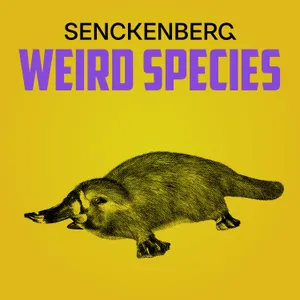
Welcome to "Weird Species," an original podcast by the Senckenberg Society for Nature Research. Join Prof. Dr. Julia Sigwart as she guides you through the fascinating world of the species on our planet. Whether you prefer them super cute or pretty icky, whether you can find them in your neighborhood or only on a remote island, we've got you covered. Each episode features conversations with scientists from various fields, where Julia quizzes them on their favorite species.Imprint: Copyright: Senckenberg Gesellschaft für NaturforschungConcept: Adrian Giacomelli, Julia Sigwart, Sabine WilkeEditor: Adrian GiacomelliEd. assistant: Benjamin WimmerModeration: Julia SigwartProduction: Senckenberg Gesellschaft für Naturforschung
Latest Episodes
The most recent episodes — sign up to get AI-powered summaries of each one.
- Jun 24, 202637 min
Weird Species #10: Histriobdella homari – A.k.a. Charlie Chaplin
Ekin Tilic isn't just Senckenberg's resident worm expert, but a science communicator as well: As "spinelessguy," he shares beautiful pictures of all kinds of deep sea invertebrates with his Instagram followers. In this episode of "Weird Species," we talk to him about his love for these kinds of animals that not many people find particularly appealing – and especially one intriguing worm nicknamed "Charlie Chaplin".Check out Ekin's Instagram account for jaw-dropping pictures of deep sea creatures. ...and his website as well! Go on a deep sea dive with The Schmidt Ocean Institute during their amazing livestreams. We need to protect marine biodiversity: Find out more about the Senckenberg Ocean Species Alliance (SOSA).Follow Senckenberg onFacebookInstagramTikTokLinkedInYouTube
- Feb 11, 202647 min
Weird Species #9: Apus apus – A swift, not a swallow!
What are the "rules" of biodiversity? How do ecology and evolution interact? These are questions that biologist Hanna Kokko is a renowned expert on, and in this episode of "Weird Species" she shares her immense knowledge on these topics. And of course, she talks about her favorite species as well: Apus apus, the common swift, which is very much not a swallow! Want to know where exactly the difference lies? Then join us for this episode! Follow Senckenberg onFacebookInstagramTikTokLinkedInYouTube
- Jul 21, 202548 min
Weird Species #8: Heloderma suspectum – A pretty chill monster
Krister Smith is Head of Division Messel Research and Mammalogy. In this episode of “Weird Species“, he talks about the UNESCO World Heritage Site just south of Frankfurt and its many well-preserved fossils. His favorite species lives quite far away, though: The Gila monster, a venomous lizard native to the Southwestern US and the Mexican State of Sonora. They are remarkably relaxed creatures, only active for 20 hours per month – but with a bite that has been described as excruciatingly painful. Learn more about our section Messel Research. Follow Senckenberg onFacebookInstagramTikTokLinkedInYouTube
- Jun 13, 202552 min
Weird Species #7: Sperm whales - Moby Dick's dark-skinned cousins
Enric Sala used to be a professor of marine biology at the Scripps Institution of Oceanography in San Diego, California. Then he realized that he was "writing the obituary of the ocean", quit academia and started putting all of his efforts into conservation. In this episode of "Weird Species", he tells us all about it: partnering with National Geographic to tell captivating stories about ocean life and helping governments and communities all over the world to set up marine protected areas. But of course he also talks about his favorite animal, the sperm whale, and what it's like to see them up close. Enric Sala was awarded the Senckenberg Prize for Commitment to Nature 2024. Watch Enric Sala's TED talk about "turning the high seas into the world's largest nature reserve". Check out Enric Sala's book "The Nature of Nature".Follow Senckenberg onFacebookInstagramTikTokLinkedInYouTube
- Apr 24, 202532 min
Weird Species #6: Dorado Octopus - Deep Sea Super Powers
In this episode of „Weird Species“, our guest is Dr. Janet Voight, renowned marine biologist and curator emerita of the Field Museum in Chicago. Earlier this year, she visited Frankfurt to assist with our new project „Secret Service“, which aims to highlight the often-forgotten contributions of women in science throughout Senckenberg’s history. But then of course we also talk species - in Janet’s case, the newly discovered so-called „dorado octopus“, a truly fascinating creature.Follow Senckenberg onFacebookInstagramTikTokLinkedInYouTube
- Dec 18, 202437 min
Weird Species #5: Deep sea brains – Xenophyophores
They kind of look like brains and live on the floor of our oceans in depths up to 10,000 meters: xenophyophores. Here to talk about them in this episode of "Weird Species" is world-renowned deep sea biologist Dr. Lisa Levin, this year's recipient of the Senckenberg Prize for Nature Research. She not only shares facinating insights about xenophyophores, but also about her long and distinguished career that took her all over the globe. Follow Senckenberg onFacebookInstagramTikTokLinkedInYouTube
- Sep 12, 202443 min
Weird Species #4: Choloepus didactylus – Sloth Wisdom
For this episode of "Weird Species", we slow things down a bit: Dr. Irina Ruf, head of the mammalogy section at Senckenberg, talks about her favorite species, the two-toed sloth. A creature as laid-back as it is fascinating, it spends its days hanging from trees in the rainforests of South America and clambers down once per week to relieve itself. So what does researching an animal that barely does anything look like? And what can we perhaps learn from these very relaxed animals? Follow Senckenberg onFacebookInstagramTikTokYouTube
- Aug 1, 202423 min
Weird Species #3: Populus tremula – Plants and their plans
Plants might not run around, bark at us or seem very active in general, but they are complex organisms with needs, goals, and ways to achieve them. In this episode of "Weird Species", Prof. Dr. Julia Sigwart talks to Dr. Liam Langan about the fascinating strategies that plants use, especially his favorite species Populus tremula, or quaking aspen. How do plants develop over time to adapt to their environment? And what kinds of models do scientists like Liam use to better understand these changes in ecosystems?Follow Senckenberg onFacebookInstagramTikTokYouTube
About Weird Species
Welcome to "Weird Species," an original podcast by the Senckenberg Society for Nature Research. Join Prof. Dr. Julia Sigwart as she guides you through the fascinating world of the species on our planet. Whether you prefer them super cute or pretty icky, whether you can find them in your neighborhood or only on a remote island, we've got you covered. Each episode features conversations with scientists from various fields, where Julia quizzes them on their favorite species.Imprint: Copyright: Senckenberg Gesellschaft für NaturforschungConcept: Adrian Giacomelli, Julia Sigwart, Sabine WilkeEditor: Adrian GiacomelliEd. assistant: Benjamin WimmerModeration: Julia SigwartProduction: Senckenberg Gesellschaft für Naturforschung
Customized Recaps
AI-powered recaps with compact key takeaways, quotes, and insights.
Straight to Your Inbox
Get key takeaways from Weird Species in a 5-minute read.
Save Hours Every Week
Stay current on your favorite podcasts without falling behind.
Frequently Asked Questions
What is Podzilla's Weird Species daily summary?
It's a free AI-powered email that summarizes new episodes of Weird Species as soon as they're published. You get the key takeaways, notable quotes, and links & mentions — all in a quick read.
How does the Weird Species podcast summary work?
When a new episode drops, our AI transcribes and analyzes it, then generates a personalized summary tailored to your interests and profession. It's delivered to your inbox every morning.
Is this an official Weird Species product?
No. Podzilla is an independent service that summarizes publicly available podcast content. We're not affiliated with or endorsed by Senckenberg Gesellschaft für Naturforschung.
Can I get summaries of other podcasts too?
Absolutely! The free plan covers up to 3 podcasts, any in the catalog. Basic raises that to 15, Pro to 40 and Max to 100. Browse our full catalog at /podcasts.
How often does Weird Species release new episodes?
Weird Species publishes monthly. Our AI generates a summary within hours of each new episode.
What topics does Weird Species cover?
Weird Species covers topics including Science, Life Sciences. Our AI identifies the specific themes in each episode and highlights what matters most to you.
Start getting Weird Species summaries tomorrow morning.
Free forever for up to 3 podcasts. No credit card required.
Free forever for up to 3 podcasts. No credit card required.