Free Daily Podcast Summary
We Da People Podcast: Daily Summaries Delivered
by We Da People Network
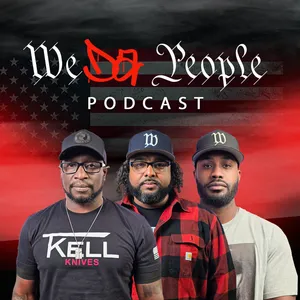
We Da People is more than a podcast — it's a platform for raw, unapologetic conversations at the intersection of culture, firearms, freedom, and real life. Hosted by everyday Americans with something to say and nothing to prove, this show brings you barbershop energy, tactical insights, and honest takes on everything from 2A rights to rap lyrics, training, current events, and community stories.
Latest Episodes
The most recent episodes — sign up to get AI-powered summaries of each one.
- 6 days ago1h 3m
Black Juror Holds Out in Lindsay Clancy Trial: Was He Right? What about Latarsha Sanders? | EP49
The Lindsay Clancy mistrial has become bigger than one courtroom. In this episode of We Da People, the crew debates the case, the lone holdout juror, postpartum psychosis, media framing, and a much harder question: does justice look different when money, resources, race, and public sympathy enter the picture? We break down the Lindsay Clancy trial from the perspective of criminal responsibility, not whether the deaths occurred. The conversation focuses on the insanity defense, the role of mental health records, access to expert witnesses, and why one juror refusing to join the majority became a national story. The crew also compares the attention around Clancy with the case of Latarsha Sanders, whose case raised its own questions about psychiatric evidence and equal treatment inside the justice system. From there, the discussion expands into media bias, the court of public opinion, online activism, and how headlines can shape what people believe before they ever examine the underlying facts. In this episode we cover: • Lindsay Clancy trial and mistrial • Postpartum psychosis and criminal responsibility • The lone Black juror and the 11–1 deadlock • Lindsay Clancy vs. Latarsha Sanders • Mental health defenses and psychiatric evidence • Money, expert witnesses, and access to legal resources • Media bias and the court of public opinion • Why reading beyond the headline matters Key takeaway: the crew argues that morality, evidence, and legal standards should matter more than identity, politics, or online consensus.
- 1 weeks ago1h 0m
How to Survive 2 Weeks Without Power | Blackout Prep Ep #48
A 72-hour emergency kit is a great starting point, but a long-term blackout changes everything. Water pressure can disappear, refrigeration becomes a problem, communication gets harder, fuel may become difficult to access, sanitation starts breaking down, and even basic routines become complicated. We break down practical blackout preparedness, power outage survival, two-week emergency preparedness, and what a realistic grid-down survival plan should prioritize. The crew discusses water collection and purification, portable power stations, solar generators, emergency radios, Starlink, food storage, sanitation, neighborhood communication, cash, emergency lighting, go bags, and why actually testing your survival gear matters. In this episode we cover: - Water storage, filtering, purification, and emergency collection - Portable power stations and solar generator setups - Emergency radios, communications, and Starlink - Refrigeration, food storage, and nonperishable food - Sanitation and waste during a prolonged blackout - Why your neighbors may become part of your emergency plan - Keeping cash and critical supplies accessible - Why camping can expose weaknesses in your preparedness - Testing your emergency equipment before you need it
- 3 weeks ago50 min
Gun Addiction: When the Hobby Starts Hurting Your Relationship | WDP #47
How many guns are too many—and when does a firearms hobby start costing you more than money? In this episode of We Da People, the crew gets into gun addiction, gun consumerism, relationship problems, and the line between enjoying the culture and letting it control your life. The conversation starts with a simple question: can buying guns, optics, gear, training, and range time become unhealthy? The crew breaks down what happens when firearm spending starts affecting bills, savings, family time, friendships, or your relationship. They also debate whether you should have to “ask permission” to go to the range, why communication matters, and how a partner may notice an unhealthy pattern before you do. From gun collecting and firearms and finances to toxic relationships, accountability, personal growth, and building something bigger than yourself, this episode goes well beyond gear. The message is simple: responsible gun ownership also means being responsible with your money, your time, and the people around you. In this episode we cover: - How many guns are too many - When a gun hobby becomes an addiction - Firearm spending versus bills and savings - Gun culture and relationship problems - Balancing range time with family time - Collecting guns versus actually using them - Accountability, toxic habits, and personal growth - Why creators should focus on adding value, not competing Key takeaway: If the hobby is damaging your finances, family, relationships, or day-to-day life, it is time to take inventory.
- Aug 18, 20261h 46m
Exigent Defense Owner on the Future of Suppressors and the NFA | EP46
Suppressors are changing fast, and the recent NFA developments could reshape how American gun owners buy, transfer, and think about them. In this episode of We Da People, we sit down with Evan from Exigent Defense to break down what’s happening with suppressor regulations, 4473 transfers, and the technology pushing modern suppressors forward. We get deep into 3D-printed suppressors, additive manufacturing, Inconel vs titanium suppressors, reduced back pressure designs, direct thread vs QD suppressors, flash suppression, heat management, barrel length, and why buying the “do everything” suppressor may not actually be the smartest move. The conversation also moves beyond equipment. We discuss representation in the firearms industry, how social media algorithms shape perceptions of gun culture, why the 2A community needs room for different types of gun owners, and why more people need to move from simply consuming firearms products to designing, manufacturing, and building businesses of their own. In this episode we cover: - NFA suppressor changes and 4473 transfers - What the current suppressor landscape means for gun owners - 3D-printed suppressors and additive manufacturing - Inconel vs titanium vs stainless suppressors - Low back pressure and reduced gas blowback - Direct thread vs QD suppressor mounts - Choosing a suppressor for your actual use case - Representation and diversity within the 2A community Key takeaway: There is no perfect suppressor for every rifle — understand your application before buying. Special thanks to SDI / Sonoran Desert Institute for supporting this episode: https://sdi.edu/we-da-people/
- Aug 11, 20261h 14m
Military to Civilian Life: The Transition Nobody Prepares You For | EP45
Life can change fast. Money dries up, relationships shift, careers end, identities get stripped away, and suddenly the version of yourself you depended on no longer works. In this episode of We Da People, Shelton and the crew sit down with retired Special Forces veterans Renford Ligon and Quojuante Moreland for a raw conversation about men navigating life transitions. They unpack what happens when military identity gives way to civilian life, when financial success disappears, when marriage or relationships change, and when pride makes it harder to ask for help. The conversation gets into military transition, veteran life after service, male friendship, brotherhood, ego and pride, financial setbacks, marriage, divorce, mental resilience, and rebuilding after failure. The guests also explain why leaving the military can feel isolating after years of living inside a high-performance team environment, and why the right circle of men can make the difference when life starts closing in. In this episode we cover: - Transitioning from Special Forces to civilian life - Losing money and rebuilding after financial setbacks - Why ego can stop men from asking for help - Brotherhood, loyalty, accountability, and real friendship - Marriage, divorce, relationships, and changing identity - Veteran mental health and adjusting after military service - Why comfort and complacency can stop personal growth - Knowing who is really with you when life changes
- Aug 3, 202658 min
Idaho Shooting Hero Jordan Salinas: Should Civilians Intervene? | EP44
A gunfight erupts in public. You are armed, your family is nearby, and every second matters. Do you move toward the threat, protect the people around you, or get out and call the police? The We Da People crew is joined by Quojuante Moreland and Renford Ligon, both retired Green Berets and former Special Forces, for a direct conversation about active shooter response, concealed carry, truck guns, and defensive gun use. They break down the In-N-Out shooting scenario discussed in the episode and ask where intervention ends and unnecessary risk begins. The conversation covers realities that shooting drills cannot fully recreate: incoming fire, crowded backdrops, crossfire, police arriving without complete information, and the possibility of being mistaken for the attacker. The crew also discusses truck guns, concealed carry, conflict avoidance, protecting your family, administering aid, and how a defensive decision may later look to a jury. The central question is not simply whether you can make the shot. It is whether taking that shot is necessary, responsible, and defensible. Follow the show and leave a rating if you’re enjoying it.
- Jul 27, 20261h 0m
The Dark Side of AI: Jobs, Privacy and Surveillance | We Da People Podcast EP43
Artificial intelligence is already changing how people work, communicate, create, shop, and consume information. But is it helping us think more clearly—or teaching us to stop thinking for ourselves? In this episode of We Da People, Shelton, Colin, and Fred explore the tension between AI’s benefits and its growing risks. They break down the difference between today’s large language models and true artificial general intelligence, then discuss why confident-sounding AI answers can still be wrong. The conversation expands into job displacement, automated customer service, self-driving transportation, AI-generated resumes, and the pressure workers may face to adapt. The crew also examines Flock cameras, phone tracking, medical data, and the larger question of what happens when governments, corporations, or individuals misuse powerful surveillance systems. They also challenge the role of social media algorithms in promoting rage, division, and conflict—especially inside the 2A community—while highlighting practical ways people can use AI for business, education, preparedness, and greater independence. The technology is not slowing down. The real challenge is learning how to benefit from it without giving up privacy, judgment, or human connection. Follow the show and leave a rating if you’re enjoying it. More links: https://wedapeople.deals/
- Jul 20, 20261h 4m
EDC Gun Belts vs Battle Belts: What You Actually Need | We Da People Podcast EP42
Your firearm is only the beginning of a dependable carry setup. In this episode of We Da People, Shelton, Colin, and Fred break down why the right EDC gun belt or battle belt can improve comfort, retention, consistency, and your draw—and why a regular department-store belt may be holding your entire setup back. The crew compares rigid concealed carry belts, ratcheting systems, Cobra buckles, inner-and-outer range belts, MOLLE mounting, and different ways to organize a practical loadout. They discuss their real-world experiences with Kore Essentials, Blue Alpha, Safariland retention holsters, magazine pouches, dump pouches, medical kits, leg straps, ride height, and the compromises between competition gear, survival gear, and everyday carry. This is not about copying somebody else’s belt. It is about building mission-specific gear around your body type, environment, training style, firearm, weapon light, optic, and budget. The crew also explains why testing your equipment through movement, weather, extended wear, and realistic training matters more than how tactical it looks online. Shop deals from We Da People affiliates and partners: https://wedapeople.deals/ Interested in turning your passion for firearms into a career? Learn more about Sonoran Desert Institute: https://sdi.edu/we-da-people/ Hidden Hybrid Holsters: https://alnk.to/g3eXeIs NeoMag https://alnk.to/gVOOR2W Safariland Holster: https://alnk.to/gp4rPWc
About We Da People Podcast
We Da People is more than a podcast — it's a platform for raw, unapologetic conversations at the intersection of culture, firearms, freedom, and real life. Hosted by everyday Americans with something to say and nothing to prove, this show brings you barbershop energy, tactical insights, and honest takes on everything from 2A rights to rap lyrics, training, current events, and community stories.
Customized Recaps
AI-powered recaps with compact key takeaways, quotes, and insights.
Straight to Your Inbox
Get key takeaways from We Da People Podcast in a 5-minute read.
Save Hours Every Week
Stay current on your favorite podcasts without falling behind.
Frequently Asked Questions
What is Podzilla's We Da People Podcast daily summary?
It's a free AI-powered email that summarizes new episodes of We Da People Podcast as soon as they're published. You get the key takeaways, notable quotes, and links & mentions — all in a quick read.
How does the We Da People Podcast podcast summary work?
When a new episode drops, our AI transcribes and analyzes it, then generates a personalized summary tailored to your interests and profession. It's delivered to your inbox every morning.
Is this an official We Da People Podcast product?
No. Podzilla is an independent service that summarizes publicly available podcast content. We're not affiliated with or endorsed by We Da People Network.
Can I get summaries of other podcasts too?
Absolutely! The free plan covers up to 3 podcasts. Upgrade to Pro for 15, or Premium for 50. Browse our full catalog at /podcasts.
How often does We Da People Podcast release new episodes?
We Da People Podcast publishes weekly. Our AI generates a summary within hours of each new episode.
What topics does We Da People Podcast cover?
We Da People Podcast covers topics including Leisure, Hobbies. Our AI identifies the specific themes in each episode and highlights what matters most to you.
Start getting We Da People Podcast summaries tomorrow morning.
Free forever for up to 3 podcasts. No credit card required.
Free forever for up to 3 podcasts. No credit card required.