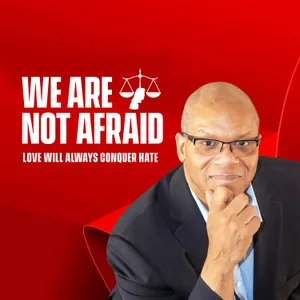
Free Daily Podcast Summary
We Are Not Afraid: Daily Summaries Delivered
by David McClam
Welcome to the podcast that uncovers the truth amidst a web of lies. Originally created to defend a friend from false accusations, we now face relentless harassment from a duo and their followers who aim to silence us and bury the facts. Here, you’ll witness the unfolding of a real true crime saga as I stand up for my friend and others. All the evidence will be made available on our Reddit for you to see. This is a rebuttal podcast like no other—because sometimes, standing up for what’s right is the only way to bring the truth to light.
Latest Episodes
The most recent episodes — sign up to get AI-powered summaries of each one.
- Today15 min
No Way Jose: My Family, My Record, My Response
In this episode of We Are Not Afraid Presents: For The Record With David McClam, David responds directly to questions sent to him by Javier Leiva concerning allegations involving David’s family, his sons, and events dating back many years.The accusations are serious, and David addresses them one by one.Among the claims raised are allegations of physical abuse, withholding food, domestic violence, and incidents involving David’s sons. David disputes several of those accounts and argues that allegations this serious should be examined through original records, complete context, prior statements, and the outcomes of investigations rather than through the most damaging version of events alone.David discusses a 2010 incident involving his son DaVonte and notes that the question sent to him itself acknowledges that the original child-cruelty and obstruction charges were dismissed, with the remaining disposition involving disturbing the peace. His position is that both the original allegations and the ultimate outcome belong in any fair account.He also addresses an earlier allegation involving a paddle, disputing both who was accused and the explanation attributed to him. David says he is attempting to obtain the underlying records because memories and competing accounts should not substitute for the original investigation.The episode also examines the claim that his children were deprived of food. David denies that accusation and points listeners to a previously published conversation with DaVonte in which his son discussed eating regularly at home, taking snacks, gaining a different perspective on his childhood, and expressing appreciation and love toward his father. David is careful to acknowledge that affection does not automatically disprove painful memories, but argues that those earlier statements are still part of the record and deserve consideration.David also corrects his own earlier characterization of that interview, acknowledging that an abuse allegation was in fact discussed during the conversation. He argues that if he expects precision from others, he must apply the same standard to himself.The episode does not avoid David’s own admissions. He acknowledges describing physical discipline and an angry confrontation with DaVonte, including grabbing him by the shoulders and striking him on the back of the head. David maintains that the circumstances surrounding those actions matter and that a physical description without context does not automatically establish the motive or meaning of an event.A significant portion of the episode concerns David’s younger son, Jacob, and a painful conflict between the brothers. David describes what he says was a serious incident involving DaVonte and Jacob, followed by a period in which the family feared for Jacob’s safety after a suicide attempt. He explains that this family history forms part of the context surrounding later angry communications between David and DaVonte.David also discusses a January 2026 Minnesota court order referencing DaVonte’s participation in Veterans Court, while emphasizing his broader concern that vulnerable people, family conflict, addiction, mental health struggles, and criminal allegations should not be turned into entertainment without careful verification and context.At the heart of the episode is David’s challenge to the way personal accusations are reported.He argues that sending questions is only the beginning of responsible journalism. What matters afterward is whether the answers are presented fairly, whether conflicting evidence is examined, whether outcomes are disclosed, and whether listeners are given enough information to evaluate the story for themselves.David acknowledges that he has made mistakes and that some of his own words deserve criticism. What he rejects is the idea that the harshest interpretation of every disputed event should automatically become the accepted version of his life or his relationship with his children.This episode is personal.It is uncomfortable.And it raises a question that sits at the center of For The Record:When the accusation is powerful, will the evidence receive equal attention?
- 2 weeks ago25 min
No Way Jose: Anthony, Your Own Lawyer Put It In Writing
For all of the recipes in the episode and others. Check and join our SubStackIf the information you are looking for is not there, check back as it will be coming soon!In this episode of We Are Not Afraid Presents: For The Record With David McClam, David examines the correspondence and court filings behind the Anthony Christopher case, focusing on what the attorneys actually wrote, when they wrote it, and how those documents compare with the version listeners have heard elsewhere.At the center of the episode are several specific questions:When was the theft of LaDonna Humphrey’s phone disclosed?Was there actually a November 8 deadline to surrender the phone?Did LaDonna refuse electronic examination altogether?And what did her attorney argue about the disputed evidence?The first key document is a November 13, 2018 email from LaDonna’s attorney, Tom Stockland, notifying opposing counsel that LaDonna’s car had been broken into and that her purse and phone had been stolen. Christopher’s attorney, Glenn Ritter, responded that same day and discussed the reported theft while requesting emergency court attention. David argues that this contemporaneous exchange is important because it establishes when the theft was disclosed and when opposing counsel acknowledged it.The episode then turns to the claim that the phone was stolen on the very evening LaDonna was supposedly required to turn it over to a third-party expert. David asks for the order, agreement, or appointment establishing that specific November 8 deadline. The records discussed in the episode instead show attorneys still negotiating expedited discovery afterward, with the judge’s office later stating that discovery would proceed “in due course.”Another major document comes from Christopher’s own attorney.On November 16, Ritter wrote that the parties had “agreed on the terms of Humphrey’s Gmail account search by Pivot.” The agreement set out search terms, dates, original email headers, IP information, account-registration data, and procedures for reviewing potentially private or privileged material. David argues that any blanket description of LaDonna refusing all electronic examination must account for this written agreement.The episode also examines LaDonna’s October 30 affidavit. David emphasizes the chronology: the affidavit describes deletion of employment emails tied to her September departure from the business, while the later preservation proceedings occurred afterward. His argument is that an earlier admission cannot automatically be treated as proof of a later violation without evidence establishing that later act.A restored page from Stockland’s trial brief adds another layer to the defense. The brief disputes attribution of spoofed messages, argues that receiving or forwarding a communication is not the same as originating it, and explains LaDonna’s reports to authorities regarding alleged business misconduct. David stresses that the brief is advocacy, not an independent finding, but argues that it remains an important contemporaneous record of what the defense was actually contesting.The phone and SIM evidence also receives closer scrutiny. David discusses the Benton County detective’s finding that there was no evidence of a false theft report after correcting a time-zone issue, while also acknowledging the later adverse civil findings. He reviews Stockland’s arguments about the replacement phone, SIM information, disputed interpretations of phone records, shared-password access, and the need to distinguish an expert conclusion from a full explanation of how competing evidence was evaluated.The episode does not ignore the outcome of the civil case.David acknowledges that the state court made serious findings against LaDonna, including contempt and spoliation, struck her pleadings, established liability, and later entered a damages judgment of approximately $3.57 million. His argument is narrower: those outcomes do not erase the underlying emails, agreements, and disputed chronology that preceded them.At the heart of this episode is a simple demand for precision.If there was a November 8 phone-handover deadline, produce the document.If LaDonna refused all electronic examination, explain the November 16 Gmail agreement.If the defense raised substantive objections at the time, address those objections directly rather than pretending they never existed.David’s position is that people can disagree about the case while still expecting dates, agreements, court records, and source documents to be presented accurately.Because a judgment answers some legal questions.It does not rewrite the pa
- 2 weeks ago19 min
No Way Jose: Who Did I Send It To?
For all of the recipes in the episode and others. Check and join our SubStackIf the information you are looking for is not there, check back as it will be coming soon!In this one we come to dispel yet another lie by Javier Leiva. In 2024 I sent an email to his then employer telling them why I could not and would not do business with him. Javier took off to his Facebook page and once again lied and stated LaDonna Humphrey actually wrote the email and my name was just on it. He also added that I tried to get him fired. Well folks as always, I brought receipts and what you hear will shock you!
- 2 weeks ago8 min
No Way Jose: The Voices Challenging Pretend
For all of the recipes in the episode and others. Check and join our SubStackIf the information you are looking for is not there, check back as it will be coming soon!In this episode of We Are Not Afraid Presents: For The Record With David McClam, David highlights two voices he believes deserve more attention in the ongoing conversation surrounding Javier Leiva, PRETEND, and accountability in true-crime media: Liam Bosonnet and CaseStudyz.David argues that when journalists and podcasters build their work around scrutinizing the conduct of others, their own reporting should remain open to the same level of examination. His criticism of PRETEND centers on what he describes as sensational framing, ridicule, disputed conclusions, and reporting choices that can continue affecting real people long after an episode ends.The episode begins with Liam Bosonnet, author of The Woman They Made a Monster, which examines the Dee Dee Blanchard case from a perspective that challenges the familiar public narrative. David praises Liam’s willingness to revisit a heavily debated case, engage with the available evidence, and put his reasoning before an audience willing to question established assumptions.David also recognizes CaseStudyz, whose YouTube coverage has contributed to the discussion surrounding Javier Leiva and PRETEND. He encourages listeners to examine the channel’s work, consider the evidence being presented, and judge the arguments for themselves.The larger theme is simple:Do not accept a narrative merely because it has been repeated often enough. Examine the sources. Examine the claims. Examine the receipts.David also discusses his petition calling for a boycott of PRETEND and an independent review of concerns raised about its reporting. The petition identifies twenty issues across multiple series, including factual mistakes, previously published corrections, unresolved questions, and disputed editorial framing.Importantly, David distinguishes between those categories. A confirmed factual error is not the same as an unresolved question. A disagreement over interpretation is not automatically proof of false reporting. And when PRETEND has issued corrections, David says those corrections should be acknowledged.His request is that the remaining concerns receive the same specific treatment:Identify the statement.Produce the supporting evidence.Explain the reasoning.Correct the record when necessary.David also openly discusses his relationship with LaDonna Humphrey, noting that she is his podcast colleague and that he supports her. He argues that listeners deserve to know that relationship while also being able to examine the evidence behind his criticism independently.The episode further addresses the human consequences of true-crime coverage. David argues that criticism of journalism is not simply about dates, technical mistakes, or wording. It is also about how subjects are portrayed, how ridicule is used, and what happens when media attention spills into someone’s professional and personal life.For David, investigative journalism carries an obligation:Accurate sourcing. Fair context. Transparent corrections. Meaningful accountability.Liam Bosonnet and CaseStudyz are highlighted in this episode because they are willing to participate in that broader conversation and put their own arguments before the public for examination.David encourages listeners to seek out their work, ask questions, compare sources, and keep the discussion centered on evidence.Because true-crime storytelling does not end when the episode does.The people being discussed still have to live with the story afterward.And they deserve an audience willing to look closely.
- 3 weeks ago21 min
No Way Jose: Javier will NEVER Talk to me
For all of the recipes in the episode and others. Check and join our SubStackIf the information you are looking for is not there, check back as it will be coming soon!In this episode I tell you why Javier will never talk to me about the case against Ladonna Humphrey or anything else that he has lied about. I introduce you to. Evil Ghost and his live stream where he exposes Javier for the liar that he is as he plays a panel that Javier sat on talking about his coverage of Gypsy Rose BlanchardEvil Ghost Live StreamMake sure to show Liam Some support!
- 3 weeks ago4 min
No Way Jose: NO WAY JOSE: Who’s Investigating the Investigator?
For all of the recipes in the episode and others. Check and join our SubStackIf the information you are looking for is not there, check back as it will be coming soon!In this episode of We Are Not Afraid Presents: For The Record With David McClam, David addresses information reported to him alleging that PRETEND host Javier Leiva is the subject of a federal cyberstalking investigation involving a Reddit profile that targeted a subject of his podcast.David makes an important distinction from the beginning: he has not independently confirmed an official finding against Javier Leiva, and an investigation is not proof of guilt.However, David says he intends to cooperate fully with investigators and provide the evidence in his possession.The allegation raises a much larger question about journalistic independence:What happens if a person reporting on accusations of harassment is also secretly participating in harassment against the very person he is covering?If evidence were to establish that a reporter operated or participated in an anonymous account targeting a subject, the implications could extend beyond the posts themselves. It could raise questions about whether apparent public reaction was truly independent, whether confrontations were being influenced behind the scenes, and whether resulting responses were later presented to an audience without disclosure of the reporter’s own involvement.The episode examines those questions through the principles of journalistic independence, transparency, accountability, and minimizing harm.David also discusses the potential legal distinction between offensive or anonymous online speech and conduct that could satisfy the elements of federal cyberstalking. An anonymous account, criticism, or hostility by itself does not establish a federal crime. Investigators would still have to establish the conduct, intent, and other required legal elements.But the ethical questions remain.If evidence ultimately connects Javier Leiva to the account in question, David argues that PRETEND’s audience deserves clear answers:What was posted?What was encouraged?What involvement existed?And what, if anything, was withheld from listeners?There is also an unavoidable contradiction at the center of the allegation. PRETEND has reported extensively on stalking and harassment, including through The Stalker. If evidence were to show that its own host engaged in similar conduct, the credibility questions would be significant.David’s position is simple:He will provide the evidence he possesses.He will cooperate with investigators.And he will allow the evidence to be examined.Because accountability cannot apply only to the people being investigated.The person holding the microphone does not get to place himself outside the standard of accountability he applies to everyone else.
- 3 weeks ago23 min
No Way Jose: The Lies Keep Rolling!!
For all of the recipes in the episode and others. Check and join our SubStackIf the information you are looking for is not there, check back as it will be coming soon!You would think people would learn, but apparently they do not.Once again, Javier “Lying” Leiva took to video to misrepresent the emails I sent to hosts of shows he had appeared on. Or, more specifically, to misrepresent who I sent them to.When someone is committed to a narrative, the easiest way to protect it is to distort the facts around it. Change the story, reshape the motive, and make the opposition look more sinister than the evidence actually supports.In my view, Leiva has relied on that kind of framing for years.But when it comes to me, I am not asking you to simply take my word for it.I am asking you to look at the evidence.I am asking you to read the receipts.Because narratives can be manipulated.Receipts cannot.
- 4 weeks ago30 min
No Way Jose: I Sent The Packets-Now Answer The Evidence
For all of the recipes in the episode and others. Check and join our SubStackIf the information you are looking for is not there, check back as it will be coming soon!In this episode of No Way, José, David McClam addresses Javier Leiva’s recent comments about the email packets sent to podcast hosts and other creators who have featured or endorsed his work.David makes one point unmistakably clear from the beginning:He sent the packets. He takes responsibility for the outreach. And any questions about those emails should be directed to him.The packets were sent to people whose audiences may rely on their recommendations, with a request that they independently review concerns involving PRETEND’s reporting and decide whether those concerns affect their own view of the work. David emphasizes that the material contains different categories of issues, including acknowledged corrections, disputed interpretations, editorial concerns, and unresolved questions that still require additional evidence.This episode walks through 60 separate points raised in the email packet, covering multiple PRETEND series and episodes. Among them are questions involving timelines, source attribution, legal terminology, forensic claims, corrections, transcript discrepancies, government records, electronic discovery, financial reporting, and the distinction between what evidence proves and what remains unresolved.The review also includes issues involving the LaDonna Humphrey series, including DHS and Medicaid fraud reporting, TLO access, private versus unlisted videos, disputed communications, phone and SIM evidence, spoofing and location evidence, Lake Hills financial records, and PRETEND’s published correction concerning Oasis revenue.David stresses that the goal is not to inflate every discrepancy into proof of dishonesty. The packet itself distinguishes confirmed mistakes from open questions and emphasizes the need to preserve those differences when evaluating the evidence.The episode also examines a separate revised packet involving the Anthony Christopher litigation. That material raises questions about the alleged phone-handover deadline, when opposing counsel learned about the reported theft, electronic discovery agreements, available sources of digital evidence, disputed forensic interpretations, and the chronology surrounding LaDonna’s affidavit. At the same time, the packet acknowledges the adverse court findings, including contempt, spoliation findings, rejection of the theft account, and the striking of LaDonna’s answer and counterclaim.At the center of the episode is a broader challenge:Address the evidence instead of assigning every criticism to LaDonna.David says that supporting LaDonna does not prove that she directed his actions, and he rejects the idea that his decision to contact other hosts should automatically be attributed to her. He also calls for specific evidence whenever terms such as “stalker” or “harassment” are used.David applies the same standard to his own work. If something in the packet is wrong, identify the specific item and produce the evidence that corrects it. If an unresolved question can now be answered, provide the documentation and allow the assessment to change accordingly.The message of this episode is simple:David sent the packets. David owns the outreach. Now address what is actually in them.Specific claims deserve specific answers.Specific evidence deserves examination.And if the evidence changes, the conclusions should change with it.Bring the evidence.
Get We Are Not Afraid summaries in your inbox
Free AI-powered daily recaps. Key takeaways, quotes, and mentions — in a 5-minute read.
Get Free Summaries →Free forever for up to 3 podcasts. No credit card required.
You Might Also Like
Listeners also like.
Nobody Should Believe Me
Andrea Dunlop examines Munchausen by Proxy abuse through expert interviews and case studies, revealing its psychological roots and lasting harm.

The Burden
A documentary series exploring corruption in law enforcement and the criminal justice system through real investigations and insider accounts.

Burden of Guilt
A mother's belief in her fiancé's innocence against abuse allegations tears her family apart amid custody battles and conflicting truths.

Betrayal Weekly
Real-life stories of broken trust and hidden lives, told through gripping firsthand accounts of deception and resilience.

Juicy Crimes with Heather McDonald
Examines famous crimes through a mix of humor and serious analysis with guests from legal, media, and entertainment fields.

True Sunlight
Journalists investigate true crime and systemic corruption, focusing on victims and accountability with rigorous, empathetic reporting.

PRETEND
Investigates real-life con artists and scams, exploring the psychology of deception and its impact on victims.

I Think Not!
Two best friends dissect true crime cases and the campy TV shows that cover them, blending humor and heartfelt reactions.

Law&Crime Sidebar
Daily legal news and true-crime stories analyzed in under twenty minutes.

The Survivor Files with Elizabeth Smart
Elizabeth Smart speaks with survivors of violent crimes about their experiences and paths to recovery.

Criminal
Stories about people who’ve done wrong, been wronged, or found themselves in morally complex situations.

The Bravo Docket
Two attorneys analyze sensational pop culture lawsuits, breaking down legal drama with expertise and humor.
About We Are Not Afraid
Welcome to the podcast that uncovers the truth amidst a web of lies. Originally created to defend a friend from false accusations, we now face relentless harassment from a duo and their followers who aim to silence us and bury the facts. Here, you’ll witness the unfolding of a real true crime saga as I stand up for my friend and others. All the evidence will be made available on our Reddit for you to see. This is a rebuttal podcast like no other—because sometimes, standing up for what’s right is the only way to bring the truth to light.
Customized Recaps
AI-powered recaps with compact key takeaways, quotes, and insights.
Straight to Your Inbox
Get key takeaways from We Are Not Afraid in a 5-minute read.
Save Hours Every Week
Stay current on your favorite podcasts without falling behind.
Frequently Asked Questions
What is Podzilla's We Are Not Afraid daily summary?
It's a free AI-powered email that summarizes new episodes of We Are Not Afraid as soon as they're published. You get the key takeaways, notable quotes, and links & mentions — all in a quick read.
How does the We Are Not Afraid podcast summary work?
When a new episode drops, our AI transcribes and analyzes it, then generates a personalized summary tailored to your interests and profession. It's delivered to your inbox every morning.
Is this an official We Are Not Afraid product?
No. Podzilla is an independent service that summarizes publicly available podcast content. We're not affiliated with or endorsed by David McClam.
Can I get summaries of other podcasts too?
Absolutely! The free plan covers up to 3 podcasts, any in the catalog. Basic raises that to 15, Pro to 40 and Max to 100. Browse our full catalog at /podcasts.
How often does We Are Not Afraid release new episodes?
We Are Not Afraid publishes biweekly. Our AI generates a summary within hours of each new episode.
What topics does We Are Not Afraid cover?
We Are Not Afraid covers topics including News, True Crime, Entertainment, Commentary. Our AI identifies the specific themes in each episode and highlights what matters most to you.
Start getting We Are Not Afraid summaries tomorrow morning.
Free forever for up to 3 podcasts. No credit card required.
Free forever for up to 3 podcasts. No credit card required.