Free Daily Podcast Summary
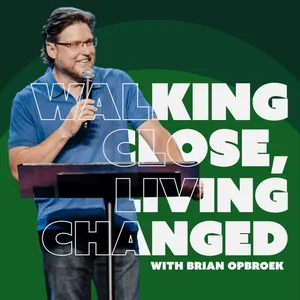
Walking Close, Living Changed: Daily Summaries Delivered
by Brian Opbroek
Real-life transformation begins with God's presence. This podcast invites you to walk closely with God and be changed from the inside out.
Latest Episodes
The most recent episodes — sign up to get AI-powered summaries of each one.
- 2 weeks ago28 min
Episode 29: Faith in God's Willingness (The Day Jesus Touched A Leper)
In this episode of Walking Close, Living Changed, Brian continues his series on "on-the-spot faith" by exploring the story of the leper who approached Jesus and said, "If you are willing, you can make me clean." Rather than questioning Jesus' ability to heal, the man questioned whether Jesus was willing to heal him. Through Jesus' immediate response—"I am willing. Be clean."—Brian explores the difference between humility and believing that we are somehow excluded from God's goodness. Jesus crosses cultural, religious, and social boundaries to touch and heal a man others considered unclean, revealing a God who is not reluctant to come near. The episode encourages listeners to stop focusing on their own unworthiness and instead place their faith in God's willingness to touch, heal, bless, save, and meet them in their need. Key Topics Discussed Faith in God's willingness The healing of the man with leprosy Jesus' compassion toward people considered unclean "If You are willing, You can make me clean" Believing God can versus believing God wants to God's willingness to come near Religious and cultural boundaries Jesus crossed Compassion versus indignation in the Gospel manuscripts Humility versus self-loathing Feeling unworthy of God's goodness Relevant Scriptures Mark 1:35–45 — Jesus prays early in the morning, tells His disciples that He intends to preach in nearby villages, and later encounters a man with leprosy who asks whether Jesus is willing to make him clean. Jesus touches and heals him, then instructs him not to spread the news. Matthew 8:1–4 — Matthew's account of Jesus cleansing a man with leprosy after the man expresses faith that Jesus can make him clean if He is willing. Luke 5:12–16 — Luke records Jesus reaching out and touching a man covered with leprosy, declaring His willingness to make him clean. Luke 5:1–11 — After the miraculous catch of fish, Peter recognizes his own sinfulness and tells Jesus to depart from him. Jesus instead calls Peter to follow Him and become a fisher of people. Matthew 6:9–10 — Jesus teaches His followers to pray for God's will to be done on earth as it is in heaven. John 10:10 — Jesus contrasts destruction with His purpose of bringing life in its fullness. 2 Peter 3:9 — Scripture describes God as patient, not wanting people to perish but desiring them to come to repentance.
- Aug 18, 202634 min
Episode 28: Blind Faith (Jesus Healed a Lot of Blindness)
In this episode of Walking Close, Living Changed, Brian explores the meaning of blind faith through several Gospel accounts of Jesus healing people who could not see. He contrasts blind faith with what he calls "blind doubt"—a refusal to believe even when evidence, miracles, or personal testimony are presented. Through the stories of Bartimaeus, the blind man at Bethsaida, and the man born blind in John 9, Brian identifies three characteristics of blind faith: it recognizes who Jesus is, remains honest about what has or has not happened, and stands firmly in its own testimony. The episode encourages listeners not to be ashamed of believing without seeing and to hold onto what they know God has done in their lives. Key Topics Discussed Blind faith versus blind doubt Walking by faith, not by sight Believing without physically seeing Jesus' healing of the blind Recognizing Jesus for who He is Persisting when others try to silence your faith Honest faith and incomplete healing Praying more than once for the same need Knowing and standing by your testimony Remaining unashamed of blind faith Relevant Scriptures 2 Corinthians 5:7 — Followers of Christ are called to walk by faith rather than depend only on what they can see. Hebrews 11:1 — Faith gives confidence in what is hoped for and conviction about what remains unseen. John 20:24–29 — Jesus meets Thomas in his doubt and calls those who believe without seeing blessed. Mark 16:9–14 — Jesus rebukes the disciples for refusing to believe the testimony of those who had seen Him alive. 1 Corinthians 15:3–8 — Paul records the eyewitnesses of the risen Jesus, including more than five hundred people at one time. Mark 10:46–52 — Bartimaeus recognizes Jesus as the Son of David, continues crying out despite the crowd, and receives his sight. Matthew 9:27–31 — Two blind men follow Jesus, call Him the Son of David, and receive their sight. Matthew 20:29–34 — Two blind men refuse to be silenced and continue asking Jesus for mercy until He heals them. Mark 8:22–26 — Jesus heals the blind man at Bethsaida in two stages while the man honestly reports what he can and cannot yet see. John 9:1–41 — Jesus heals a man who was blind from birth, and the man later stands firmly by his testimony despite opposition.
- Aug 11, 202632 min
Episode 27: Collective Faith (The Man Who Couldn't Get There on His Own)
In this episode of Walking Close, Living Changed, Brian explores the story of the paralyzed man whose friends carried him to Jesus in Luke 5. Unable to reach Him through the crowded house, they climbed onto the roof and lowered their friend down in front of Jesus. Brian focuses on the phrase, "When Jesus saw their faith," highlighting how the miracle was connected not only to one person's belief, but to the shared faith of the group. He reflects on the importance of friendship, spiritual community, and having people who can pray, believe, and stand with you through difficult seasons. The episode encourages listeners to remember that faith is not always meant to be carried alone. Key Topics Discussed Collective faith The healing of the paralyzed man "When Jesus saw their faith" The importance of friendship Jesus' authority to forgive sins Faith in the presence of naysayers Strength in spiritual community Agreeing together in prayer Unity among believers Walking through faith with others Relevant Scriptures Luke 5:17–26 — Jesus heals the paralyzed man after his friends lower him through the roof. Mark 2:1–12 — Mark's account of the paralyzed man being carried to Jesus by his friends. Matthew 18:19–20 — Jesus teaches about agreement in prayer and two or three gathering in His name. Acts 2:1 — The believers gather together in unity before the coming of the Holy Spirit. Nehemiah 4 — God's people work together to rebuild Jerusalem's walls despite opposition. Nehemiah 8:10 — "The joy of the Lord is your strength." Mark 6:1–6 — Jesus encounters unbelief in His hometown and performs only a few miracles there.
- Aug 4, 202630 min
Episode 26: The Faith of an Oxymoron (A Man Who Was "Kinda Sure")
In this episode of Walking Close, Living Changed, Brian continues his series on people who received immediate miracles from Jesus by examining the father who cried, "I do believe; help me overcome my unbelief." Through the story in Mark 9, Brian shows that Jesus can respond even when faith feels incomplete, conflicted, or "kinda sure." He challenges listeners to stop arguing, move beyond blame, confront the roots of long-standing problems, forgive where needed, and bring whatever faith they have directly to Jesus. The episode offers hope that struggling faith can still reach Christ—and that Jesus can bring lasting freedom, lift people to their feet, and help them begin a new walk. Key Topics Discussed The father who believed and doubted at the same time Jesus coming down from the Mount of Transfiguration Immediate miracles in Scripture The disciples' inability to cast out the spirit Why arguments do not produce miracles Bringing long-standing problems to Jesus When things get worse before they get better Taking responsibility instead of shifting blame Discovering the roots of destructive patterns Forgiveness as a path toward freedom Relevant Scriptures Mark 9:14–29 — Jesus delivers a boy after his father asks for help with his unbelief. Matthew 17:14–21 — Matthew's parallel account, including Jesus' teaching about mustard-seed faith. Luke 9:37–43 — Luke's account of Jesus healing the demon-possessed boy. 2 Timothy 2:23–26 — Paul warns Timothy against foolish arguments and calls for gentle instruction. Matthew 12:43–45 — Jesus teaches about an unclean spirit leaving and attempting to return. Mark 2:18–20 — Jesus explains why His disciples were not fasting while He was physically with them. Acts 13:2–3 — The early church worships, fasts, prays, and follows the Holy Spirit's direction. Acts 14:23 — Paul and Barnabas appoint elders with prayer and fasting. 2 Corinthians 5:17 — Anyone in Christ is a new creation.
- Jul 28, 202625 min
Episode 25: Faith that Breaks Boundaries (The Canaanite Woman)
In Episode 25 of Walking Close, Living Changed, Brian continues his series on people who received immediate miracles from Jesus by exploring the remarkable faith of the Canaanite woman in Matthew 15. Although she faced silence, rejection, cultural prejudice, and what appeared to be unanswered prayer, she refused to walk away. Brian explains why Jesus ultimately praised her faith—not because she had perfect circumstances, but because she believed God's mercy was greater than every obstacle standing in her way. The episode encourages listeners to reject the lie that God plays favorites and to approach Him with persistent, confident faith. Key Topics Discussed The faith of the Canaanite woman Immediate miracles in Scripture Matthew 15:21–28 Persistent faith Unanswered and delayed prayer God's impartiality Jesus and the Canaanite woman Cultural prejudice in the Gospels God's mercy for all people Faith despite silence Trusting God's character Pressing through discouragement Jesus welcomes everyone The persistence of a mother's faith Relevant Scriptures Matthew 15:21–28 — Jesus and the Canaanite woman Mark 7:24–30 — The Syrophoenician woman's account Romans 2:11 — God shows no favoritism. Acts 10:34–35 — God accepts people from every nation. Romans 8:28 — God works all things together for good. Isaiah 1:18 — "Come now, let us reason together." James 1:2–4 — Perseverance through trials.
- Jul 14, 202630 min
Episode 24: Faith that Amazed Jesus (The Centurion's)
In this episode of Walking Close, Living Changed, Brian continues his series on people who experienced immediate miracles through Jesus by examining the faith of the Roman centurion in Matthew 8 and Luke 7. Rather than focusing on a formula for receiving miracles, Brian explores the centurion's extraordinary understanding of authority and explains why Jesus declared that He had never seen such great faith in all of Israel. Listeners are encouraged to take responsibility for their faith, trust Christ's authority, and believe that when Jesus speaks, His word is enough. Key Topics Discussed The faith of the Roman centurion Immediate miracles in Scripture Matthew 8 and Luke 7 Faith that amazed Jesus Jesus' authority over sickness Speaking the Word Biblical authority Submission and obedience Responsibility of personal faith Mustard seed faith Asking God without wavering James on faith Jesus as the Word Trusting God's authority Receiving miracles through faith Relevant Scriptures Matthew 8:5–13 — Jesus heals the centurion's servant. Luke 7:1–10 — Luke's account of the centurion's faith. Romans 12:3 — God gives each believer a measure of faith. Matthew 17:20 — Faith as small as a mustard seed. James 1:5–8 — Asking in faith without doubting. John 1:1–14 — Jesus as the Word made flesh. Colossians 1:15–20 — Christ's supreme authority over creation.
- Jul 7, 202632 min
Episode 23: Jairus' Walk from Faith to Fulfillment
In Episode 23 of Walking Close, Living Changed, Brian begins a new series exploring great faith moments in the New Testament. Using the story of Jairus from Mark 5, he examines the journey between believing God for a miracle and actually seeing that miracle fulfilled. Rather than focusing only on the miracle itself, Brian identifies five distinct stages Jairus experienced—from making the first move toward Jesus, through delay and disappointment, to ultimately witnessing God's power. The episode encourages listeners to recognize that while every faith journey is unique, God often uses seasons of waiting, worsening circumstances, and surrender to prepare us for His perfect work. Key Topics Discussed Jairus' walk from faith to fulfillment Faith that takes the first step The five stages between faith and miracle Waiting while others receive their miracle Delays are not denial Circumstances getting worse before breakthrough Trusting God during interruptions Allowing God to sort relationships and circumstances God's purpose after the miracle Faith demonstrated through action Jesus raising Jairus' daughter God's unique patterns of answering prayer Relationship over miracles Trusting God's timing Relevant Scriptures Mark 5:22–43 — Jairus asks Jesus to heal his daughter, and Jesus raises her from the dead. James 4:8 — "Draw near to God, and He will draw near to you." Hebrews 11 — The faith of those who trusted God throughout history. Acts 14 — Paul recognizes the lame man's faith to be healed. Romans 12:15 — "Rejoice with those who rejoice; mourn with those who mourn." James 5 — The perseverance and faith of Job. Matthew 13:24–30 — The parable of the wheat and the tares.
- Jun 30, 202629 min
Episode 22: Don't Worry About What You Don't Have
In this episode of Walking Close, Living Changed, Brian continues building on last week's message about trusting God for our daily bread by exploring why we spend so much time worrying about what we don't have. Through the story of Peter and John healing the lame man at the temple gate, Brian encourages listeners to stop focusing on what is missing and instead trust that God knows what they truly need. He explains that our greatest limitations often become the very places where God performs His greatest miracles. Key Topics Discussed Worrying about what we don't have Trusting God's daily provision Contentment and gratitude Imposter syndrome Focusing on God-given strengths Peter and John healing the lame man Acts 3 and the Beautiful Gate God's provision beyond our requests Miracles through seasons of lack The purpose of unanswered prayers The story of the Prodigal Son God's timing and His greater plan Faith over fear Trusting God's wisdom Relevant Scriptures Matthew 6:11 — "Give us this day our daily bread." Acts 3:1–10 — Peter and John heal the lame beggar at the Beautiful Gate. Luke 15:11–32 — The Parable of the Prodigal Son. Matthew 6:25–34 — Do not worry about tomorrow. Romans 8:28 — God works all things together for good. Philippians 4:19 — God supplies every need according to His riches. 2 Corinthians 12:9 — God's strength is made perfect in weakness.
About Walking Close, Living Changed
Real-life transformation begins with God's presence. This podcast invites you to walk closely with God and be changed from the inside out.
Customized Recaps
AI-powered recaps with compact key takeaways, quotes, and insights.
Straight to Your Inbox
Get key takeaways from Walking Close, Living Changed in a 5-minute read.
Save Hours Every Week
Stay current on your favorite podcasts without falling behind.
Frequently Asked Questions
What is Podzilla's Walking Close, Living Changed daily summary?
It's a free AI-powered email that summarizes new episodes of Walking Close, Living Changed as soon as they're published. You get the key takeaways, notable quotes, and links & mentions — all in a quick read.
How does the Walking Close, Living Changed podcast summary work?
When a new episode drops, our AI transcribes and analyzes it, then generates a personalized summary tailored to your interests and profession. It's delivered to your inbox every morning.
Is this an official Walking Close, Living Changed product?
No. Podzilla is an independent service that summarizes publicly available podcast content. We're not affiliated with or endorsed by Brian Opbroek.
Can I get summaries of other podcasts too?
Absolutely! The free plan covers up to 3 podcasts. Upgrade to Pro for 15, or Premium for 50. Browse our full catalog at /podcasts.
How often does Walking Close, Living Changed release new episodes?
Walking Close, Living Changed publishes weekly. Our AI generates a summary within hours of each new episode.
What topics does Walking Close, Living Changed cover?
Walking Close, Living Changed covers topics including Religion & Spirituality, Spirituality, Christianity. Our AI identifies the specific themes in each episode and highlights what matters most to you.
Start getting Walking Close, Living Changed summaries tomorrow morning.
Free forever for up to 3 podcasts. No credit card required.
Free forever for up to 3 podcasts. No credit card required.