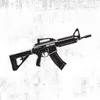
Europe's NATO members have pledged 3.5% of GDP to rearmament. The political argument is already about which social programmes will be sacrificed to pay for this, when the government chooses guns instead of butter. What does history tell us about what politicians will do?Christoph Trebesch and Johannes Marzian spent four years assembling the Global Budget Database: 150 years of primary government budget documents from 20 countries, with 116 identified military spending booms in peace and war. They find that governments almost never cut social spending when they rearm; they expand both military and welfare budgets simultaneously. The bill arrives later, as higher taxes. Top income rates typically rise by 10 to 15 percentage points in the decade following a military boom, funded mainly through broad-based income and value-added taxes. With rearmament underway, will history repeat itself?The research behind this episode:Marzian, Johannes, and Christoph Trebesch. 2026. "Guns and Butter: The Fiscal Consequences of Rearmament and War." CEPR Discussion Paper 21193. [Gated]To cite this episode:Phillips, Tim, and Christoph Trebesch. 2026. "Guns and Butter." VoxTalks Economics (podcast). Assign this as extra listening. The citation above is formatted and ready for a reading list or VLE.About the guestChristoph Trebesch is Director of the Research Center on International Finance at the Kiel Institute for the World Economy and Professor of Macroeconomics at Kiel University. His research spans sovereign debt, financial crises, China's role in global finance, the economics of populism, and the long-run fiscal history of military spending. He is a Research Fellow of the Centre for Economic Policy Research (CEPR). In 2024 he received the Hermann Heinrich Gossen Award, Germany's leading economics prize for economists under 45.Research cited in this episodeThe Global Budget Database is the primary dataset introduced in this paper. Marzian and Trebesch constructed it from primary archival sources, including national parliamentary budget documents, for 20 countries from 1870 to 2022. Unlike existing datasets that rely on planned rather than realised expenditures, it records what governments actually spent, broken down by ministry and purpose. The Switzerland case illustrates the stakes: standard sources record Swiss military spending at around 2% of GDP during the World Wars. The archival record shows actual spending reached 10% once off-budget items are included; five times the apparent figure.The Correlates of War (COW) Military Expenditures Dataset is one of the most widely used secondary-source datasets for historical military spending, maintained by the Correlates of War Project. Trebesch uses the Swiss case to illustrate the limitations of secondary-source data: the COW series misses off-budget military items that primary archival documents capture, producing a significantly distorted picture of wartime mobilisation in a number of countries.Credit booms methodology provided the template for identifying military spending booms. Trebesch and Marzian define a boom as an increase of at least 6.5 percentage points of military spending as a share of GDP over two consecutive years, ending when spending growth falls to zero. This approach, adapted from the literature on financial credit expansions and their economic consequences, allows systematic cross-country and cross-period identification without relying on retrospective classification alone. Each algorithmically flagged episode was then verified against historical sources.Local projections are the main statistical technique used to trace the long-run fiscal path following military booms. The method estimates how a variable (here, tax revenues and top income rates) evolves over time following an identified shock. It is well suited to the protracted dynamics Trebesch and Marzian observe: tax rates rising over a decade or more after a military buildup and, critically, not returning to pre-boom levels once the spending episode ends.Exogenous military shocks are the basis of the paper's causal identification strategy. To separate the fiscal effects of military spending from broader economic conditions, the authors distinguish episodes triggered by external geopolitical events from those driven by domestic factors. France's rearmament in the mid-1930s, forced by Nazi Germany's military expansion regardless of French domestic politics, is used as an example of an exogenous peacetime boom. Germany's own rearmament in the same period would not qualify as exogenous, since Germany
Podzilla Summary coming soon
Sign up to get notified when the full AI-powered summary is ready.
Free forever for up to 3 podcasts. No credit card required.
Listen to This Episode




Get summaries like this every morning.
Free AI-powered recaps of VoxTalks Economics and your other favorite podcasts, delivered to your inbox.
Free forever for up to 3 podcasts. No credit card required.