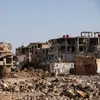
S7 Ep59: What drives civil war in poor countries?
There are more wars now than at any time since 1946. Most are civil wars, and they cluster in poor countries, in places where the surveys stop and researchers rarely go. So how do you find out what starts a war, or what it leaves behind?Oeindrila Dube (University of Chicago) and Michael Callen (LSE) tell Tim Phillips about how the answers to questions such as do richer countries fight less need careful measurement, because the answer might depend on who exactly is getting the money. The good news: we have many new ways to collect the data we need to make better policy decisions. The research behind this episode:Dube, Oeindrila, and Michael Callen. 2026. "Conflict and Fragility." Lecture 8, BREAD-IGC virtual PhD-level course on political economy, 27 October 2026. Lectures: "Economic Shocks and Conflict: What Better Data Let Us See" (Dube) and "Fragility, Conflict, and State Building" (Callen).Dube, Oeindrila, and Juan F. Vargas. 2013. "Commodity Price Shocks and Civil Conflict: Evidence from Colombia." Review of Economic Studies 80 (4): 1384-1421.Blumenstock, Joshua E., Michael Callen, Anastasiia Faikina, Stefano Fiorin, and Tarek Ghani. 2023. "Strengthening Fragile States: Evidence from Mobile Salary Payments in Afghanistan." CEPR Discussion Paper 18254. Centre for Economic Policy Research (gated).Bhusal, Bhishma, Michael Callen, Rohini Pande, Soledad Artiz Prillaman, Deepak Singhania, and Apurva Subedi. 2026. "From People's War to People's Rule: Rebel Governance and the Foundations of Inclusive Democracy." NBER Working Paper 35241.Dube, Oeindrila, Joshua Blumenstock, and Michael Callen. Forthcoming. "Measuring Religion from Behavior: Violence, Climate Shocks and Religious Adherence in Afghanistan." Journal of Political Economy.To cite this episode:Phillips, Tim, Oeindrila Dube, and Michael Callen. 2026. "What drives civil war in poor countries?" VoxDev Talks (podcast). About the guestsOeindrila Dube is the Philip K. Pearson Professor of Global Conflict Studies at the University of Chicago Harris School of Public Policy. Her research spans the causes and consequences of conflict, crime and violence, from commodity price shocks and civil war in Colombia to post-conflict reconciliation in Sierra Leone and religious extremism. She co-chairs the Crime, Violence, and Conflict sector at J-PAL and is a co-editor of the Journal of Development Economics.Michael Callen is an Associate Professor of Economics at the London School of Economics and a research programme director for the State programme at the International Growth Centre. His research spans political economy, development and behavioural economics, using field experiments to tackle failures of accountability and service delivery in the public sector, mainly in Afghanistan, Nepal and Pakistan. He serves on the editorial board of VoxDev.Research cited in this episodeUppsala Conflict Data Program (UCDP). The dataset most conflict researchers use. In 2025 it recorded 65 state-based conflicts, the highest number since its records begin in 1946. A state-based conflict has a government on at least one side; eight of the 65 were fought between states, and the rest were inside them.OECD, States of Fragility 2025. The OECD rates 177 countries and territories on 56 indicators of risk and resilience. The 2025 report finds 61 contexts with high or extreme fragility. They hold 25% of the world's population but 72% of its extreme poor, a share the OECD projects could reach 92% by 2040. Callen cites the 18 rated extremely fragile, including Afghanistan, Sudan and the Democratic Republic of the Congo.The research gap. Callen estimates that less than 1% of the trials in the AEA registry of randomised controlled trials take place in the 18 extremely fragile countries, and less than half a percent of articles in the top five economics journals study them. His point is the mismatch; that is where a large share of the world's poorest people live.<
Podzilla Summary coming soon
Sign up to get notified when the full AI-powered summary is ready.
Free forever for up to 3 podcasts. No credit card required.
Listen to This Episode
More from VoxDev Development Economics

S7 Ep58: Who enters politics?

S7 Ep57: Skipping the factory

S7 Ep56: Why democracy alone does not build effective states
Ideas in Development: Ken Opalo on the research Africa needs
Get summaries like this every morning.
Free AI-powered recaps of VoxDev Development Economics and your other favorite podcasts, delivered to your inbox.
Free forever for up to 3 podcasts. No credit card required.