Free Daily Podcast Summary
Voices of Country Legends: Daily Summaries Delivered
by Frank Gerard
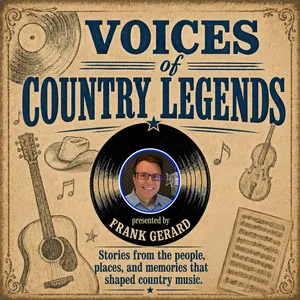
Country music has always been built on stories: songs about heartbreak, faith, family, hard work, loss, love, and real life. Voices of Country Legends is an interview-based podcast preserving the stories behind country music’s most enduring artists, songs, and memories. Hosted by Frank Gerard, the series features conversations with country artists, musicians, songwriters, family members, historians, authors, and others connected to the people and moments that helped shape the music. Frank brings a broadcaster’s voice, a publisher’s sense of history, a narrator’s ear, and a lifelong love of country music to every conversation. His audiobook narration work includes books about Randy Travis, Faron Young, Marty Robbins, and Jim Reeves, giving him a deep appreciation for the lives, careers, and legacies behind the music. This is not a podcast about chasing trends or retelling the same old stories. It is about listening carefully, asking thoughtful questions, and preserving firsthand memories while they can still be shared. Whether you grew up with this music or are discovering it now, Voices of Country Legends brings you closer to the people, songs, and stories that made country music last.
Latest Episodes
The most recent episodes — sign up to get AI-powered summaries of each one.
- 3 days ago26 min
John Berry on “Your Love Amazes Me” and the Christmas Session His Wife Saved
John Berry and his wife, Robin, were driving home to Athens, Georgia, listening to songwriter demos when “Your Love Amazes Me” came on. John wanted to record it. One problem. Tanya Tucker had first dibs, and she’d go on to record it herself. So how did it become John’s No. 1 hit? As he tells Frank Gerard, the answer starts with a guitar player who slipped his headphones off one ear during Tanya’s session.A Joe Diffie song and 250 invitationsJohn had already made six independent records, and he and Robin had a farm outside Athens. Driving home from a club one night, he heard Joe Diffie’s “Ships That Don’t Come In” on the radio. He drove the rest of the way in tears. When he got home, he woke Robin and told her he wanted to give Nashville a shot. Together they decided to give it a year.They sent 250 invitations to a showcase at Douglas Corner. Exactly one person on that list showed up. His name was Herky Williams, and he worked for Jimmy Bowen at Capitol Nashville. John also remembers songwriter Chuck Jones, who had a hand in five songs on his major-label debut. Looking back, John figures they missed a chance to form a duo. They could have called it Chuck Berry.The Christmas session Robin kept on the calendarJohn and Robin were newlyweds when their pastor asked them to sing at church for Christmas in 1988. Over the years, their band joined in, then strings and a choir. One day, producer Chuck Howard spotted the couple in a corner of the studio working on their church set list. He suggested recording a couple of those songs. They booked a day in June.Then John needed emergency brain surgery. Chuck called Robin and offered to cancel. She thought John could use the distraction and told him to keep the date. John remembers standing in front of a microphone just weeks after surgery to sing “O Holy Night.” Capitol sent the recording to radio stations as a Christmas thank-you. Nobody was asking a DJ to find room for a five-and-a-half-minute song. Then somebody played it. The Christmas tour that grew out of those church shows reached its 30th year in 2026.A guitar, a gospel song, and a voice that sounded like hisAt the 1995 CMA Awards, John sang “If I Had Any Pride Left at All” with just his guitar. He remembers how exposed he felt. Ask him today for his favorite live performance, and that’s the one he picks. He also shares what two years on the road with Reba McEntire taught him about treating people well while keeping all those buses and trucks moving.While John was recovering from throat cancer, his manager sent him a song called “Find My Joy.” John took one look at the title and deleted the email. He was taking meals through a feeding tube, and joy was the last thing he wanted to hear about. He tells Frank what he heard when he finally listened, and why he gave his gospel album that very title.Music and moreWatch John sing “Your Love Amazes Me”Listen to “O Holy Night”John Berry’s music and tour datesVoices of Country Legends is hosted by Frank Gerard and created in connection with the Legends of Country Music Museum in Nashville. Follow the podcast and hear more conversations.
- 6 days ago38 min
Bill Anderson: “City Lights,” 65 Years at the Opry, and Life as Pawpaw
In 1988, Frank Gerard won the grand prize on Bill Anderson’s television game show, Fandango. Thirty-eight years later, the tables turn as “Whisperin’ Bill” joins Frank on Voices of Country Legends to share the music, memories, humor, and family stories behind his remarkable career.The Country Music Hall of Fame member takes us back to his first audience: his mother, who listened while he played guitar perched on her washing machine. Her request? Fast songs, so she could get the housework done. Bill also remembers the radio station above his father’s insurance office, where he watched announcers and musicians at work, and the gift his father gave him that shaped both his career and his own approach to parenting: the freedom to be himself.From a Georgia rooftop to “City Lights”Bill recalls writing “City Lights” while looking out over Commerce, Georgia, a town with considerably fewer lights than the song might suggest. He traces its journey from his own recording to Ray Price, including the role Ernest Tubb played in urging Price to record it. Was Ray convinced by the song, or did he just want Ernest to stop asking? Bill offers his own amused take.The phone call that changed everythingWhile watching baseball’s All-Star Game, Bill nearly ignored a ringing telephone. On the other end was an invitation to join the Grand Ole Opry. He remembers becoming part of the Opry family, his friendship with Roy Acuff, and why he makes a point of welcoming newcomers today. There’s also an admission about another attraction at Opry membership celebrations: the cake.Later, Bill recalls telling his parents he had been elected to the Country Music Hall of Fame, a conversation filled with emotion and an unexpected question from his mother.Vince Gill, “Whiskey Lullaby,” and finding his way backAfter years of writing songs on his own, Bill wasn’t sure where he fit into Nashville’s changing songwriting world. A hairstylist kept encouraging him to call Vince Gill, but he carried the number around without using it. When he finally called, Vince’s answering-machine greeting gave him a surprise he still laughs about.Bill explains how their friendship and collaboration helped open a new chapter in his career. He also takes us inside “Whiskey Lullaby,” recalling the challenge of moving the story forward after its devastating first verse and the creative decision that made the second verse work.The man his family calls PawpawBill speaks candidly about turning to faith, friends, music, and his fans after his wife’s devastating automobile accident. He remembers the grandfather who made him feel loved and wanted, and describes trying to pass that feeling along to his own family.He shares his granddaughter Hallie’s interest in songwriting and the music business, explaining why he wants to help her understand the profession while letting her earn her own way. And he tells a particularly personal story about attending another granddaughter’s school play on a cold, rainy night, because he wanted her to remember that Pawpaw showed up.We also revisit a memorable Fandango blooper, hear about a planned duet project, and wrap up with “Legendary Favorites,” from his mother’s meatloaf and lemon icebox pie to the quiet pleasures of watching birds, reading a newspaper, and spending a day at home.Bill’s music, books, and newsletter: BillAnderson.comMore conversations with country music’s legends: VoicesOfCountryLegends.comHosted by Frank Gerard.Follow or subscribe, and share this episode with a fellow country music fan.
- 1 weeks ago23 min
Kenyon Lockry: Life with Mel Tillis, Little Jimmy Dickens, and Country Roots
What happens when Mel Tillis hears your demo, invites you to live at his farm, and starts introducing you around Nashville? For singer-songwriter Kenyon Lockry, it meant an education in country music, showmanship, and life. It also meant learning the hard way which soap belongs in a dishwasher.Kenyon joins Frank Gerard on Voices of Country Legends for a visit filled with personal memories of Mel, encounters with Little Jimmy Dickens and Pam Tillis, and the music he's making in his own voice today.Raised around cattle and citrus in Central Florida, Kenyon started out playing rock music. Then his grandfather introduced him to Hank Williams, George Jones, Merle Haggard, Willie Nelson, and Johnny Cash. Before long, the young musician who had been playing Nirvana and Stone Temple Pilots was starting a country band.A five-song Nashville demo eventually reached Mel Tillis through Kenyon's great-uncle. Kenyon remembers meeting Mel just one day before he planned to move to Nashville on his own. Mel had another idea: wait a little, stay at his farm in Ashland City, and let him make the introductions.What followed went far beyond a business relationship. Kenyon recalls Mel's cooking, his kindness to fans, his insistence on wearing suits onstage, and the lessons behind treating an audience with respect. He also shares a kitchen disaster in Branson and an embarrassing evening at a Mexican restaurant where Barbara Mandrell happened to walk past their table.In this episode:Little Jimmy Dickens: How a question about Ernest Tubb helped start a conversation Kenyon still treasures, and what it meant to talk country history with someone who had known Hank Williams.Finding his own direction: Why Kenyon asked Mel for more creative freedom, how Mel responded, and the making of It's About That Time.Honky Tonk Noir: How a love of old black-and-white crime movies helped Kenyon turn a collection of songs into a concept album with a storyline.Family Man: Recording with his wife, Jenni, and capturing their children's early years in songs he sees as a family time capsule.Further Than California: The request from Jenni that inspired a prettier, George Strait-style record, the grandfather behind the title track's lyrics, and why that is the song Kenyon would choose to play for Mel today.Our Legendary Favorites round covers Hank Williams, Mel's home cooking, Key lime pie, Casablanca, and the song Kenyon recommends for someone hearing him for the first time. There's even a breakfast comparison that finds Frank and Kenyon on surprisingly familiar ground.Listen and connect:Further Than CaliforniaIt's About That TimeFamily ManKenyon on FacebookMore episodes of Voices of Country LegendsVoices of Country Legends is hosted by Frank Gerard and created in connection with the Legends of Country Music Museum in Nashville.Enjoyed this visit? Follow the podcast, leave a review, and share this episode with a friend who loves classic country music and the stories behind it.
- 1 weeks ago30 min
Bobby Tomberlin: The Stories Behind a Life in Country Music
Bobby Tomberlin once sat in his bedroom pretending to be a radio announcer, surrounded by records. Before long, he was behind a real microphone in Luverne, Alabama, playing those records and calling country stars’ offices to ask for interviews.That childhood fascination became a career writing songs and building friendships with many of the people whose music first inspired him.In this episode of Voices of Country Legends, Bobby joins Frank Gerard for a conversation about small-town radio, finding his way to Nashville, and the moments behind songs that have helped listeners through some of the hardest days of their lives.Bobby takes us back to an emotional holiday season when the beginnings of “One More Day” came to him while thinking about people he had lost. He brought the idea to longtime friend and co-writer Steven Dale Jones, and together they finished the song that became a number-one hit for Diamond Rio.He also shares what it means to hear from people who have turned to the song after a loss, including a woman who approached him after a performance, asked for a hug, and cried without needing to explain why.Bobby remembers the excitement of signing his first publishing contract with Mel Tillis and the practical reality of working nights at a grocery store while writing songs during the day. His customers sometimes included the very stars he hoped would record his music.At Mel’s publishing company, country legends could turn up in the lobby, and a newly recorded “Boot Scootin’ Boogie” could be heard upstairs before the rest of the world knew it. Through it all, Mel offered advice Bobby still shares with young writers: “Be a good hang.”A job running sound for Bill Anderson brought Bobby onto the road and into the company of artists including Ray Price, Kitty Wells, and Porter Wagoner. Their friendship grew into a lasting songwriting partnership.Bobby explains how a difficult writing session with Bill and Ryan Larkins changed direction when Ryan said, “Someday it’ll all make sense.” That simple thought became their song.Then came another unexpected turn: Dolly Parton heard it while sitting in hairstylist Cheryl Riddle’s chair. Bobby tells how a suggestion that Dolly add harmony became a full duet with Bill, a music video, and a Grammy nomination.Bobby recalls the invitation to sing a Conway Twitty and Loretta Lynn duet with Loretta at her ranch, a full-circle moment for someone who had watched the pair perform as a boy.He also talks about writing “Here Lately” with Sylvia, his book I’ve Lived Country Music, collaborations involving Buddy Cannon and Willie Nelson, and the young artists arriving in Nashville with a deep knowledge of Gene Watson, Moe Bandy, and traditional country music.Our Legendary Favorites questions bring out stories about Little Jimmy Dickens, favorite voices, Alabama fried chicken, and two treasured possessions: the family Gibson guitar he learned on and the little AM radio that introduced him to country legends.LinksBobby Tomberlin’s music and book: https://www.bobbytomberlinmusic.comLegends of Country Music Museum: https://www.legendsofcountrymusic.comMore episodes of Voices of Country Legends: https://www.voicesofcountrylegends.comHosted by Frank Gerard and created in connection with the Legends of Country Music Museum in Nashville, Tennessee.Follow or subscribe, and share this visit with a friend who loves country music.
- 2 weeks ago33 min
Johnny Owens Remembers Buck Owens, Merle Haggard, and the Boy Under the Pool Table
When Buck Owens and the Buckaroos rehearsed in the garage at the family ranch, Johnny Owens knew where to hide. There was an old pool table by the door with half the felt worn off. He’d slip underneath and listen. First came the acoustic guitars as the men worked out a song. Then Doyle Holly would come in on bass, Tom Brumley on steel, and Don Rich would pick up his electric guitar. From his spot on the concrete floor, Johnny could hear the whole thing come together. Every once in a while, somebody caught him and told him to get out.Buck’s youngest son joins Frank Gerard on Voices of Country Legends to talk about growing up in Bakersfield, why he never sang with his father, and what finally gave him the nerve to sing those songs himself. He also shares the story behind his November 6 release of “Santa Looked a Lot Like Daddy,” one of Frank’s favorite Buck Owens records.What was Buck like as a dad? Johnny remembers how tired his father was when he came home from the road. For the first couple of days, the kids barely saw him. Then he’d come outside and toss a football with them. Johnny remembers painting ranch fences at eight to earn money for tennis shoes that didn’t have duct tape on them. And he remembers his mother’s rule about television. If the kids wanted to see the Disney movie on Sunday night, they had to sit with her through The Lawrence Welk Show and Hee Haw.Over at Marty Haggard’s house, Johnny got to watch Merle Haggard and the Strangers rehearse, too. He also got to know the Merle who’d walk into the kitchen, see the boys eating sandwiches and want to know why they hadn’t made him one. Johnny and Marty have been friends since they were teenagers. Years later, they shared a stage in Coeur d’Alene, Idaho, singing the music they grew up hearing from the next room.Johnny speaks candidly about what losing Don Rich meant to Buck. The two talked every day, whether they were on tour or home in Bakersfield. Years later, when Dwight Yoakam asked Buck to sing “Streets of Bakersfield” with him, Johnny saw some of the spark come back. He also tells a story about Don’s sense of humor involving “Act Naturally,” a set of Beatles wigs and a bass player who threw his wig on the stage and declared it alive.For all those years around musicians, Johnny was once so nervous about giving a high school speech that he remembers shaking all the way to the front of the classroom. It took three friends in a garage band to get him singing after his dad was gone. Today, with Johnny Owens and the Bakersfield Sound, he knows exactly what he wants the audience to hear. Turn up the Telecaster, let the fiddle sound like a fiddle, and make sure the folks out front can hear the band as clearly as the singer.Johnny talks about recording “Act Naturally” and “Together Again,” and how he found his own way into “Santa Looked a Lot Like Daddy,” somewhere between Buck’s original and Brad Paisley’s rocked-up version. He also shares his favorite part of a show. Once the music’s over, he goes out front, and the audience gets to tell him stories. One fan remembered seeing Buck on a Friday night, then driving a hundred miles on Saturday to see Merle.Voices of Country Legends is hosted by Frank Gerard and created in connection with the Legends of Country Music Museum in Nashville.Johnny’s music and shows: JohnnyOwensMusic.com More episodes: VoicesOfCountryLegends.com
- 2 weeks ago48 min
Deborah Allen: “Baby I Lied,” Jim Reeves, Prince, and a Life in Song
A childhood adventure aboard Elvis Presley’s tour bus. Hit duets with a singer who had died years earlier. A letter to Prince that brought an extraordinary reply. Deborah Allen joins Frank Gerard for the stories behind a career that connects country, pop, soul, and gospel.Known for “Baby I Lied,” “I’ve Been Wrong Before,” “I Hurt for You,” and “Rock Me,” Deborah looks back on the people, opportunities, and unexpected turns that shaped her life. She also shares what excites her today: making gospel music, writing new songs, and keeping the music of earlier generations alive.Deborah recalls growing up surrounded by the sounds of Memphis and explains how that soulful influence still finds its way into her music. Her parents’ automobile upholstery business brought an unusual assignment: working on Elvis Presley’s tour bus. When her father brought it home to finish the job, Deborah and her sister decided to camp out inside.An early job at Opryland helped lead to a State Department exchange tour of the Soviet Union with Tennessee Ernie Ford. Deborah remembers audiences clapping and stomping together, their enthusiasm for American country music, and Ford’s warmth away from the stage. Having loved “Sixteen Tons” as a child, she found herself traveling with one of her musical heroes. He encouraged her to consider a “Plan B.” She appreciated the advice, but her heart remained firmly committed to Plan A.Deborah explains how singing at a Nashville party led to an invitation to add her voice to recordings by the late Jim Reeves. She recalls working with producer Bud Logan, seeing Mary Reeves in the studio, and the emotional moment when their voices came together on “When Two Worlds Collide.” She also tells how RCA introduced her as a mystery duet partner. Frank shares how “Oh, How I Miss You Tonight” introduced him to Reeves’s music, long before he narrated the singer’s biography.After her label passed on “Don’t Worry ’Bout Me Baby,” Deborah took the song to publisher Don Gant. What followed was a Cadillac ride down Music Row, an impromptu visit to a recording session, and Janie Fricke cutting the song that very day. Deborah reflects on the disappointment that became a songwriting success and a lasting friendship.Deborah discusses her Sunday Gospel Matinee series at the Franklin Theatre, welcoming guests including T. Graham Brown, Billy Dean, and Larry Gatlin, and why traditional hymns belong alongside new gospel songs. She shares the story of writing “That’s My Prayer for Today” with Bobby Tomberlin, her hopes for live and studio gospel recordings, and memories of writing with Lainey Wilson before her rise to stardom.A meeting at Sunset Sound inspired Deborah to send Prince a letter and a cassette. Soon, his engineer called with news: Prince had written a song specifically for her. Deborah remembers their collaboration on “Telepathy,” his kindness, and the handwritten lyrics she still treasures. She recalls asking whether he had really written it just for her, and what his engineer told her about watching Prince create it.Plus: Memphis barbecue, favorite movies, learning to edit her own music video, and a home overflowing with recordings, wardrobe, and career keepsakes.Deborah AllenVoices of Country LegendsLegends of Country Music MuseumHosted by Frank Gerard. Created in connection with the Legends of Country Music Museum in Nashville.
- 3 weeks ago47 min
VOCL EXTRA - Suzi Quatro: Elvis, Country Connections, Happy Days, and Freedom on Her Own Terms -EXTRA
What happened when Elvis Presley called Suzi Quatro and invited her to Graceland? And how did a tribute song bring her to Nashville to record with James Burton and the Jordanaires?In this EXTRA edition of Voices of Country Legends, Frank Gerard welcomes Suzi Quatro for a candid conversation about her rock and roll journey, her country music connections, and the family stories behind it all.Suzi takes us back to her musical childhood in Detroit, starting an all-girl band with her sister, and learning bass on the instrument her father handed her. She recalls leaving home for England, breaking through with “Can the Can,” and the moment she finally understood how much her example had meant to other women in music.Along the way, she shares the story of her Elvis phone call, recording “Singing with Angels” in Nashville, and putting her own stamp on Dallas Frazier’s “The Honky Tonk Downstairs.” She also talks about Tanya Tucker’s version of “Tear Me Apart” and names the country singer she could listen to all night.Of course, there’s Leather Tuscadero. Suzi remembers auditioning for Happy Days, a prank Henry Winkler played before her first entrance, and the friendships that continued long after the cameras stopped. She also reveals how an impromptu performance with Chris Norman led to “Stumblin’ In,” and why they recorded it singing face-to-face.We explore Freedom, her album made with her son, Richard, including the stories behind “Choose Yourself” and “Nobody Held My Hand.” Suzi explains how they separate being mother and son from being creative partners, and why being herself remains the one rule she won’t break.Funny, direct, and full of unexpected connections, this is Suzi Quatro in her own words.Explore more:Suzi Quatro’s official website: https://suziquatro.com/home.htmlListen to Freedom: https://music.apple.com/us/album/freedom/1871131325Official music and merchandise: https://suziquatro.tmstor.es/Voices of Country Legends: https://www.VoicesOfCountryLegends.comLegends of Country Music Museum: https://www.legendsofcountrymusic.com/Hosted by Frank Gerard, in connection with the Legends of Country Music Museum in Nashville.Enjoyed this conversation? Follow the podcast and share this episode with a music fan.
- 3 weeks ago30 min
Jim Reeves' Secretary Joyce Jackson: Remembering Jim and Mary Reeves, and the People Behind the Music
Joyce Jackson knew Jim Reeves as her boss and her friend. At 90, she joins Frank Gerard to share memories of the man behind that unmistakable voice, the woman who helped preserve his legacy, and a Nashville where an evening with friends could mean bowling all night with Patsy Cline.Joyce began working for Jim on January 29, 1958, just ten days after arriving in Nashville. She recalls the unusual interview that landed her the job, his exacting approach to business, and the day she stood her ground when they disagreed.There are stories behind the songs, too. Joyce remembers asking Jim to record “Missing You,” the song she wishes she could have remembered when Chet Atkins called, and Jim’s conviction that “He’ll Have to Go” was a hit before he recorded it. She also shares her recollection of how a demo made as a favor to Cindy Walker became “Distant Drums.”Some of her most moving memories concern Jim’s quiet generosity, including finding a braille watch for a young fan who was blind. Joyce also recalls their final exchange before the trip that ended in the plane crash that took the lives of Jim and pianist Dean Manuel in July 1964.After Jim’s death, Joyce stayed beside Mary Reeves and continued working with the company until 1988. She remembers Mary as her boss, her friend, and a big sister, and speaks about the work of keeping Jim’s music alive for new generations.Also in this conversation:• Guitarist Leo Jackson and his place in Joyce’s life • Seeing “Kimberley Jim” with Jim himself • Remembering Dean Manuel as a musician and friend • Jim’s beloved collie, Cheyenne, and how he knew to get his way • Meeting Elvis Presley outside RCA • An all-night bowling outing with Patsy Cline and Charlie Dick • Joyce’s concerns about inaccurate stories online and what she wants listeners to understand about Jim and MaryThese are personal recollections from someone who shared their working days, their friendships, and their losses.Hosted by Frank Gerard, Voices of Country Legends is created in connection with the Legends of Country Music Museum in Nashville.Listen to more episodes: VoicesOfCountryLegends.comVisit the museum: Legends of Country Music MuseumFollow or subscribe wherever you listen, and share this conversation with someone who loves Jim Reeves.
About Voices of Country Legends
Country music has always been built on stories: songs about heartbreak, faith, family, hard work, loss, love, and real life. Voices of Country Legends is an interview-based podcast preserving the stories behind country music’s most enduring artists, songs, and memories. Hosted by Frank Gerard, the series features conversations with country artists, musicians, songwriters, family members, historians, authors, and others connected to the people and moments that helped shape the music. Frank brings a broadcaster’s voice, a publisher’s sense of history, a narrator’s ear, and a lifelong love of country music to every conversation. His audiobook narration work includes books about Randy Travis, Faron Young, Marty Robbins, and Jim Reeves, giving him a deep appreciation for the lives, careers, and legacies behind the music. This is not a podcast about chasing trends or retelling the same old stories. It is about listening carefully, asking thoughtful questions, and preserving firsthand memories while they can still be shared. Whether you grew up with this music or are discovering it now, Voices of Country Legends brings you closer to the people, songs, and stories that made country music last.
Customized Recaps
AI-powered recaps with compact key takeaways, quotes, and insights.
Straight to Your Inbox
Get key takeaways from Voices of Country Legends in a 5-minute read.
Save Hours Every Week
Stay current on your favorite podcasts without falling behind.
Frequently Asked Questions
What is Podzilla's Voices of Country Legends daily summary?
It's a free AI-powered email that summarizes new episodes of Voices of Country Legends as soon as they're published. You get the key takeaways, notable quotes, and links & mentions — all in a quick read.
How does the Voices of Country Legends podcast summary work?
When a new episode drops, our AI transcribes and analyzes it, then generates a personalized summary tailored to your interests and profession. It's delivered to your inbox every morning.
Is this an official Voices of Country Legends product?
No. Podzilla is an independent service that summarizes publicly available podcast content. We're not affiliated with or endorsed by Frank Gerard.
Can I get summaries of other podcasts too?
Absolutely! The free plan covers up to 3 podcasts, any in the catalog. Basic raises that to 15, Pro to 40 and Max to 100. Browse our full catalog at /podcasts.
How often does Voices of Country Legends release new episodes?
Voices of Country Legends publishes every few days. Our AI generates a summary within hours of each new episode.
What topics does Voices of Country Legends cover?
Voices of Country Legends covers topics including Music. Our AI identifies the specific themes in each episode and highlights what matters most to you.
Start getting Voices of Country Legends summaries tomorrow morning.
Free forever for up to 3 podcasts. No credit card required.
Free forever for up to 3 podcasts. No credit card required.