Free Daily Podcast Summary
Very Bad Wizards: Daily Summaries Delivered
by Tamler Sommers & David Pizarro
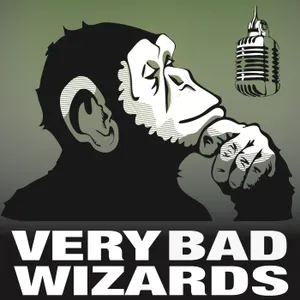
Very Bad Wizards is a podcast featuring a philosopher (Tamler Sommers) and a psychologist (David Pizarro), who share a love for ethics, pop culture, and cognitive science, and who have a marked inability to distinguish sacred from profane. Each podcast includes discussions of moral philosophy, recent work on moral psychology and neuroscience, and the overlap between the two.
Latest Episodes
The most recent episodes — sign up to get AI-powered summaries of each one.
- 1 weeks ago52 min
The Lotus Eaters Episode 13: An Odyssey Dream Cast [unlocked]
In the final episode of The Lotus Eaters, Tamler and David make their casting decisions (any actors across history) for their dream "Odyssey" film. We then end with some broader thoughts about The Odyssey and our experience doing The Lotus Eaters. Thank you for coming along with us on this journey!
- 1 weeks ago1h 18m
Episode 343: Culture and the Concept of a Person
How would you a describe a friend or a co-worker? Would you list their personality traits like generous, aggressive, principled, or stubborn? Or would you give more concrete context-filled descriptions ("she argues with her parents a lot," "she brings us donuts at work sometimes"?) According to Shweder and Bourne's influential 1982 article, culture and the dominant metaphors within it influence how we answer these questions. David and Tamler continue their deep dive into the work of Richard Shweder with a discussion of his paper "Does the Concept of a Person Vary Cross-Culturally." Plus, you might not save baby Hitler from drowning, but would you save his father or his grandfather? Moral psychology has a new paradigm! Pucci, M., & Gagliardi, L. (2026). The killing baby Hitler dilemma: A novel paradigm for studying causal-temporal distance in moral decision-making. Consciousness and Cognition, 145, 104141. Shweder, R. A., & Bourne, E. J. (1982). Does the concept of the person vary cross-culturally?. In Cultural conceptions of mental health and therapy (pp. 97-137). Dordrecht: Springer Netherlands.
- 2 weeks ago1h 1m
The Lotus Eaters Episode 12: Reunited in Ithaca [unlocked]
As foretold in the prophecies, Tamler and David unite in Ithaca to cover the final chapters (23 & 24) of The Odyssey, in which Odysseus passes Penelope's final test, reunites with Laertes, and Athena and Zeus do a little deus ex machina-ing and prevent the suitors' families from getting revenge.
- 4 weeks ago1h 6m
The Lotus Eaters Episode 11: Cleaning House
Tamler and David discuss books 20, 21, & 22 of The Odyssey. Beginning with omens and portents and ending with merciless slaughter (with a bow contest in between), we finally see Odysseus' plans for revenge reach fruition.
- Oct 6, 20261h 53m
Episode 342: A Boy's Best Friend (Hitchcock's "Psycho")
David and Tamler steal some of Laurie Santos' podcast money (she'll never miss it), drive to LA, and pull over in the rain to spend the night in the Bates Motel. That lanky young man in the office seems nice if a bit awkward, not sure about his mother though. Plus, we share a few things that might turn us into psycho killers. Like we always say, a son is a poor substitute for a lover.
- Oct 1, 20261h 3m
The Lotus Eaters Episode 10: Like-Minded [unlocked]
Tamler and Dave devote a full episode to Book 19 of The Odyssey. In what is one of the most emotionally intense chapters of the story so far, Odysseus continues his Cretan lies, has a long tête-à-tête with Penelope, and finally gets recognized by his former slave Eurycleia.
- Sep 24, 202649 min
The Lotus Eaters Episode 9: An Ode to Argos [unlocked]
Tamler and David discuss The Odyssey books 17 & 18, in which Telemachus and Odysseus, back at home, continue their deception and put everyone to the test. Everyone except for Argos, that is, because Argos was (and will always be) a very good boy.
- Sep 22, 20261h 37m
Episode 341: Psychology Ranked (With Paul Bloom)
David and Tamler welcome Paul Bloom back to the show for a definitive ranking of classic psychology experiments. Will the shocking results of the Milgram studies earn him a posthumous 'S' ranking? How far will Zimbardo fall? Is the Stroop effect a super effect? Did you see the Gorilla in these notes? Which is more plausible: that we have Paul Bloom as a guest, or we have Paul Bloom and a guest and it's a banger? Note: no dogs or baby monkeys were harmed in the making of this episode. Final Tier List Rankings (episode spoilers!) List of Studies Ranked (all links are to pages on wikipedia.org) Milgram Shock Studies Tversky and Kahneman Linda Problem Loftus Car Crash/False Memory Ekman Basic Emotions Studies Good Samaritan Study Invisible Gorilla Study Shepard Figure Rotation Harlow's Monkeys Seligman Learned Helplessness Asch Conformity Stroop Effect Dunning-Kruger Effect Visual Cliff Experiment Zimbardo Prison Experiment False Belief Task Bem ESP Study Marshmallow Test Bargh Elderly Walking Prime
Get Very Bad Wizards summaries in your inbox
Free AI-powered daily recaps. Key takeaways, quotes, and mentions — in a 5-minute read.
Get Free Summaries →Free forever for up to 3 podcasts. No credit card required.
You Might Also Like
Listeners also like.
Philosophize This!
Explores the history of philosophy by breaking down key thinkers and ideas in chronological order for a general audience.
Fictional
Retellings of classic literary works by authors like Shakespeare, Austen, and Lovecraft with a casual, modern tone.
Six Sensory Podcast
Explores mysteries, historical enigmas, and alternative theories about ancient knowledge and conspiracies.

The UnMute Podcast
Philosophers discuss current social and political issues with insight, humor, and a drive for change.

The Emerald
Explores myth, story, and imagination to reframe modern discourse on society, science, art, and the human experience.
Myths and Legends
Retells global myths and legends, from Arthur to Aladdin, with origins and tales reimagined for modern listeners.
Lit Witches: A Fantasy Book Podcast
Penguin Books Australia

Forum Borealis
In-depth interviews with authors and thinkers on unconventional topics in history, science, philosophy, and politics.
Stuff To Blow Your Mind
Explores the strange edges of science, consciousness, and reality through neuroscience, cosmology, evolution, and emerging technology.
Inner Cosmos with David Eagleman
Neuroscientist David Eagleman examines how the brain interprets reality through science, stories, and interviews.
Stanford Psychology Podcast
Students interview psychologists about recent research and its real-world applications.
Dumb-Dumbs & Dragons: A D&D Podcast
A group of improvisers new to roleplaying adventures through Dungeons & Dragons with comedic results.
About Very Bad Wizards
Very Bad Wizards is a podcast featuring a philosopher (Tamler Sommers) and a psychologist (David Pizarro), who share a love for ethics, pop culture, and cognitive science, and who have a marked inability to distinguish sacred from profane. Each podcast includes discussions of moral philosophy, recent work on moral psychology and neuroscience, and the overlap between the two.
Customized Recaps
AI-powered recaps with compact key takeaways, quotes, and insights.
Straight to Your Inbox
Get key takeaways from Very Bad Wizards in a 5-minute read.
Save Hours Every Week
Stay current on your favorite podcasts without falling behind.
Frequently Asked Questions
What is Podzilla's Very Bad Wizards daily summary?
It's a free AI-powered email that summarizes new episodes of Very Bad Wizards as soon as they're published. You get the key takeaways, notable quotes, and links & mentions — all in a quick read.
How does the Very Bad Wizards podcast summary work?
When a new episode drops, our AI transcribes and analyzes it, then generates a personalized summary tailored to your interests and profession. It's delivered to your inbox every morning.
Is this an official Very Bad Wizards product?
No. Podzilla is an independent service that summarizes publicly available podcast content. We're not affiliated with or endorsed by Tamler Sommers & David Pizarro.
Can I get summaries of other podcasts too?
Absolutely! The free plan covers up to 3 podcasts, any in the catalog. Basic raises that to 15, Pro to 40 and Max to 100. Browse our full catalog at /podcasts.
How often does Very Bad Wizards release new episodes?
Very Bad Wizards publishes weekly. Our AI generates a summary within hours of each new episode.
What topics does Very Bad Wizards cover?
Very Bad Wizards covers topics including Philosophy, Culture, Society & Culture. Our AI identifies the specific themes in each episode and highlights what matters most to you.
Start getting Very Bad Wizards summaries tomorrow morning.
Free forever for up to 3 podcasts. No credit card required.
Free forever for up to 3 podcasts. No credit card required.