Free Daily Podcast Summary
Uplifting Black Nichiren Buddhist Voices: Daily Summaries Delivered
by Black Buddhist Studies
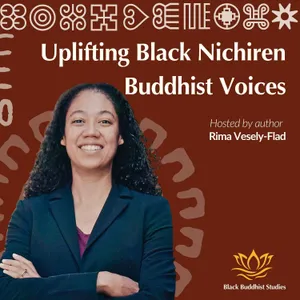
How Black practitioners in the U.S. are embracing, shaping, and deepening Nichiren Buddhist traditions. Host Rima Vesely-Flad discusses the unique ways Black Buddhists bring African diasporic perspectives, lived experiences, and spiritual creativity into their practice. Including influential voices like Dr. Kamilah Majied, Bishop Myokei Caine-Barrett Shonin, and Dr. Ralph Craig, who discusses Tina Turner’s lifelong practice. Produced by Twice As Good Media, supported by the Crossroads Project via the Henry J. Luce Foundation, as well as the Frederick Lenz Foundation and the Fetzer Institute.
Latest Episodes
The most recent episodes — sign up to get AI-powered summaries of each one.
- Nov 18, 20253 min
Closing Thoughts
Listening to the transformative experiences of Black Nichiren Buddhists in this podcast series reminds us that Black people have confronted extraordinary levels of oppression over centuries and have survived. These practitioners ask, ‘how do we confront this onslaught beyond expressing fear and outrage?’We are encouraged by these practitioners—by their wisdom and stamina, by their singing and chanting, by their emphasis on joy.Supported by the Crossroads Project funded by the Henry J. Luce Foundation, as well as the Frederick Lenz Foundation and the Fetzer Institute. Produced by Sandra Hannebohm, founder of Twice as Good Media.
- Nov 11, 202526 min
Buddhists of African Descent on Creating a Just Society with Michael Belton
This final episode explores the connection between self-improvement and justice. Nichiren Daishonin, the founder of Nichiren Buddhism, believed that Buddhism only has meaning when it effects positive change in society. Rima Vesely-Flad speaks with Michael Belton, a founding co-architect of the association, Buddhists of African Descent, about how this teaching has helped him develop throughout his life.Michael Belton is a Minneapolis-based practitioner who spent forty years in public service, most recently as the Deputy Director for Ramsey County, Minnesota’s Juvenile Corrections Division. He has instituted culturally responsive treatment and programming for communities of color, focusing on culturally rooted responses for vulnerable African American male youth.
- Nov 5, 202526 min
Buddhists of African Descent on “Nam Myoho Renge Kyo” with Jacci Thompson-Dodd
“Nam Myoho Renge Kyo,” the title of the Lotus Sutra, is also known as the Daimoku. In this episode, Rima Vesely-Flad speaks with a decades-long practitioner of Nichiren Buddhism, Jacci Thompson-Dodd, about the significance of chanting and other practices of the association, Buddhists of African Descent.Jacci Thompson-Dodd has practiced Nichiren Buddhism for 50 years. She supports women healing from life-altering illness and trauma. Thrivorship®, her nationally recognized program for breast cancer survivors, has been offered by cancer centers and organizations across the country.
- Oct 28, 202536 min
Buddhists of African Descent on Education in Nichiren Buddhism with Mahazi Roundtree
Study is a core practice for Nichiren Buddhists, who dive deeply into the Lotus Sutra and the writings of Nichiren Daishonin as a way to cultivate their inherent Buddha-nature.Mahazi Roundtree has been a Nichiren practitioner for 38 years. She is a study leader in the Nichiren Buddhist association, Buddhists of African Descent, and she lives in Harlem, New York, where she is a corporate paralegal by day and a jazz vocalist & bass player by night.
- Oct 21, 202540 min
Buddhists of African Descent on Innate Buddhahood with Thembi
This and the next three episodes feature conversations with members of the association, Buddhists of African Descent (aka BAD) which engages in connecting traditional systems of African spirituality with the basic tenets and principles of Nichiren Buddhism. Thembi is one of the founding co-architects of BAD. She speaks with Rima Vesely-Flad about the significance of Buddhahood for herself and other Black practitioners in America.Thembi (Valerie Geaither) is professor emerita at Metropolitan State University in Minneapolis, where for 25 years she was a professor of Education Philosophy and Family Studies, as well as a co-director of the Center for Community Based Education, Learning and Research. She was also a catalyst in establishing the university’s School of Urban Education.
- Oct 14, 202532 min
Compassion in Action with Bishop Myokei Caine-Barrett Shonin
One compelling teaching of Nichiren Daishonin, the founder of the Nichiren Buddhist tradition, is that each person is responsible for contributing to world peace and justice. He believed that the daily practice of chanting was an essential form of committing to compassionate action, and could generate benefits for society. Bishop Myokei Caine-Barrett Shonin is the first American woman and the first of African-Japanese descent to attain full ordination as a Nichiren priest.Myokei Caine-Barrett Shonin is a bishop for the Nichiren Shu Buddhist Order of North America, and she is the principal teacher of Myoken-ji Temple in Houston, where she actively supports Buddhist practice for people who are incarcerated in Texas prisons.
- Oct 7, 202528 min
Faith in Action with Ben Harris
One tenet of Nichiren Buddhism known as “faith in action” is used consistently in the teachings of Nichiren Daishonin, the founder of the tradition. The use of the word “faith,” though seldom associated with Buddhism, has helped a number of practitioners in the West make connections between their Christian heritage and their Buddhist practice. Ben Harris, is one such practitioner who has made the connections between seemingly very different religious traditions.Ben Harris is a former student of Rima Vesely-Flad, and a recent graduate of Union Theological Seminary's Inaugural Master of Social Justice Program. He is former military officer living in the DC Metro area, and has practiced Nichiren Buddhism for nine years.
- Sep 30, 202537 min
Manifesting Buddhahood in This Lifetime with Dr. Kamilah Majied
Buddha-nature refers to the innate potential for every living being to attain enlightenment, and one of the most compelling aspects of Nichiren Buddhism is the teaching that this is already present in every being. The realization of this inherent truth is called “Buddhahood.” In this episode, Rima Vesely-Flad speaks with Dr. Kamilah Majied about using hardship as fuel for reaching the state of mind called Buddhahood.Dr. Kamilah Majied is a longtime member of the Soka Gakkai International lineage, a mental health therapist, researcher, professor of social work, and a consultant for contemplative justice and sustainability. She is the author of Joyfully Just: Black Wisdom and Buddhist Insights for Liberated Living.
About Uplifting Black Nichiren Buddhist Voices
How Black practitioners in the U.S. are embracing, shaping, and deepening Nichiren Buddhist traditions. Host Rima Vesely-Flad discusses the unique ways Black Buddhists bring African diasporic perspectives, lived experiences, and spiritual creativity into their practice. Including influential voices like Dr. Kamilah Majied, Bishop Myokei Caine-Barrett Shonin, and Dr. Ralph Craig, who discusses Tina Turner’s lifelong practice. Produced by Twice As Good Media, supported by the Crossroads Project via the Henry J. Luce Foundation, as well as the Frederick Lenz Foundation and the Fetzer Institute.
Customized Recaps
AI-powered recaps with compact key takeaways, quotes, and insights.
Straight to Your Inbox
Get key takeaways from Uplifting Black Nichiren Buddhist Voices in a 5-minute read.
Save Hours Every Week
Stay current on your favorite podcasts without falling behind.
Frequently Asked Questions
What is Podzilla's Uplifting Black Nichiren Buddhist Voices daily summary?
It's a free AI-powered email that summarizes new episodes of Uplifting Black Nichiren Buddhist Voices as soon as they're published. You get the key takeaways, notable quotes, and links & mentions — all in a quick read.
How does the Uplifting Black Nichiren Buddhist Voices podcast summary work?
When a new episode drops, our AI transcribes and analyzes it, then generates a personalized summary tailored to your interests and profession. It's delivered to your inbox every morning.
Is this an official Uplifting Black Nichiren Buddhist Voices product?
No. Podzilla is an independent service that summarizes publicly available podcast content. We're not affiliated with or endorsed by Black Buddhist Studies.
Can I get summaries of other podcasts too?
Absolutely! The free plan covers up to 3 podcasts. Upgrade to Pro for 15, or Premium for 50. Browse our full catalog at /podcasts.
How often does Uplifting Black Nichiren Buddhist Voices release new episodes?
Uplifting Black Nichiren Buddhist Voices publishes weekly. Our AI generates a summary within hours of each new episode.
What topics does Uplifting Black Nichiren Buddhist Voices cover?
Uplifting Black Nichiren Buddhist Voices covers topics including Religion & Spirituality, Spirituality, Buddhism. Our AI identifies the specific themes in each episode and highlights what matters most to you.
Start getting Uplifting Black Nichiren Buddhist Voices summaries tomorrow morning.
Free forever for up to 3 podcasts. No credit card required.
Free forever for up to 3 podcasts. No credit card required.