Free Daily Podcast Summary
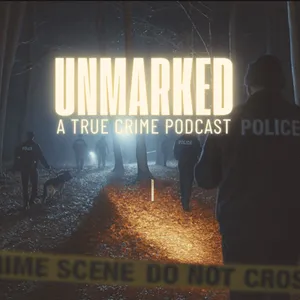
UNMARKED: A True Crime Podcast: Daily Summaries Delivered
by UNMARKED: A True Crime Podcast
Get key takeaways, quotes, and insights from UNMARKED: A True Crime Podcast in a 5-minute read. Delivered straight to your inbox.
Latest Episodes
The most recent episodes — sign up to get AI-powered summaries of each one.
- Yesterday17 min
55: What Creates a Serial Killer? The Psychology of Attachment | Case Notes
How much of who we become is shaped before we can even remember it?In this episode of UNMARKED: Case Notes, I sit down with clinical and forensic neuropsychologist Dr. Judy Ho to talk about attachment—how our earliest relationships shape the way we see ourselves, connect with other people, and respond to the world around us.We break down attachment theory, the different attachment styles, what happens when those early bonds are disrupted, and how childhood experiences can continue influencing behavior decades later.#TrueCrime #Psychology #AttachmentTheory #SerialKillers #DrJudyHo #CaseNotes
- 3 days ago28 min
55: The Nick Reiner Pre-Trial Hearing, Lizzie Borden & Your Questions
A shocking case is entering a new chapter as Nick Reiner appears in court for a pre-trial hearing in the deaths of his parents, Rob and Michele Reiner. Prosecutors have decided not to seek the death penalty, while questions over sealed grand jury evidence and what comes next in the case continue to unfold.In this Friday edition of UNMARKED, producer Jon Nadeau joins me to break down the pre-trial hearing of the Nick Reiner case and what happens next. Then we get into your questions: Why did Lizzie Borden kill her parents?, Was Gary Heidnik really insane, and Buddy’s favourite kind of movie projects. Have a question for the show? Leave it in the comments on YouTube or Apple Podcasts, DM @unmarkedpodcast on Instagram, or find me directly @JamesBuddyDay.
- 4 days ago39 min
54: Lizzie Borden: Creating a Monster with Dr. Cara Robertson
What if everything we think we know about Lizzie Borden is wrong?With Netflix once again turning Lizzie Borden into a monster, we're going back to the woman behind the legend. In 1892, Lizzie stood trial for the brutal murders of her father, Andrew, and stepmother, Abby, inside their Fall River home. She was acquitted—but more than 130 years later, we're still trying to explain who she was and what could have driven her to kill, if she did.This week on UNMARKED, I’m joined by Dr. Cara Robertson, author of The Trial of Lizzie Borden and one of the foremost researchers on the case, to separate the historical Lizzie from the character we've created around her.We reconstruct the morning of the murders, examine the evidence against Lizzie, the alleged attempt to purchase poison, the disputed murder weapon, the Borden family's simmering resentments, and the psychology of parricide. And we trace how each generation has reinvented Lizzie—from Victorian spinster to abused daughter to cold-blooded heiress and, now, Netflix monster.Research in This Episode:Heide KM. Patricide and steppatricide victims and offenders: an empirical analysis of U.S. arrest data. Int J Offender Ther Comp Criminol. 2014 Nov;58(11):1261-78.Show Notes:If you want to go deeper into the Charles Manson case, my book Charles Manson: The Last Words documents years researching the story and speaking directly with members of the Manson Family — including Charles Manson himself. Read it here:https://www.amazon.com/dp/B0GQ6QRVQ7If you want to follow the cases as I’m working on them, you can find me on Instagram: https://www.instagram.com/jamesbuddyday/For those who want to examine the evidence directly, complete phone calls and documents are available inside UNMARKED: Case Files, our research portal, along with ad-free episodes.Join here:https://www.patreon.com/Unmarked_TrueCrimePodcastUNMARKED: A True Crime Podcast is hosted by Audioboom.
- 1 weeks ago15 min
53: Why Did the Lindsay Clancy Trial End in a Mistrial? | Case Notes
I’m joined by Brandi Churchwell, host of the 13th Juror Podcast, to break down the mistrial in the Lindsay Clancy case. We talk about what happened in the courtroom, the reaction to the decision, what the jury actually decided—and some of the biggest misconceptions surrounding the case.We also dig into the difficult questions at the heart of this trial: mental illness, criminal responsibility, and why this case has produced such dramatically different reactions from people following it.#LindsayClancy #TrueCrime #CaseNotes #podcast #UNMARKED
- 1 weeks ago21 min
52: The Lindsey Clancy mistrial, Gary Heidnik & Your Questions
Have a question for the show? Leave it in the comments on YouTube or Apple Podcasts, DM @unmarkedpodcast on Instagram, or find me directly @JamesBuddyDay.A controversial case has taken another dramatic turn in Massachusetts, where a mistrial was declared after jurors deadlocked in Lindsay Clancy’s trial for the deaths of her three children. Now, prosecutors must decide whether to try the case again—while the debate over mental illness, accountability and what happened in the days leading up to the tragedy continues.In this Friday edition of UNMARKED, producer Jon Nadeau joins me to break down the mistrial in the Lindsey Clancy case and what happens next. Then we get into your questions: Gary Heidnik and his connect to Silence of the Lambs, Clifford Olson’s adaptability, and a review of Charlie Hunnam’s performance of Ed Gein.
- 1 weeks ago47 min
50: Gary Heidnik: The Real Horror Behind The Silence of the Lambs
Was Gary Heidnik legally insane—or did he know exactly what he was doing?The crimes committed inside Gary Heidnik’s North Philadelphia home became infamous for their brutality—and would later draw comparisons to The Silence of the Lambs. But beneath the mythology of the so-called “Monster Preacher” is a much more difficult question about mental illness, culpability, and the way the law defines sanity.Heidnik had a documented history of severe mental illness stretching back decades. He experienced delusions, believed God had given him a mission, and constructed an elaborate fantasy that ultimately helped drive his crimes. Yet prosecutors pointed to his ability to plan, manipulate, conceal evidence, and evade police as proof that he understood exactly what he was doing.In this episode of UNMARKED, I speak with legendary Philadelphia defense attorney Chuck Peruto, who represented Heidnik at trial, to reconstruct the case and examine the insanity defense that nearly saved him from a death sentence.Research in This Episode:Bryant, B. R., et al. (2022). “Behavioral and Emotional Dyscontrol Following Traumatic Brain Injury: A Systematic Review of Neuroimaging and Electrophysiological Correlates.” Journal of the Academy of Consultation-Liaison Psychiatry, 63(5), 434–449.Show Notes:If you want to go deeper into the Charles Manson case, my book Charles Manson: The Last Words documents years researching the story and speaking directly with members of the Manson Family — including Charles Manson himself. Read it here:https://www.amazon.com/dp/B0GQ6QRVQ7If you want to follow the cases as I’m working on them, you can find me on Instagram: https://www.instagram.com/jamesbuddyday/For those who want to examine the evidence directly, complete phone calls and documents are available inside UNMARKED: Case Files, our research portal, along with ad-free episodes.Join here:https://www.patreon.com/Unmarked_TrueCrimePodcastUNMARKED: A True Crime Podcast is hosted by Audioboom.
- 2 weeks ago23 min
51: How Many Serial Killers Are Operating Right Now? | Case Notes
How many serial killers are operating right now—and how many murders are we failing to connect?This week on Case Notes, I’m joined by Dr. Michael Arntfield of the Murder Accountability Project to talk about the enormous amount of homicide data hiding in plain sight—and what it can tell us about serial murder in America.We get into why homicides are underreported and misclassified, how the Murder Accountability Project uses data to identify suspicious clusters of killings, and what the numbers suggest about the serial killers who may still be operating today.We also explore something I find particularly fascinating: the relationship between serial killers and the culture surrounding them. Drawing from his new book, Dr. Arntfield explains how killers consume true crime, movies, books, and stories about other murderers—and how that media can become part of the way they understand themselves and their crimes.Show Notes:Murder Accountability Project ⬇️https://www.murderdata.orgPlease Bring Me Home ⬇️https://pleasebringmehome.comDr. Michael Arntfield ⬇️https://michaelarntfield.comCop TV: The Extraordinary Untold Story of Television Police Shows ⬇️https://www.amazon.in/Cop-TV-Extraordinary-Stories-Television-ebook/dp/B0H99WGYFH
- 2 weeks ago30 min
51: The Bryan Kohberger appeal, Richard Ramirez & Your Questions
A controversial case is entering a new chapter as Bryan Kohberger’s appeal moves forward. The challenge has reignited debate over the investigation, the evidence, and whether the justice system got it right—while the families of the victims continue to face the painful question of whether the case will ever truly be over.In this Friday edition of UNMARKED, producer Jon Nadeau joins me to break down the Bryan Kohberger plea agreement and how he is able to attempt to change his plea after pleading guilty. Then we get into your questions: What made Richard Ramirez such a terrifying predator, what Ed Kemper thought of his sisters, and did the FBI under estimate Israel Keyes?Have a question for the show? Leave it in the comments on YouTube or Apple Podcasts, DM @unmarkedpodcast on Instagram, or find me directly @JamesBuddyDay.
Get UNMARKED: A True Crime Podcast summaries in your inbox
Free AI-powered daily recaps. Key takeaways, quotes, and mentions — in a 5-minute read.
Get Free Summaries →Free forever for up to 3 podcasts. No credit card required.
You Might Also Like
Listeners also like.

Serial Killers & Murderous Minds
Examines the psychology of serial killers and violent criminals through true crime storytelling and forensic analysis.

True Crime Garage
Two hosts analyze real crime cases weekly, blending detailed research with casual conversation over beer.

Serialously with Annie Elise
A true-crime podcast that dives deep into cases with detailed timelines, social media insights, and a conversational tone.
Unraveled
A journalist investigates the case of the Long Island Serial Killer in a season-long true crime deep dive.

Murder, Mystery & Makeup
A beauty influencer explores true crime stories, from serial killers to cannibals, while doing makeup.

True Criminals
Investigative journalists revisit high-profile and overlooked crime cases with firsthand sources and deep reporting insight.

Crime, Conspiracy, Cults and Murder
Explores notorious historical figures, bizarre murders, conspiracy theories, and unsolved mysteries with deep-dive true crime storytelling.
The Minds of Madness - True Crime Stories
Explores the psychology behind violent criminals and the lasting effects of their crimes on victims' families and communities.

Most Notorious! A True Crime History Podcast
Examines historical crimes and criminals through interviews with experts, covering figures like serial killers and gangsters with factual detail.

Murder In America
A true crime podcast exploring infamous homicides in each U.S. state, blending investigative analysis with paranormal insights.

Killer Psyche
A retired FBI agent examines the psychological motives behind notorious criminals and their crimes.

Crimehub: A True Crime Podcast
Examines disturbing and unbelievable true crimes from modern history with in-depth storytelling and new cases released weekly.
Customized Recaps
AI-powered recaps with compact key takeaways, quotes, and insights.
Straight to Your Inbox
Get key takeaways from UNMARKED: A True Crime Podcast in a 5-minute read.
Save Hours Every Week
Stay current on your favorite podcasts without falling behind.
Frequently Asked Questions
What is Podzilla's UNMARKED: A True Crime Podcast daily summary?
It's a free AI-powered email that summarizes new episodes of UNMARKED: A True Crime Podcast as soon as they're published. You get the key takeaways, notable quotes, and links & mentions — all in a quick read.
How does the UNMARKED: A True Crime Podcast podcast summary work?
When a new episode drops, our AI transcribes and analyzes it, then generates a personalized summary tailored to your interests and profession. It's delivered to your inbox every morning.
Is this an official UNMARKED: A True Crime Podcast product?
No. Podzilla is an independent service that summarizes publicly available podcast content. We're not affiliated with or endorsed by UNMARKED: A True Crime Podcast.
Can I get summaries of other podcasts too?
Absolutely! The free plan covers up to 3 podcasts. Upgrade to Pro for 15, or Premium for 50. Browse our full catalog at /podcasts.
How often does UNMARKED: A True Crime Podcast release new episodes?
UNMARKED: A True Crime Podcast publishes weekly. Our AI generates a summary within hours of each new episode.
What topics does UNMARKED: A True Crime Podcast cover?
UNMARKED: A True Crime Podcast covers topics including True Crime, Film, TV & Film. Our AI identifies the specific themes in each episode and highlights what matters most to you.
Start getting UNMARKED: A True Crime Podcast summaries tomorrow morning.
Free forever for up to 3 podcasts. No credit card required.
Free forever for up to 3 podcasts. No credit card required.