Free Daily Podcast Summary
Under The Steeple: Daily Summaries Delivered
by Union Baptist Association
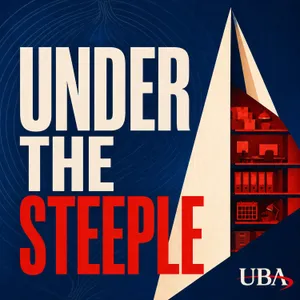
Under the Steeple is a church operations podcast about the people, decisions, systems, and surprises that keep ministry moving. Each episode tackles leadership, finance, staffing, facilities, technology, governance, and the other duties nobody mentioned in seminary. It is an honest and occasionally humorous look at what happens behind the scenes, between Sundays, and whenever ministry meets reality.
Latest Episodes
The most recent episodes — sign up to get AI-powered summaries of each one.
- 6 days ago23 min
Know Your City: The Forests and Deserts of Houston
Why does church planting flourish in some neighborhoods while ministries just a few miles away struggle to stay afloat? And what would it look like for churches to work together to reach the whole city? In this special follow-up episode of Under the Steeple, Matthew Dillingham and Marie Burrus welcome back UBA Executive Director Dr. Josh Ellis to explore his “Forests and Deserts” framework for understanding ministry across Houston. They unpack how economics and neighborhood context shape church planting, why financial self-sufficiency isn’t always a realistic expectation, and how meaningful partnerships can help ministry flourish in places where resources are scarce. In This Episode: Forests and Deserts: How Houston’s economic landscape creates very different conditions for planting and sustaining churches. Reaching the Whole City: Why loving Houston means investing in neighborhoods beyond the places where churches can most easily grow. Partnership That Starts with Listening: Why effective collaboration means learning from local leaders who already know their communities and are doing good work. Rethinking Self-Sufficiency: Why some ministries may need ongoing financial partners and why that doesn’t diminish their value or impact. Co-Vocational Ministry and Team Planting: How shared leadership and income from work outside the church can help sustain ministry in under-resourced neighborhoods. Turning Data into Ministry: Why understanding your community takes more than a demographic report, and how relationships can help churches put the numbers into practice. Resources: From the “Baptist Bishop”: How Does Baptist Structure Work Anyways - https://www.ubahouston.org/blog/how-are-baptists-organized Facts Every Minister Should Know about Houston - https://www.ubahouston.org/blog/facts-every-minister-should-know-about-houston Ministering in the Forests and Deserts of Houston - https://www.ubahouston.org/blog/houston-forests-and-deserts
- 3 weeks ago35 min
Know Your Neighbor: Why Demographics Matter for Churches
When the community around your church starts to shift, how do you adapt? Do you double down on the people already in your pews or change your approach to reach your new neighbors? In this episode of Under the Steeple, Marie Burrus and Matthew Dillingham welcome “The Numbers Guy” (and UBA Executive Director) Dr. Josh Ellis to discuss the practical role of demographics in church strategy. They unpack why standard online data is often years behind reality, how to realistically interpret neighborhood numbers, and the best methods to discover exactly what your community needs right now. In This Episode: The Limits of Data: Why website demographics and census data are usually behind a rapidly changing neighborhood and why psychographics (like "unchurched" people statistics) are notoriously unreliable. The Power of Local Schools: Why building genuine relationships with local schools is the fastest, most accurate way to understand your neighborhood's needs. Navigating Neighborhood Turnover: Practical advice for older or established congregations facing gentrification or major cultural shifts. The "Sphere of Influence" Strategy: What to do when your congregation no longer lives in the neighborhood where your church building is located. Space Sharing as a Strategy: How sharing your facility with another congregation can be a powerful gospel tool. Resources: Kinder Institute for Urban Research: Regional data and reports for Greater Houston. https://kinder.rice.edu Houston-Galveston Area Council (H-GAC): Demographic data, maps, and forecasting for the region. https://www.h-gac.com Loving Schools (formerly Loving Houston): Helping churches build transformative partnerships with local schools. https://lovingschools.net
- Oct 1, 202641 min
Political Limbo: What Churches Can and Can't Say During Election Season
Election season is here, and church leaders face a difficult balancing act: How do you shepherd your congregation through complex cultural issues without losing your 501(c)(3) status—or fracturing your church? Further complicating matters, the Johnson Amendment may or may not be currently enforceable. Matthew Dillingham and Marie Burrus break down the legal and practical limits of church political involvement. From the history of the Johnson Amendment to recent Treasury Department statements and IRS guidance, this episode unpacks what you can say from the pulpit, how to handle political candidates in your facility, and why wisdom should have the final say in your church's approach. In This Episode: The Johnson Amendment Explained: The 1954 history behind the tax code rule prohibiting 501(c)(3) organizations from endorsing or opposing political candidates. Legal Limbo & Recent Court Rulings: Where the law actually stands in 2026 following recent federal court challenges and informal Treasury Department guidance. Pulpits vs Personal Convictions: How pastors can navigate personal political engagement on their own dime without misusing church assets, titles, or platforms. Facilities & Candidate Forums: How to host neutral voter education events, candidate forums, or town halls without violating IRS rules or showing favoritism. The Wisdom Principle: Why protecting gospel unity in a divided culture matters just as much as obeying tax law. What Your Church CAN vs. CANNOT Do as a Nonprofit (between Johnson Amendment decisions) CAN: Preach on biblical, moral, and theological issues that have public policy implications. Host non-partisan voter registration drives and get-out-the-vote efforts. Hold neutral candidate forums where all qualified candidates are invited on equal terms. Invite a candidate to speak as a subject-matter expert (provided no campaign activity or endorsement occurs). Engage in non-partisan political activity as an individual on your own time and dime. CANNOT: Endorse or oppose specific candidates or political parties from the pulpit or in official church communications. Use church funds, websites, social media channels, or staff time to promote candidates or campaign events. Put campaign signs, fundraising tables, or single-candidate promotional materials on church property. Provide voter guides that highlight or bias preferred candidates over others. Resources: IRS Revenue Ruling 2007-41: Tax-Exempt Organizations and Political Campaign Intervention https://www.irs.gov/pub/irs-drop/rr-07-41.pdf Pew Research Center: Public Views on Politics and Houses of Worship (April 2026) What Churches Can and Can't Say During Election Season, UBA Blog Just for Fun: Parks and Recreation "Straight to Jail" Scene: Watch on YouTube
- Sep 14, 202635 min
Share Space Without the Headache: Best Practices for Facility Agreements
Sharing space with other churches, non-profits, or ministries is a powerful ministry strategy, especially for churches in major cities, where space is at a premium. But unwritten rules and damaged property can easily create chaos. Matthew Dillingham and Marie Burrus break down why clear boundaries protect your ministry. Learn the essential legal clauses, financial risks, and management strategies required to share your facility safely and generously. Key Takeaways Know Your Church's "Why": Define your primary goals upfront, whether focused on financial sustainability, community outreach, or Kingdom partnership. Clarity Is Kindness: Written facility-use agreements eliminate assumptions, protect relationships, and set both parties up for success. Cover Baseline Costs: Set rental rates that reliably cover utilities, building wear-and-tear, and required staff hours. Understand Legal & Tax Risks: Avoid public "Space for Rent" signs or unvetted for-profit leases that could trigger unexpected tax implications. Suggestions to Include in Your Facilities Agreement Approved rooms, dates, and exact usage hours A/V and facility equipment usage limits Damage liability and facility cleanup expectations Insurance, staffing, and security requirements Indemnification clauses to protect both parties from liability Payment terms and strict invoicing schedules Clear exit and cancellation clauses for both parties Resources Church Tax & Law: https://www.churchlawandtax.com/ Virtual Executive Pastor: https://www.virtualexecutivepastor.com/ Just for Fun: "Dance Little Jean," by Nitty Gritty Dirt Band https://www.youtube.com/watch?v=SS56zyv0bIE
- Sep 2, 202633 min
Don't Go to Jail: Avoiding Fraud and Money Mismanagement
When church numbers don't add up, is it a simple mistake, administrative mismanagement, or actual fraud? Matthew Dillingham and Marie Burrus dive into the murky waters of church finances, unpacking why "asking for forgiveness instead of permission" doesn't work with the IRS—or your congregation. From rogue credit cards and missing coffee receipts to the legal boundaries of designated funds, this episode breaks down the essential internal controls every ministry needs to stay transparent, ethical, and out of trouble. In This Episode: Audits and Financial Reviews: Why churches need a professional audit every three years, an annual financial review in between, and how to build those costs directly into the budget. Fractional Bookkeeping: How churches can afford professional financial accounting instead of relying on unqualified volunteers and why it matters. Designated vs. Restricted Funds: The legal line between operational spending and designated giving—and why changing a donor's intent requires a clear paper trail. The Itemized Receipt Mandate: What the IRS actually requires for meal and travel expense reporting, plus practical ways to enforce receipt policies with staff. The Transparency Dividend: How financial clarity directly correlates with increased congregational trust and donor giving.
- Aug 14, 202631 min
When Everything is Important, Nothing is Sustainable
Marie Burrus and Matthew Dillingham launch the inaugural episode of “Under the Steeple,” introducing the podcast’s goal of making church leadership and operations simple for busy ministers. They discuss how pastors and church leaders can feel overwhelmed when everything seems important. They emphasize prioritization (important vs. urgent), accepting that some “rubber balls” can be dropped, and delegating without feeling like a failure. Matthew stresses that offering clarity (by defining work/volunteer roles, job descriptions, policies, and lines of authority) is a kind of pastoral care. They warn against a pastor “hero” mindset that leads to burnout and recommend Kelly Kapic’s devotional, “You Were Never Meant to Do It All,” to learn more on this topic. Resources: “When Everything is Important, Nothing Feels Sustainable” www.virtualexecutivepastor.com/post/when-everything-is-important-nothing-feels-sustainable The Eisenhower Matrix: https://www.eisenhower.me/eisenhower-matrix/ ”You Were Never Meant To Do it All,” by Kelly Kapic Bonus Extras 1099 Versus W2? https://www.virtualexecutivepastor.com/post/1099-or-w-2-what-churches-need-to-know-especially-for-musicians King Ranch Casserole Recipe: https://www.southernliving.com/recipes/king-ranch-chicken-casserole Pear Salad Recipe: https://southernbite.com/southern-pear-salad/
Get Under The Steeple summaries in your inbox
Free AI-powered daily recaps. Key takeaways, quotes, and mentions — in a 5-minute read.
Get Free Summaries →Free forever for up to 3 podcasts. No credit card required.
You Might Also Like
Podcasts in similar categories.

Coffeez with Joe Shalaby
Conversations with entrepreneurs, investors, and cultural figures reveal the real strategies, struggles, and costs behind success.

All-In with Chamath, Jason, Sacks & Friedberg
Four tech investors discuss technology, markets, politics, and poker with candid, in-depth analysis.

Unblinded with Sean Callagy
A legally blind entrepreneur shares insights on ethical influence, peak performance, and mastering hidden patterns in business and life.

The Code To Winning
Interviews with business leaders, entrepreneurs, and CEOs reveal strategies and insights for success in the modern business world.

Planet Money
Explains how economic forces influence everyday life and global events through storytelling and deep dives into surprising topics.

The Room Podcast
Tech founders and funders share behind-the-scenes stories from pivotal moments in their careers.
Prof G Markets
Daily market news and analysis on earnings, geopolitics, Big Tech, and AI with clear, no-jargon insights.

The Level Up Podcast w/ Paul Alex
A former detective shares real stories and practical strategies on building passive income, financial freedom, and entrepreneurial success.
About Under The Steeple
Under the Steeple is a church operations podcast about the people, decisions, systems, and surprises that keep ministry moving. Each episode tackles leadership, finance, staffing, facilities, technology, governance, and the other duties nobody mentioned in seminary. It is an honest and occasionally humorous look at what happens behind the scenes, between Sundays, and whenever ministry meets reality.
Customized Recaps
AI-powered recaps with compact key takeaways, quotes, and insights.
Straight to Your Inbox
Get key takeaways from Under The Steeple in a 5-minute read.
Save Hours Every Week
Stay current on your favorite podcasts without falling behind.
Frequently Asked Questions
What is Podzilla's Under The Steeple daily summary?
It's a free AI-powered email that summarizes new episodes of Under The Steeple as soon as they're published. You get the key takeaways, notable quotes, and links & mentions — all in a quick read.
How does the Under The Steeple podcast summary work?
When a new episode drops, our AI transcribes and analyzes it, then generates a personalized summary tailored to your interests and profession. It's delivered to your inbox every morning.
Is this an official Under The Steeple product?
No. Podzilla is an independent service that summarizes publicly available podcast content. We're not affiliated with or endorsed by Union Baptist Association.
Can I get summaries of other podcasts too?
Absolutely! The free plan covers up to 3 podcasts, any in the catalog. Basic raises that to 15, Pro to 40 and Max to 100. Browse our full catalog at /podcasts.
What topics does Under The Steeple cover?
Under The Steeple covers topics including Business, Non-Profit. Our AI identifies the specific themes in each episode and highlights what matters most to you.
Start getting Under The Steeple summaries tomorrow morning.
Free forever for up to 3 podcasts. No credit card required.
Free forever for up to 3 podcasts. No credit card required.