Free Daily Podcast Summary
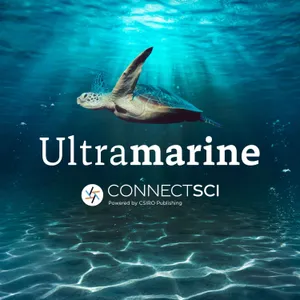
Ultramarine: the science of our oceans and waterways: Daily Summaries Delivered
by ConnectSci
Ultramarine investigates the latest research, innovations and science news from our oceans and marine environments. Hosted on Acast. See acast.com/privacy for more information.
Latest Episodes
The most recent episodes — sign up to get AI-powered summaries of each one.
- May 29, 202632 min
‘Remarkable’ freshwater turtles face quiet decline
This is an episode from our new podcast, It Starts With... available on Apple, Spotify and ConnectSci.If you enjoy this, check out part 2 of our turtles chat on It Starts With... Australia’s freshwater turtles are some of the country’s most fascinating and under-appreciated animals.They can live for decades, survive incredible injuries, help clean river systems and in some cases even breathe underwater through specialised adaptations. But despite how remarkable they are, turtle populations across Australia are quietly declining and most people do not even realise it is happening.In this first of a two-part panel episode, David Boldeman is joined by turtle experts Deb Bower, James Van Dyke, Michael Thompson and Ricky Spencer to explore why turtles are so important, the surprising biology behind how they survive, and the growing challenges they face.Deb, James, Mike and Ricky co-author the book The Mystery of the Missing Turtles with Elizabeth Hale and illustrator James O'Hanlon. The book is published by CSIRO Publishing and is available in print or eBook. Hosted on Acast. See acast.com/privacy for more information.
- Mar 23, 202631 min
4500m deep: remote observatory expands climate knowledge
David Boldeman speaks with CSIRO marine biogeochemist Dr Elizabeth Shadwick about one of Australia’s most important long-running ocean climate observation programs, the Southern Ocean Time Series south of Tasmania.Anchored in waters around 4500 metres deep, this remote ocean observatory allows scientists to measure how the Southern Ocean absorbs heat and carbon dioxide from the atmosphere, and how these processes influence the global climate system.Dr Shadwick explains how carbon dioxide moves from the air into the ocean, how physical circulation and deep water formation can store that carbon away from the atmosphere for decades to centuries, and how the “biological carbon pump” helps move organic carbon into the deep ocean.The episode also explores the remarkable engineering effort required to deploy and maintain deep-water moorings in harsh Southern Ocean conditions, and what more than two decades of observations are revealing about ocean acidification, natural variability, and the challenge of detecting long-term human impacts in deep ocean ecosystems.Further reading:IMOS Southern Ocean Time SeriesVoyage information and photo galleryAustralian Antarctic Program PartnershipUnderwater observatory keeps pulse of the Southern Ocean for nearly 30 yearsFor the latest science news visit https://connectsci.au/news Hosted on Acast. See acast.com/privacy for more information.
- Mar 20, 202618 min
How do you give a whale a hearing test?
Host David Boldeman speaks with ConnectSci science journalist Imma Perfetto about new research that has, for the first time, measured the hearing range of humpback whales in the wild.The discussion explores why understanding whale hearing is critical, particularly because whales rely heavily on sound for communication, navigation and finding food in the dark ocean environment. Imma explains that studying Baleen Whale hearing has long been difficult since these massive animals cannot be kept in captivity. This means scientists previously relied on indirect estimates based on anatomy and vocalisation patterns.Discover how researchers overcame this challenge by adapting a behavioural hearing test used for human infants, broadcasting sound signals to migrating humpback whales off the Queensland coast and observing changes in their behaviour.For the latest research and discoveries visit https://connectsci.au/news Hosted on Acast. See acast.com/privacy for more information.
- Mar 16, 202621 min
How is ocean temperature measured?
David Boldeman is joined by science journalist Ellen Phiddian to explore a deceptively simple question: how do scientists actually know the oceans are warming?The conversation unpacks the global network of measurements that allow researchers to track heat across the world’s oceans, from early ship-based observations to modern satellite systems and autonomous Argo floats that dive thousands of metres beneath the surface.Along the way, the episode explains why ocean heat content is one of the most important indicators of climate change, how scientists distinguish long-term warming from natural variability, and why the oceans absorb the vast majority of the excess heat in the Earth’s climate system.It is a story about evidence, measurement and the remarkable ability of modern science to take the temperature of a changing planet.For the latest research and discoveries visit https://connectsci.au/news Hosted on Acast. See acast.com/privacy for more information.
- Mar 12, 202616 min
The first Arctic explorers: ancient communities thrived in harsh environments
Four and a half thousand years ago, people were already navigating the dangerous waters of the High Arctic. In this episode of the ConnectSci Podcast Ultramarine series, David Boldeman speaks with journalist Evrim Yazgin about new research showing how ancient Arctic communities crossed open ocean, thrived in extreme environments, and even helped shape the ecosystems around them.For the latest science news visit connectsci.au/news Hosted on Acast. See acast.com/privacy for more information.
- Mar 10, 202614 min
Earth's alien ocean
We travel nearly ten kilometres beneath the surface of our own planet to explore one of the most extraordinary discoveries in modern science.For decades, the search for extraterrestrial life has focused on distant planets and far-off stars. But some of the most compelling clues may be hiding in the deepest trenches of Earth’s oceans. In total darkness, under crushing pressure and without any sunlight, scientists have discovered thriving ecosystems powered not by light, but by chemistry.Host David Boldeman and ConnectSci journalist Evrim Yazgin unpack how these deep-sea organisms survive using chemosynthesis, breaking down chemicals like hydrogen instead of relying on photosynthesis.READ MORE: https://connectsci.au/news/news-parent/6784/Clues-to-extraterrestrial-life-found-in-deep-sea Hosted on Acast. See acast.com/privacy for more information.
- Mar 2, 202639 min
Did we accidentally design our cities for mosquitoes?
Mosquitoes are usually framed as pests and disease carriers. But what if they are simply one of the most successful species at adapting to the environments we have built?In this episode Ultramarine, David Boldeman is joined by medical entomologist Dr Véronique Paris to explore the hidden water systems inside our cities and how they shape mosquito life.Véronique is a Research Fellow in Medical Entomology and Vector Population Control, at the University of Melbourne: https://www.instagram.com/mozzienique/This podcast is brought to you by ConnectSci, the home of fact-based content you can trust. For the latest science news and discoveries visit https://connectsci.au/news Hosted on Acast. See acast.com/privacy for more information.
- Feb 13, 202619 min
The impact of shifting ocean currents
Ocean currents are the hidden systems that regulate Earth’s climate, moving heat and energy around the planet. But as the ocean warms, those currents are beginning to shift, with major consequences for Australia.In this episode of the Ultramarine, science journalist Ellen Phiddian explains how ocean currents work, how scientists track their movement, and why predicting their future is so complex. The conversation explores changes already being observed, from the Antarctic Circumpolar Current to the East Australian Current pushing further south along Australia’s east coast.Together, the episode unpacks what scientists know, what remains uncertain, and why Australia, as an island continent surrounded by multiple ocean systems, is particularly exposed to changes in ocean circulation. Understanding how the ocean moves, it turns out, is essential to understanding Australia’s climate future.More information:Earth Nullschool: An interactive global map that shows ocean currents, winds, and temperatures moving around the planet in near real time. A great way to visualise systems like the East Australian Current.Integrated Marine Observing System (IMOS): Australia’s national network of ocean sensors, moorings, and observing platforms used to track ocean currents, temperature, and conditions around the coastline.For the latest science news and discoveries visit https://connectsci.au/news Hosted on Acast. See acast.com/privacy for more information.
About Ultramarine: the science of our oceans and waterways
Ultramarine investigates the latest research, innovations and science news from our oceans and marine environments. Hosted on Acast. See acast.com/privacy for more information.
Customized Recaps
AI-powered recaps with compact key takeaways, quotes, and insights.
Straight to Your Inbox
Get key takeaways from Ultramarine: the science of our oceans and waterways in a 5-minute read.
Save Hours Every Week
Stay current on your favorite podcasts without falling behind.
Frequently Asked Questions
What is Podzilla's Ultramarine: the science of our oceans and waterways daily summary?
It's a free AI-powered email that summarizes new episodes of Ultramarine: the science of our oceans and waterways as soon as they're published. You get the key takeaways, notable quotes, and links & mentions — all in a quick read.
How does the Ultramarine: the science of our oceans and waterways podcast summary work?
When a new episode drops, our AI transcribes and analyzes it, then generates a personalized summary tailored to your interests and profession. It's delivered to your inbox every morning.
Is this an official Ultramarine: the science of our oceans and waterways product?
No. Podzilla is an independent service that summarizes publicly available podcast content. We're not affiliated with or endorsed by ConnectSci.
Can I get summaries of other podcasts too?
Absolutely! The free plan covers up to 3 podcasts. Upgrade to Pro for 15, or Premium for 50. Browse our full catalog at /podcasts.
How often does Ultramarine: the science of our oceans and waterways release new episodes?
Ultramarine: the science of our oceans and waterways publishes weekly. Our AI generates a summary within hours of each new episode.
What topics does Ultramarine: the science of our oceans and waterways cover?
Ultramarine: the science of our oceans and waterways covers topics including Science, Nature, Earth Sciences. Our AI identifies the specific themes in each episode and highlights what matters most to you.
Start getting Ultramarine: the science of our oceans and waterways summaries tomorrow morning.
Free forever for up to 3 podcasts. No credit card required.
Free forever for up to 3 podcasts. No credit card required.