Free Daily Podcast Summary
to know the land: Daily Summaries Delivered
by byron
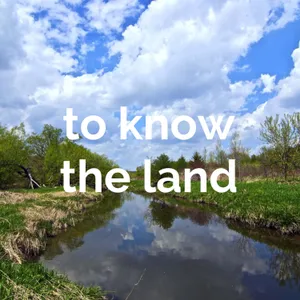
A show about relationships with the landbase, striving to evoke resilience, resistance, and reverence for the land. Interviews with authors, researchers, activists and students of the land.
Latest Episodes
The most recent episodes — sign up to get AI-powered summaries of each one.
- 5 days ago55 min
Ep. 290 : I Found A Northern Paper Wasp Nest!
A couple of days ago, while with my students I came across a paper wasp nest affixed to a Common Buckthorn (Rhamnus cathartica). It wasn’t too big, and I couldn’t tell if there was anything really going on within the individual cells. I ended up pruning the top of the Buckthorn off and bringing the nest home. This obviously led so a big series of questions and an even bigger investigation into who made this particular nest, how, and how the ongoing life cycles of these animals plays out. As per usual, it was a lot of fun.To learn more : Tracks and Sign of Insects and Other Invertebrates by Charley Eiseman and Noah Charney. Stackpole Books, 2010.Wasps by Heather Holm. Pollination Press, 2021.Guide to Observing Insect Lives by Donald M. Stokes. Little, Brown, 1983.Nutritional Value of the Larvae of the Alien Invasive Wasp Vespa velutina nigrithorax and Amino Acid Composition of the Larval Saliva by Hyeyoon Jeong, Ja Min Kim, Beomsu Kim, Ju-Ock Nam, Dongyup Hahn, Moon Bo Choi. Foods, 2020.Ep. 127 : Monday May 11, 2020 Gard Otis from the University of Guelph talks about the Asian Giant Hornet
- Oct 7, 202648 min
Ep. 289 : Wild Cranberry Harvest
I am in love with Cranberries. I have loved them for a long time. When I ended up in a bog full of Wild Large Cranberries (Vaccinium macrocarpon) last year, I knew I had to come back again and harvest some. The plan worked out and this year, on a beautiful early Autumn day, I got to hike out to that very same bog with a couple of pals and harvest a small buckets worth, for cookies, for sauce, for crumble and for joy. I didn’t know much about the natural history of Cranberries until now, but as is the case with this radio/podcast project, I learn with the shows.Hope you enjoy!To learn more :Michigan Shrubs and Vines by Burton V. Barnes, Christopher W. Dick, and Melanie E. Gunn. University of Michigan Press, 2016.Natures Garden by Samuel Thayer. Forager’s Harvest, 2010. The Book of … Swamp and Bog by John Eastman and Amelia Hansen. Stackpole Books, 1995.
- Sep 28, 202653 min
Ep. 288 : Appreciating Apples
In this wonderful season of harvest and plenty I wanted to share some gratitude for my favorite fruit. Like most everyone, I have long appreciated Apples (Malus domestica). They are fairly ubiquitous and common, but, as with many of the forms of life I like to talk about on this show, I feel like they are also underappreciated. We notice the fruit, but do we know how the flowers grow? The growth habit of the tree? The history? Some of us might need a refresher. Hope you enjoy!Photo by NatTo learn more :Ep. 256 : Apple Scat of Coyotes and Red FoxEp. 135 : Brian Husband and The Ontario Heritage and Feral Apple ProjectThe Book of … Field and Roadside by John Eastman and Amelia Hansen. Stackpole Books, 2003.Apples of North America by Tom Burford. Timber Press, 2021.Trees of Power by Akiva Silver. Chelsea Green, 2019.
- Sep 9, 202658 min
Ep. 287 : Considering Crayfish
Crayfish have fascinated me all my life. My mother told me stories of finding bright blue crayfish in streams as she was growing up. I see them now everyday in the river I live and work alongside. Crayfish are plentiful and seem to be throughout the Great Lakes bioregion, but I still don’t know enough about them. I want to know more. Summer is pretty much through, and Autumn is in the air. I can smell it. And really, it’s been a while since I have released a new show, but I have been thinking about this one for a good long time. I just keep getting hung up on the unanswered questions. I hope that just going through the motions, and ignoring the self doubt, might be enough to get back into the game. Photo: Rusty Crayfish in Guelph By Ryan Hodnett - Own work, CC BY-SA 4.0, https://commons.wikimedia.org/w/index.php?curid=97211151, edited for clarity and cropped.To learn more :Field Guide to Crayfishes in Canada (pdf)Crow’s Path Natural History of CrayfishTracks and Sign of Insects and Other Invertebrates by Charley Eiseman and Noah Charney. Stackpole Books, 2010.A Guide To Common Freshwater Invertebrates of North America by J. Reese Voshell, Jr. McDonald & Woodward Publishing Company, 2002.Crayfish Gastroliths, which I didn’t talk about but should have.
- Jun 25, 202657 min
Ep. 286 : Considering Plantain
When we see certain things everyday, we start to encounter them with routine and we can sometimes begin to overlook them. They become mundane and the magic is forgotten. This is tricky in human-human relationships as well as human-plant relationships. Sometimes it is good to remember the qualities that got us stoked in the first place, that filled us with awe and wonder, and bring us back into good relationship with those we once desired to know more and saw as significant in our lives.This is one of the reasons why I wanted to do an episode reorienting to Plantain; turning back towards a treasured companion on the bumpy trail of life. Many of us are very familiar with this plant, but perhaps we also take them for granted, their being ever present and underfoot with a pretty nondescript flower. But Summer is here, and the season is full of bumps and bites. Now is the time to turn again to our trusted friend along the path and reacquaint ourselves once more.Hope you enjoy the show.To learn more : Field Manual of Michigan Flora by Anton Reznicek and Edward Groesbeck Voss. University of Michigan Press, 2012.Nine Herbs Charm - Anglo-Saxon poem featuring PlantainBraiding Sweetgrass by Robin Wall Kimmerer. Milkweed Editions, 2013.Invasive Plant Medicine by Timothy Lee Scott. Healing Arts Press, 2010.American Wildlife Plants: A Guide to Wildlife Food Habits by Arthur C. Martin, et al. Dover, 1951.Population Dynamics of the Perennial Herbs Plantago Major L. and P. Rugelii Decne by Wayne R. Hawthorn and Paul B. Cavers.NorthEast Medicinal Plants by Liz Neves. Timber Press, 2020.Botany in a Day by Thomas J. Elpel. Hops Press, 2013.The Book of … Field and Roadside by John Eastman and Amelia Hansen. Stackpole Books, 2003.
- Jun 5, 202659 min
Ep. 285 : Migration of Vegetation Post Glaciation in Southern Ontario
I have been out with my students a lot in the past month and a half and it seems that every time we go out we are looking to the trees and shrubs that are growing in disturbed areas and likening these disrupted habitats to post glacial landscapes. Some of my students are able to recognize the similarities between an urban construction/destruction site, and some are still picking it up. I always do my best to explain what I am seeing, I still don’t know much and wanted to go a little bit deeper, as always. For this show I share some of what I am learning about the migration of trees and different flora through southern Ontario after the glaciers receded. On top of this, I wanted to note how these development sites also hold hope, and set examples for wild rejuvenation through random ecological assemblages and novel ecosystems in the face of uncertain futures of changing climates and infrastructure degradation.Please appreciate the fun title as well.To learn more : After the Ice Age by E. C. Pielou. University of Chicago Press, 1991.Ontario Forests : A Historical Perspective by K. A. Armsom. Fitzhenry and Whiteside, 2001.Wild Urban Plants of the NorthEast (2nd ed.) by Peter Del Tredici. Cornell University Press, 2020.Legacy : A Natural History of Ontario edited by John B. Theberge. McClelland & Stewart, 1989.glaciationtreesOntariopost-glaciationdisturbancenovel ecosystemsinvasive
- Apr 20, 202646 min
Ep. 284 : Annika Wilcox, Salamanbro
After my recent jaunt to go visit some migrating salamanders, I had so many questions. For years I have been making my pilgrimage to visit the salamanders as they make their ways to their breeding pools. All the while, I have been reading about “Unisexual Ambystomas” and was confused by the complexity of “the complex”, a small group of closely related salamanders and sperm stealers. Yeah, sperm stealers. After I heard some friends had ran into a local salamander afficionado, Annika Wilcox, I asked if she would like to hang out on air for an hour to discuss her love for the Order Urodela. I had so many questions of my own, along with questions from roommates, pals, and some of my students. I hope this helps us all learn a little bit more about those wild weird and wonderful amphwibians (see what I did there?).To learn more : Ep. 282 : Spotted Salamander Migration
- Apr 13, 202652 min
Ep. 283 : Hibernacula and Brown Snakes
The other day, while out with my students, we came across four basking snakes on the side of a gravel access road cutting through an Eastern White Cedar (Thuja occidentalis) forest. Two Eastern Garters (Thamnophis sirtalis sirtalis), a single Red-bellied (Storeria occipitomaculata), and a Brown Snake (Storeria dekayi). Three of the four stuck around and we watched, told a story, and asked questions about the snakes. Some of the questions I could help the students find the answers, but some I was at a loss. Do multiple species of snakes share a hibernaculum? What is a hibernaculum really? Do all snakes use them? What characteristics are the snakes looking for in a hibernaculum? These and a couple other questions really sat with me for the day. When it came time for the radio show, while I had a lot of interesting sightings this first warm week of Spring, the hibernacula question still held my heart. So I obviously had to look it up and learn more.To learn more : The Snakes of Ontario : Natural History, Distribution, and Status by Jeffrey C. Rowell. Self published, 2012.Amphibians and Reptiles of the Great Lakes Region by James H. Harding & David A. Mifsud. University of Michigan Press, 2017.
Get to know the land summaries in your inbox
Free AI-powered daily recaps. Key takeaways, quotes, and mentions — in a 5-minute read.
Get Free Summaries →Free forever for up to 3 podcasts. No credit card required.
You Might Also Like
Listeners also like.

Indigenous Earth Community Podcast
Indigenous leaders share traditional ecological knowledge to address modern environmental challenges.
Natural Causes
Explores the intersection of outdoor access, conservation, and environmental justice in an era of climate crisis and political threat.
The Forest Garden
Discusses forest gardening, permaculture, and regenerative design through interviews with practitioners and experts.
The Wild with Chris Morgan
Explores wildlife and wild places through stories of animals adapting to survive and the people protecting them.
The Nature Of with Willow Defebaugh
Explores lessons from nature through conversations with artists, scientists, and thinkers about creativity, connection, and transformation.
Terrestrials
Nature stories that reveal surprising animal and plant behaviors through immersive, family-friendly audio adventures.
The Michigan DNR's Wildtalk Podcast
Experts from Michigan’s Department of Natural Resources discuss wildlife, habitat, and conservation efforts across the state.

Wild Edible World: A Foraging Podcast
Explores wild edible plants and mushrooms, sharing global foraging knowledge and ways to identify and use them safely.
In Defense of Plants Podcast
Explores the fascinating world of plants, from tiny duckweeds to towering redwoods, celebrating the science and wonder of botany.
This Land
Rebecca Nagle investigates how conservative forces exploit Native children to undermine tribal sovereignty and advance political goals.

Scotland Outdoors
A topical guide to outdoor life in Scotland.
Hello, Nature
Dustlight Productions, REI Co-op Studios
Customized Recaps
AI-powered recaps with compact key takeaways, quotes, and insights.
Straight to Your Inbox
Get key takeaways from to know the land in a 5-minute read.
Save Hours Every Week
Stay current on your favorite podcasts without falling behind.
Frequently Asked Questions
What is Podzilla's to know the land daily summary?
It's a free AI-powered email that summarizes new episodes of to know the land as soon as they're published. You get the key takeaways, notable quotes, and links & mentions — all in a quick read.
How does the to know the land podcast summary work?
When a new episode drops, our AI transcribes and analyzes it, then generates a personalized summary tailored to your interests and profession. It's delivered to your inbox every morning.
Is this an official to know the land product?
No. Podzilla is an independent service that summarizes publicly available podcast content. We're not affiliated with or endorsed by byron.
Can I get summaries of other podcasts too?
Absolutely! The free plan covers up to 3 podcasts, any in the catalog. Basic raises that to 15, Pro to 40 and Max to 100. Browse our full catalog at /podcasts.
How often does to know the land release new episodes?
to know the land publishes biweekly. Our AI generates a summary within hours of each new episode.
What topics does to know the land cover?
to know the land covers topics including Science, Nature. Our AI identifies the specific themes in each episode and highlights what matters most to you.
Start getting to know the land summaries tomorrow morning.
Free forever for up to 3 podcasts. No credit card required.
Free forever for up to 3 podcasts. No credit card required.