Free Daily Podcast Summary
Think for Christ: Daily Summaries Delivered
by Dr. Anthony Alberino and Dr. Andrew Payne
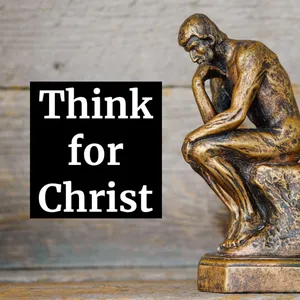
Think for Christ is a channel dedicated to the nurturing of the Christian mind. Join Anthony Alberino and Andrew Payne as they seek to motivate deep thinking about God and his creation through an exploration of theology, philosophy, and apologetics. Think for Christ is a place where believers are encouraged to think deeply, and a place where deeply thinking believers are encouraged.
Latest Episodes
The most recent episodes — sign up to get AI-powered summaries of each one.
- 3 weeks ago1h 1m
The Case for Divine Simplicity with Dr. Pat Flynn
In this episode, Anthony Alberino sits down with philosopher Pat Flynn to unpack his provocative paper, “Simply Put: The Argument for Divine Simplicity.” Flynn argues that divine simplicity isn’t an abstract relic of classical theology, but a conclusion that follows from clear and unavoidable conceptual truths: anything composite depends on prior parts, while what is ultimate depends on nothing. If God is truly ultimate, He cannot be composite. Together, they explore Flynn’s streamlined argument, why attempts to reject simplicity either collapse back into it or diminish God’s ultimacy, and his taxonomy of common anti-simplicity strategies—from the “Blob” to the “Patchwork.” The result is a sharp, accessible defense of one of the most debated doctrines in philosophical theology.
- Aug 18, 202614 min
What is Philosophy About?
What is philosophy actually about? In this video, Anthony Alberino explores the classical answer to that question: philosophy studies the intelligible order of reality—the principles, natures, and causes that make science, and indeed all rational inquiry, possible. Drawing on Lloyd Gerson’s Platonism and Naturalism: The Possibility of Philosophy, we examine why the classical philosophical tradition—from Plato and Aristotle to Augustine and Aquinas—stands fundamentally opposed to naturalism, and why Gerson argues that the choice is ultimately philosophy or naturalism, not both. Along the way, Anthony examines the five doctrines Gerson associates with consistent naturalism—materialism, mechanism, nominalism, skepticism, and relativism—and consider what the rise of naturalism means for the nature of philosophy today. Gerson’s framework presents the history of philosophy as a conflict between Ur-Platonism and Naturalism, including various attempts to find compromises between them.
- Jul 13, 20261h 2m
After Stoicism with Dr. Thomas Ward
In this episode of Think for Christ, Anthony Alberino is joined by philosopher Dr. Thomas Ward to discuss his outstanding book, After Stoicism: Last Words of the Last Roman Philosopher. Together they explore the life and legacy of Boethius, the enduring wisdom of The Consolation of Philosophy, and why this sixth-century masterpiece remains one of the greatest works in the Western philosophical tradition. The conversation examines Stoicism and its limits, Lady Philosophy's therapeutic role in consoling Boethius, the classical understanding of happiness as beatitude, the relationship between philosophy and Christian faith, the problem of evil, divine providence, human freedom, and Boethius' famous solution to the apparent conflict between divine foreknowledge and free will. Whether you're interested in philosophy, theology, classical education, or the search for lasting happiness, this discussion offers a compelling introduction to one of the most influential books ever written. If you enjoy thoughtful conversations on philosophy, theology, and the Christian intellectual tradition, be sure to like, subscribe, and share this episode with others. #Boethius #ConsolationOfPhilosophy #ThomasWard #AfterStoicism #Stoicism #ChristianPhilosophy #Platonism #ClassicalPhilosophy #ThinkForChrist Amazon link to Dr. Ward's book After Stoicism: https://www.amazon.com/After-Stoicism-Words-Roman-Philosopher/dp/1685781330/ref=sr_1_1?crid=3EZM0T7M3665V&dib=eyJ2IjoiMSJ9.r3kSFEzss3pIvEav7VcANQrFV8EZ9_dDn2B6usbB56eQiUZqRiOnbdqxTDet_LIqhGY1SUcE5O4vxY59tkI9SIvPlkmD9qPv4K86_nixNYQIBs_rz2hS847-6C7GyhUSYP3IAFqjTM3E-X6Vn-BeIB5vCQX7riZMl2pIcxLiJZFFoY1B1noGOxwISk8RzQKuzWxwhfiqUQPv5ps_oOYtP-Jf5rSdpG0sCE4criZjp9I.FYfF99_4amfE6Tu3v5qgOunt3Hj9lnMEEZrzklS_VPg&dib_tag=se&keywords=after%2Bstoicism&qid=1783954356&sprefix=after%2Bstoicism%2Caps%2C156&sr=8-1
- Jun 15, 20261h 6m
On Christian Platonism with Dr. Michael Wiitala
What happens when the world of Plato meets the world of Christ? In the final installment of this three-part series on Platonism, Dr. Anthony Alberino sits down with Dr. Michael Wiitala to explore the fascinating relationship between Christianity and the Platonic tradition. From the Gospel of John’s doctrine of the Logos to the profound influence of Platonism on the Church Fathers, creeds, and classical Christian theology, this episode examines how Christian thinkers appropriated, transformed, and sometimes rejected elements of Greek philosophy in their effort to understand and articulate the faith. The discussion covers Philo of Alexandria, Justin Martyr, Clement of Alexandria, Origen, Augustine, Dionysius the Areopagite, Maximus the Confessor, and other major figures in the Christian Platonic tradition. Dr. Wiitala also explains why Platonism proved uniquely attractive to early Christians, how it shaped doctrines concerning God, creation, immaterial reality, providence, and the soul, and where important disagreements emerged regarding creation, reincarnation, emanation, and pagan religion. Finally, Anthony and Michael address contemporary criticisms of Christian Platonism and ask whether the synthesis of faith and philosophy remains a fruitful project for Christian thinkers today. Topics Covered: The Logos in John's Gospel and Philo of AlexandriaPlatonism and the Early Church FathersAugustine's conversion and the NeoplatonistsChristian Platonism and the Ecumenical CreedsProvidence, creation, and the transcendence of GodThe Trinity and Platonic metaphysicsTheosis and the Christian life Critiques of Christian PlatonismIs Christian Platonism still relevant today? This episode concludes our series: Part 1: On Plato and Platonism Part 2: On Neoplatonism Part 3: On Christian Platonism If you enjoy thoughtful conversations on philosophy, theology, and the intellectual foundations of Christianity, be sure to like, subscribe, and share. #ChristianPlatonism #Plato #Christianity #Theology #Philosophy #Augustine #Neoplatonism #ChurchFathers #Logos #ThinkForChrist
- Jun 10, 20261h 7m
On Neoplatonism with Dr. Michael Wiitala
In this episode of Think for Christ, Anthony Alberino is joined again by philosopher Dr. Michael Wiitala to explore the origins, development, and enduring significance of Neoplatonism. Together they trace the history of Platonism from Plato’s Academy through the Hellenistic and Roman periods before examining the thought of Plotinus, the founder of Neoplatonism. The discussion covers the famous hierarchy of the One, Intellect, and Soul, the meaning of the claim that the One is “beyond being,” and the profound influence of Neoplatonic metaphysics on Christian, Jewish, and Islamic thought. The conversation concludes with a reflection on how Plotinus deepened the metaphysical question by asking not only what reality is, but why there is being at all. Topics Covered:The fate of Plato’s Academy after Plato's deathMiddle Platonism and the rise of NeoplatonismPlotinus and the systematization of Plato's philosophy The One, Intellect (Nous), and World SoulWhy Plotinus places the One beyond beingThe relationship between Platonism, Aristotelianism, Stoicism, and EpicureanismThe enduring theological and metaphysical legacy of Neoplatonism #Plato #Neoplatonism #Plotinus #ChristianPlatonism #Philosophy #Metaphysics #ThomasAquinas #Augustine #ThinkForChrist #AnthonyAlberino #MichaelWiitala #ClassicalTheism #AncientPhilosophy #Theology #HistoryOfPhilosophy
- May 25, 20261h 5m
On Plato and Platonism with Dr. Michael Wiitala
How should we understand Plato—what exactly is Platonism? In this episode of Think for Christ, Anthony Alberino sits down with philosopher Dr. Michael Wiitala for a deep exploration of Plato, Socrates, the theory of Forms, dialectic, metaphysics, and the true nature of philosophy itself. Drawing from the Platonic dialogues, the conversation examines how Plato sought not merely to construct a philosophical system, but to awaken the soul to truth, goodness, and wisdom through the lived practice of philosophy. Anthony and Dr. Wiitala discuss Plato’s relationship to Socrates, why Plato wrote dialogues instead of systematic treatises, the meaning of dialectic, and the role of philosophy as a transformative way of life rather than merely an academic exercise. The discussion also tackles common misconceptions about Platonism—including the idea that Plato believed in a literal “world of Forms”—and situates Plato within the broader context of Greek philosophy, including the influence of Parmenides, Heraclitus, and the Sophists.
- May 2, 202610 min
God's Eternity
What does it mean to say that God is eternal? Is God simply everlasting—or does He exist beyond time altogether? In this episode, Anthony Alberino explores the classical doctrine of divine eternity, drawing on Aristotle, Thomas Aquinas, and Boethius. You’ll learn why time is the measure of change, why all changeable beings exist in time, and why a changeless God must be timeless. We also clear up common misconceptions—God’s eternity is not a “frozen now,” but the fullness of life possessed all at once.
- Mar 9, 202618 min
God's Immutability and Impassibility
What does it mean to say that God cannot change? And why did the vast majority of the Christian tradition affirm the doctrines of divine immutability and impassibility? In this episode, Anthony Alberino explores the classical Christian understanding of God’s changelessness through the metaphysics of Aristotle and Thomas Aquinas. By examining the principles of act and potency, divine simplicity, and pure actuality, we see why a perfect and necessary being cannot undergo change or be acted upon. Far from implying a distant or lifeless deity, the classical doctrine reveals God as the infinite act of existence itself—the ultimate source of life, activity, and love. The episode also addresses common objections and explains how Christ’s human experiences fit with the Church’s teaching on God’s immutability, as articulated at the Council of Chalcedon. Topics covered: Divine Immutability • Divine Impassibility • Act and Potency • Pure Act • Classical Theism • Thomistic Philosophy • The Incarnation Subscribe for more episodes on classical theism, philosophy, and Christian theology.
About Think for Christ
Think for Christ is a channel dedicated to the nurturing of the Christian mind. Join Anthony Alberino and Andrew Payne as they seek to motivate deep thinking about God and his creation through an exploration of theology, philosophy, and apologetics. Think for Christ is a place where believers are encouraged to think deeply, and a place where deeply thinking believers are encouraged.
Customized Recaps
AI-powered recaps with compact key takeaways, quotes, and insights.
Straight to Your Inbox
Get key takeaways from Think for Christ in a 5-minute read.
Save Hours Every Week
Stay current on your favorite podcasts without falling behind.
Frequently Asked Questions
What is Podzilla's Think for Christ daily summary?
It's a free AI-powered email that summarizes new episodes of Think for Christ as soon as they're published. You get the key takeaways, notable quotes, and links & mentions — all in a quick read.
How does the Think for Christ podcast summary work?
When a new episode drops, our AI transcribes and analyzes it, then generates a personalized summary tailored to your interests and profession. It's delivered to your inbox every morning.
Is this an official Think for Christ product?
No. Podzilla is an independent service that summarizes publicly available podcast content. We're not affiliated with or endorsed by Dr. Anthony Alberino and Dr. Andrew Payne.
Can I get summaries of other podcasts too?
Absolutely! The free plan covers up to 3 podcasts. Upgrade to Pro for 15, or Premium for 50. Browse our full catalog at /podcasts.
How often does Think for Christ release new episodes?
Think for Christ publishes biweekly. Our AI generates a summary within hours of each new episode.
What topics does Think for Christ cover?
Think for Christ covers topics including Religion & Spirituality, Spirituality, Christianity, Philosophy, Culture, Society & Culture. Our AI identifies the specific themes in each episode and highlights what matters most to you.
Start getting Think for Christ summaries tomorrow morning.
Free forever for up to 3 podcasts. No credit card required.
Free forever for up to 3 podcasts. No credit card required.