Free Daily Podcast Summary
Theology is Fun: Daily Summaries Delivered
by Dr. Corey Abney & Dr. Ben Skaug
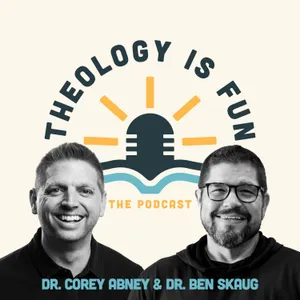
What do you get when two theologians walk into a podcast? A lot more fun than you'd expect. Whether you're a lifelong student of Scripture or just curious about the deeper stuff, Dr. Corey Abney and Dr. Ben Skaug will challenge your thinking, strengthen your faith, and prove once and for all that Theology is Fun.
Latest Episodes
The most recent episodes — sign up to get AI-powered summaries of each one.
- 2 days ago28 min
Are We Living in the Last Days? | End Times & the Second Coming of Jesus
Are we living in the last days—and what does that actually mean?The end times often bring up questions about the rapture, tribulation, and the book of Revelation. But when the New Testament speaks about the “last days,” is it only describing the future? And why should the return of Jesus give Christians hope?In this episode, Dr. Corey and Dr. Ben begin a conversation about eschatology—the study of the last things. They discuss when the last days began, how Jesus is reigning now, and why the early church lived with an expectation of His return. They also explore tribulation, the resurrection of the dead, and final judgment—and explain why Christians can disagree about end-times timelines while remaining united in their hope.So, how should the promise of Christ’s return change the way we live today?Discover:What the Bible means by “the last days”How Christ’s ascension and Pentecost connect to the end timesWhy the early church expected Jesus to return in their lifetimeHow God’s patience helps explain the wait for His returnWhy Revelation is meant to bring clarity, comfort, and hopeWhy the second coming of Jesus is the blessed hope of the churchWhat happens at the resurrection and final judgmentHow to discuss different end-times views without dividing the churchKey Passages:Hebrews 1:1–3 • 1 Corinthians 10:11 • 1 Thessalonians 4–5 • 2 Peter 3:9 • Revelation 1 • Matthew 13 • Matthew 24Understanding the end times should shape how we live in the present. Dr. Corey and Dr. Ben explain how remembering that Christ reigns and will return helps us live with urgency, remain united, and look ahead with confidence.👉 Subscribe for more theology (and a lot more fun).🎧 Available wherever you listen to podcastsListen on Apple PodcastsListen on SpotifyFollow Corey Abney on InstagramFollow Ben Skaug on InstagramLearn more about Bell Shoals ChurchWatch full sermons from Dr. Corey Abney#TheologyIsFun #EndTimes #LastDays #SecondComing #JesusChrist #Eschatology #BibleStudy #ChristianTheology #Revelation
- 1 weeks ago22 min
How to Understand the Bible: 5 Common Misconceptions
You know the Bible stories—but do you know how they all connect?From David and Goliath to the book of Revelation, it’s easy to read Scripture as individual stories, moral lessons, or passages about our own lives. But how does seeing the Bible as one unfolding story change the way we understand it?In this episode, Dr. Ben is joined by guest host Patrick to explore five common misunderstandings about the Bible. They discuss why God is at the center of Scripture, how the covenants connect its story, and why the Old Testament offers far more than examples of good and bad behavior. They also explore how all of Scripture points to Jesus—and why Revelation is meant to reveal Him.So, how can we move beyond familiar Bible stories and begin to understand the bigger picture?Discover:Why we often make ourselves the center of ScriptureWhat to ask before “What does this passage mean for me?”How 66 books connect to tell one unfolding storyWhat the biblical covenants are and how they fit togetherWhy the Old Testament is more than a collection of moral lessonsHow Old Testament people, events, and promises point forward to ChristWhy Revelation is meant to bring clarity and comfortKey Passages:Genesis 1:1 • Romans 1 • 1 Corinthians 10:6 • Luke 24 • 2 Corinthians 3 • Revelation 1:1Understanding the Bible begins with knowing the God who reveals Himself through it. Dr. Ben and Patrick explain how keeping our eyes on Christ helps us connect the Old and New Testaments, understand the purpose of familiar stories, and see the unity of Scripture.👉 Subscribe for more theology (and a lot more fun).🎧 Available wherever you listen to podcastsListen on Apple PodcastsListen on SpotifyFollow Corey Abney on InstagramFollow Ben Skaug on InstagramLearn more about Bell Shoals ChurchWatch full sermons from Dr. Corey Abney#TheologyIsFun #BibleStudy #UnderstandingTheBible #BiblicalTheology #OldTestament #JesusChrist #ChristianTheology #Revelation
- 2 weeks ago34 min
4 Theologians Every Christian Should Know
How did a bishop, a former skeptic, a monk, and a bookworm help shape the way you understand God today?You may have never read their books—or even heard their names—but Athanasius, Augustine, Martin Luther, and John Calvin helped shape conversations Christians still have about Jesus, sin, salvation, and Scripture. So, why should their stories matter to us?In this episode, Dr. Ben is joined by guest host Patrick to explore four of his favorite theologians. They discuss Athanasius’s defense of Christ’s divinity, Augustine’s understanding of humanity’s fallen nature, Luther’s emphasis on justification by faith alone, and Calvin’s approach to understanding theology and seeing Christ throughout Scripture.So, how can learning from these theologians deepen our understanding of the Bible—and how do we appreciate their contributions while keeping Scripture as our final authority?Discover:Why church history matters for understanding theology todayHow to learn from theologians without agreeing with everything they taughtHow Athanasius defended the divinity of JesusWhat Augustine’s disagreement with Pelagius reveals about sin and human natureWhy Martin Luther emphasized Scripture alone and justification by faith aloneHow John Calvin helped organize theology and highlight Christ throughout ScriptureWhere to start if you want to learn more about these influential thinkersKey Passages:Romans 1 • Romans 6–8 • Colossians 1 • Hebrews 1:1–3 • Philippians 2Church history reminds us that we aren’t the first people to ask difficult questions about God. Dr. Ben and Patrick explain how learning from those who came before us can sharpen our understanding of Scripture, help us recognize theological errors, and deepen our appreciation for the truth of the gospel.Resources to Explore:R.C. Sproul’s Heroes of the Christian Faith series from Ligonier Ministries:Explore the seriesLearn about Athanasius:Athanasius with R.C. SproulLearn about Augustine:Augustine with R.C. SproulLearn about Martin Luther:Martin Luther, Part 1, with R.C. SproulLearn about John Calvin:John Calvin with R.C. Sproul👉 Subscribe for more theology (and a lot more fun).🎧 Available wherever you listen to podcastsListen on Apple PodcastsListen on SpotifyFollow Corey Abney on InstagramFollow Ben Skaug on InstagramLearn more about Bell Shoals ChurchWatch full sermons from Dr. Corey Abney#TheologyIsFun #ChurchHistory #Athanasius #Augustine #MartinLuther #JohnCalvin #ChristianTheology #BibleStudy
- 3 weeks ago28 min
Why Did God Test Abraham? The Meaning of Isaac’s Sacrifice
Why did God ask Abraham to sacrifice Isaac—and how does this story point to Jesus?God promised Abraham a son, and despite Abraham and Sarah’s old age, Isaac was born. Yet God then asked Abraham to offer that same son as a sacrifice. How could God’s promise continue through Isaac if Isaac died? And what gave Abraham the faith to obey?In this episode, Dr. Corey and Dr. Ben explore the story of Abraham and Isaac in Genesis 22. They explain Abraham’s belief that God could raise his son from the dead, discuss the significance of the ram provided in Isaac’s place, and trace the connections between Isaac, the Passover, and Jesus as the Lamb of God.So, why was Abraham willing to sacrifice Isaac—and what can his story teach us about faith, God’s provision, and the price of our redemption?Discover:How Isaac’s miraculous birth reveals God’s faithfulnessWhy God tested Abraham by asking him to sacrifice IsaacWhat Hebrews 11 reveals about Abraham’s faith in resurrectionWhy Abraham told his servants that both he and Isaac would returnHow the ram provided in Isaac’s place points toward a greater sacrificeHow the Passover connects to Jesus as the Lamb of GodHow baptism and the Lord’s Supper connect to Old Testament promisesKey Passages:Genesis 3:15 • Genesis 22:1–14 • Exodus 12 • Hebrews 11:17–19 • John 1:29 • John 3:16Abraham and Isaac’s story raises difficult questions about faith, obedience, and sacrifice. Dr. Corey and Dr. Ben explain why this account must be understood within God’s unfolding plan of redemption—and how God’s promise to provide ultimately points to Jesus Christ.👉 Subscribe for more theology (and a lot more fun).🎧 Available wherever you listen to podcastsListen on Apple Podcasts – https://podcasts.apple.com/us/podcast/theology-is-fun/id1808965100Listen on Spotify – https://open.spotify.com/show/4EZUfXCbWCbSs6VpbAYSEbFollow Corey Abney on Instagramhttps://instagram.com/corey.abneyFollow Ben Skaug on Instagramhttps://instagram.com/ben.skaugLearn more about Bell Shoals Churchhttps://instagram.com/bellshoalsWatch full sermons from Dr. Corey Abneyhttps://youtube.com/playlist?list=PLLbG1nVw0Ymu2gj1-OkB9WyX9vgWaOtot#TheologyIsFun #Abraham #Isaac #LambOfGod #GodsPromises #ChristianTheology #BibleStudy
- Oct 14, 202632 min
What Happens When We Take God’s Promises Into Our Own Hands?
Why did God bless Ishmael—and yet choose Isaac as the son of promise?God promised Abraham a son, but as the years passed, Abraham and Sarah struggled to see how that promise could be fulfilled. Sarah gave her servant Hagar to Abraham, and Hagar gave birth to Ishmael. Yet God made clear that His covenant would continue through Isaac. What does that distinction tell us about faith and God’s promises?In this episode, Dr. Corey and Dr. Ben explore the story of Abraham, Sarah, Hagar, and Ishmael. They explain the difference between earthly blessing and covenant blessing, consider Paul’s comparison of Ishmael and Isaac, and discuss their perspective on the spiritual roots of tension in the Middle East.So, was Ishmael saved—and what can his story teach us about trusting God rather than taking matters into our own hands?Discover:Why Sarah gave Hagar to AbrahamHow Abraham and Sarah tried to fulfill God’s promise themselvesHow God cared for Hagar and blessed IshmaelWhy Ishmael was not the son of promiseHow Paul contrasts Ishmael and Isaac in GalatiansWhy the hosts distinguish earthly blessing from saving faithWhat this story teaches us about waiting on God’s timingKey Passages:Genesis 16–17 • Genesis 21 • Galatians 3–4Ishmael’s story raises difficult questions about blessing, faith, and the consequences of disobedience. Dr. Corey and Dr. Ben explain why receiving earthly blessings is different from belonging to God’s covenant people—and how God’s promise to Abraham ultimately points to Jesus Christ.👉 Subscribe for more theology (and a lot more fun).🎧 Available wherever you listen to podcastsListen on Apple Podcasts – https://podcasts.apple.com/us/podcast/theology-is-fun/id1808965100Listen on Spotify – https://open.spotify.com/show/4EZUfXCbWCbSs6VpbAYSEbFollow Corey Abney on Instagramhttps://instagram.com/corey.abneyFollow Ben Skaug on Instagramhttps://instagram.com/ben.skaugLearn more about Bell Shoals Churchhttps://instagram.com/bellshoalsWatch full sermons from Dr. Corey Abneyhttps://youtube.com/playlist?list=PLLbG1nVw0Ymu2gj1-OkB9WyX9vgWaOtot#TheologyIsFun #Ishmael #Abraham #Isaac #GodsPromises #ChristianTheology #BibleStudy
- Oct 7, 202631 min
Was Lot Really Righteous? Understanding His Story in Sodom and Gomorrah
Why does the Bible call Lot righteous—and how do we reconcile that with his troubling choices?Lot lived in Sodom, a city known for its wickedness, and his own story includes decisions that are difficult to understand. Yet 2 Peter 2:7–8 calls him righteous and describes how the lawless deeds around him tormented his soul. What does that tell us about his faith?In this episode, Dr. Corey and Dr. Ben explore the story of Lot and explain why being counted righteous doesn’t mean someone always makes righteous choices. They consider what Scripture reveals about his life, why Peter’s description matters, and how the limited details we have should shape our interpretation.So, was Lot a believer—and what can his story teach us about faith, righteousness, and failure?Discover:Why Peter describes Lot as righteousWhat Lot’s distress over sin reveals about his faithWhy believers can still make unrighteous choicesHow 2 Peter helps us understand Lot’s story in GenesisWhy we should be careful when drawing conclusions from limited biblical detailsWhat God’s rescue of Lot reveals about His judgment and mercyKey Passages:Genesis 18–19 • 2 Peter 2:6–9Lot’s story raises difficult questions about the relationship between faith and behavior. Dr. Corey and Dr. Ben explain why his failures must be considered alongside Scripture’s description of his righteousness—and why being saved by God’s grace does not mean living without failure.👉 Subscribe for more theology (and a lot more fun).🎧 Available wherever you listen to podcastsListen on Apple Podcasts – https://podcasts.apple.com/us/podcast/theology-is-fun/id1808965100Listen on Spotify – https://open.spotify.com/show/4EZUfXCbWCbSs6VpbAYSEbFollow Corey Abney on Instagramhttps://instagram.com/corey.abneyFollow Ben Skaug on Instagramhttps://instagram.com/ben.skaugLearn more about Bell Shoals Churchhttps://instagram.com/bellshoalsWatch full sermons from Dr. Corey Abneyhttps://youtube.com/playlist?list=PLLbG1nVw0Ymu2gj1-OkB9WyX9vgWaOtot#TheologyIsFun #Lot #SodomAndGomorrah #Righteousness #GodsGrace #ChristianTheology #BibleStudy
- Sep 30, 202630 min
How Were People Saved in the Old Testament?
How were people saved before Jesus came to earth—and could Abraham actually be called a Christian?Abraham believed God, and his faith was counted as righteousness. But how could he be saved through Jesus when Christ’s death and resurrection were still centuries away? Were Old Testament believers saved by keeping the law, offering sacrifices, or trusting in the Messiah God had promised?In this episode, Dr. Corey and Dr. Ben explore salvation in the Old Testament and explain why there has always been one way to be saved. They examine Abraham’s faith, God’s eternal plan of redemption, and the work of the Holy Spirit before Pentecost. They also discuss why the sacrificial system pointed forward to Jesus rather than providing salvation on its own.So, were Abraham, Moses, and David saved differently—or did they trust the same Savior we do today?Discover:How people were saved in the Old TestamentWhy Dr. Corey and Dr. Ben describe Abraham as a ChristianWhat it means that Abraham’s faith was counted as righteousnessHow Old Testament believers trusted in the promised MessiahWhy animal sacrifices could never take away sinHow the Holy Spirit worked in believers before PentecostWhat changed with the coming of Jesus and the New CovenantKey Passages:Genesis 3:15 • Genesis 15:6 • Romans 4:17–21 • Galatians 3:8 • John 8:56 • Hebrews 11:8–16 • John 4:21–24 • Psalm 50The question of salvation before Jesus points to the unity of God’s redemptive plan. Dr. Corey and Dr. Ben explain how Old Testament believers looked forward to the promised Messiah, while believers today look back to His finished work—the same Savior at the center of both.👉 Subscribe for more theology (and a lot more fun).🎧 Available wherever you listen to podcastsListen on Apple Podcasts – https://podcasts.apple.com/us/podcast/theology-is-fun/id1808965100Listen on Spotify – https://open.spotify.com/show/4EZUfXCbWCbSs6VpbAYSEbFollow Corey Abney on Instagramhttps://instagram.com/corey.abneyFollow Ben Skaug on Instagramhttps://instagram.com/ben.skaugLearn more about Bell Shoals Churchhttps://instagram.com/bellshoalsWatch full sermons from Dr. Corey Abneyhttps://youtube.com/playlist?list=PLLbG1nVw0Ymu2gj1-OkB9WyX9vgWaOtot#TheologyIsFun #OldTestament #Salvation #Abraham #JesusChrist #ChristianTheology #BibleStudy
- Sep 23, 202628 min
Melchizedek: A Man, an Angel, or Jesus?
Was Melchizedek a mysterious king and priest—or was he actually an appearance of Jesus before His birth?Melchizedek appears briefly in Genesis 14, where he blesses Abraham and receives a tenth of the spoils. Yet centuries later, Psalm 110 and the book of Hebrews return to him to explain something essential about Jesus. Why does this seemingly minor figure matter so much?In this episode, Dr. Corey and Dr. Ben examine the different views of Melchizedek, including the idea that he was a preincarnate appearance of Christ. They look at his missing genealogy, his roles as both king and priest, and the way Hebrews uses his encounter with Abraham to show that Jesus belongs to a greater and lasting priesthood.So, was Melchizedek Jesus—or was he a real person whose life pointed forward to Him?Discover:Who Melchizedek was in Genesis 14Why Abraham gave him a tenth of the spoilsWhat Hebrews means when it says he had no recorded father, mother, or genealogyWhether Melchizedek could have been an appearance of JesusWhy his priesthood matters more than the Levitical priesthoodHow Melchizedek points to Jesus as both King and PriestWhether the bread and wine in Genesis 14 point forward to the Lord’s SupperKey Passages:Genesis 14:18–20 • Psalm 110:4 • Hebrews 5:5–10 • Hebrews 6:19–20 • Hebrews 7The mystery of Melchizedek leads to a bigger question: What does his story reveal about Jesus? Dr. Corey and Dr. Ben explain why Hebrews looks back to this ancient king and priest to help us understand Christ’s eternal priesthood.👉 Subscribe for more theology (and a lot more fun).🎧 Available wherever you listen to podcastsListen on Apple Podcasts – podcasts.apple.com/us/podcast/theology-is-fun/id1808965100Listen on Spotify – open.spotify.com/show/4EZUfXCbWCbSs6VpbAYSEbFollow Corey Abney on Instagraminstagram.com/corey.abneyFollow Ben Skaug on Instagraminstagram.com/ben.skaugLearn more about Bell Shoals Churchinstagram.com/bellshoalsWatch full sermons from Dr. Corey Abneyhttps://youtube.com/playlist?list=PLLbG1nVw0Ymu2gj1-OkB9WyX9vgWaOtot#TheologyIsFun #Melchizedek #JesusChrist #Hebrews7 #ChristianTheology #BibleStudy
Get Theology is Fun summaries in your inbox
Free AI-powered daily recaps. Key takeaways, quotes, and mentions — in a 5-minute read.
Get Free Summaries →Free forever for up to 3 podcasts. No credit card required.
You Might Also Like
Podcasts in similar categories.

Dateline NBC
True-crime mysteries, documentaries, and in-depth investigations from NBC News.

Candace
Candace speaks freely and unfiltered on various topics.

Morbid
A true crime and spooky history podcast blending research with dark humor, hosted by an autopsy technician and a hairstylist.

This American Life
True stories exploring weekly themes with emotional depth, humor, and narrative twists, capturing the complexities of contemporary life.

The Megyn Kelly Show
Provocative conversations with influential figures in politics, law, and culture, featuring candid and fearless dialogue.

Sword and Scale
Raw audio from 911 calls, court testimony, and interviews reveals the realities of violent crime and the justice system.

Matt and Shane's Secret Podcast
Two comedians deliver irreverent, unfiltered humor in a chaotic and improvisational format.

Bulwark Takes
Daily news analysis from a conservative perspective, featuring insights and commentary by Bulwark staff on current political events.
About Theology is Fun
What do you get when two theologians walk into a podcast? A lot more fun than you'd expect. Whether you're a lifelong student of Scripture or just curious about the deeper stuff, Dr. Corey Abney and Dr. Ben Skaug will challenge your thinking, strengthen your faith, and prove once and for all that Theology is Fun.
Customized Recaps
AI-powered recaps with compact key takeaways, quotes, and insights.
Straight to Your Inbox
Get key takeaways from Theology is Fun in a 5-minute read.
Save Hours Every Week
Stay current on your favorite podcasts without falling behind.
Frequently Asked Questions
What is Podzilla's Theology is Fun daily summary?
It's a free AI-powered email that summarizes new episodes of Theology is Fun as soon as they're published. You get the key takeaways, notable quotes, and links & mentions — all in a quick read.
How does the Theology is Fun podcast summary work?
When a new episode drops, our AI transcribes and analyzes it, then generates a personalized summary tailored to your interests and profession. It's delivered to your inbox every morning.
Is this an official Theology is Fun product?
No. Podzilla is an independent service that summarizes publicly available podcast content. We're not affiliated with or endorsed by Dr. Corey Abney & Dr. Ben Skaug.
Can I get summaries of other podcasts too?
Absolutely! The free plan covers up to 3 podcasts, any in the catalog. Basic raises that to 15, Pro to 40 and Max to 100. Browse our full catalog at /podcasts.
How often does Theology is Fun release new episodes?
Theology is Fun publishes weekly. Our AI generates a summary within hours of each new episode.
What topics does Theology is Fun cover?
Theology is Fun covers topics including Comedy, Religion & Spirituality, Spirituality, Philosophy, Culture, Society & Culture. Our AI identifies the specific themes in each episode and highlights what matters most to you.
Start getting Theology is Fun summaries tomorrow morning.
Free forever for up to 3 podcasts. No credit card required.
Free forever for up to 3 podcasts. No credit card required.