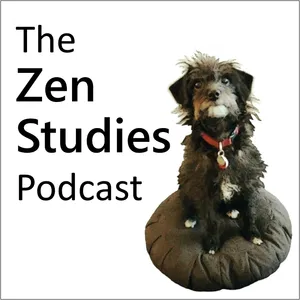
Free Daily Podcast Summary
The Zen Studies Podcast: Daily Summaries Delivered
by Domyo Burk
Learn about traditional Zen and Buddhist teachings, practices, and history through episodes recorded specifically for podcast listeners. Host Domyo Burk is a Soto Zen priest and teacher.
Latest Episodes
The most recent episodes — sign up to get AI-powered summaries of each one.
- 1 weeks ago22 min
340 - Five Kinds of Appropriate Longing (1 of 2)
Many people think that the aim of Buddhism is let go of any kind of longing. However, without wholesome desires – to awaken, to act ethically, to honor your relationships, etc. – you wouldn't progress in practice. I discuss five kinds of appropriate longing based loosely on the Vajrayana teaching of the five wisdom energies.
- 3 weeks ago27 min
339 – Bright Clarity Appears Before You: Insight When You're "Just Sitting"
When we sit Zazen, even if we're working with a koan, we do not actively try to achieve insight. But nonetheless, Chan and Zen masters throughout history have exhorted us to awaken to Reality. How does insight happen when you're "just sitting?" How do you awaken to what you have not yet seen without getting caught up in concepts of enlightenment and delusion, before and after? How do you lean into the unknown if you're trying to let go of any kind of doing at all?
- Aug 15, 202623 min
338 – Seijo Is Separated from Her Soul: Waking Up from Alienation from Ourselves
There are countless ways in which we can feel inwardly divided or somehow alienated from our true self. Case 35 of the Mumonkan, or Gateless Gate koan collection addresses this matter with a pointed question about Seijo, the character in a traditional Chinese story who ends up living parallel lives. The koan asks, "Which one is the true Seijo?" Naturally, the answer is "Both… and neither."
- Aug 1, 202633 min
337 - Finding the Edge of Your Practice (2 of 2)
To keep your Dharma practice lively, it's important to regularly identify the "edge" of your practice. This is your growth point – the current limit of your understanding and your capacity to embody it. Of course, you don't have a single edge; it might be more accurate to say it's important to identify something on your growth "perimeter," or find one of your many edges, so you focus your practice or have a dialogue with a teacher. I discuss what an edge is, what it means to find one, why this is important, and how to go about it.
- Jul 20, 202628 min
336 - Finding the Edge of Your Practice (1 of 2)
To keep your Dharma practice lively, it's important to regularly identify the "edge" of your practice. This is your growth point – the current limit of your understanding and your capacity to embody it. Of course, you don't have a single edge; it might be more accurate to say it's important to identify something on your growth "perimeter," or find one of your many edges, so you can focus your practice or have a dialogue with a teacher. I discuss what an edge is, what it means to find one, why this is important, and how to go about it.
- Jul 9, 202623 min
335 – Six Useful Lessons from the Buddhist Teachings on Rebirth (2 of 2)
This is second episode of two on this topic. In the first episode (334), I identified existing episodes of the Zen Studies Podcast on - or related to - rebirth that you might want to listen to for context and background. Then I discussed the way you are free to believe in rebirth, disbelieve, or remain agnostic about it. Finally, I talked about the first useful lesson we can take from the teachings of rebirth: The basic laws of karma, or behavioral cause-and-effect, as portrayed in the cosmology of the Six Realms. In this episode I cover five more useful lessons from the Buddhist teachings on rebirth.
- Jun 29, 202626 min
334 – Six Useful Lessons from the Buddhist Teachings on Rebirth (1 of 2)
Zen practice is not dependent on rebirth being true or untrue, and I suspect most Dharma teachers would say the same of their lineage traditions. As long as you practice, it doesn't matter whether you believe in rebirth, disbelieve, or maintain an agnostic attitude. Nevertheless, the traditional narratives and imagery of rebirth teachings contain many valuable lessons for us.
- Jun 16, 202633 min
333 - Buddha Is Like an Old-Growth Tree: Practice as Human Maturation
Sometimes it's difficult to relate to the goal of "awakening" or "enlightenment." Especially if we've gained a hard-won sense of peace with ourselves and our lives, it can seem counterproductive to dwell on some experience or understanding we don't yet have and then drive ourselves to achieve it. I want to share an alternative way to frame your practice that might kindle your Bodhicitta in a different way.
Get The Zen Studies Podcast summaries in your inbox
Free AI-powered daily recaps. Key takeaways, quotes, and mentions — in a 5-minute read.
Get Free Summaries →Free forever for up to 3 podcasts. No credit card required.
You Might Also Like
Listeners also like.
Thich Nhat Hanh Dharma Talks
Teachings and dharma talks by Zen Master Thich Nhat Hanh.
The 12-Step Buddhist Podcast
Explores Buddhist principles and mindfulness practices integrated with 12-step recovery to heal trauma and addiction.

Meet the Monastics
Conversations with monks and nuns about their path to monastic life and ongoing spiritual inspiration.

Stoic Coffee Break
A weekly reflection on applying Stoic philosophy to live with purpose and integrity.
Stanford Psychology Podcast
Students interview psychologists about recent research and its real-world applications in mental health, behavior, and cognition.

Tara Brach
Teaches mindfulness and self-compassion through meditation, blending psychology and Eastern spirituality to ease emotional suffering.

The Drop the Needle Podcast
Interviews exploring spirituality, mindset, and music, featuring healers, artists, and teachers discussing personal growth and meaningful songs.

The One You Feed | Personal Growth, Emotional Resilience & Purpose
Insightful conversations with leading thinkers on personal growth, emotional resilience, and living with purpose.

Psychiatry & Psychotherapy Podcast
Explores psychiatry and psychotherapy through interviews with experts, trainees, and individuals sharing lived mental health experiences.

Recovery Dharma Audiobook
A guided audiobook exploring Buddhist practices and principles to support recovery from addiction.

Don't Miss This Study
Emily Freeman & David Butler

The Miku Real Japanese Podcast | Japanese conversation | Japanese culture
Natural Japanese conversations and cultural insights to help learners speak more authentically.
About The Zen Studies Podcast
Learn about traditional Zen and Buddhist teachings, practices, and history through episodes recorded specifically for podcast listeners. Host Domyo Burk is a Soto Zen priest and teacher.
Customized Recaps
AI-powered recaps with compact key takeaways, quotes, and insights.
Straight to Your Inbox
Get key takeaways from The Zen Studies Podcast in a 5-minute read.
Save Hours Every Week
Stay current on your favorite podcasts without falling behind.
Frequently Asked Questions
What is Podzilla's The Zen Studies Podcast daily summary?
It's a free AI-powered email that summarizes new episodes of The Zen Studies Podcast as soon as they're published. You get the key takeaways, notable quotes, and links & mentions — all in a quick read.
How does the The Zen Studies Podcast podcast summary work?
When a new episode drops, our AI transcribes and analyzes it, then generates a personalized summary tailored to your interests and profession. It's delivered to your inbox every morning.
Is this an official The Zen Studies Podcast product?
No. Podzilla is an independent service that summarizes publicly available podcast content. We're not affiliated with or endorsed by Domyo Burk.
Can I get summaries of other podcasts too?
Absolutely! The free plan covers up to 3 podcasts. Upgrade to Pro for 15, or Premium for 50. Browse our full catalog at /podcasts.
How often does The Zen Studies Podcast release new episodes?
The Zen Studies Podcast publishes biweekly. Our AI generates a summary within hours of each new episode.
What topics does The Zen Studies Podcast cover?
The Zen Studies Podcast covers topics including Religion & Spirituality, Spirituality, Buddhism. Our AI identifies the specific themes in each episode and highlights what matters most to you.
Start getting The Zen Studies Podcast summaries tomorrow morning.
Free forever for up to 3 podcasts. No credit card required.
Free forever for up to 3 podcasts. No credit card required.