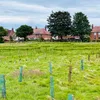
I recently learned about Solarpunk and I’d like to add Solarpunk as an attribute of the Willow Worlds project. I’m saying that Willow Worlds is Solarpunk, but what is Solarpunk? Solarpunk is both a literary genre and an artistic and lifestyle movement that imagines a positive, sustainable future where people live in harmony with nature. This Substack is Solarpunk but unfortunately, it would be Solarpunk even if it was entirely imaginary. There is certainly a place for imaginary projects and writing science fiction but of course the Willow Worlds physically exists and that’s the point of a community-led research project, even if it doesn’t sound as cool. There really are Willow Worlds planted to protect other trees, to cut down on plastic tree guards and improve the ecosystem services of Muiredge Park. But now you know: there is something Solarpunk about Willow Worlds, and if you’d like to tell me about your Solarpunk project, I’d like to hear from you.Welcome to the June episode of the Willow Worlds podcast. In this episode we’ll cover the spring drought, the tree nursery, some deer damage, our tree and now wildflower experiments and how to name 35 species of wildflowers, and why.PART 1: April Showers Bring May FlowersApril Showers Bring May Flowers: The proverb describes the familiar rhythm of the seasons: brief, light spring rains nourishing the soil, holding moisture until May’s longer days, and stronger sun, force life into full expression. Except in 2025, the April showers never came. April passed dry, and May began with the same parched stillness. The BBC report we received just 20% of the average rainfall, it was the driest spring in 69 years. In some areas, that figure dropped to a mere 2%. I’d never seen brown grass in mid-May before.What did this mean for the Willow Worlds project in Muiredge Park?For one, there was a startling bloom of dandelions — all at once. Great yellow constellations lit up the place, reflecting the warm weather. Whether you see them as cheerful wildflowers offering early sustenance to bumblebees, or as stubborn garden trespassers, their abundance was remarkable. But they vanished just as quickly and before most of the bees, it seems, who missed them. This kind of disarticulation — where flowers bloom before pollinators are ready — is the ecological unravelling warned of in Silent Earth by Dave Goulson. A recommended read for everyone interested in life on Earth.On more positive note: the willow fedge of the Willow Worlds is growing well. Digging trenches, layering manure and loosened soil in winter — helped trap enough water for the willows to manage the dry spell. The middles of the willow worlds, however, remain over-exposed to the drought. The saplings there look thirsty, the soil is too dry so we spent a little time adding some water, just to tide them over.PART 2: Treewilding UpdateDrought isn’t much of a worry in our air-pruning nursery. A solar-powered pump manages the watering here, and though it has to spend winter in the shed, it's easy to reinstall it when our now hot, dry Aprils arrives.Now, it’s early summer, the nursery is full. Chestnut, hazel, oak, yew, willow, sycamore, and others — all jostling for light and space. The box looks crowded, but the trees are content. Leaves are upright, growth steady, no signs of stress. After two years, they’ll be pressing at the edges of this wooden world, their roots well trained. Well, hopefully well trained: we’ll see what shape they’re in later.For now, the nursery is thriving — a small win for the trees.PART 3: Willow Worlds vs the WildlifeSome pupils assured me that deer don’t come near the houses. I understood why they believed that — but gently explained they were mistaken. The deer pass through at night, as silent as Slender Man. Still, I like their confidence. A strong sense of place — even when it’s not quite accurate — is a valuable thing. It means they’ve formed a vivid, high-definition picture of where they believe they live. That kind of mental mapping is part of growing up, part of how we build relationships with the world around us. When you spend time in a place — even just a few minutes each day — you start to know it deeply. You remember its shapes, its air, its sounds. And if you’ve never seen a deer there, it’s only natural to think they don’t come.But they do.I’ve learned not to rely on digital wildlife cameras — they don’t last long out here in klepto-land. Instead, I plant “analogue sensors”: lone willow rods, placed like decoys. Deer find them irresistible. Every spring for three years, I’ve planted unprotected willow, and every year, the deer destroy them. I might as well be planting lolipops. The results are unmistakable — bark stripped clean, trunks left smooth an
Podzilla Summary coming soon
Sign up to get notified when the full AI-powered summary is ready.
Free forever for up to 3 podcasts. No credit card required.
Listen to This Episode

Get summaries like this every morning.
Free AI-powered recaps of The Willow Worlds Podcast and your other favorite podcasts, delivered to your inbox.
Free forever for up to 3 podcasts. No credit card required.