Free Daily Podcast Summary
The Vault: The Epstein Files: Daily Summaries Delivered
by Bobby Capucci
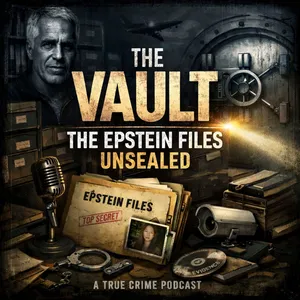
The Vault: The Epstein Files Unsealed is a deep-dive investigative podcast that pulls back the curtain on one of the most protected criminal networks in modern history. This series is built from the ground up on the actual paper trail—unsealed court records, depositions, exhibits, emails, and filings that were never meant to be read by the public. No pundit panels. No spin. Just the documents themselves, examined line by line, name by name, connection by connection—paired with precise, document-driven analysis that explains what the record truly shows. Each episode opens the vault on newly unsealed or long-buried Epstein files and walks listeners through what they actually reveal about power, money, influence, and the systems that failed survivors at every turn. Alongside the filings themselves, informed commentary breaks down the legal strategy, the institutional behavior, the contradictions, and the implications hiding between the lines. From judges’ orders and sealed exhibits.
Latest Episodes
The most recent episodes — sign up to get AI-powered summaries of each one.
- Yesterday14 min
Hillary Clinton And The Transcript From Her Epstein Related Talk With Congress (Part 15) (9/18/26)
Hillary Clinton’s February 26, 2026 deposition before the House Oversight Committee centered on how much she knew about Jeffrey Epstein, Ghislaine Maxwell and Bill Clinton’s relationship with them. Clinton repeatedly testified that she had never met Epstein, never flew on his plane, never visited Little St. James and knew nothing about his crimes before they became public. She described Maxwell as no more than a “casual acquaintance,” said she did not consider her a friend and attributed Maxwell’s presence around the Clinton family largely to her relationship with longtime Clinton friend Ted Waitt. Clinton acknowledged that Maxwell attended Chelsea Clinton’s 2010 wedding, but said she had no specific recollection of speaking with her there and believed Maxwell attended as Waitt’s guest. She also said she did not remember Maxwell visiting the Clintons’ Chappaqua home, despite Maxwell later saying she had been there several times, and said she had no knowledge of Epstein having connections to American or foreign intelligence services.The questioning became much more contentious when lawmakers turned to Bill Clinton’s documented relationship with Epstein. Hillary characterized her husband’s relationship with Epstein as “limited” and primarily connected to his use of Epstein’s airplane, said she had no knowledge of Bill visiting Little St. James and maintained there was no evidence connecting him to Epstein’s crimes. When lawmakers pressed her about photographs showing Bill Clinton with Epstein, Maxwell and young women during trips, Clinton acknowledged seeing some of those photographs but said she had not become curious enough to investigate the circumstances herself, calling it simply “unfortunate” that her husband ever had dealings with Epstein. She also denied personally soliciting money from Epstein and said she was unaware of anyone doing so on her behalf, while acknowledging she knew little about whether Epstein played any role around Clinton Foundation or Clinton Global Initiative activities. The transcript therefore presented a consistent Clinton defense: she said she personally had essentially no relationship with Epstein and only a peripheral relationship with Maxwell, while repeatedly separating herself from questions about Bill Clinton by telling lawmakers that he would have to answer for his own conduct.to contact me:bobbycapucci@protonmail.com
- Yesterday15 min
Hillary Clinton And The Transcript From Her Epstein Related Talk With Congress (Part 14) (9/18/26)
Hillary Clinton’s February 26, 2026 deposition before the House Oversight Committee centered on how much she knew about Jeffrey Epstein, Ghislaine Maxwell and Bill Clinton’s relationship with them. Clinton repeatedly testified that she had never met Epstein, never flew on his plane, never visited Little St. James and knew nothing about his crimes before they became public. She described Maxwell as no more than a “casual acquaintance,” said she did not consider her a friend and attributed Maxwell’s presence around the Clinton family largely to her relationship with longtime Clinton friend Ted Waitt. Clinton acknowledged that Maxwell attended Chelsea Clinton’s 2010 wedding, but said she had no specific recollection of speaking with her there and believed Maxwell attended as Waitt’s guest. She also said she did not remember Maxwell visiting the Clintons’ Chappaqua home, despite Maxwell later saying she had been there several times, and said she had no knowledge of Epstein having connections to American or foreign intelligence services.The questioning became much more contentious when lawmakers turned to Bill Clinton’s documented relationship with Epstein. Hillary characterized her husband’s relationship with Epstein as “limited” and primarily connected to his use of Epstein’s airplane, said she had no knowledge of Bill visiting Little St. James and maintained there was no evidence connecting him to Epstein’s crimes. When lawmakers pressed her about photographs showing Bill Clinton with Epstein, Maxwell and young women during trips, Clinton acknowledged seeing some of those photographs but said she had not become curious enough to investigate the circumstances herself, calling it simply “unfortunate” that her husband ever had dealings with Epstein. She also denied personally soliciting money from Epstein and said she was unaware of anyone doing so on her behalf, while acknowledging she knew little about whether Epstein played any role around Clinton Foundation or Clinton Global Initiative activities. The transcript therefore presented a consistent Clinton defense: she said she personally had essentially no relationship with Epstein and only a peripheral relationship with Maxwell, while repeatedly separating herself from questions about Bill Clinton by telling lawmakers that he would have to answer for his own conduct.to contact me:bobbycapucci@protonmail.com
- Yesterday54 min
Mega Edition: Jeffrey Epstein And The Amnesia Plague (9/19/26)
One of the most striking patterns to emerge around Jeffrey Epstein’s social circle was how often people who had spent years around him suddenly claimed not to remember basic details once those relationships came under scrutiny. Former friends, business associates and social contacts repeatedly minimized the depth of their connections, described Epstein as little more than an acquaintance, or said they could not recall meetings, trips, conversations and introductions that later surfaced in flight logs, photographs, emails, calendars and testimony. Ghislaine Maxwell herself leaned heavily on formulations such as “I don’t recall” and “I have no memory” when questioned about specific people and events, even while acknowledging that Epstein had moved in elite circles for years. Hillary Clinton similarly testified in 2026 that she did not recall meeting Epstein and described Maxwell as only a casual acquaintance. The recurring theme was difficult to miss: as documentary evidence made the relationships harder to deny, the recollections of the people involved often became noticeably less precise.That collective amnesia became one of the reasons the Epstein story generated so much public skepticism. A photograph alone did not prove wrongdoing, a flight did not establish knowledge of abuse and a social relationship did not make someone a participant in Epstein’s crimes. But the constant retreat into faulty memory created a credibility problem when the same people were confronted with records showing repeated contact over long periods of time. Maxwell’s later DOJ interviews were filled with examples of her saying she could not remember specific recruiting, travel or social details while simultaneously offering confident recollections when discussing subjects that helped her own narrative. The pattern did not prove that every forgotten detail concealed misconduct, but it reinforced the impression that association with Epstein became something many people wanted to shrink, blur or forget only after the consequences of being closely connected to him became impossible to ignore.to contact me:bobbycapucci@protonmail.com
- Yesterday46 min
Mega Edition: The Ghislaine Maxwell Jury Zero's In On The Transcripts (9/19/26)
As jurors deliberated Ghislaine Maxwell’s fate in December 2021, they repeatedly returned to the trial record and asked Judge Alison Nathan for transcripts of key testimony rather than relying solely on memory. Early in deliberations, they requested the testimony of several accusers, including Jane, Annie and Carolyn, and later asked for transcripts from witnesses who either corroborated parts of those accounts or helped establish the mechanics of Jeffrey Epstein’s world. Among those requests were testimony from Jane’s former boyfriend, former Palm Beach police officer Gregory Parkinson and Epstein pilot David Rodgers. The jurors also asked for a definition of “enticement” and posed specific legal questions about how Maxwell’s alleged conduct fit individual counts, showing that they were closely matching witness testimony against the elements prosecutors were required to prove. Their requests were detailed enough that they asked for some testimony to be assembled in binders, along with different colored Post-it notes, poster board and highlighters to help organize the evidence.The scrutiny intensified on December 29, the day the verdict was ultimately returned. Jurors requested transcripts from several additional witnesses, including testimony from the defense expert on memory, indicating that they were weighing not only the accusers’ accounts but also the defense argument that decades-old memories could be distorted or unreliable. They never sent Judge Nathan a note saying they were deadlocked; instead, their written messages said deliberations were progressing while they continued reviewing testimony witness by witness. After days of requesting and comparing transcripts, the jury went silent for several hours before announcing it had reached a verdict. Maxwell was convicted on five of the six counts submitted to the jury, making the transcript requests an unusually visible window into a deliberation process in which jurors appeared to be methodically testing the testimony against both the government’s allegations and the defense’s attacks on memory and credibility.to contact me:bobbycapucci@protonmail.com
- 2 days ago1h 7m
Mega Edition: Ghislaine Maxwell Calls For A Mistrial Due To Juror Misconduct (9/18/26)
After Ghislaine Maxwell was convicted in December 2021, her legal team demanded a new trial after Juror 50, Scotty David, revealed in media interviews that he had been sexually abused as a child and had discussed that experience during jury deliberations. The disclosure immediately became a major issue because the juror questionnaire had specifically asked prospective jurors whether they or close family members had ever been victims of sexual abuse, and David had answered no. Maxwell’s attorneys argued that the omission deprived them of the opportunity to question him further or potentially remove him from the jury, and they contended that his personal history could have influenced how he evaluated the testimony of Epstein’s accusers. The defense therefore asked Judge Alison Nathan to throw out the verdict and grant a new trial, arguing that the integrity of the jury-selection process had been compromised.Judge Nathan ordered an evidentiary hearing and questioned David under oath about how he had answered the questionnaire. David testified that he had rushed through the form, misunderstood or overlooked the relevant questions and had not intentionally concealed his past in order to get onto the jury. He also acknowledged that he had used his own experience during deliberations to explain to other jurors why survivors might not remember every detail of abuse consistently. Nathan ultimately found that his false questionnaire answers were not deliberate and that Maxwell had failed to show he was actually biased against her, so she denied the motion for a new trial. Maxwell’s lawyers continued to argue on appeal that the controversy warranted overturning the conviction, but the juror issue did not undo the verdict.to contact me:bobbycapucci@protonmail.com
- 2 days ago54 min
Mega Edition: An NYPD Detective Gives Testimony To The Maxwell Grand Jury In 2021 (Part 5-7) (9/19/26)
In the lead-up to Ghislaine Maxwell’s indictment and eventual arrest, a wide range of law enforcement agents representing multiple agencies were brought before the grand jury to lay out the evidentiary foundation of the case. Their testimony reflected a coordinated federal effort that had been building quietly for years, drawing on investigative work from different jurisdictions, timelines, and investigative lanes. Agents walked jurors through financial records, travel logs, victim accounts, electronic communications, and corroborating witness statements, showing how Maxwell functioned not as a peripheral figure, but as a central facilitator in Jeffrey Epstein’s trafficking operation. The cumulative effect of this testimony was to establish pattern, intent, and continuity—demonstrating that Maxwell’s actions were not isolated or accidental, but deliberate, repeated, and essential to the enterprise prosecutors were preparing to charge.In this episode, we take a close, methodical look at that grand jury testimony and what it reveals about how the case against Maxwell was constructed. By examining how different agencies’ witnesses reinforced one another’s findings, the episode highlights how prosecutors built a layered narrative designed to withstand both legal scrutiny and defense attacks. The testimony shows how long-standing investigative threads were finally pulled together after Epstein’s death, transforming years of fragmented information into a cohesive criminal case. Rather than focusing on speculation or hindsight, this episode zeroes in on the mechanics of the prosecution itself—how law enforcement presented the evidence, why the grand jury ultimately moved forward, and how that testimony paved the way for Maxwell’s arrest and indictment.to contact me:bobbycapucci@protonmail.comsource:EFTA00008744.pdf
- 2 days ago50 min
Mega Edition: An NYPD Detective Gives Testimony To The Maxwell Grand Jury In 2021 (Part 1-4) (9/18/26)
In the lead-up to Ghislaine Maxwell’s indictment and eventual arrest, a wide range of law enforcement agents representing multiple agencies were brought before the grand jury to lay out the evidentiary foundation of the case. Their testimony reflected a coordinated federal effort that had been building quietly for years, drawing on investigative work from different jurisdictions, timelines, and investigative lanes. Agents walked jurors through financial records, travel logs, victim accounts, electronic communications, and corroborating witness statements, showing how Maxwell functioned not as a peripheral figure, but as a central facilitator in Jeffrey Epstein’s trafficking operation. The cumulative effect of this testimony was to establish pattern, intent, and continuity—demonstrating that Maxwell’s actions were not isolated or accidental, but deliberate, repeated, and essential to the enterprise prosecutors were preparing to charge.In this episode, we take a close, methodical look at that grand jury testimony and what it reveals about how the case against Maxwell was constructed. By examining how different agencies’ witnesses reinforced one another’s findings, the episode highlights how prosecutors built a layered narrative designed to withstand both legal scrutiny and defense attacks. The testimony shows how long-standing investigative threads were finally pulled together after Epstein’s death, transforming years of fragmented information into a cohesive criminal case. Rather than focusing on speculation or hindsight, this episode zeroes in on the mechanics of the prosecution itself—how law enforcement presented the evidence, why the grand jury ultimately moved forward, and how that testimony paved the way for Maxwell’s arrest and indictment.to contact me:bobbycapucci@protonmail.comsource:EFTA00008744.pdf
- 2 days ago16 min
How The Federal Government Broke The Law When It Comes to Epstein And The CVRA (Part 2)
The Crime Victims’ Rights Act (CVRA) was supposed to guarantee fairness and transparency for victims—making sure they were informed, included, and respected in the legal process. But when Jeffrey Epstein came along, that promise evaporated. Federal prosecutors secretly cut a Non-Prosecution Agreement that protected not only Epstein but also his “potential co-conspirators,” violating the very law designed to stop such backroom deals. The victims weren’t told; they found out months later from the press. The same Department of Justice that preaches accountability deliberately hid the deal, broke federal law, and then argued that the CVRA didn’t apply because no federal charges were filed—an argument so twisted it turned their own crime into a loophole.Instead of punishment, Epstein got 13 months in county jail with daily work release, while the prosecutors who betrayed the victims got promotions. The courts sided with the government, ruling that since the feds never formally charged Epstein, the survivors technically weren’t “victims” under the CVRA. The result was a legal farce that showed how easily the system bends for the powerful. The law that was supposed to protect victims ended up protecting predators, proving once again that in America, justice isn’t blind—it just looks away when the wrong people are involved.to contact me:bobbycapucci@protonmail.com
Get The Vault: The Epstein Files summaries in your inbox
Free AI-powered daily recaps. Key takeaways, quotes, and mentions — in a 5-minute read.
Get Free Summaries →Free forever for up to 3 podcasts. No credit card required.
You Might Also Like
Listeners also like.
The Epstein Files
An AI-driven investigation into the Jeffrey Epstein case, analyzing millions of documents to uncover hidden connections and patterns.

The Tara Palmeri Show
A political journalist reveals behind-the-scenes dynamics and unfiltered realities of power in Washington and beyond.

The Black Vault Radio w/ John Greenewald, Jr.
Explores declassified U.S. government and military documents to uncover hidden histories and uncover truths with expert guests.

Slow Burn
Examines pivotal political and cultural moments in American history through archival audio and firsthand accounts.

Deep Cover
Investigative stories about people leading double lives, uncovering deception, crime, and the truth behind hidden identities.

Legal AF by MeidasTouch
Legal analysis of major law and politics stories from experienced attorneys, with deep dives and breaking news updates.

The Megyn Kelly Show
Provocative conversations with influential figures in politics, law, and culture, featuring candid and fearless dialogue.

Admissible: Shreds of Evidence
A reporter investigates a forensic analyst tied to 13 wrongful convictions and allegations of misconduct at a state crime lab.

Disclosure
A podcast about using the Freedom of Information Act to uncover government secrets and hidden documents.

The Binge Cases: What She Buried
A journalist investigates how a hacker targeted female gamers with swatting and harassment, and the fightback that brought him down.
True Sunlight
Journalists investigate true crime and systemic corruption, focusing on victims and accountability with rigorous, empathetic reporting.

The Trial: USA
Analyzes major criminal trials through court transcripts, interviews with investigators and experts, and detailed courtroom evidence breakdowns.
About The Vault: The Epstein Files
The Vault: The Epstein Files Unsealed is a deep-dive investigative podcast that pulls back the curtain on one of the most protected criminal networks in modern history. This series is built from the ground up on the actual paper trail—unsealed court records, depositions, exhibits, emails, and filings that were never meant to be read by the public. No pundit panels. No spin. Just the documents themselves, examined line by line, name by name, connection by connection—paired with precise, document-driven analysis that explains what the record truly shows. Each episode opens the vault on newly unsealed or long-buried Epstein files and walks listeners through what they actually reveal about power, money, influence, and the systems that failed survivors at every turn. Alongside the filings themselves, informed commentary breaks down the legal strategy, the institutional behavior, the contradictions, and the implications hiding between the lines. From judges’ orders and sealed exhibits.
Customized Recaps
AI-powered recaps with compact key takeaways, quotes, and insights.
Straight to Your Inbox
Get key takeaways from The Vault: The Epstein Files in a 5-minute read.
Save Hours Every Week
Stay current on your favorite podcasts without falling behind.
Frequently Asked Questions
What is Podzilla's The Vault: The Epstein Files daily summary?
It's a free AI-powered email that summarizes new episodes of The Vault: The Epstein Files as soon as they're published. You get the key takeaways, notable quotes, and links & mentions — all in a quick read.
How does the The Vault: The Epstein Files podcast summary work?
When a new episode drops, our AI transcribes and analyzes it, then generates a personalized summary tailored to your interests and profession. It's delivered to your inbox every morning.
Is this an official The Vault: The Epstein Files product?
No. Podzilla is an independent service that summarizes publicly available podcast content. We're not affiliated with or endorsed by Bobby Capucci.
Can I get summaries of other podcasts too?
Absolutely! The free plan covers up to 3 podcasts. Upgrade to Pro for 15, or Premium for 50. Browse our full catalog at /podcasts.
How often does The Vault: The Epstein Files release new episodes?
The Vault: The Epstein Files publishes daily. Our AI generates a summary within hours of each new episode.
What topics does The Vault: The Epstein Files cover?
The Vault: The Epstein Files covers topics including News, Politics, Commentary. Our AI identifies the specific themes in each episode and highlights what matters most to you.
Start getting The Vault: The Epstein Files summaries tomorrow morning.
Free forever for up to 3 podcasts. No credit card required.
Free forever for up to 3 podcasts. No credit card required.